Sample text



Printing Plant VOCs Treatment Solutions for Emission Control
Are you struggling to keep up with strict environmental standards while trying to cut your facility’s energy costs? Choosing the right printing plant VOCs treatment solution can mean the difference between costly regulatory fines and a high-efficiency, profit-protecting operation.
In this guide, you’re going to learn exactly how to manage VOC emissions in printing operations. We’ll break down effective exhaust collection, compare leading technologies—including RTO systems, zeolite concentrator rotors, and activated carbon adsorption—and reveal how waste heat recovery can dramatically reduce your total operating costs.
If you want a clear, practical path to total environmental compliance and optimized exhaust performance, this guide is for you.
Let’s dive right in!
Sources and Characteristics of VOC Emissions in Printing Plants
Effective printing plant VOCs treatment begins with a thorough understanding of where volatile organic compounds originate and how they behave within production environments. Soto Machinery provides custom environmental protection equipment designed to target these complex emission profiles at the source.
Main Sources of VOCs in Printing Operations
VOC emissions in printing facilities stem primarily from solvent evaporation during ink application, drying, and equipment maintenance:
- Ink Formulation and Thermal Drying: Solvent-based inks release heavy VOC loads during high-speed drying in gravure, flexographic, and rotary screen printing.
- Fountain Solutions: Offset printing presses emit alcohol vapors (such as isopropyl alcohol) during dampening operations.
- Cleaning and Maintenance Solvents: Press cleanup, blanket washing, and roller maintenance release quick-evaporating organic solvents directly into shop-floor air.
- Laminating and Coating Adhesives: Flexible packaging lines discharge significant solvent vapors during adhesive lamination processes.
Composition and Chemical Profile of Printing Exhaust Gas
Printing exhaust streams contain diverse organic compounds with varying molecular weights, boiling points, and odor thresholds:
| Chemical Category | Common Compounds | Primary Operational Source |
|---|---|---|
| Ester Solvents | Ethyl acetate, propyl acetate, butyl acetate | Gravure inks and lamination adhesives |
| Alcohols | Isopropanol, ethanol, n-propanol | Fountain solutions and flexo ink systems |
| Ketones | Methyl ethyl ketone (MEK), acetone | Specialty inks and wash solvents |
| Aromatics & Hydrocarbons | Toluene, xylene, aliphatic hydrocarbons | Solvent-based screen inks and cleaning agents |
Challenges of Fugitive and Low-Concentration Emissions
Designing efficient treatment systems requires overcoming specific operational hurdles inherent to printing plants:
- High Air Volume, Low Concentration: Fast-moving press lines require massive ventilation air volumes, diluting solvent levels and increasing treatment equipment sizing.
- Fugitive Workspace Emissions: Uncaptured solvent vapors escape open ink wells, washing stations, and floor areas, threatening indoor workplace air quality and regulatory compliance.
- Fluctuating Exhaust Loads: Variable job runs, frequent color changes, and press start-stop cycles create unpredictable VOC concentration spikes that strain standard abatement systems.
Exhaust Gas Collection and Air Concentration Technologies
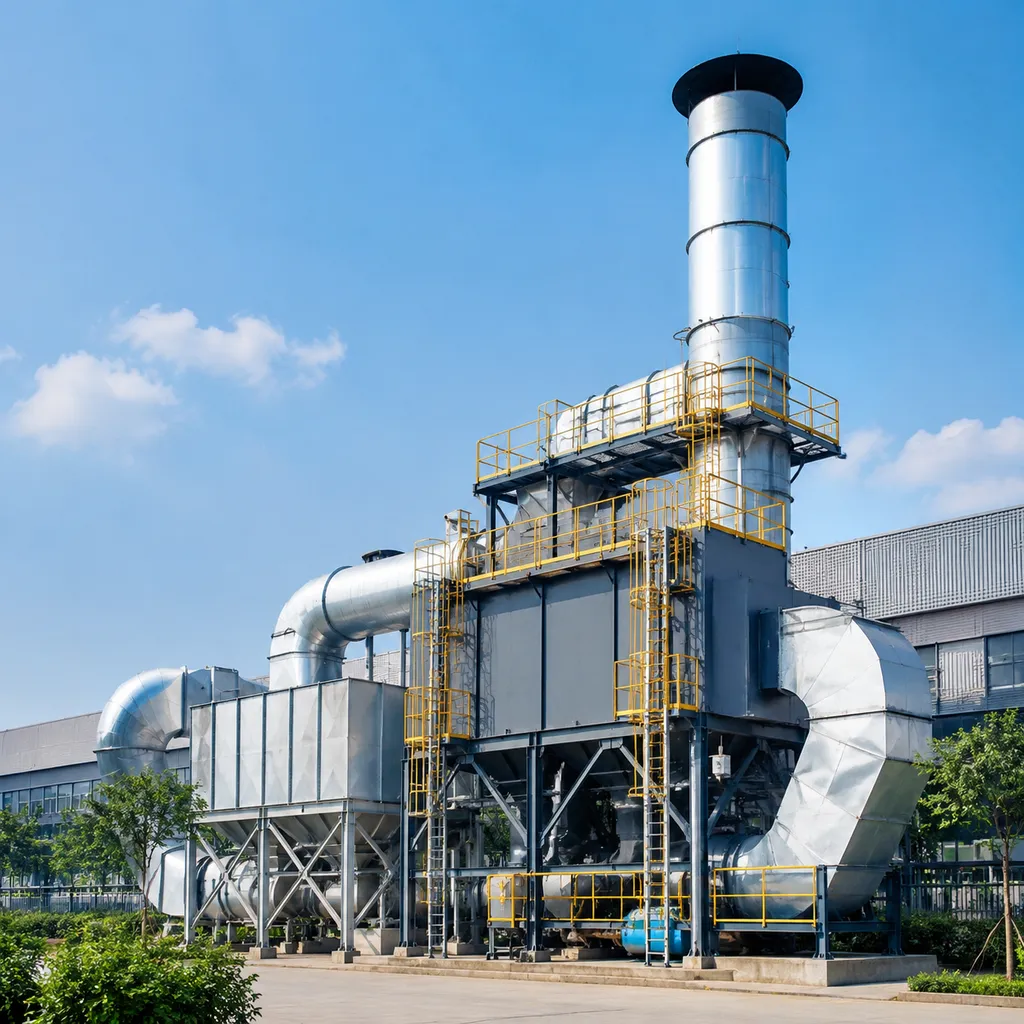
Capturing off-gases right where they are generated is the foundational step in effective printing plant VOCs treatment. Without an engineered collection strategy, huge volumes of room air dilute solvent vapors, driving up equipment size and utility bills. We focus on capturing emissions directly at the source to keep your downstream treatment system lean and cost-effective.
Source Capture and Hood Extraction Design
We design custom collection systems tailored to your specific press lines—whether you operate high-speed gravure, flexographic, or offset printing equipment.
- Targeted Hoods: Positioned strategically over ink fountains, flash dryers, and cooling zones to capture solvent vapors before they reach the plant floor.
- Press Enclosures: Sealed, negative-pressure enclosures that achieve up to 95%+ capture efficiency without obstructing operator workflow or maintenance access.
- Balanced Airflow: Fine-tuned face velocity that captures fugitive VOCs cleanly without disturbing ink stability or web movement.
Air Reduction and Concentration Systems
Handling massive volumes of low-concentration exhaust wastes money. We apply smart air recirculation to shrink the physical airflow while boosting solvent concentration.
| Strategy | Operational Benefit |
|---|---|
| Safe Air Recirculation | Reuses warm press air while continuously monitoring lower explosive limits (LEL). |
| Volume Reduction | Cuts total exhaust air volume by 50% to 70%. |
| Stream Concentration | Delivers a rich VOC stream to the final destruction unit, lowering overall system footprint and fuel demand. |
Exhaust Pre-treatment and Filtration
Raw printing exhaust carries ink mist, paper dust, and plasticizers that can ruin secondary treatment media. We clear these contaminants out first.
- Multi-Stage Dry Filters: Trap sticky ink overspray and particulate matter to prevent fouling in downstream equipment.
- Cooling and Dehumidification: Adjusts gas temperature and relative humidity to protect sensitive adsorbents like zeolite rotors and carbon beds.
- System Protection: Keeps overall printing plant VOCs treatment equipment operating at peak efficiency while extending media service life.
Main VOC Treatment Technologies for Printing Industry
Selecting the right printing plant VOCs treatment setup comes down to your airflow volume, solvent concentration, and operational budget. We design and install four primary system configurations tailored to distinct printing processes.
Regenerative Thermal Oxidizer (RTO) Systems
RTOs are the benchmark for high-concentration printing exhaust gas. By destroying volatile organic compounds at elevated temperatures, these systems deliver reliable compliance and high heat recovery.
- Destruction Efficiency: Achieves up to 99%+ VOC removal rates.
- Heat Recovery: Ceramic media traps up to 95% of thermal energy, drastically cutting burner fuel usage.
- Best Fit: Continuous, high-concentration gravure and flexographic printing lines.
Zeolite Concentrator Rotor + RTO
When handling massive air volumes with low VOC concentrations, running a direct RTO wastes fuel. At Soto Machinery, we pair a high-capacity zeolite rotor with a compact RTO to solve this exact problem.
| Feature | System Capability |
|---|---|
| Concentration Ratio | 10:1 to 20:1 air volume reduction |
| Energy Savings | Up to 70% lower auxiliary gas consumption |
| Primary Target | High-volume flexible packaging and offset printing exhaust |
Activated Carbon Adsorption and Catalytic Oxidation
This system uses a continuous adsorption-desorption loop to capture VOCs and destroy them using a Catalytic Oxidizer (CO). It burns solvents at significantly lower operating temperatures (300°C to 400°C).
- Low Thermal Load: Catalytic beds lower the required ignition temperature, saving fuel.
- Flexible Operation: Handles batch runs and mid-sized print shops with fluctuating solvent loads well.
- Safe Processing: Built-in automatic cooling and purge cycles protect the bed during high surges.
Honeycomb Activated Carbon Adsorption
For small-scale offset or screen printing operations, honeycomb activated carbon beds offer an straightforward, low-CAPEX solution.
- Low Air Resistance: Honeycomb structures reduce pressure drop across system fans, cutting electricity costs.
- Modular Replacement: Easy block replacement keeps maintenance straightforward and predictable.
- Ideal Application: Low-concentration, intermittent solvent streams where thermal equipment isn’t cost-effective.
System Advantages and Heat Recovery Solutions
Capturing and destroying solvent emissions is only half the process. A truly effective printing plant VOCs treatment setup reclaims energy to directly lower factory overhead. At Soto Machinery, we design our systems to transform high-temperature waste heat into usable energy assets for packaging and printing facilities.
Secondary Waste Heat Recovery and Utilization
Thermal oxidation breaks down solvent vapors while generating massive amounts of clean thermal energy. Instead of venting this heat into the atmosphere, we capture it using secondary heat exchangers, thermal oil heaters, or air-to-air systems.
- Drying Tunnel Recycling: Route purified hot air directly back into gravure, flexo, or offset drying ovens to reduce primary burner load.
- Plant Utility Heating: Supply hot water or space heating across the shop floor during colder months.
- Process Steam Generation: Power waste heat boilers to supply steam for broader facility operations.
Energy Efficiency and Operational Cost Reduction
Energy efficiency dictates long-term profitability. Our equipment prioritizes heat retention to minimize fuel consumption and shorten your payback period.
| Advantage | Operational Impact |
|---|---|
| Autothermal Operation | Runs self-sustained without auxiliary fuel when solvent concentrations exceed 1.5–2 g/m³. |
| 95%+ Heat Recovery | Multi-bed ceramic media retains thermal energy to preheat incoming exhaust gas. |
| VFD Smart Control | Automated fan drives adjust airflow to match press activity, cutting electricity draw. |
Compliance with Environmental Emission Standards
Regulatory enforcement requires steady, reliable performance. We engineer every system to hit environmental targets consistently without interrupting your production schedules.
- High Destruction Efficiency: Delivers up to 99%+ Destruction Removal Efficiency (DRE) across common printing solvents like ethyl acetate, IPA, and toluene.
- Ultra-Low Secondary Emissions: Precision burner management keeps NOx and CO levels well within local EPA and international limits.
- Real-Time Data Integration: Standardized connections for Continuous Emissions Monitoring Systems (CEMS) make compliance tracking simple.
Backed by years of project experience as an environmental protection equipment manufacturer, Soto Machinery delivers robust treatment solutions that protect both your bottom line and the air you breathe.
Core Equipment Components of VOC Treatment Systems
High-performance printing plant VOCs treatment relies on robust, precision-engineered hardware built to withstand continuous industrial operation. We design every core subsystem to maximize destruction efficiency, cut fuel usage, and guarantee operational safety.
Ceramic Heat Exchange Media and Burner Systems
The thermal core of our RTO systems balances high heat recovery with continuous burner stability.
- Ceramic Media: High-density honeycomb ceramic blocks absorb and release thermal energy rapidly, achieving thermal efficiency up to 95%. This drastically reduces natural gas consumption during operation.
- Low-NOx Burners: Fuel-efficient burner assemblies automatically modulate heat output to maintain steady chamber temperatures (typically 750°C to 850°C) while minimizing secondary nitrogen oxide emissions.
Air Flow Switching Valves and System Fans
Flow control components direct exhaust gas through thermal beds seamlessly to prevent untreated bypass.
- Pneumatic Switching Valves: Fast-acting poppet valves feature high-temperature seals that prevent gas leakage, enabling overall VOC destruction efficiency above 99%.
- Variable Frequency Fans: Heavy-duty, corrosion-resistant draft fans automatically adjust air volume based on real-time printing line output, cutting electricity demand.
Integrated Safety and Control Ecosystems
Printing plant exhaust contains flammable solvent vapors that demand strict safety automation. At Soto Machinery, we build fully automated control architecture into every environmental protection system.
| Safety Component | Primary Function | Operational Impact |
|---|---|---|
| LEL Vapor Monitors | Continuous lower explosive limit tracking | Prevents over-concentration hazardous conditions |
| Emergency Bypass Dampers | Rapid heat/pressure vent activation | Protects downstream media during sudden thermal spikes |
| PLC Control Architecture | Centralized automated system management | Enables remote diagnostics and touch-screen control |
How to Choose the Best Printing Plant VOCs Treatment Solution
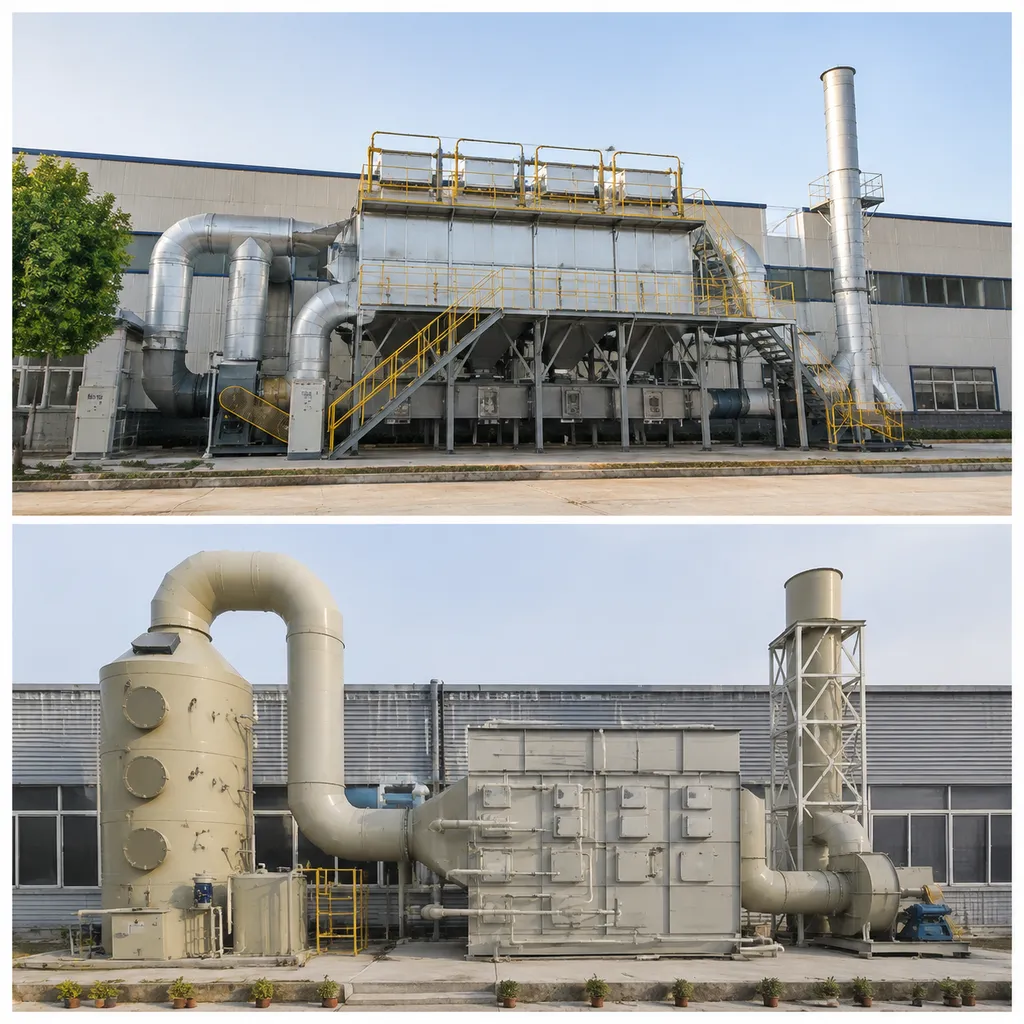
Picking the right system comes down to three main factors: exhaust air volume, solvent concentration, and operating budget. We evaluate your specific printing lines to match the technology that delivers full environmental compliance without wasting energy.
Evaluating Air Volume and VOC Concentration
Your process exhaust profile directly dictates the baseline technology required:
- High Volume, Low Concentration: Common in flexible packaging and wide-web flexo. Concentrating the air stream first reduces equipment size and fuel consumption.
- Moderate Volume, High Concentration: Typical in heavy gravure printing. High solvent levels feed the combustion process, allowing self-sustaining thermal operation without extra gas.
- Low Volume, Intermittent Run: Standard for small offset or screen printing. Simple capture and adsorption setups keep initial expenses low.
Comparing RTO, Zeolite Rotor, and Carbon Systems
| Technology | Air Volume | VOC Concentration | Efficiency | Best Application |
|---|---|---|---|---|
| Direct RTO | Medium – High | High (> 2,000 mg/m³) | 99%+ | Heavy gravure, continuous high-load lines |
| Zeolite Rotor + RTO | High – Very High | Low (< 1,000 mg/m³) | 95% – 98% | Flexo & flexible packaging printing |
| Activated Carbon | Low – Medium | Low – Medium | 85% – 92% | Small offset, batch screen printing |
Total Cost of Ownership and Maintenance Requirements
Look beyond the upfront equipment price tag. Calculate your total cost over a 5-to-10-year operation window:
- CapEx vs. OpEx: Carbon systems have low initial costs but recurring media replacement bills. RTO systems require higher initial capital investment but offer the lowest ongoing utility costs.
- Energy Consumption: Systems utilizing primary and secondary heat recovery drastically cut monthly natural gas and power bills.
- Upkeep Needs: At Soto Machinery, we engineer treatment systems with durable ceramic packing and heavy-duty switching valves to keep routine maintenance simple and prevent production downtime.
Printing Plant VOC Treatment Project Cases and Applications
Every printing facility presents a distinct exhaust profile. Over years of engineering real-world equipment installations—including extensive environmental projects with Soto Machinery—we have tailored printing plant VOC treatment systems across diverse production lines to maximize energy recovery and ensure strict compliance.
Gravure and Flexible Packaging Printing Applications
Gravure lines rely heavily on solvent-based inks, generating high-volume exhaust streams packed with ethyl acetate, toluene, and isopropyl alcohol.
- The Challenge: Continuous high airflow paired with fluctuating solvent loads during job changes.
- The Solution: A Zeolite Concentrator Rotor coupled with a Regenerative Thermal Oxidizer (RTO).
- Operational Impact: The rotor concentrates the low-VOC exhaust stream up to 20:1 before directing it to the RTO. Once at temperature, solvent combustion maintains self-sustaining operation, allowing us to route excess heat directly back into the drying hoods.
Screen and Offset Printing Solutions
Screen and heatset offset processes produce lower exhaust volumes with higher boiling-point solvents and localized odor issues.
- The Challenge: Intermittent production runs and lower flow rates where a full-scale RTO is not cost-effective.
- The Solution: Honeycomb Activated Carbon Adsorption with Catalytic Oxidation (CO).
- Operational Impact: Carbon beds capture organic vapors during active printing cycles. During offline desorption, low-temperature catalytic oxidation destroys the concentrated solvents with minimal power consumption and low capital outlay.
Case Study Results and Performance Benchmarks
Our field projects consistently outperform basic regulatory requirements across commercial and packaging print operations:
| Performance Metric | Target Benchmark | Achieved Field Performance |
|---|---|---|
| VOC Destruction Efficiency (DRE) | ≥ 98% | 98.5% – 99.3% |
| Exhaust Outlet Emission | < 30 mg/m³ | < 15 mg/m³ |
| Thermal Heat Recovery Rate | ≥ 90% | Up to 95% |
| Operating Energy Savings | 30% reduction | 40%+ fuel drop via direct heat reuse |
Matching the precise capture and destruction setup to your specific press technology delivers total emission compliance while driving down long-term operating costs.