Sample text



UV Photolysis Exhaust Gas Purifier Manufacturer Guide
What Is a UV Photolysis Exhaust Gas Purifier?
A UV photolysis exhaust gas purifier is an advanced industrial air pollution control system designed to eliminate volatile organic compounds (VOCs), hazardous air pollutants, and foul odors from industrial emissions. As a professional manufacturer of environmental protection equipment, Soto Machinery engineers high-performance purification systems backed by a wealth of environmental protection equipment project cases to meet strict international environmental standards and deliver efficient, continuous waste gas treatment across diverse global industries.
Working Principle and Mode of Operation
The system utilizes high-intensity C-band ultraviolet (UV) light to induce photochemical decomposition and deep oxidation of organic gas molecules:
- Direct Photolysis: High-energy UV light rays strike passing pollutants, breaking down the molecular bonds of organic gases and converting complex polymer chains into smaller, unstable molecular structures.
- Ozone Generation: Photons at specific wavelengths ionize oxygen molecules in the airflow to generate free oxygen atoms, which quickly react with oxygen to form active ozone (O3).
- Deep Oxidation: Ozone acts as a powerful oxidizing agent, rapidly reacting with the split organic molecules to transform harmful contaminants into harmless carbon dioxide (CO2) and water (H2O).
Core Components of UV Photolysis Systems
To ensure stable, long-term operation in demanding factory environments, each unit integrates durable, industrial-grade core components:
| Component | Function & Features |
|---|---|
| High-Output UV C-Band Lamps | Emits targeted 185nm and 254nm wavelengths for high photolysis energy and ozone yield. |
| Photocatalytic Media (TiO2) | Titanium dioxide-coated matrix plates that multiply oxidative reaction rates under UV illumination. |
| Heavy-Duty Structural Casing | Constructed from 304/316 stainless steel or polypropylene (PP) for maximum corrosion resistance. |
| Intelligent Control & Ballast System | Delivers stable power output, circuit protection, and real-time status monitoring. |
Target Pollutants and VOC Purification Capability
UV photolysis technology delivers robust, multi-pollutant treatment across a wide spectrum of industrial air emissions:
- Volatile Organic Compounds (VOCs): Benzene, toluene, xylene, ethyl acetate, acetone, and styrene.
- Malodorous Sulfur & Nitrogen Gases: Hydrogen sulfide (H2S), ammonia (NH3), methyl mercaptan, and trimethylamine.
- Industrial Exhaust Fumes: Solvent vapors, paint spray mist residues, and polymer processing fumes.
With optimized reactor design and airflow dynamics, these purifiers achieve up to 95% deodorization efficiency and significant VOC reduction, making compliance seamless for industrial operations worldwide.
Key Advantages of UV Photolysis Waste Gas Treatment
As a dedicated UV photolysis exhaust gas purifier manufacturer, we engineer our waste gas treatment systems to deliver maximum purification efficiency while minimizing long-term operating costs for modern industrial facilities.
High Deodorization and Purification Efficiency
Our high-intensity UV photolysis systems break down complex organic compounds and stubborn industrial odors in seconds.
- Broad-Spectrum VOC Removal: Delivers up to 90%+ purification efficiency for volatile organic compounds (VOCs), benzene, toluene, and hydrogen sulfide.
- Instant Odor Breakdown: High-energy ultraviolet light breaks molecular bonds on contact, transforming foul exhaust into odorless compounds.
- Stable Processing: Maintains reliable, high-volume purification performance even during peak factory production hours.
Low Operational and Maintenance Costs
We build our equipment to maximize your operational efficiency and lower total cost of ownership.
- Energy-Efficient Design: Optimized power consumption delivers maximum photolytic energy with minimal electricity usage.
- Zero Chemical Additives: Operates completely dry without requiring expensive liquid reagents or chemical storage.
- Low Maintenance Overhead: Durable UV lamps offer extended service lifespans with fast, straightforward replacement cycles.
Safe Continuous Operation Without Secondary Pollution
Safety and environmental compliance guide every design choice in our equipment manufacturing process.
- Zero Secondary Waste: Converts harmful organic pollutants into simple carbon dioxide and water vapor without producing hazardous sludge or wastewater.
- 24/7 Industrial Reliability: Designed for continuous heavy-duty operation, backed by proven environmental protection equipment project cases across China and global markets.
- Built-In Safety Controls: Outfitted with fire-resistant structural materials, automated overload protection, and smart monitoring for worry-free operation.
Main Types of UV Photolysis and Exhaust Purification Systems
As a dedicated UV photolysis exhaust gas purifier manufacturer, we recognize that industrial exhaust streams vary significantly in moisture, particulate load, and chemical composition. A single off-the-shelf system rarely meets every facility’s needs. To deliver reliable performance and meet strict global emission standards, we engineer three main equipment configurations tailored to specific operational environments.
| System Configuration | Core Technologies | Target Pollutants | Primary Advantage |
|---|---|---|---|
| Integrated Photolysis & Oxidation | UV Light + TiO2 Catalyst | Odorous compounds, light VOCs | High destruction speed without consumable media |
| Wet Scrubber & UV Combination | Spray Tower + UV Photolysis | Acid mist, dust, sticky vapors, VOCs | Pre-cleans harsh exhaust to protect UV lamps |
| Hybrid UV & Activated Carbon | UV Photolysis + Carbon Bed | Complex VOCs, fluctuating emissions | Maximize removal rates while extending carbon life |
Integrated UV Photolysis & Photocatalytic Oxidation Equipment
This configuration combines high-intensity C-band UV lamps with semiconductor-grade titanium dioxide (TiO2) catalyst plates inside a single compact housing.
- Synergistic Reaction: UV light directly breaks the chemical bonds of complex organic molecules, while simultaneously activating the TiO2 catalyst to release highly reactive hydroxyl radicals.
- Zero Consumables: The catalyst plate accelerates oxidation without being consumed, keeping ongoing operational costs exceptionally low.
- Best Uses: Ideal for paint spray booths, commercial printing, and food processing facilities with low-to-moderate dust and high odor control needs.
Combined Wet Scrubber and UV Photolysis Systems
When dealing with harsh exhaust streams containing sticky mists, corrosive acid vapors, or high dust levels, we pair our photolysis units with an upstream wet scrubbing tower.
- Pre-Treatment Protection: The wet scrubber uses fine liquid sprays to wash out suspended particulates, oil droplets, and water-soluble compounds before the air enters the photolysis chamber.
- Sustained UV Output: Keeping dust and grease off the quartz UV lamp sleeves prevents light intensity degradation and extends lamp maintenance intervals.
- Best Uses: Essential for chemical synthesis, electroplating, wastewater treatment plants, and biogas processing facilities.
Hybrid UV and Activated Carbon Adsorption Units
For facilities operating in strict environmental zones that demand ultra-low emission thresholds, our hybrid UV and activated carbon systems provide deep, multi-stage purification.
- Two-Stage Destruction: The UV photolysis section decomposes 80% to 90% of the incoming organic pollutants and eliminates foul odors. The downstream activated carbon bed then captures any remaining trace compounds or sudden surge spikes.
- Dramatically Lower Maintenance: Because the UV unit handles the bulk of the pollutant load, the carbon media lasts up to 3 to 5 times longer than in traditional standalone carbon absorbers, significantly reducing media replacement expenses.
- Best Uses: Ideal for pharmaceutical manufacturing, composite resin production, and electronics manufacturing processes subject to near-zero emission standards.
Application Scenarios and Industry Solutions
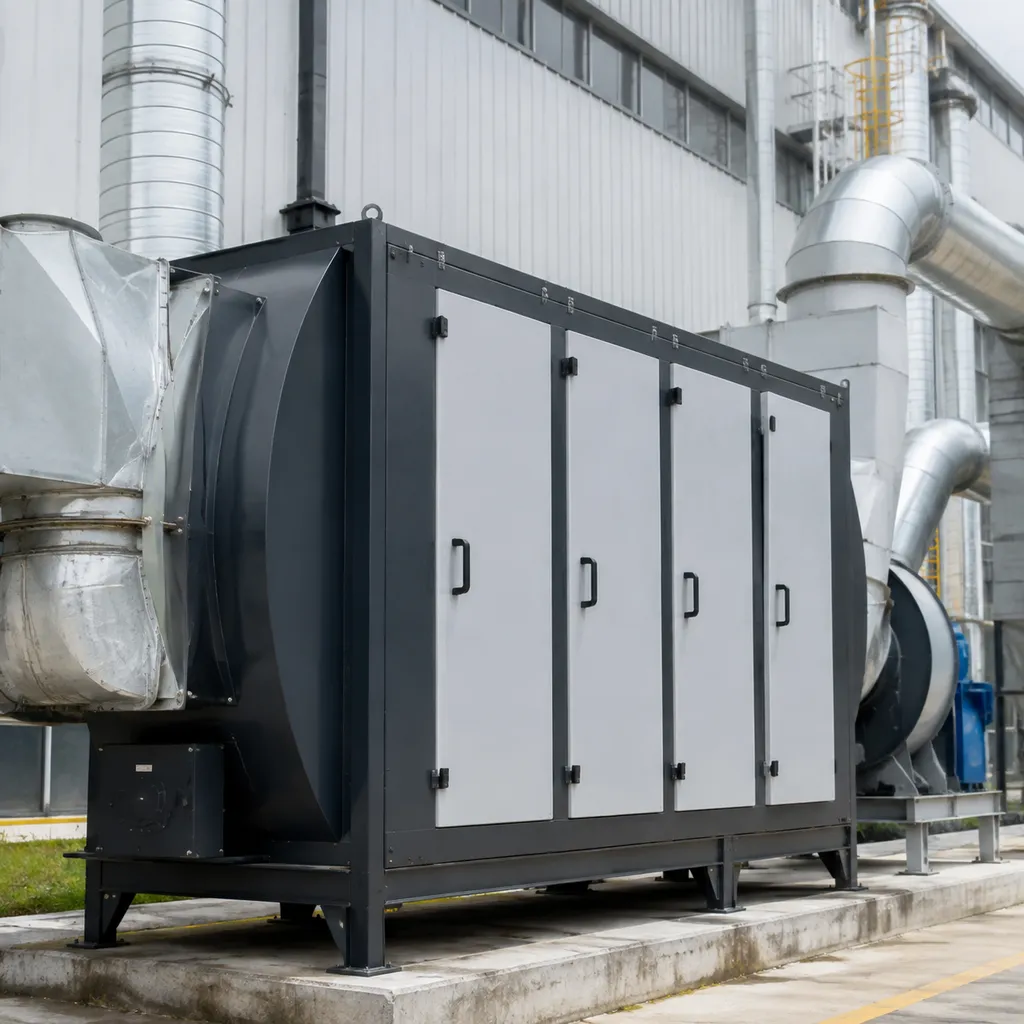
As a specialized UV photolysis exhaust gas purifier manufacturer, we design targeted air pollution control systems for complex industrial environments. Backed by extensive experience and environmental protection equipment project cases in China and international markets, our systems adapt to diverse emission profiles and regulatory requirements.
Industrial VOC Waste Gas and Organic Exhaust Treatment
Manufacturing facilities generate complex volatile organic compounds (VOCs) that demand continuous high-efficiency destruction. Our UV photolysis units break open molecular bonds in organic solvents, transforming hazardous emissions into carbon dioxide and water vapor.
- Key Industries: Automotive spray painting, printing and packaging, chemical processing, pharmaceutical manufacturing, and electronics production.
- Key Compounds: Benzene, toluene, xylene, acetone, ethyl acetate, and mixed solvent exhaust.
Odor Control for Wastewater Treatment and Biogas Plants
Biological processing and wastewater facilities emit persistent sulfur and nitrogen compounds that trigger compliance issues. We engineer heavy-duty purifiers designed for high-humidity environments that destroy malodorous molecules on contact.
- Key Applications: Municipal sewage treatment facilities, sludge dewatering plants, municipal solid waste sites, and biogas power plants.
- Key Compounds: Hydrogen sulfide (H2S), ammonia (NH3), mercaptans, methyl sulfide, and organic amines.
Commercial Food Processing and Manufacturing Exhaust
Large-scale food manufacturing releases a mix of fine grease particles, oil smoke, and intense organic odors. Our systems oxidize vaporized fats and neutralize cooking smells before exhaust reaches the discharge stack.
- Key Applications: Industrial snack production, commercial frying and baking lines, meat processing and rendering, and coffee roasting plants.
- Key Benefits: Reduces grease buildup in exhaust ducts, minimizes fire risks, and removes persistent food processing odors.
Product Specifications and Technical Parameters
As a dedicated UV photolysis exhaust gas purifier manufacturer, we design our systems to fit precise industrial footprints and airflow requirements. We focus on durable engineering that delivers consistent performance with minimal power draw.
Airflow Processing Capacity and Air Volume Range
Our purifiers feature modular designs, making it simple to scale treatment capacity for small processing lines or massive industrial plants.
- Standard Air Volume Range: 2,000 m³/h to 100,000+ m³/h (1,200 CFM to 60,000+ CFM)
- Custom Sizing: Parallel multi-module array setups for unlimited airflow expansion
- System Resistance: Low pressure drop ($le$ 300 Pa), keeping energy demand low on your primary exhaust fans
UV Lamp Lifespan and Energy Consumption
Our units use high-intensity C-band (185 nm + 254 nm) UV quartz lamps that maximize VOC degradation while keeping energy costs down.
| Technical Parameter | Standard Specification |
|---|---|
| Lamp Lifespan | 8,000 – 12,000 effective operating hours |
| Removal Efficiency | Up to 95% on target VOC and odor compounds |
| Power Supply | 220V / 380V / 440V (50/60 Hz custom configured) |
| Power Rate | ~0.15 kW to 0.3 kW per 1,000 m³/h airflow |
Equipment Structural Materials and Corrosion Resistance
Industrial exhaust streams carry moisture, grease, and chemical vapors. We build our equipment shells using heavy-duty materials tailored to your plant’s environment.
- Stainless Steel (304 / 316L): Corrosion-resistant build for high-temperature and chemically aggressive gases.
- Polypropylene (PP): Ideal choice for high-moisture, acid, or alkali heavy air streams.
- Coated Carbon Steel: Economical option with outdoor-grade anti-corrosion powder coating for standard ventilation setup.
- Weatherproof Enclosures: IP65-rated control panels built for safe outdoor operation.
How to Select a Reliable UV Photolysis Purifier Manufacturer
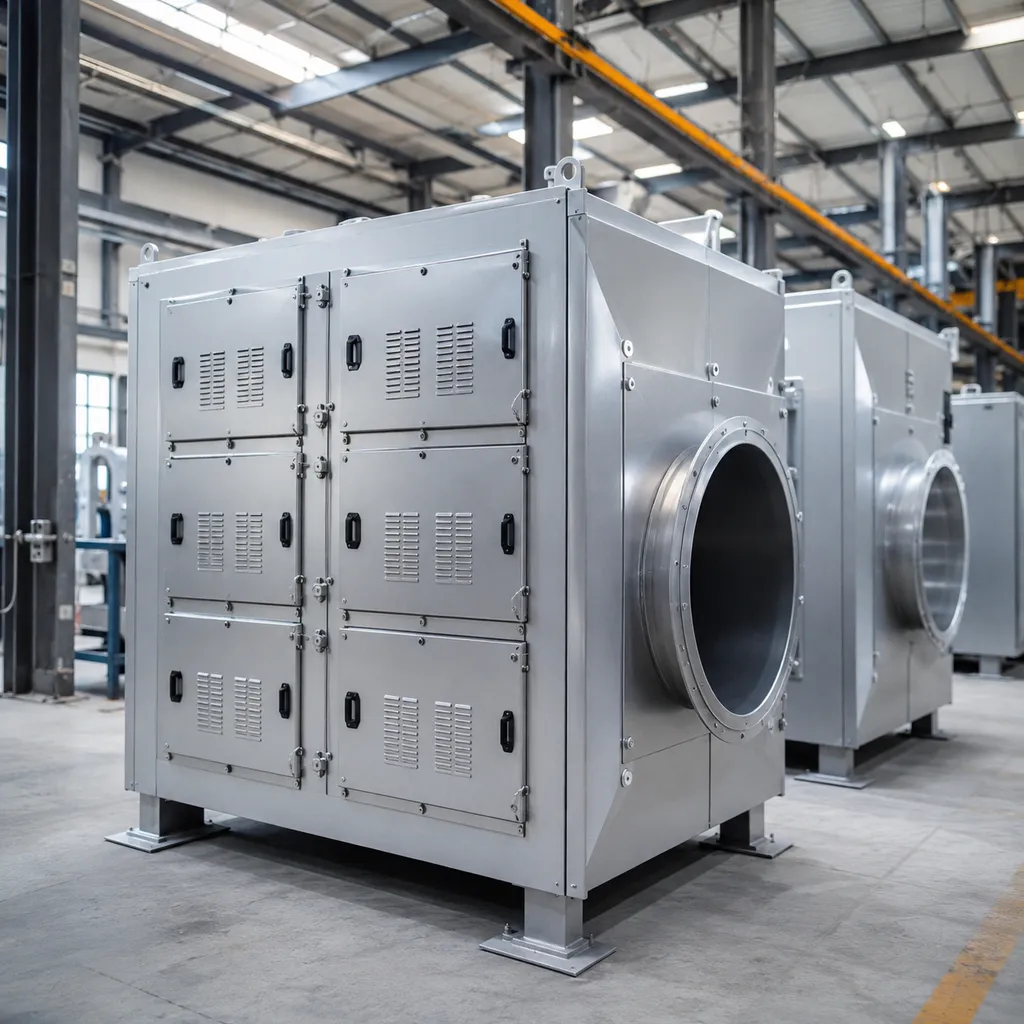
Finding the right UV photolysis exhaust gas purifier manufacturer makes the difference between seamless environmental compliance and continuous operational headaches. You need a production partner with proven manufacturing depth, solid engineering, and practical field experience.
Production Capacity and Quality Assurance Certifications
A top-tier UV photolysis exhaust gas purifier manufacturer must back up their products with certified manufacturing facilities and rigorous quality controls. Soto Machinery is a professional manufacturer of environmental protection equipment with a wealth of environmental protection equipment project cases in China, delivering durable, field-tested systems designed for high-demand industrial environments.
| Evaluation Metric | Target Standard | Operational Impact |
|---|---|---|
| Certifications | ISO9001, CE, Ex (Explosion-proof) | Guarantees factory quality and compliance |
| Testing Protocols | 100% pre-shipment UV intensity & seal tests | Eliminates field failures and installation delays |
| Manufacturing Scale | In-house laser cutting, welding, & assembly | Ensures fast lead times and consistent build quality |
Custom System Design and Engineering Capabilities
Industrial exhaust varies wildly by process. A generic equipment supplier often fails to meet strict local emission standards. We customize every purifier setup based on your exact operating conditions:
- Specific VOC Profiling: Adjusting UV wavelength combinations (185 nm + 254 nm) and ozone output based on specific pollutants.
- Airflow Optimization: Sizing reactor chambers to ensure optimal gas residence time without creating excessive static pressure drop.
- Material Selection: Offering SS304, SS316, or PP (polypropylene) casing depending on acid-base moisture levels in your waste gas.
After-Sales Support and Technical Services
Long-term system reliability relies on fast, dependable technical service. We provide full-lifecycle support to keep your exhaust treatment operating smoothly:
- Engineering Guidance: Remote or on-site commissioning to integrate purifiers cleanly into existing ductwork.
- Rapid Spare Parts: Direct access to OEM replacement UV lamps, digital ballasts, and photo-catalytic plates.
- Maintenance Programs: Clear servicing guidelines for lamp replacement intervals and routine quartz sleeve cleaning.
Frequently Asked Questions (FAQ)
How often do UV photolysis lamps need to be replaced?
Most high-efficiency UV lamps have an operational lifespan of 8,000 to 12,000 hours—roughly 12 to 18 months of continuous use. Even if the bulb stays illuminated past this point, the ultraviolet intensity degrades, which drops your overall purification efficiency. As an experienced UV photolysis exhaust gas purifier manufacturer, we integrate running-time counters into our control panels so your team knows exactly when to schedule lamp replacements.
Can UV photolysis handle high-concentration organic waste gas?
UV photolysis is engineered primarily for low- to medium-concentration organic exhaust streams and heavy industrial odors. For high-concentration VOC loads, standalone photolysis can hit a capacity ceiling. In those scenarios, we design multi-stage hybrid systems—pairing UV photolysis with upstream wet scrubbers or downstream activated carbon beds to safely handle spike loads and meet emission standards.
What routine maintenance is required for optimal purifier performance?
Daily operations are largely automated, but simple routine checks keep performance at peak levels:
Clean Quartz Tubes: Wipe dust and grease buildup off the protective lamp sleeves every 3 to 6 months.
Check Pre-Filters: Inspect primary dust/oil-mist filter pads monthly and replace them when dirty to maintain proper airflow.
Inspect Ballasts and Wiring: Conduct a basic electrical check on ballasts and power components during annual plant turnarounds.