Environmental protection equipment supplier

Activated Carbon Adsorption Unit
High-efficiency VOC and solvent removal through activated carbon adsorption. Trusted across chemical, pharmaceutical, and printing industries for reliable, low-cost emission control.
Air Volume1,000-50,000 m3/h
Carbon TypeHoneycomb / Granular
Iodine Value800-1000 mg/g
Removal Rate90-98%
Bed Depth300-500 mm
MaterialSS304 / Carbon Steel
98%
Max Removal Efficiency
1,200
m2/g Surface Area
3-5 yr
Carbon Service Life
500 Pa
Max Pressure Drop
Overview
Proven VOC Removal Technology
Activated carbon adsorption is one of the most reliable and widely used technologies for industrial VOC and solvent emission control.
Activated carbon has millions of microscopic pores per gram, creating a massive internal surface area of 800 to 1,200 square meters per gram. When polluted gas passes through the carbon bed, VOC molecules are physically trapped on this vast surface through a process called adsorption.
This technology effectively captures a wide range of organic compounds including benzene, toluene, xylene, alcohols, ketones, esters, and chlorinated solvents. It works exceptionally well on low-to-medium concentration streams where other methods like thermal oxidation may be too expensive or energy-intensive.
Our activated carbon adsorption units are engineered for industrial continuous-duty operation. With proper sizing and carbon selection, they deliver consistent emission control performance for years with minimal maintenance. When the carbon eventually saturates, it can be regenerated in-place with steam or hot air — or simply replaced with fresh media.
How It Works
The Adsorption-Regeneration Cycle
From gas intake to clean air output — understand each stage of the activated carbon treatment process.
1
Gas Intake & Pre-Treatment
Waste gas enters the unit through an inlet plenum. If the gas contains dust or particulate matter, a pre-filter removes these particles to prevent carbon bed clogging. For high-temperature gas, a cooling coil brings the temperature below 50°C — activated carbon adsorbs most effectively at ambient temperatures.
2
Adsorption Through Carbon Bed
Gas flows downward (or upward in some designs) through the activated carbon bed at a controlled velocity of 0.3-0.5 m/s. As VOC molecules contact the carbon surface, they adhere to the pore walls through van der Waals forces. The contact time of 1-3 seconds ensures thorough treatment. Clean air exits from the opposite side of the bed.
3
Saturation & Breakthrough
Over days or weeks of operation, the carbon gradually becomes saturated with VOC molecules. When the carbon reaches its adsorption capacity, VOCs begin to “break through” into the outlet air. At this point, the carbon bed needs regeneration or replacement. Our systems include outlet VOC sensors to detect breakthrough and trigger maintenance alerts.
4
Regeneration or Replacement
For regenerable systems, steam or hot air (120-150°C) is passed through the saturated carbon bed in reverse flow. The heat desorbs the VOC molecules, which are carried away with the steam to a condenser for solvent recovery. For non-regenerable systems, the saturated carbon is removed and replaced with fresh media. Regenerated carbon typically regains 80-90% of its original capacity.
Carbon Media
Three Types of Activated Carbon
Each carbon type is suited to different VOC concentrations, air volumes, and operational needs.
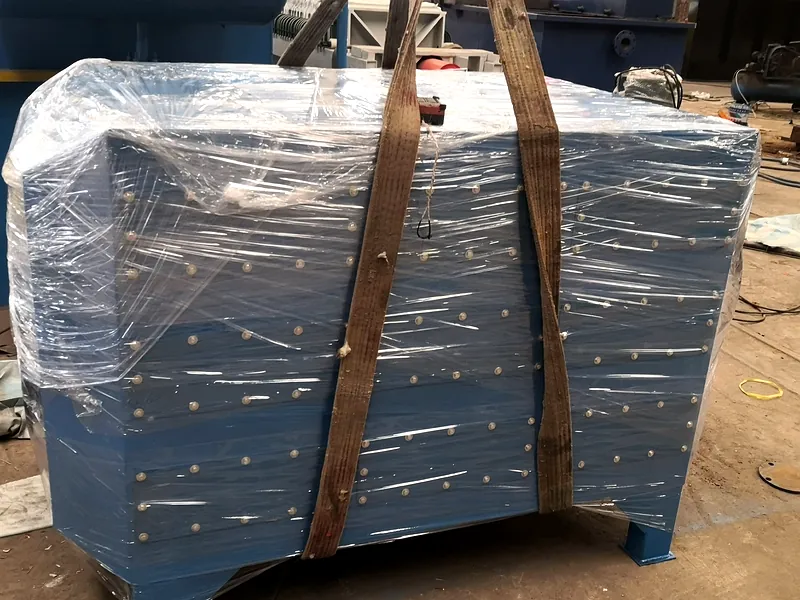
Honeycomb Carbon
Structured carbon blocks with honeycomb geometry. Low airflow resistance, ideal for high-volume, low-concentration gas streams. Commonly used in odor control and general ventilation.
Low pressure drop
Non-regenerable
Replace 6-12 months
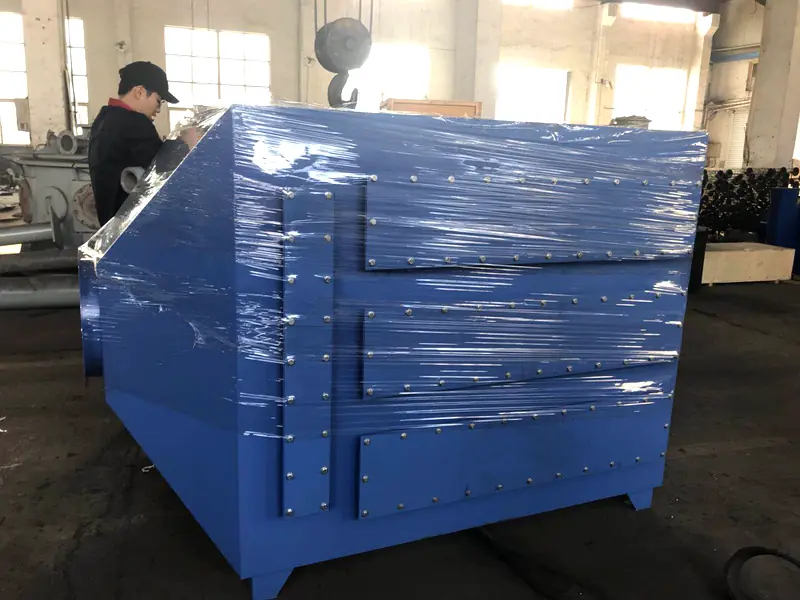
Granular Carbon (GAC)
Irregular-shaped carbon granules with high adsorption capacity. The most versatile option — handles medium-to-high VOC concentrations and can be regenerated with steam for extended service life.
High capacity
Steam regenerable
3-5 year lifespan
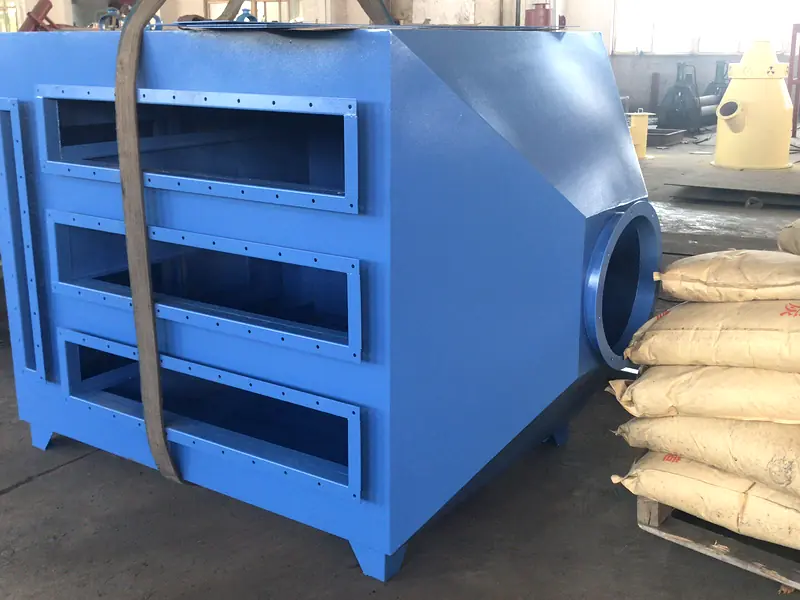
Columnar Carbon
Extruded cylindrical pellets with uniform size and high mechanical strength. Low dust generation, ideal for solvent recovery systems where carbon undergoes frequent regeneration cycles.
High strength
Low dust
Solvent recovery
Comparison
Carbon Type Comparison
Compare key properties to choose the right carbon media for your application.
| Property | Honeycomb | Granular (GAC) | Columnar |
|---|---|---|---|
| Pressure Drop | 200-300 Pa | 300-500 Pa | 300-450 Pa |
| Adsorption Capacity | Medium | High | High |
| Best For | Low concentration | Medium-high | Solvent recovery |
| Regenerable | No | Yes (steam) | Yes (steam) |
| Service Life | 6-12 months | 3-5 years | 3-5 years |
| Cost | Low | Medium | Higher |
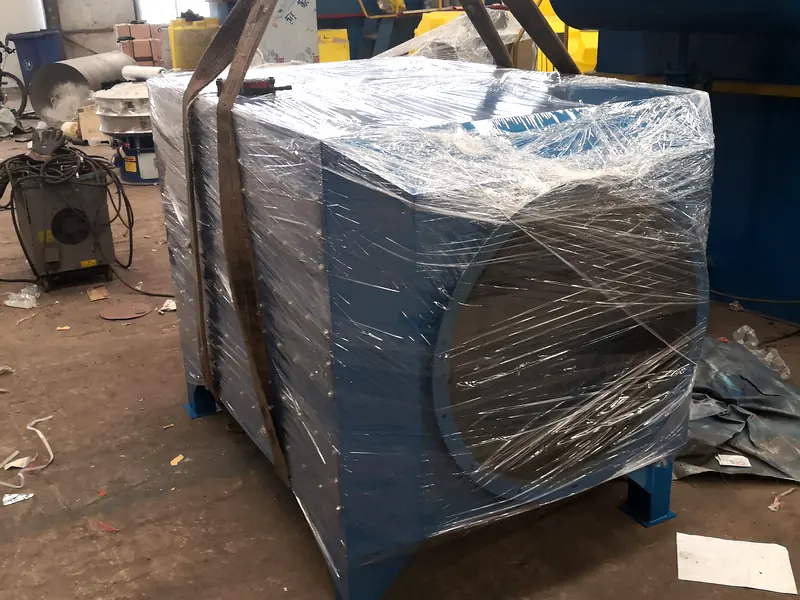
Gallery
Project Gallery
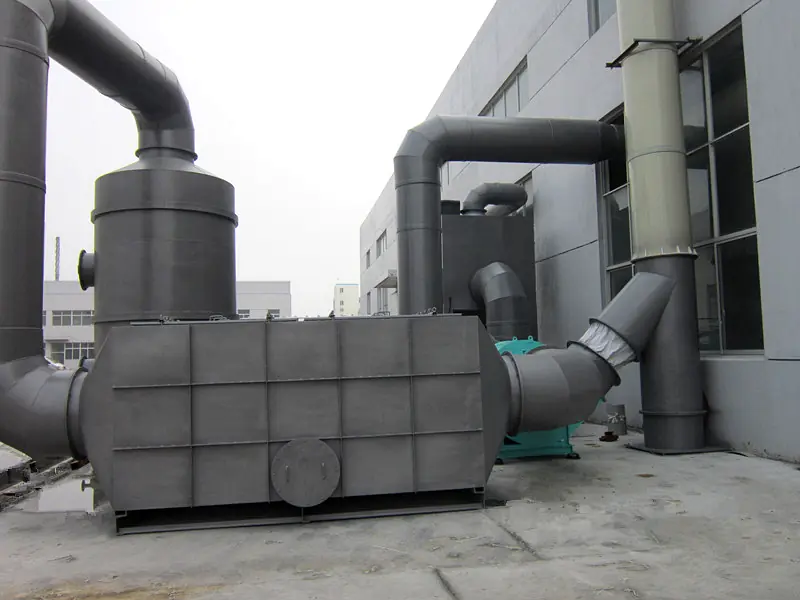
Real installation photos from our projects across various industries.
What Is
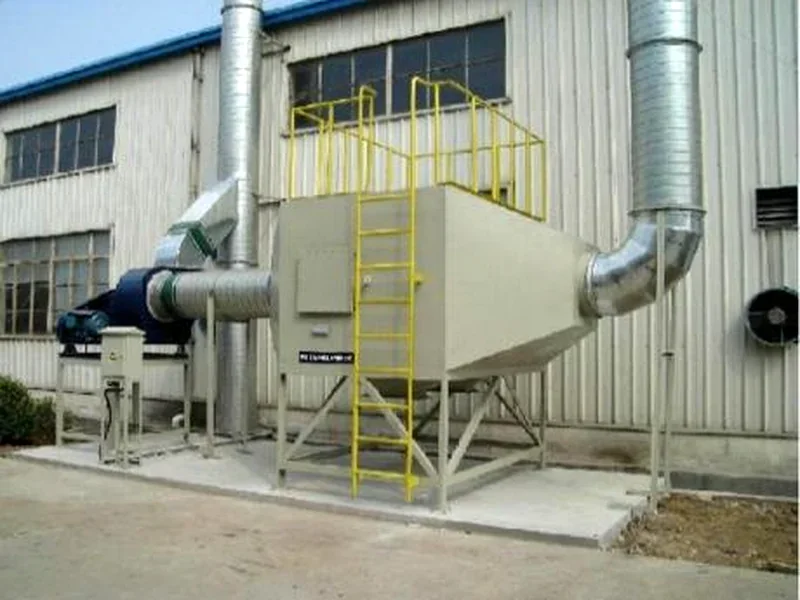
What Is an Activated Carbon Adsorption Unit?
An activated carbon adsorption unit is an industrial waste gas treatment device that removes VOCs, solvents, and odorous compounds by passing polluted air through beds of activated carbon. The highly porous structure of activated carbon — with internal surface areas reaching 800-1,200 m2/g — traps organic molecules through physical adsorption.
When gas flows through the carbon bed, VOC molecules adhere to the carbon surface while clean air passes through. Over time, the carbon becomes saturated and must be replaced or regenerated. This technology is the gold standard for high-efficiency VOC removal and solvent recovery in industries ranging from chemical manufacturing to pharmaceutical production.
Activated carbon adsorption is often used as a polishing stage after UV photolysis or wet scrubbing, or as a standalone solution for low-to-medium concentration VOC streams. Its simplicity, reliability, and low operating cost make it one of the most popular waste gas treatment technologies worldwide.
Key Benefits
Why Choose Activated Carbon Adsorption
Four advantages that make activated carbon a top choice for VOC and solvent removal.
01
High Removal Efficiency
Achieves 90-98% removal efficiency for most VOCs and solvents. Effectively captures low-concentration pollutants that other methods miss. Proven performance on benzene, toluene, xylene, alcohols, ketones, and esters.
02
Solvent Recovery Capable
With steam regeneration systems, captured solvents can be recovered and reused — turning waste into a valuable resource. For high-value solvents, the recovery payback period can be as short as 1-2 years.
03
Low Energy Consumption
No power-hungry components — just a fan to move air through the carbon bed. One of the lowest operating costs among VOC treatment technologies. Typical power consumption is only 1-5 kW for the entire system.
04
Reliable & Simple Operation
Simple, proven technology with no complex electronics or high-temperature components. Easy to install, operate, and maintain — ideal for continuous 24/7 industrial use. Minimal training required for operators.
Maintenance
Carbon Maintenance & Replacement Schedule
Different carbon types and system configurations have different maintenance requirements.
Honeycomb Carbon Replacement
Every 6-12 monthsHoneycomb carbon is non-regenerable. When saturated, remove the old carbon blocks and install fresh ones. The process takes 1-2 hours per unit. Replacement cost is low compared to other maintenance tasks.
Granular Carbon Regeneration
Steam regeneration every 3-6 monthsGranular carbon can be regenerated in-place using steam desorption. Pass 120-150°C steam through the bed in reverse flow for 2-4 hours. The carbon regains 80-90% capacity. After 20-30 regeneration cycles, replace with fresh media.
Full Carbon Replacement
Every 3-5 yearsEven with regular regeneration, activated carbon eventually degrades. After 3-5 years of service, the carbon loses its adsorption capacity and must be replaced entirely. We supply replacement carbon in 25kg bags or bulk.
System Inspection
Monthly checkInspect the pressure gauges, outlet VOC sensors, and fan operation monthly. Check for unusual pressure drops that may indicate carbon bed clogging or channeling. Clean or replace pre-filters as needed.
Applications
Industries We Serve
Activated carbon adsorption is used across a wide range of industrial sectors.
Printing
Ink and solvent fume control
Coating
Spray booth VOC removal
Chemical
Process emission control
Pharmaceutical
Solvent vapor capture
Electronics
Cleanroom exhaust
Petrochemical
Refinery gas treatment
Paint Spray
Booth exhaust treatment
Solvent Recovery
Value recovery systems
Specifications
Technical Specifications
Detailed technical parameters for our activated carbon adsorption systems.
| Parameter | Honeycomb Type | Granular Type | Solvent Recovery |
|---|---|---|---|
| Model | AC-H-1000 to AC-H-50000 | AC-G-1000 to AC-G-50000 | AC-R-1000 to AC-R-50000 |
| Air Volume | 1,000-50,000 m3/h | 1,000-50,000 m3/h | 1,000-30,000 m3/h |
| Carbon Volume | 0.1-3 m3 | 0.2-5 m3 | 0.5-8 m3 (dual bed) |
| Filter Velocity | 0.3-0.5 m/s | 0.3-0.5 m/s | 0.3-0.5 m/s |
| Carbon Type | Honeycomb block | Granular (GAC) | Columnar |
| Iodine Value | 800 | 900-1000 | 950-1000 |
| Pressure Drop | 200-300 Pa | 300-500 Pa | 300-500 Pa |
| Bed Depth | 300-400 mm | 400-500 mm | 400-500 mm |
| Material | SS304 / Carbon steel | SS304 / Carbon steel | SS304 / SS316 |
| Regeneration | No | Steam | Steam (dual bed) |
Models
Three System Configurations
From simple single-bed units to dual-bed solvent recovery systems.
Honeycomb
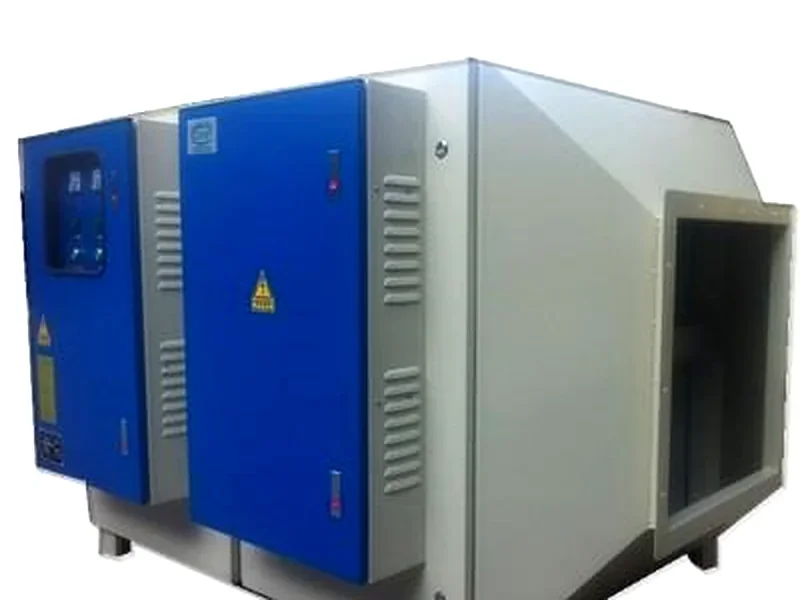
Honeycomb Carbon Adsorber
Uses honeycomb-structured activated carbon blocks. Low resistance, high airflow capacity, and uniform contact with pollutants.
- Low pressure drop (200-300 Pa)
- High air volume capacity
- Non-regenerable, replaceable
- For low VOC concentrations
- Ideal for odor control
Granular
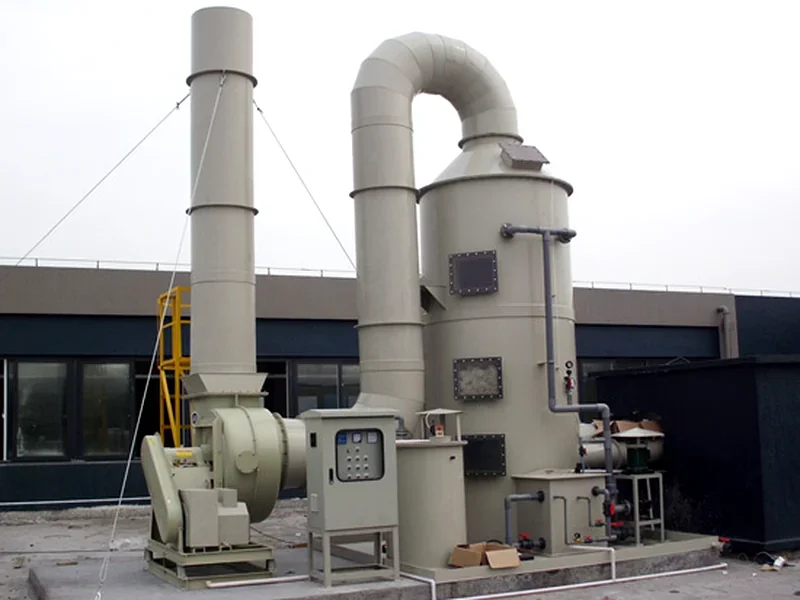
Granular Carbon Adsorber
Filled with granular activated carbon (GAC). Higher adsorption capacity and longer service life than honeycomb carbon.
- Moderate pressure drop (300-500 Pa)
- Higher adsorption capacity
- Can be steam-regenerated
- For medium VOC concentrations
- Widely used in industry
Recovery
Solvent Recovery System
Dual-bed system with steam regeneration. Adsorbs VOCs in one bed while regenerating the other — for continuous operation with solvent recovery.
- Two alternating beds
- Steam desorption regeneration
- Solvent condensation & recovery
- For high VOC concentrations
- Payback from recovered solvent
Custom Solutions
Custom Design & OEM Services
Every facility has different VOC profiles and space constraints. We custom-design activated carbon adsorption systems to match your exact requirements — from carbon type selection to full solvent recovery systems with condensers and separators.
Honeycomb / granular / columnar carbon
Single-bed or dual-bed design
Steam regeneration systems
Solvent recovery condensers
SS304 / SS316 / CS housing
OEM branding available
FAQ
Frequently Asked Questions
Common questions about activated carbon adsorption systems.
How often does activated carbon need to be replaced?
Carbon replacement frequency depends on VOC concentration and air volume. Typically, honeycomb carbon lasts 6-12 months, and granular carbon 6-12 months as well. With steam regeneration systems, the same carbon can be reused for 3-5 years before needing replacement. We calculate the exact service life based on your conditions.
What is the difference between honeycomb and granular carbon?
Honeycomb carbon has lower pressure drop and is suitable for high air volumes with low VOC concentrations. Granular carbon has higher adsorption capacity per unit volume and can be regenerated with steam, making it better for medium-to-high concentrations and solvent recovery applications.
Can activated carbon handle high-humidity gas?
High humidity can reduce adsorption efficiency because water vapor competes for adsorption sites. For high-humidity applications, we recommend adding a dehumidification pre-treatment or using hydrophobic activated carbon. We’ll assess your specific conditions and recommend the best approach.
How does solvent recovery work and is it profitable?
In a solvent recovery system, VOC-laden carbon is regenerated with steam, which desorbs the solvent. The solvent-steam mixture is condensed and the solvent is separated from water. For high-concentration, high-value solvents, the recovered solvent value can pay back the system investment within 1-2 years.
Get a Quote
WhatsApp
+86 18653221918
Request Your Activated Carbon System Quote
Tell us your air volume, VOC type, and concentration. Our engineers will recommend the right carbon type, bed size, and configuration.
Get Your Free Quote
Fill in the form and we’ll respond within 24 hours.
Need an Activated Carbon System?
Send us your gas volume and VOC type. We’ll recommend the right carbon type and configuration.