Environmental protection equipment supplier

Industrial Baghouse Dust Collector
Pulse-jet fabric filtration system for industrial particulate matter control. Captures 99%+ of dust particles down to 0.1 microns. Trusted across cement, mining, steel, and power generation industries for reliable, continuous-duty dust collection.
99%+
Filtration Efficiency
0.1
Micron Capture
500+
Filter Bags Max
30
mg/Nm3 Emission
250°C
Max Gas Temp (PTFE)
1000
m2 Filter Area
4
Filter Bag Materials
3
Cleaning Methods
24/7
Continuous Operation
24h
Quote Response
Overview
Fabric Filtration Technology for Industrial Dust Control
Baghouse collectors are the most widely used dry dust collection technology in heavy industry.
A baghouse dust collector filters particulate matter from industrial exhaust gas by passing it through thousands of woven or felted fabric filter bags. As dust-laden gas enters the housing, it flows from the outside of the bags inward — dust particles are captured on the outer bag surface while clean air passes through the fabric and exits.
Over time, the accumulated dust layer (known as a dust cake) actually improves filtration efficiency by acting as a secondary filter medium. However, as the cake thickens, pressure drop increases and airflow decreases. To maintain performance, a pulse-jet cleaning system periodically blasts compressed air into each bag, fracturing the dust cake and dropping it into the hopper below.
This self-cleaning mechanism allows baghouse collectors to operate 24/7 without shutdown for filter cleaning. With the right filter media selection, baghouses handle temperatures from ambient up to 250°C and capture virtually any dust type — from fine pharmaceutical powders to heavy mineral dust.
Compressed Air Header
Pulse-jet nozzles above each bag
↓
Clean Air Plenum
Filtered air exits through top
↑
Filter Bags (cages inside)
Dust collects on outer surface
↓
Dirty Gas Inlet
Dust-laden gas enters housing
↓
Dust Hopper
Collected dust discharged via rotary valve
Dust Guide
Dust Type Selection Guide
Common industrial dust types and the recommended baghouse configuration for each.
| Dust Type | Typical Source | Particle Size | Recommended Bag | Air-to-Cloth Ratio |
|---|---|---|---|---|
| Cement dust | Kiln, mill, conveyor | 1-50 um | PPS / PTFE | 0.8-1.0 m/min |
| Coal dust | Mining, power plant | 1-100 um | PPS / Nomex | 0.8-1.0 m/min |
| Steel / metal dust | Furnace, foundry | 1-200 um | Nomex | 0.8-1.0 m/min |
| Wood dust | Sanding, cutting | 10-500 um | Polyester | 1.0-1.2 m/min |
| Flour / food dust | Milling, mixing | 1-100 um | Polyester (food-grade) | 1.0-1.2 m/min |
| Chemical powder | Drying, packaging | 0.5-50 um | Polyester / PPS | 0.8-1.0 m/min |
| Boiler fly ash | Power plant boiler | 1-100 um | PPS / PTFE | 0.8-1.0 m/min |
Filter Media
Filter Bag Material Selection
Choose the right filter bag material based on your gas temperature, dust chemistry, and operating conditions.
up to 130°C
Polyester
The most economical and widely used filter media. Good chemical resistance and mechanical strength for ambient temperature applications.
Low cost
General use
1-2 yr life
up to 160°C
PPS (Ryton)
Excellent chemical and acid resistance for moderately high temperatures. Ideal for boiler exhaust and sulfur-containing gas streams.
Acid resistant
Boiler gas
2-3 yr life
up to 200°C
Nomex (Aramid)
High-temperature aramid fiber with excellent abrasion resistance. Well-suited for metallurgy and foundry dust applications.
High temp
Abrasion resistant
3-5 yr life
up to 250°C
PTFE (Teflon)
Premium filter media for extreme temperatures and highly corrosive environments. Non-stick surface resists caking and blinding.
Max temp
Corrosion proof
3-5 yr life
Comparison
Filter Media Comparison Guide
Detailed technical comparison of all four filter bag materials.
| Property | Polyester | PPS (Ryton) | Nomex | PTFE |
|---|---|---|---|---|
| Max Temperature | 130°C | 160°C | 200°C | 250°C |
| Acid Resistance | Good | Excellent | Fair | Excellent |
| Alkali Resistance | Good | Excellent | Excellent | Excellent |
| Abrasion Resistance | Very Good | Good | Excellent | Good |
| Hydrolysis Resistance | Fair | Excellent | Good | Excellent |
| Relative Cost | Low | Medium | High | Highest |
| Typical Lifespan | 1-2 years | 2-3 years | 3-5 years | 3-5 years |
| Best Application | General dust | Boiler/SO2 | Foundry/metal | Extreme conditions |
Applications
Industries We Serve
Baghouse dust collectors are deployed across a wide range of industrial sectors.
Cement
Kiln & mill dust collection
Mining
Crusher & conveyor dust
Steel & Metal
Furnace & foundry dust
Power Plant
Boiler flue gas filtration
Wood Working
Sawdust & wood flour
Chemical
Process dust & powder
Pharmaceutical
Fine powder recovery
Food Processing
Flour & ingredient dust
Gallery
Project Gallery
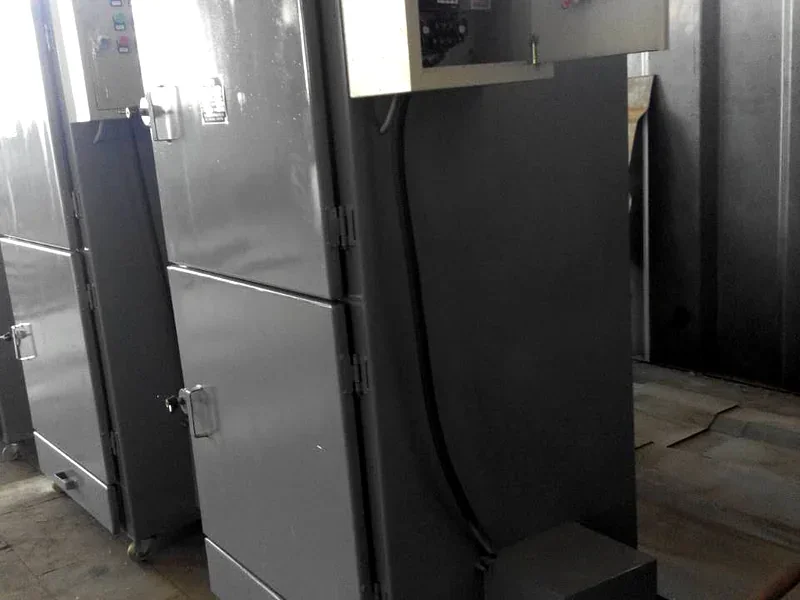
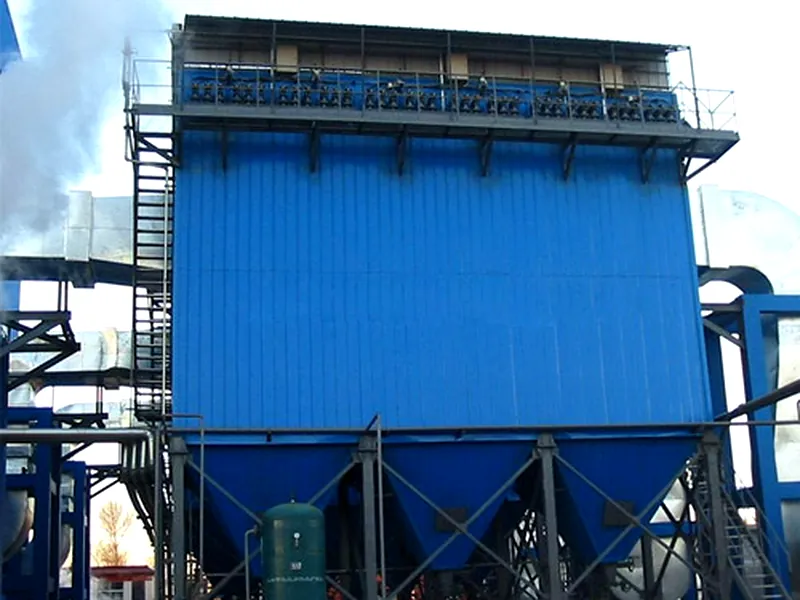
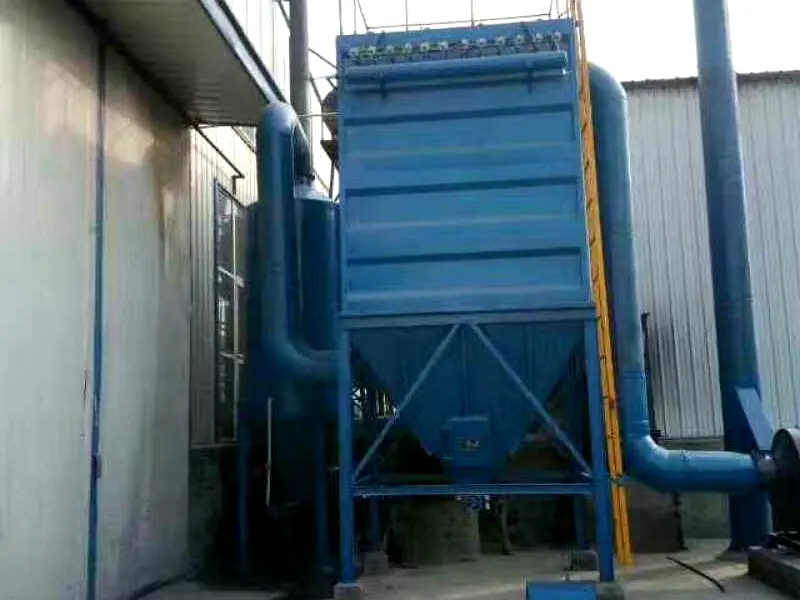
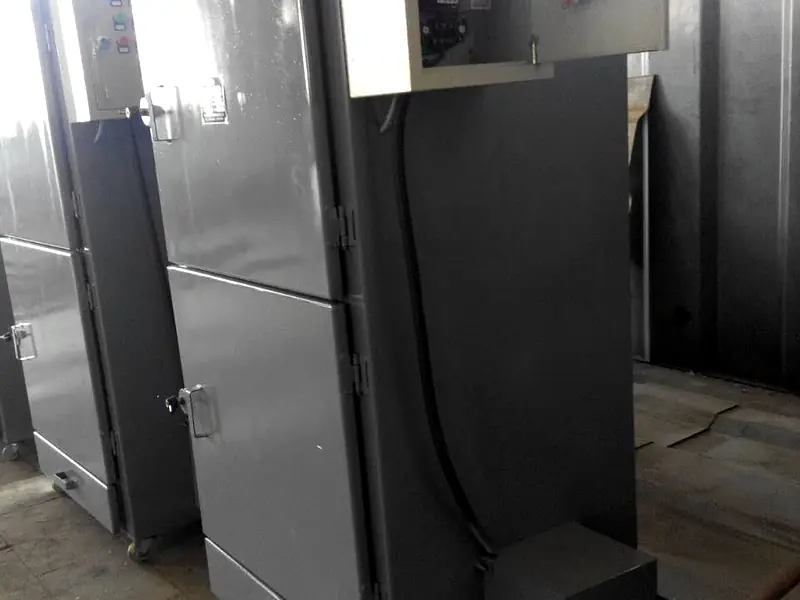
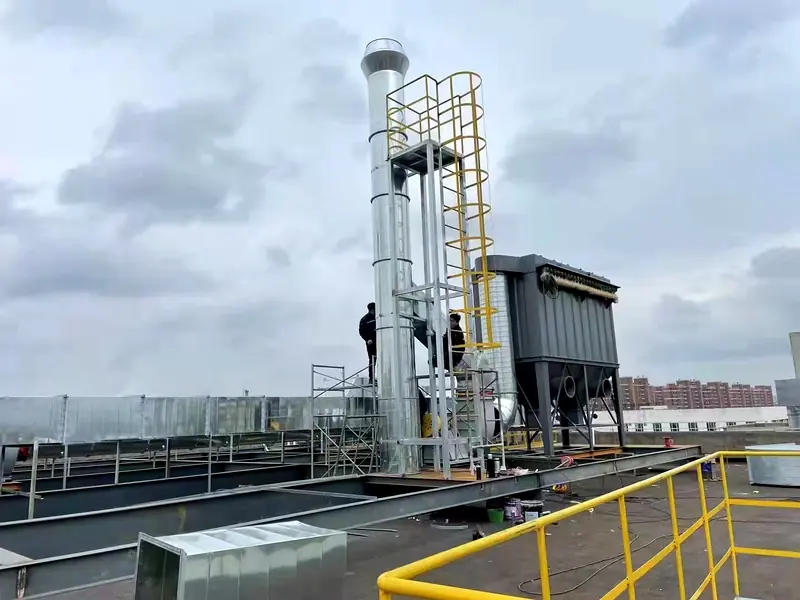
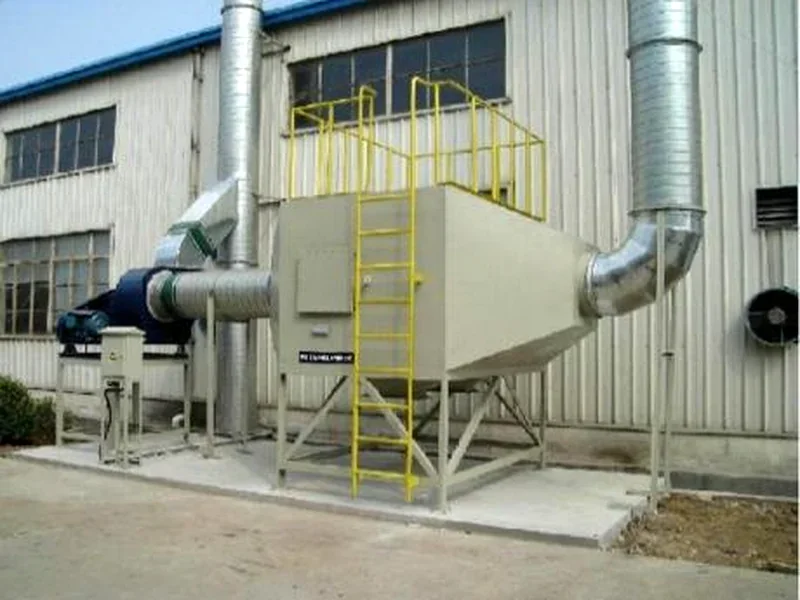
Real baghouse dust collector installation photos from our industrial projects.
What Is
What Is a Baghouse Dust Collector?
A baghouse dust collector is a dry filtration system that removes particulate matter from industrial exhaust gas using fabric filter bags. Dust-laden gas passes through thousands of filter bags, which capture dust particles on their outer surface while allowing clean air to pass through the fabric weave.
When the accumulated dust layer — called a dust cake — builds up and increases pressure drop, a pulse-jet cleaning system blasts compressed air (0.4-0.6 MPa) into each bag in rapid succession. This brief, high-pressure pulse flexes the bag and fractures the dust cake, dropping it into the hopper below for disposal via rotary valve or screw conveyor.
Baghouse collectors achieve 99%+ collection efficiency and capture particles as small as 0.1 microns. They are the gold standard for industrial dust control across cement production, mining, steel manufacturing, power generation, and many other heavy industries.
Key Benefits
Why Choose a Baghouse Dust Collector
Four advantages that make baghouses the most trusted dust collection technology.
01
99%+ Collection Efficiency
Captures 99% or more of dust particles, including fine particulate matter (PM2.5 and PM10) down to 0.1 microns. Meets the strictest industrial emission standards worldwide, including EU BAT and US EPA regulations.
02
Continuous 24/7 Operation
Pulse-jet cleaning regenerates filter bags online without shutting down production. The system runs continuously with no downtime for filter cleaning — ideal for cement plants and power stations.
03
Dry Dust Collection
Collects dust in dry form, making disposal, recycling, or resale of recovered material much simpler than wet methods. No wastewater treatment or sludge handling required.
04
Wide Application Range
Handles virtually any dust type — from fine pharmaceutical powder to heavy mineral dust. Works across temperatures from ambient to 250°C with the appropriate filter media selection.
Models
Three Baghouse Configurations
From compact workshop units to large-scale industrial systems.
Compact
Small Pulse-Jet Baghouse
Compact units for small to medium dust loads. Ideal for individual machines or small production lines.
- Air volume: 2,000-10,000 m3/h
- 24-64 filter bags
- Top-entry design
- Integrated fan & control
- For small workshops
Standard
Medium Pulse-Jet Baghouse
Standard capacity baghouses for typical industrial dust collection. The workhorse of manufacturing and processing facilities.
- Air volume: 10,000-50,000 m3/h
- 64-200 filter bags
- Side or top access
- Modular design
- For production lines
Industrial
Large Industrial Baghouse
Heavy-duty baghouses for large-scale industrial applications. Custom engineered for high dust loads and extreme conditions.
- Air volume: 50,000-100,000+ m3/h
- 200-500+ filter bags
- Multiple compartments
- Heavy-gauge construction
- For power plants, mines
Maintenance
Baghouse Maintenance & Service Schedule
Proper maintenance extends filter bag life and ensures consistent emission performance.
Daily Check
Every dayMonitor differential pressure across the filter bags. Check that the pulse-jet cleaning system is cycling correctly. Inspect the dust discharge system (rotary valve or screw conveyor) for smooth operation.
Spray Nozzle & Solenoid Inspection
MonthlyInspect pulse-jet solenoid valves for proper operation. Check compressed air pressure (0.4-0.7 MPa). Verify that all pulse-jet nozzles are clear and delivering proper air flow to each bag row.
Filter Bag Inspection
Every 3-6 monthsOpen the clean air plenum and visually inspect bag tops for wear, hardening, or dust breakthrough. Check bag cages for corrosion or deformation. Replace any damaged bags promptly to prevent emission spikes.
Full Bag Replacement
Every 1-5 yearsDepending on dust type and filter media, bags need full replacement. Polyester: 1-2 years. PPS: 2-3 years. Nomex/PTFE: 3-5 years. Schedule replacement before breakthrough occurs to maintain continuous compliance.
Specifications
Technical Specifications
Detailed technical parameters for our baghouse dust collector systems.
| Parameter | Compact (BC-C) | Standard (BC-S) | Industrial (BC-I) |
|---|---|---|---|
| Model | BC-C-24 to BC-C-64 | BC-S-64 to BC-S-200 | BC-I-200 to BC-I-500+ |
| Air Volume | 2,000-10,000 m3/h | 10,000-50,000 m3/h | 50,000-100,000+ m3/h |
| Filter Bags | 24-64 | 64-200 | 200-500+ |
| Filtration Area | 20-130 m2 | 130-400 m2 | 400-1000+ m2 |
| Bag Size | 120×3000 mm | 130×5000 mm | 160×8000 mm |
| Air-to-Cloth Ratio | 0.8-1.2 m/min | 0.8-1.2 m/min | 0.8-1.0 m/min |
| Emission | <30 mg/Nm3 | <30 mg/Nm3 | <20 mg/Nm3 |
| Compressed Air | 0.4-0.6 MPa | 0.4-0.6 MPa | 0.5-0.7 MPa |
| Housing Material | Carbon steel | CS / SS304 | SS304 / SS316 |
| Dust Discharge | Manual / rotary valve | Rotary valve | Rotary valve + screw |
Custom Solutions
Custom Design & OEM Services
Every baghouse is custom-engineered for your specific dust type, gas temperature, and flow rate. We select the right filter media, housing material, and cleaning system for your application.
Polyester / PPS / Nomex / PTFE bags
Carbon steel / SS304 / SS316 housing
Rotary valve / screw discharge
Explosion-proof designs (ATEX)
PLC control with differential pressure
OEM branding available
Knowledge Base
Latest Insights from Our Blog
Learn more about industrial dust collection and waste gas treatment from our technical articles.
Sep 24, 2026
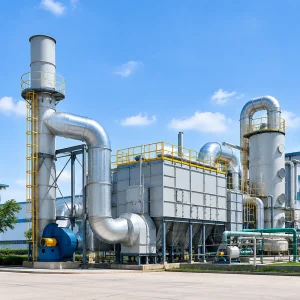
Waste Gas Treatment Industrial Air Pollution Control Guide
Explore what is waste gas treatment including technologies equipment applications compliance and future trends in industrial air pollution control
Read More ›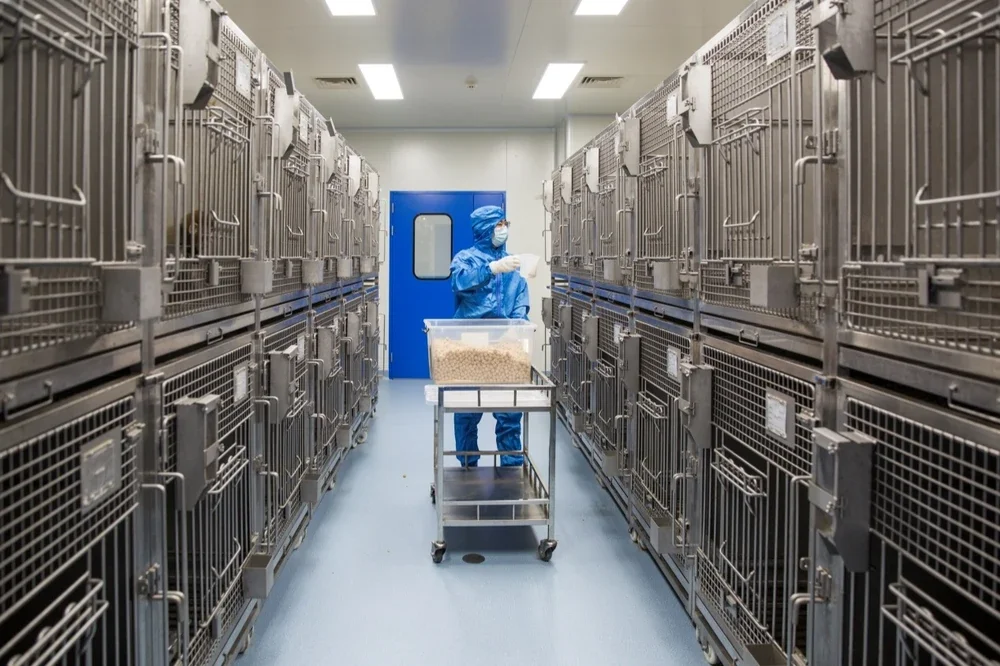
Sep 22, 2026
How does the integrated spoiler-spray deodorization system achieve efficient odor removal?
Combining physical and chemical processes, the integrated turbulent-flow spray deodorization system delivers 24/7 odor and waste-gas purification—98% purification rate and ≥99% desulfurization—for laboratory animal facilities, pharmaceutical plants, and livestock farms.Additionally, the system features low airflow resistance and controllable energy consumption, making it suitable for treating high-concentration waste gases. Technical Principles and Core Structure: This equipment […]
Read More ›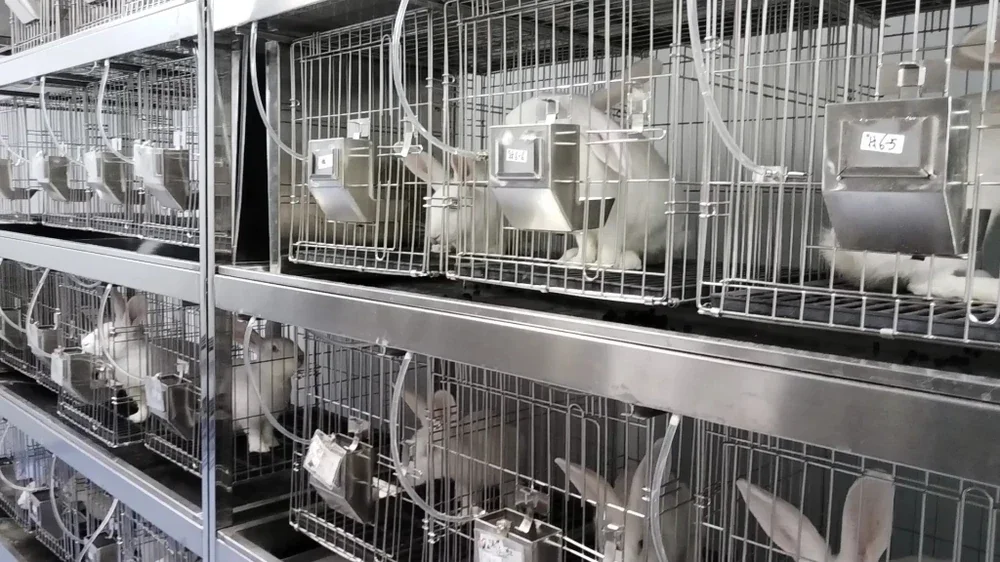
Sep 21, 2026
Factory for Animal Facility Odor Control Equipment: An Inside Look at the Equipment and Its Advantages
In the field of animal husbandry, the issue of odors in animal housing has long been a major challenge for breeders. Facilities that manufacture odor-control equipment for these spaces act much like mysterious, magical factories, dedicated to producing systems that effectively solve this problem. Today, let us step inside one of these factories and unveil […]
Read More ›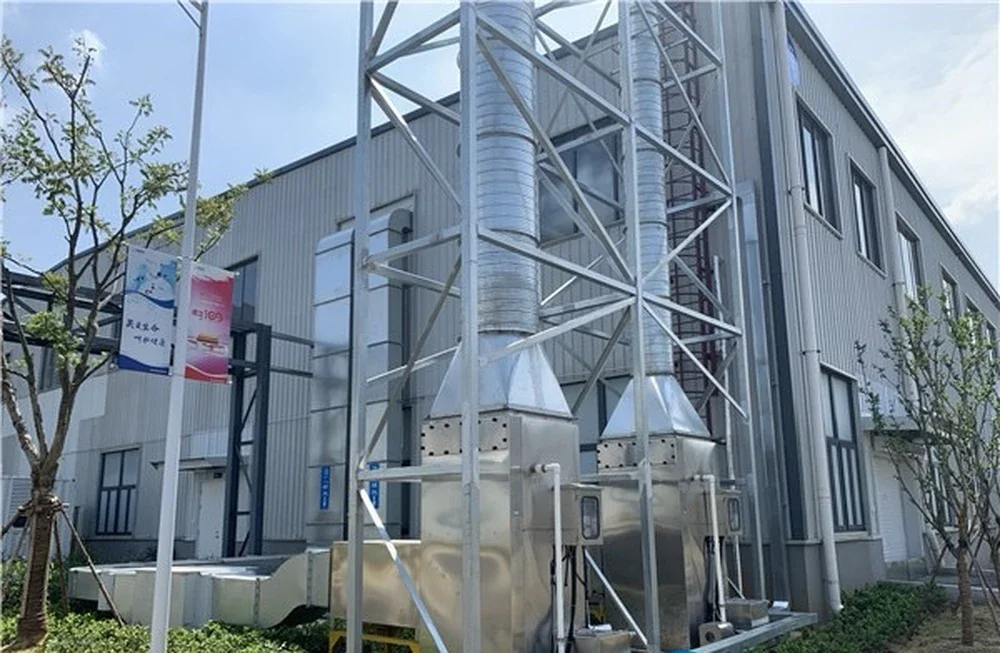
Sep 16, 2026
Shuotu Machinery Opens a New Chapter in Odor Control for Laboratory Animal Facilities
In the critical spaces of biomedical research, the quality of every cubic centimeter of air impacts the credibility of scientific discoveries. The complex odors characteristic of laboratory animal facilities—a mixture of ammonia, hydrogen sulfide, and volatile organic compounds—pose a dual challenge: not only do they cause sensory discomfort, but they also compromise experimental standardization and […]
Read More ›
FAQ
Frequently Asked Questions
Common questions about baghouse dust collector systems for industrial dust control.
How long do filter bags last?
Filter bag lifespan depends on dust type, temperature, and operating conditions. Polyester bags typically last 1-2 years in normal service. PPS bags last 2-3 years at higher temperatures. Nomex and PTFE bags can last 3-5 years in high-temperature applications. We’ll recommend the best bag material for your specific conditions.
How do I know what size baghouse I need?
Sizing is based on air volume (m3/h) and filtration velocity (air-to-cloth ratio). The air-to-cloth ratio depends on dust type — typically 0.8-1.2 m/min for most applications. Tell us your gas volume and dust type, and we’ll calculate the required filtration area and number of bags.
What bag material should I use for high-temperature gas?
For temperatures up to 130°C, polyester is the standard and most economical choice. Up to 160°C, use PPS. For 200°C, Nomex (aramid) is recommended. For temperatures up to 250°C, PTFE (Teflon) bags are the best choice, though more expensive. We always verify your gas temperature before recommending.
Can baghouse collectors handle explosive dust?
Yes, but the system must be designed with explosion protection. We offer explosion-proof baghouses with explosion vent panels, spark detection, and other safety features as required by your dust type and local regulations. Always inform us if your dust is potentially explosive.
Get a Quote
WhatsApp
+86 18653221918
Request Your Baghouse Dust Collector Quote
Tell us your air volume, dust type, and gas temperature. We’ll size the right baghouse with the best filter media for your application.
Get Your Free Quote
Fill in the form and we’ll respond within 24 hours.
Need a Baghouse Dust Collector?
Send us your dust type, gas volume, and temperature. We’ll size the right baghouse for your application.