Environmental protection equipment supplier

Case Study / Waste Gas Treatment
Beijing Badachu Plastic Surgery Hospital Animal Facility Deodorization
Hospital-grade exhaust air deodorization solution. Specifically, it combines UV photocatalytic oxidation and cyclonic spray technology for the Experimental Animal Center at Beijing Badachu Plastic Surgery Hospital.
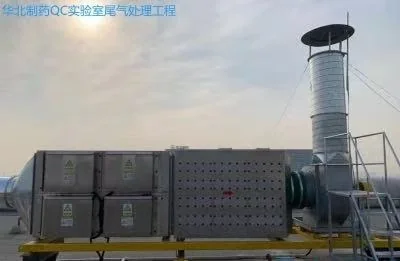
Project Overview
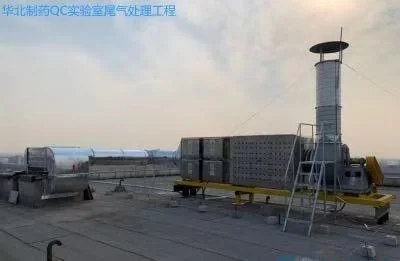
First, Beijing Badachu Plastic Surgery Hospital ranks as a renowned medical institution specializing in plastic and reconstructive surgery. Additionally, its Experimental Animal Center plays a crucial role in supporting the hospital’s research activities. In fact, it houses various laboratory animals used in preclinical studies and surgical training. Therefore, maintaining the highest standards of air quality matters greatly in a hospital environment. Specifically, this protects both the well-being of animals and the comfort of staff, patients, and visitors.
Soto Machinery won the contract to design and implement a specialized exhaust air treatment system for the hospital’s experimental animal facility. Moreover, the project required a solution that effectively eliminates odors. In addition, it needed to meet stringent healthcare facility requirements for reliability, hygiene, and noise control.
The Challenge
Key Challenges Identified
- Hospital Environment Sensitivity: First, located within a working hospital campus, the animal facility exhaust needs complete deodorization. Specifically, this prevents any impact on patient areas, operating rooms, and public spaces. In fact, zero odor perceptibility at the hospital boundary formed a critical requirement.
- Complex Odor Profile: Additionally, the facility exhaust contains ammonia (NH3), hydrogen sulfide (H2S), mercaptans, indole, skatole, volatile fatty acids, and other organic compounds. Specifically, these come from animal metabolism, waste decomposition, and bedding materials.
- Variable Loading Conditions: Moreover, animal population and activity levels vary throughout the day and across different research cycles. Consequently, this creates fluctuating exhaust concentrations that the treatment system must handle effectively.
- Strict Regulatory Compliance: Furthermore, the system must meet GB14554-93 odor emission standards. In addition, it needs to satisfy hospital-specific indoor air quality requirements and healthcare facility environmental regulations.
- Quiet Operation: Also, the equipment must operate with low noise levels. Therefore, it avoids disturbing patients and staff in adjacent hospital areas.
- Aesthetic Integration: Finally, the system installation required careful planning. Specifically, it needed to integrate with the hospital’s existing architecture and HVAC infrastructure.
Our engineering team conducted detailed site surveys. Additionally, they collaborated closely with the hospital’s facilities management and biomedical engineering departments. Consequently, they understood the specific operational constraints. Furthermore, the solution required minimal disruption to hospital operations during installation. Ultimately, it needed to provide reliable, low-maintenance performance for years to come.
Our Solution
Soto Machinery delivered a customized two-stage treatment system. Specifically, it features cyclonic spray deodorization followed by UV photocatalytic oxidation. Moreover, we selected this proven combination for its effectiveness against the broad spectrum of odorous compounds in animal facility exhaust. In addition, it meets the hospital’s requirements for clean, safe operation.
1
Exhaust Air Collection
First, specially designed ductwork collects exhaust air from multiple animal rooms, procedure areas, and cage washing facilities. Additionally, the system maintains negative pressure in all animal areas. Consequently, this prevents odor migration into hospital corridors and patient zones.
2
Cyclonic Spray Deodorization (Stage 1)
Next, the exhaust passes through a cyclonic spray tower. There, it receives treatment with a hospital-grade plant-based deodorizing solution. Specifically, this stage removes 85-90% of ammonia and hydrogen sulfide. Additionally, it captures bio-aerosols and particulates. Furthermore, it humidifies the air for optimal downstream UV treatment.
3
UV Photocatalytic Oxidation (Stage 2)
Then, the pre-treated air flows through a UV photolysis chamber. This chamber features high-output UV-C lamps and nano-titanium dioxide photocatalyst modules. Consequently, advanced oxidation processes break down residual organic odor compounds. In addition, they sterilize airborne microorganisms and ensure complete odor elimination.
4
Quiet Discharge & Monitoring
Finally, a sound-attenuated centrifugal fan discharges treated air through a rooftop stack. Additionally, the system includes continuous monitoring of odor concentration, pressure differentials, and equipment status. Furthermore, it features alarms for any performance deviations.
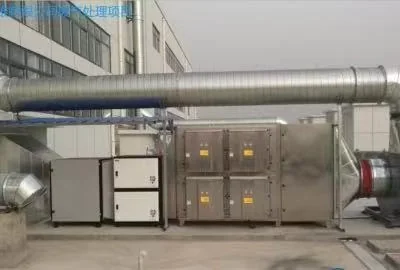
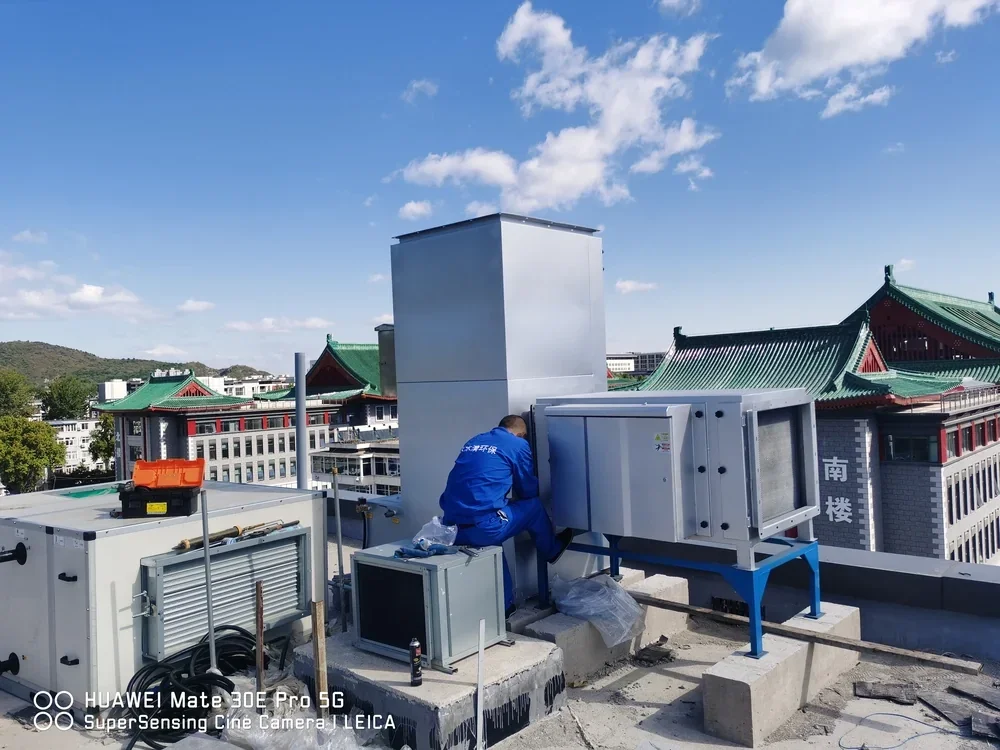
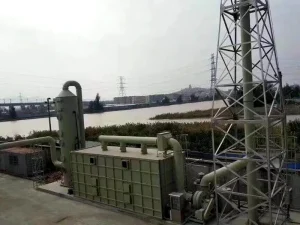
Exhaust air purifier for hospital animal facility waste gas treatment
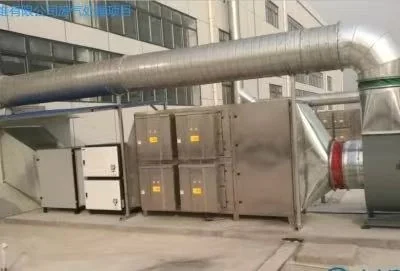
UV treatment unit for hospital animal laboratory exhaust purification
Hospital-Specific Design Features
Specifically, our engineers built the system with several features for hospital applications. First, all equipment housings use medical-grade stainless steel for easy cleaning and corrosion resistance. Additionally, the spray deodorization system uses a natural plant extract deodorant. Importantly, this deodorant is non-toxic, non-irritating, and completely safe for healthcare environments. Furthermore, the UV chamber incorporates redundant lamp arrays. Consequently, this ensures treatment continuity even during lamp replacement.
Moreover, noise control measures include acoustic insulation on all equipment housings. In addition, the system uses vibration isolation mounts for fans and pumps. Also, it features silencers on air intake and discharge points. Finally, the entire system runs through a hospital building management system (BMS)-compatible PLC control panel. Therefore, facilities staff can monitor and adjust operations from a central location.
Key Equipment Used
The hospital animal facility deodorization system uses Soto Machinery’s premium treatment equipment. Importantly, we selected each unit for reliability, efficiency, and suitability for healthcare applications.
☀
UV Photolysis Waste Gas Purifier
Medical-grade UV-C photocatalytic oxidation system with nano-TiO2 catalyst. Specifically, it decomposes organic odors and sterilizes bio-aerosols in healthcare facilities.
Learn More →💧
Spray Deodorization System
Cyclonic spray tower with hospital-safe plant-based deodorant. In fact, it removes ammonia, H2S, and particulate matter from animal facility exhaust.
Learn More →Project Results
Since its successful commissioning, the deodorization system has operated flawlessly. In fact, it delivers exceptional results that exceed the hospital’s expectations.
Zero
Odor Complaints
92%+
Odor Removal Rate
GB14554-93
Standard Compliance
<55 dB
Operating Noise Level
Verified Performance
Independent third-party testing confirmed that all emission parameters fully comply with GB14554-93 Class II standards. Specifically, ammonia removal efficiency reaches 93%, hydrogen sulfide removal exceeds 96%, and total odor concentration reduction stays consistently above 92%. Most importantly, patients, staff, and neighboring areas have filed zero odor complaints since the system began operating.
Furthermore, the hospital’s facilities management team reported that the system operates reliably with minimal maintenance. Additionally, the automated control system ensures consistent performance without manual intervention. Moreover, the low noise operation has not caused any disturbance to hospital activities. Consequently, the successful implementation led Soto Machinery to become the preferred supplier for the hospital’s future air treatment needs.
Project Gallery
Browse photos from the project installation, equipment, and system commissioning below.
Hospital animal facility UV photolysis equipment for exhaust deodorization
Odor control system for hospital animal laboratory facility
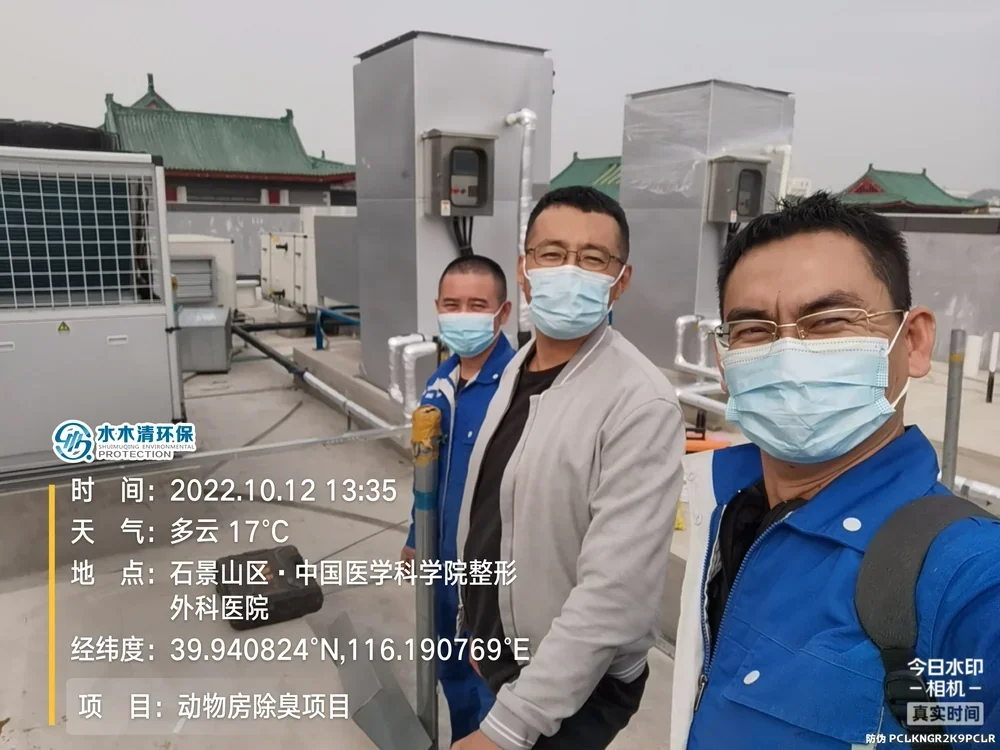
Exhaust air purifier for hospital animal facility waste gas treatment
UV treatment unit for hospital animal laboratory exhaust purification
Spray deodorization system at hospital animal facility
Waste gas treatment system for hospital animal laboratory
Explore Our Waste Gas Treatment Solutions
Looking for the right equipment for your facility? Browse our complete range of waste gas treatment systems, including UV photolysis purifiers, spray deodorization towers, activated carbon adsorption units, wet scrubbers, and specialized animal room treatment systems. Each product is engineered for industrial-grade reliability and customized to your specific emission requirements.
All Waste Gas Treatment Products
View our complete catalog of exhaust gas purification equipment
Browse All Products →Wastewater Treatment Equipment
DAF, MBR, sedimentation, and filtration systems for industrial wastewater
Browse All Products →Need Help Choosing?
Contact our engineers for a free consultation and customized quote
Get Expert Advice →Need a Hospital-Grade Deodorization Solution?
Contact Soto Machinery today for a free consultation. In addition, get a customized quote for your hospital or healthcare facility exhaust treatment needs.
Get a Free Quote