Environmental protection equipment supplier

UV Photolysis Waste Gas Purifier
High-intensity UV light breaks down VOCs and odors without secondary pollution
Air Volume1,000-100,000 m3/h
UV Wavelength185nm + 254nm
Lamp Power80-150W each
Number of Lamps4-80 pcs
MaterialSS304 / Carbon Steel
Voltage220V / 380V
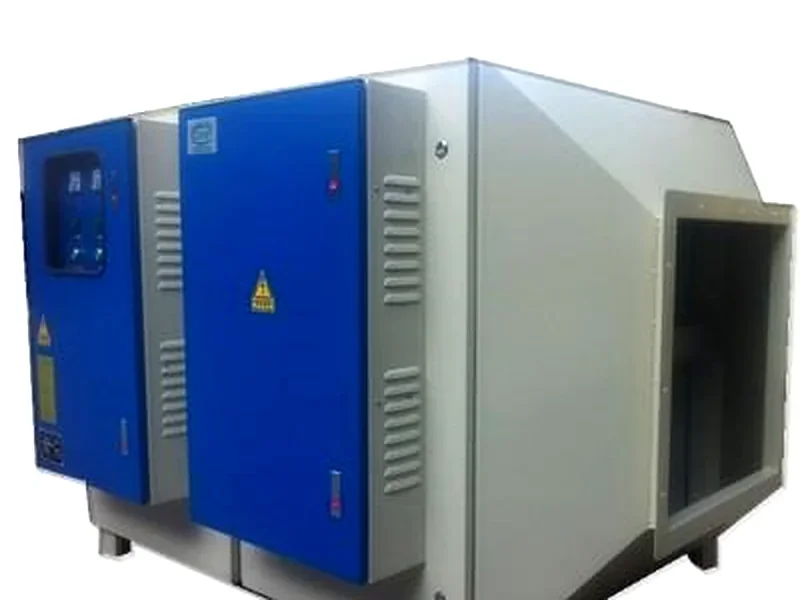
Overview
How UV Photolysis Works
UV photolysis uses high-energy ultraviolet light to break the molecular bonds of VOCs and malodorous compounds. UV at 185nm generates ozone, which further oxidizes the broken-down molecules into CO2 and H2O. No chemicals, no secondary pollution, low energy use.
Working Principle
Three-Step Treatment Process
From UV bombardment to final oxidation — clean air in three stages.
1
UV Bombardment
High-energy UV photons at 185nm and 254nm break molecular bonds in VOCs and malodorous compounds, splitting them into free radicals.
2
Ozone Generation
UV at 185nm splits oxygen molecules (O2) into atomic oxygen, which combines with O2 to form ozone (O3) — a powerful oxidant.
3
Oxidation
Ozone and free radicals oxidize the broken-down molecules into CO2, H2O, and simple inorganic compounds.
Components
Key Components Inside
Each UV purifier is built with high-quality components for reliable, long-term operation.
UV Lamp Module
High-output 185nm+254nm UV-C lamps, 80-150W each
Reflector Chamber
Polished aluminum reflectors for maximum UV intensity
Control Panel
Electronic ballasts, timers, and lamp status indicators
Housing
SS304 or carbon steel, sealed for outdoor installation
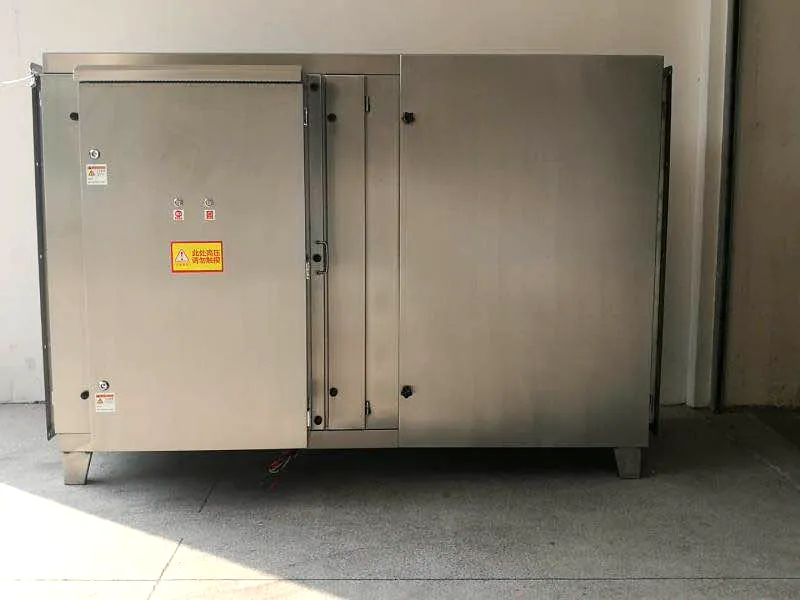
Gallery
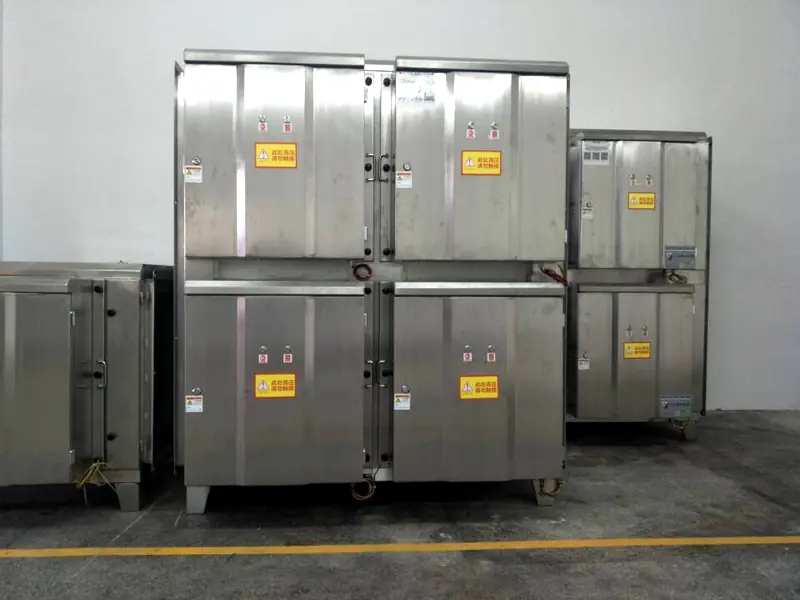
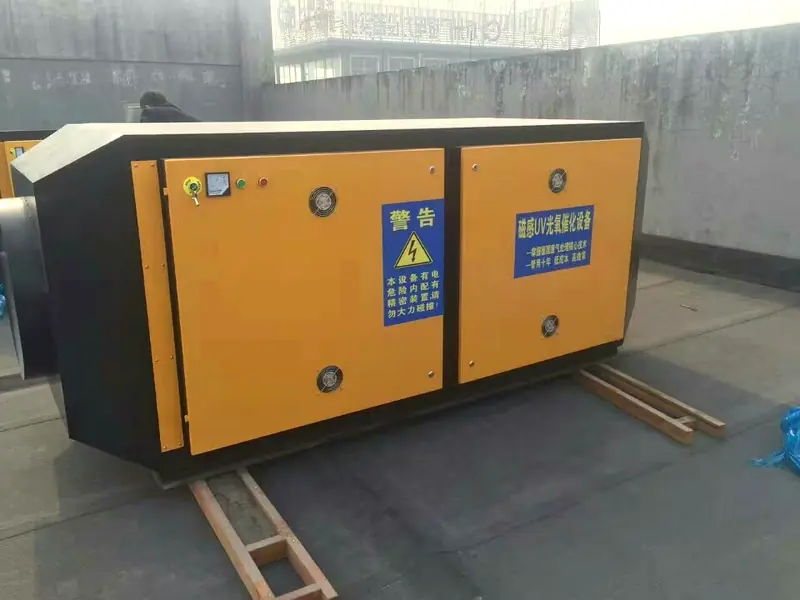
Project Gallery
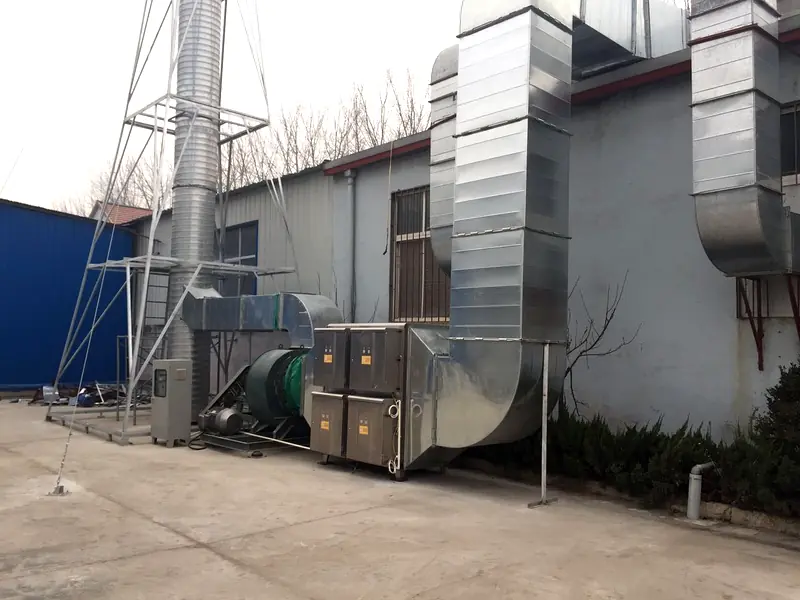
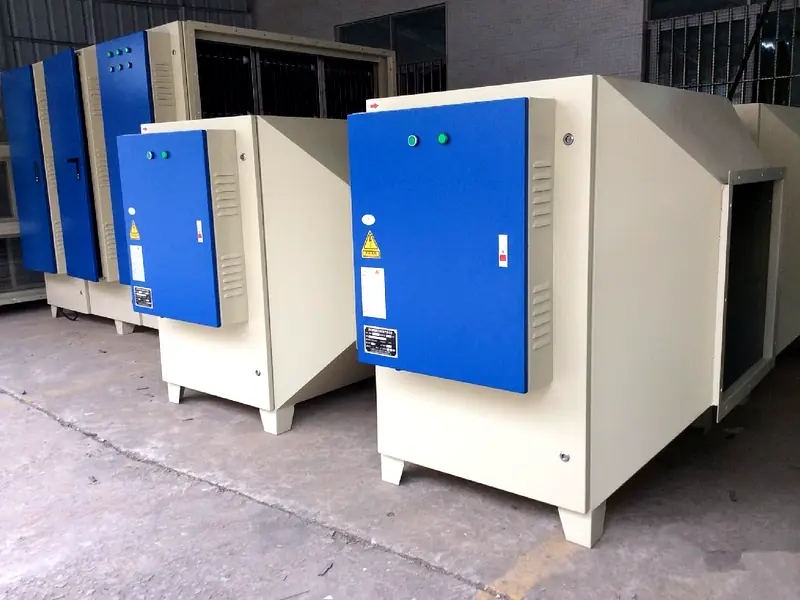
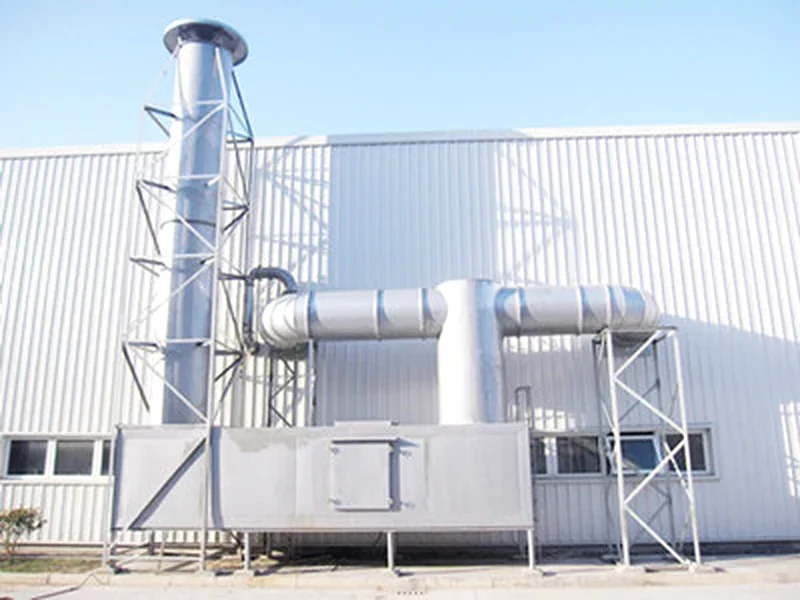
Real installation photos from our projects.
What Is
What Is a UV Photolysis Waste Gas Purifier?
A UV photolysis waste gas purifier is an air treatment device that uses high-energy ultraviolet light to break down volatile organic compounds (VOCs) and malodorous substances in industrial exhaust gas.
The system works by exposing polluted air to UV-C light at two key wavelengths: 185nm and 254nm. The 254nm UV light directly breaks molecular bonds in VOCs, while the 185nm wavelength generates ozone from oxygen in the air, which further oxidizes pollutant molecules into harmless CO2, H2O, and simple inorganic compounds.
UV photolysis systems are valued for their low energy consumption, no secondary pollution, and ability to treat a wide range of organic and odorous compounds at low to medium concentrations.
Key Benefits
Why Choose UV Photolysis Technology
Four advantages that make UV photolysis a top choice for VOC and odor control.
01
No Secondary Pollution
UV photolysis breaks down pollutants using only light and oxygen. No chemicals, no wastewater, no hazardous byproducts — just clean air.
02
Low Operating Cost
Low power consumption and minimal maintenance. Just periodic lamp replacement every 8,000-10,000 hours. No expensive consumables.
03
Fast Treatment Response
Instant on/off operation — no warm-up or cool-down time needed. The system starts treating gas immediately when powered on.
04
Compact & Modular Design
Modular construction makes it easy to add more UV modules as needed. Fits into existing ductwork with minimal space requirements.
Specifications
UV Lamp & System Specifications
Detailed technical specifications for our UV photolysis systems.
| Parameter | UV-S (Compact) | UV-M (Standard) | UV-L (Industrial) |
|---|---|---|---|
| Air Volume | 1,000-10,000 m3/h | 10,000-50,000 m3/h | 50,000-100,000 m3/h |
| UV Lamp Power | 80W | 120W | 150W |
| Number of Lamps | 4-20 | 20-50 | 50-80+ |
| UV Wavelength | 185nm + 254nm | 185nm + 254nm | 185nm + 254nm |
| Lamp Lifespan | 8,000-10,000 h | 8,000-10,000 h | 8,000-10,000 h |
| Housing Material | SS304 | SS304 / Carbon Steel | SS304 / SS316 |
| Voltage | 220V | 220V / 380V | 380V |
| Ballast Type | Electronic | Electronic | Electronic |
Applications
Where UV Photolysis Is Used
Effective across a wide range of industries with VOC and odor emissions.
Models
Available Models & Configurations
Three standard series to match different air volumes and application requirements.
Compact Series
UV-S Series
Small-footprint units for low to medium air volumes. Perfect for workshops and small production lines.
- Air volume: 1,000-10,000 m3/h
- 4-20 UV lamps
- SS304 housing
- Plug-and-play installation
Standard Series
UV-M Series
Medium-capacity systems for typical industrial applications. Most popular choice for printing and coating lines.
- Air volume: 10,000-50,000 m3/h
- 20-50 UV lamps
- SS304 / carbon steel
- Modular UV modules
Industrial Series
UV-L Series
Large-capacity systems for heavy industrial use. Custom-engineered for high-flow, high-concentration scenarios.
- Air volume: 50,000-100,000 m3/h
- 50-80+ UV lamps
- SS304 / SS316 housing
- Multi-stage configuration
Combined Systems
Multi-Stage Treatment Solutions
UV photolysis can be combined with other technologies for complex waste gas streams.
2-Stage
UV+Activated Carbon
UV + Activated Carbon
For low-to-medium VOC concentrations. UV breaks down most compounds, carbon captures residuals.
2-Stage
UV+Wet Scrubber
UV + Wet Scrubber
For dust-laden gas. Scrubber removes particles and acid gases first, UV handles VOCs.
3-Stage
UV+Carbon+Scrubber
UV + Carbon + Scrubber
For complex mixed emissions. Three-stage treatment for maximum removal efficiency.
Custom Solutions
OEM & Custom Design Services
Every industrial application is different. We work with you to design a UV photolysis system that fits your exact requirements — from sizing and material selection to control systems and branding.
Custom air volume sizing
SS304 / SS316 / PP materials
Explosion-proof configurations
PLC & HMI control systems
Ozone decomposition layer
OEM branding & packaging
FAQ
Frequently Asked Questions
Common questions about UV photolysis waste gas purification systems.
What VOC concentrations can UV photolysis handle?
UV photolysis is most effective for low to medium VOC concentrations, typically below 500 mg/m3. For higher concentrations, we recommend combining UV with activated carbon adsorption or using catalytic oxidation instead. Our engineers will assess your specific gas composition and recommend the right configuration.
How long do UV lamps last and how do I replace them?
Our UV lamps have an effective lifespan of 8,000-10,000 hours. After that, UV output decreases significantly. Lamp replacement is simple: just open the access door, slide out the lamp module, and replace the lamps. We provide replacement lamp kits and detailed instructions.
Is ozone from the UV system dangerous?
Ozone is generated internally to help oxidize pollutants, and most of it is consumed during the oxidation process. Residual ozone at the outlet is typically very low. For applications where ozone must be zero, we can add an ozone decomposition catalyst layer at the outlet to eliminate all remaining ozone.
Can UV photolysis handle dust in the gas stream?
Dust can coat the UV lamps and reduce their effectiveness, so we always recommend pre-filtration for dusty gas streams. A simple pre-filter or a wet scrubber before the UV unit removes dust and ensures the lamps stay clean and effective.
Get a Quote
WhatsApp
+86 18653221918
Request Your UV Photolysis System Quote
Tell us your air volume, gas composition, and emission requirements. Our engineers will design the right system and provide a detailed quote within 24 hours.
Get Your Free Quote
Fill in the form and we’ll respond within 24 hours.
Need a UV Photolysis System?
Tell us your air volume and waste gas composition. We’ll design the right UV system for your facility.