Environmental protection equipment supplier

Flow Rate
5-200 m³/h
SS Removal
85-95%
Air Pressure
0.3-0.5 MPa
Surface Load
3-8 m/h
Material
SS304 / SS316
Recycle Ratio
20-40%
How DAF Works
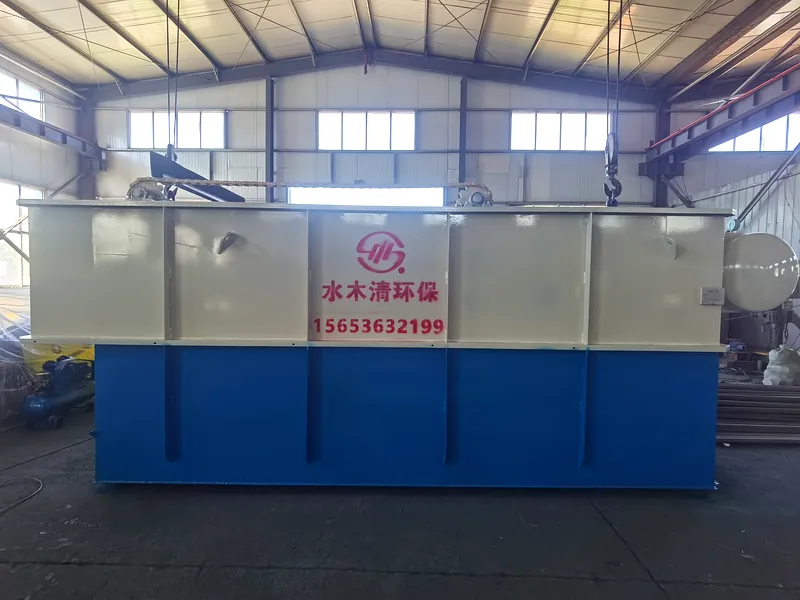
DAF removes contaminants that gravity settling cannot — fine particles, emulsified oils, and lightweight suspended solids. By dissolving air into water under pressure and releasing it, we create millions of microscopic bubbles that lift pollutants to the surface for removal.
Working Principle
Three-Step Flotation Process
Step 01
Air Dissolution
Pressurized water dissolves maximum air in the saturation tank. A recycle pump forces water and air together under 0.3-0.5 MPa pressure.
Step 02
Bubble Release
Pressure drops at the flotation tank entrance, releasing micro-bubbles (20-50 microns). These tiny bubbles are the key to high removal efficiency.
Step 03
Flotation & Skimming
Bubbles attach to particles, float them to the surface, where a mechanical skimmer removes the floated sludge layer continuously.
Technology Comparison
DAF vs Sedimentation vs Coagulation
| Comparison | DAF | Sedimentation | Coagulation |
|---|---|---|---|
| Removal Target | SS / Oil / Grease | Heavy solids | Colloids |
| SS Removal Rate | 85-95% | 60-80% | 70-85% |
| Oil & Grease Removal | Excellent | Poor | Fair |
| Footprint | Small (60% less) | Large | Medium |
| Processing Speed | Fast (20-30 min) | Slow (2-4 hours) | Medium (30-60 min) |
Technical Specifications
DAF Machine Specifications
| Flow Rate | 5-200 m³/h |
|---|---|
| SS Removal Efficiency | 85-95% |
| Air Dissolution Pressure | 0.3-0.5 MPa |
| Surface Load | 3-8 m/h |
| Material | SS304 / SS316 / Carbon steel |
| Recycle Ratio | 20-40% |
| Micro-bubble Size | 20-50 microns |
Applications
Common DAF Applications
- Food processing
- Dairy
- Slaughterhouse
- Refinery
- Chemical plant
- Electroplating
- Pulp & paper
- Restaurant grease trap
Product Overview
What Is Dissolved Air Flotation Machine?
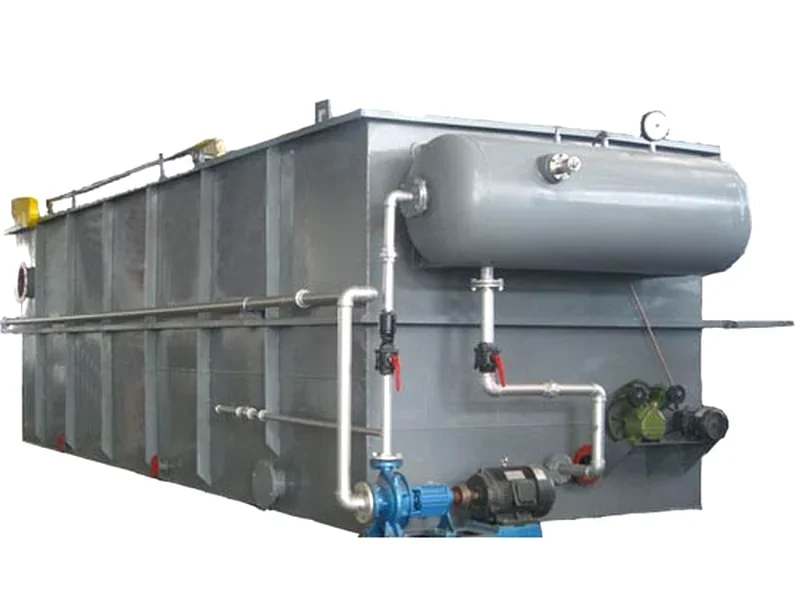
A Dissolved Air Flotation (DAF) machine is a wastewater treatment device that removes suspended solids, oil, grease, and other light contaminants by floating them to the water surface using microscopic air bubbles. It is one of the most efficient solid-liquid separation technologies for industrial wastewater.
The working principle is simple yet effective: air is dissolved into recycled water under pressure (0.3-0.5 MPa), then released into the flotation tank at atmospheric pressure. The sudden pressure drop creates millions of tiny bubbles (20-50 microns) that attach to suspended particles and oil droplets, lifting them to the surface where a skimmer removes the floated sludge.
DAF is especially effective for contaminants that are too light to settle by gravity — such as emulsified oils, fats, grease, fine fibers, and low-density suspended solids. It is widely used in food processing, dairy, slaughterhouse, refinery, chemical, and pulp & paper industries.
Key Benefits
Why Choose Our DAF System?
Four core advantages that make dissolved air flotation the preferred choice for industrial wastewater pretreatment.
01
High Separation Efficiency
Achieves 85-95% SS removal and excellent oil & grease removal in a single pass. Micro-bubbles (20-50 microns) provide maximum contact surface area for superior flotation performance.
02
Compact Design, Small Footprint
Flotation is 5-10 times faster than gravity settling, requiring only 20-30 minutes retention time. This reduces the required tank volume by 60-70% compared to sedimentation tanks.
03
Low Energy Consumption
Efficient recycle pump design and optimized air dissolution system minimize power use. Typical energy consumption is only 0.2-0.4 kWh per cubic meter of treated water.
04
Easy Operation & Maintenance
Simple design with few moving parts. Automated control with real-time monitoring. Quick access for maintenance with standard replaceable components. Minimal operator training required.
DAF Types
Three Types of DAF Machines
Select the right DAF configuration based on your flow rate, site layout, and treatment requirements.
Rectangular
Rectangular DAF
Horizontal flow rectangular tank design, the most common and versatile DAF configuration.
- Flow rate: 5-200 m³/h
- Easy to install and maintain
- Stainless steel or carbon steel
- Ideal for medium to large flows
Circular
Circular DAF
Vertical flow circular tank with rotating skimmer, offering high efficiency in a compact footprint.
- Flow rate: 10-100 m³/h
- More uniform flow distribution
- Rotary skimmer for better sludge removal
- Smaller footprint per flow rate
Shallow
Shallow Air Flotation
Ultra-shallow tank design (only 400-600 mm deep) with extremely short flotation path length.
- Retention time: 3-5 minutes only
- Super high surface loading rate
- Low profile for height-limited sites
- Perfect for algae and micro-flocs
Custom Solutions
Engineered for Your Wastewater
Every industrial wastewater is different. Our engineers design DAF systems specifically for your water quality, flow rate, and discharge requirements. We offer complete customization from material selection to process configuration.
Flow rate: 5-200 m³/h
Material: SS304 / SS316 / CS+epoxy
Chemical dosing system included
Skid-mounted or containerized
OEM & private labeling
PAC/PAM dosing integrated
FAQ
Frequently Asked Questions
Common questions about dissolved air flotation machines answered by our engineering team.
How does DAF compare to sedimentation?
DAF is much faster (20-30 min vs 2-4 hours) and takes 60-70% less space. It excels at removing light particles, oil, and grease that gravity settling cannot handle. Sedimentation is better for heavy, dense solids. In many plants, both are used in sequence for comprehensive treatment.
What chemicals are needed for DAF?
Most DAF systems use coagulants (PAC or aluminum sulfate) and flocculants (polyacrylamide/PAM) to help particles form larger flocs that bubbles can attach to. The exact dosage depends on your wastewater composition and is determined through jar testing. We provide dosing systems as part of our complete DAF packages.
What is the expected SS removal rate?
With proper chemical dosing, our DAF systems typically achieve 85-95% SS removal. Oil and grease removal can reach 90-99%. The exact rate depends on inlet water quality, particle size distribution, and chemical selection. We can run lab tests on your water sample to predict performance.
How often does the DAF need maintenance?
Daily checks include monitoring pressure gauges and skimmer operation. Weekly tasks include inspecting the recycle pump and cleaning nozzles if needed. The air saturation tank should be inspected every 3-6 months. Overall, DAF systems are low-maintenance compared to other treatment technologies.
Get in Touch
Request a Free DAF Quote
Send us your wastewater test report and flow rate. Our engineers will recommend the right DAF model and provide a detailed quotation within 24 hours.
Email Us
david@sotomachinery.com
+86 18653221918
Factory Location
Qingdao, Shandong, China
Send Us Your Requirements
Fill in the form below and we will get back to you within 24 hours.
Get a DAF System Quote Today
Send us your wastewater test report and flow rate. We will recommend the right DAF model and provide a detailed quote within 24 hours.