Environmental protection equipment supplier

Case Study / Waste Gas Treatment
Shandong University Animal Facility Deodorization Project
A UV photolysis plus integrated turbulent-flow spray system that restored clean air to a key university’s 1,200 m² animal center — lifting compliance from 65% to 98% while cutting annual running costs.
Project Overview
Within a university research system, the experimental animal house carries the weight of life sciences, medicine and pharmacy studies at once. Yet this critical facility has long faced a common problem: odor. For this project, Soto Machinery applied years of engineering experience to a purpose-built solution — a UV photolysis plus integrated turbulent-flow spray deodorization system designed specifically for university animal rooms.
Specifically, the client is the School of Life Sciences at a leading “Double First-Class” university in Shandong province. Its animal center was built in 2008, spans approximately 1,200 square meters, and serves more than ten research groups across the university. Before the retrofit, persistent odor affected staff morale, and the aging system was both energy-hungry and maintenance-heavy.
A Facility with Its Own Rhythm
Unlike a hospital or a pharmaceutical plant, a university animal house has a distinct rhythm. It supports multiple disciplines, its usage surges during the semester and falls during holidays, and it sees many undergraduate and graduate students coming and going. On top of that, budgets are tight and the physical conditions range from old converted buildings to new purpose-built facilities. In short, the deodorization system had to be efficient and stable, yet economical and easy for non-specialists to operate.
Facility Profile: Shandong “Double First-Class” university | School of Life Sciences | ~1,200 m² animal center | Built 2008 | 10+ research groups
Notably, the building’s age matters to the design. Commissioned in 2008 and extended over the years as research groups grew, the animal center mixes old and new construction. Duct sizes vary, ceiling heights differ, and some rooms were never meant to host modern ventilation. A retrofit therefore had to be flexible enough to fit legacy spaces while still meeting the performance a modern research program demands.
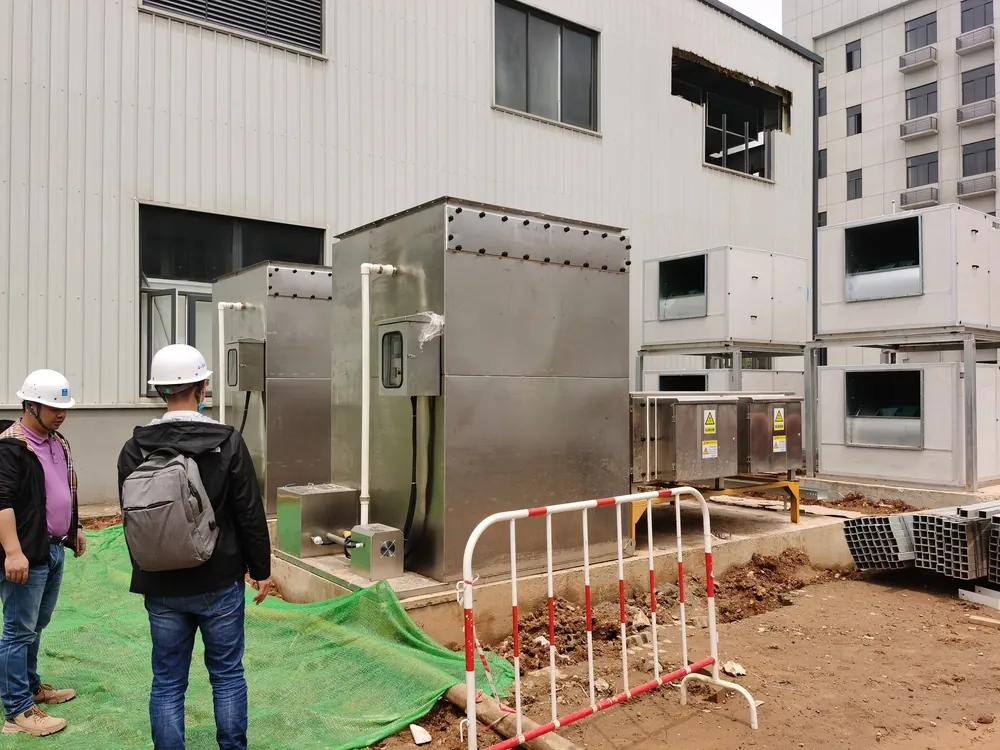
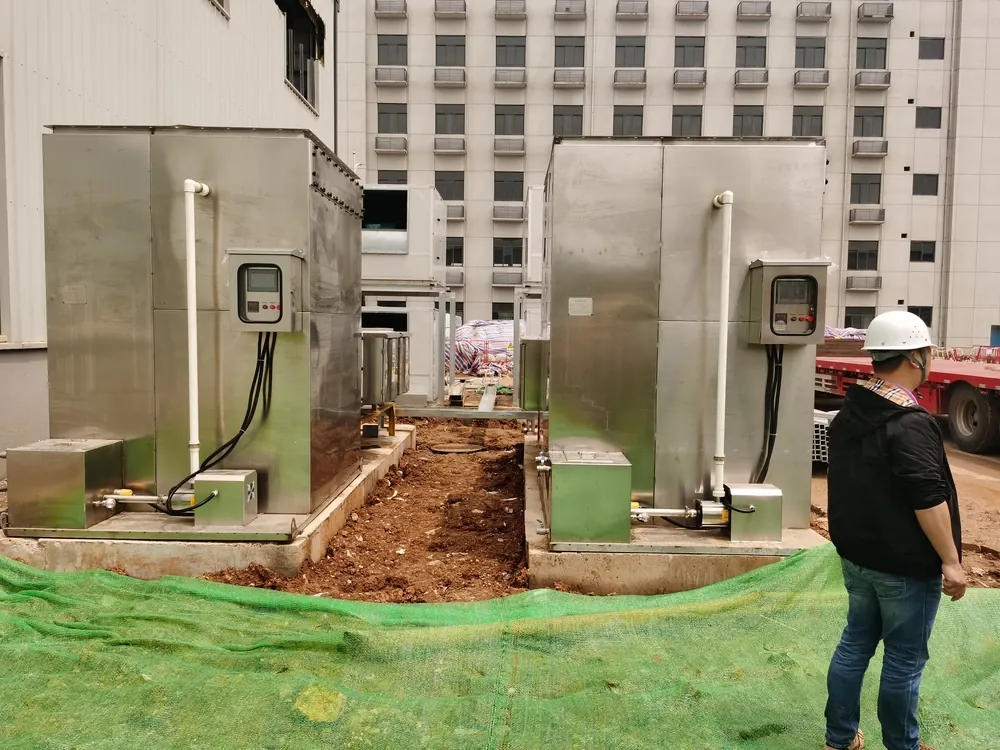
On-site equipment inspection
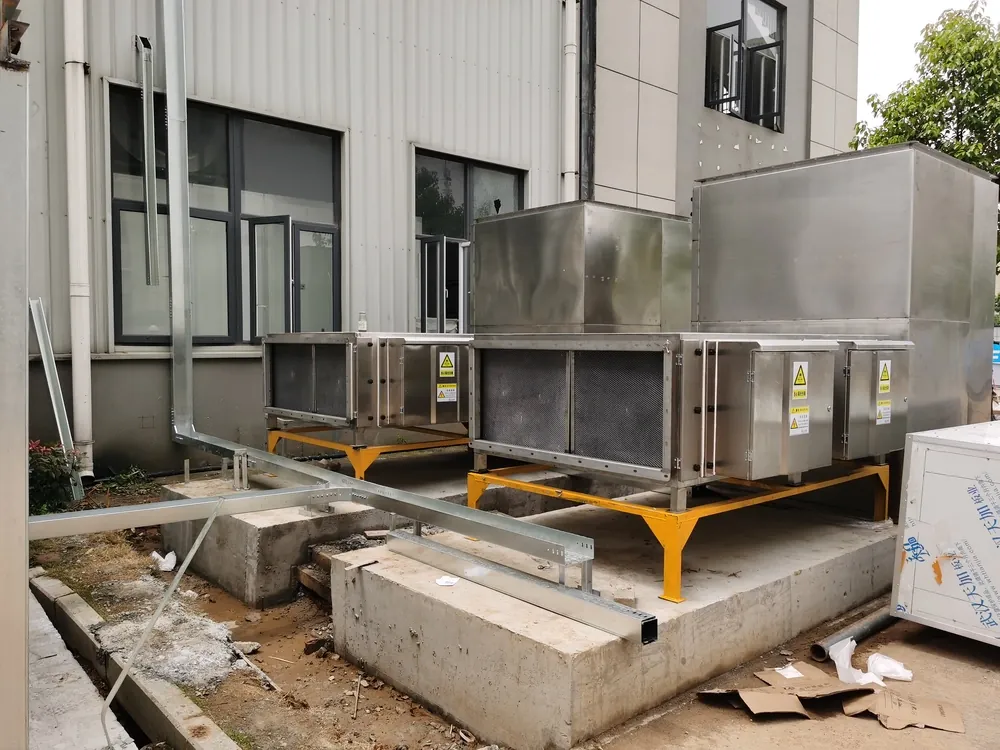
Treatment units with ductwork connection
Where the Odor Comes From
Ammonia rises from urine and soiled bedding, hydrogen sulfide and mercaptans form as feces decompose, and the constant ventilation needed to protect animal welfare pushes all of it out through the exhaust. A hospital can often standardize its operation, but a university facility rarely can: it may host rodents one week and larger animals the next, and its loading swings with the academic calendar. In short, the treatment system must stay effective across a wide, changing range of conditions — and do so quietly and cheaply.
The Challenge
Key Challenges Identified
- Persistent Odor: Long-standing odor issues affected the motivation and comfort of faculty and students working in the animal center.
- Multi-Discipline Sharing: Several schools and research teams share the same facility, so usage intensity is high and management is complex.
- High Energy and Maintenance: The original system consumed excessive energy and required frequent upkeep.
- Uneven Ventilation: Some zones were poorly ventilated, which in turn affected animal welfare and experimental consistency.
Accordingly, the design had to deliver strong, stable purification while remaining affordable to run and simple enough for students and facilities staff to operate safely.
Our Solution
Soto Machinery deployed a two-stage purification approach that pairs photocatalytic oxidation with a patented turbulent-flow spray stage. Each stage plays a distinct role, and together they handle the full odor profile of a busy university animal house.
UV Photolysis and Photocatalysis
The first stage uses specialized UV lamps that emit at 185 nm and 254 nm. These wavelengths activate oxygen and water molecules in the air, producing highly reactive hydroxyl radicals. These strong oxidizers rapidly break down the ammonia, hydrogen sulfide and mercaptans common to animal rooms, converting them into harmless carbon dioxide and water. Because the process is ozone-managed and well contained, it stays safe for both animals and people.
In fact, this photolytic stage matters for two reasons. First, it does the heavy lifting on the sulfur compounds that a spray stage alone struggles to fully remove. Second, it works without the chemical dosing and consumables that would otherwise add to a university’s operating budget. The result is a cleaner baseline before the gas even reaches the spray tower.
Integrated Turbulent-Flow Spray System
After photolysis pre-treatment, the gas enters the core purification zone. Our patented turbulent-flow design changes the conventional spray tower gas path in four ways:
1
Three-Dimensional Swirl
The gas forms a spiral, upward trajectory inside the tower, which extends contact time and improves mass transfer.
2
Multi-Level Spray Coverage
Staggered spray heads above and below guarantee 100% coverage of the rising gas stream.
3
Intelligent Concentration Control
Sensor data automatically adjusts the spray liquid composition to match real-time pollutant load.
4
High-Efficiency Mist Separation
A purpose-designed demister layer prevents secondary pollution and keeps downstream air clean.
Taken together, the photolysis and spray stages form a two-step safeguard. The UV stage breaks the most stubborn compounds, and the turbulent-flow spray scrubs what remains. This layered approach means the system holds its removal efficiency even when the animal house runs at its busiest, and it does so without the ozone risks that rule out some competing technologies for sensitive research settings.
Five Advantages for University Sites
Beyond the core technology, the system was tailored to the specific needs of a university setting.
| Advantage | What It Means for a University |
|---|---|
| Flexible fit | Modular design scales from a few dozen to over a thousand square meters, with rooftop, wall and indoor mounting that also suits older buildings. |
| Energy efficient | Intelligent variable-frequency control cuts power 30–40% versus traditional systems, and a low-consumption holiday mode saves more during breaks. |
| Safe and reliable | Multi-layer protection prevents ozone escape; explosion-proof and leak-proof design meets campus safety standards; noise stays below 55 dB. |
| Intelligent management | A remote monitoring platform, automatic alarms and full data logging reduce the burden on facilities staff. |
| Procurement friendly | Complete qualification and test reports, phased implementation options, and full training support fit university budget and approval processes. |
These five advantages speak directly to how universities actually buy and run equipment. Budget cycles are annual and often constrained, so phased implementation lets a school start with the highest-priority rooms and expand later. Training matters because the operators change as students graduate. And the holiday mode matters because an animal house that sits half-empty over the winter break should not be paying for full-power treatment. In practice, this is what turned a one-off equipment purchase into a system the facilities team actually enjoys managing.
The Retrofit at the School of Life Sciences
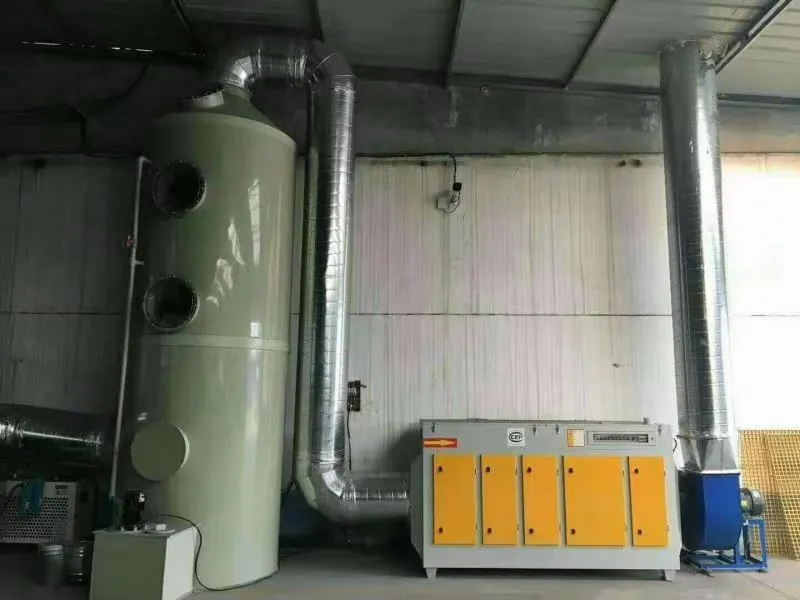
In 2023, we completed the deodorization system upgrade for the animal center at this key university’s School of Life Sciences. The retrofit targeted four long-standing problems: persistent odor that hurt staff motivation, high usage intensity from multi-discipline sharing, an energy-hungry legacy system, and uneven ventilation in some zones.
The results were clear. Indoor air quality compliance rose from 65% to 98%. Annual operating costs dropped by roughly ¥120,000. Staff and student satisfaction reached 4.8 out of 5.0, and the system has now run for a full year without a single failure. The project lead summed it up well: the system not only solved the odor problem but also brought intelligent management that suits a university, and students quickly learned to operate it.
Meanwhile, before the upgrade, the mismatch was easy to see. During semester peaks the old system ran hard and still could not keep the smell down in the busiest rooms, while over the holidays it kept consuming power for a facility that was mostly idle. The retrofit addressed both halves of that problem at once: higher peak capacity where it was needed, and an automatic low-power mode when the rooms emptied out.
Designed for Teaching and Research
University animal houses are not just research spaces; they are also teaching environments. With that in mind, the system includes several education-friendly features. Selected models offer transparent observation windows for classroom demonstration, and a data output interface connects to the laboratory data system for research data collection. Safety interlocks reflect the fact that students, rather than trained technicians, often operate the equipment.
The system also adapts to the academic calendar. During winter and summer breaks it enters an ultra-low-consumption mode, and during semester peaks it automatically detects high-use periods and adjusts operating parameters in advance. Multi-user management supports permission control for different research groups.
Safety interlocks deserve particular mention on a campus. Because students rather than trained technicians often operate the equipment, the controls are designed to fail safe and to prevent misuse rather than simply warn about it. Combined with the complete training package, this turns a piece of industrial hardware into something a biology undergraduate can run confidently on day one.
Finally, the environmental footprint matters on a green campus. The main components use recyclable materials, the spray liquid achieves a circulation rate above 85%, and the system carries a national energy-saving product certification.
These details add up. A university that publicly commits to a green campus is judged on the small numbers as well as the big ones — the litres of spray liquid recycled, the kilowatt-hours saved during a break, the noise level in a shared corridor. By engineering for all of them, the system becomes a quiet proof point of the institution’s sustainability goals rather than a compromise they must defend.
Project Results
The retrofit delivered measurable improvements across air quality, cost and reliability.
98%
Air Quality Compliance
¥120k
Annual Cost Savings
4.8/5.0
Satisfaction Score
1 Year
Failure-Free Operation
Verified Performance
Indoor air quality compliance climbed from 65% before the retrofit to 98% after commissioning, verified by routine monitoring across the animal rooms. Annual running cost fell by about ¥120,000, and the satisfaction survey among staff and students reached 4.8 out of 5.0. Most importantly, the system has operated for a full year without a failure, giving the research teams an uninterrupted environment for their work.
The waste gas treatment system also delivered the quieter, cleaner conditions the campus required. Noise stays below 55 dB, so it does not disturb precision experiments or teaching, and the intelligent controls keep the facility easy to manage with minimal hands-on effort.
Moreover, for the research groups, the practical effect was immediate. Better and more even ventilation improved animal welfare and the consistency of experimental conditions, which in turn protects the quality of the data those groups publish. That is the deeper value of a deodorization retrofit on a research campus: it quietly underpins the science rather than just the comfort of the people working around it.
Frequently Asked Questions
How is a university animal house different from a hospital or plant? Universities share one facility across many disciplines, their usage peaks during the semester and falls during holidays, and their operators are often students. The system must therefore be efficient, quiet and simple to run safely, and it should adapt its power to the academic calendar.
Does UV photolysis produce harmful ozone? No. The design is ozone-managed and well contained, with multi-layer protection that prevents ozone escape. This makes it safe for animals, staff and students — an important point for a campus environment.
What happens during winter and summer breaks? The system enters an ultra-low-consumption mode automatically, so an animal house that sits half-empty over a break does not keep paying for full-power treatment. It also anticipates semester peaks and adjusts parameters in advance.
Can the system be phased across multiple years? Yes. Modular design supports phased implementation, so a school can start with the highest-priority rooms and expand later as budget allows. Full qualification and test reports support the procurement process.
How much maintenance does it actually need? Very little. The core components are long-lived, the spray liquid recycles above 85%, and the remote monitoring platform raises alarms before small issues become failures. In this project, the system has run a full year without a fault.
Related Case Studies
This project belongs to a wider set of animal facility deodorization case studies. For an SPF breeding facility with a strict ozone-free constraint, see the university SPF animal laboratory case study. For a large multi-species research center, see the biomedical research institute animal center case study.
Project Gallery
Photos from the UV photolysis and turbulent-flow spray system installation at the university animal facility.
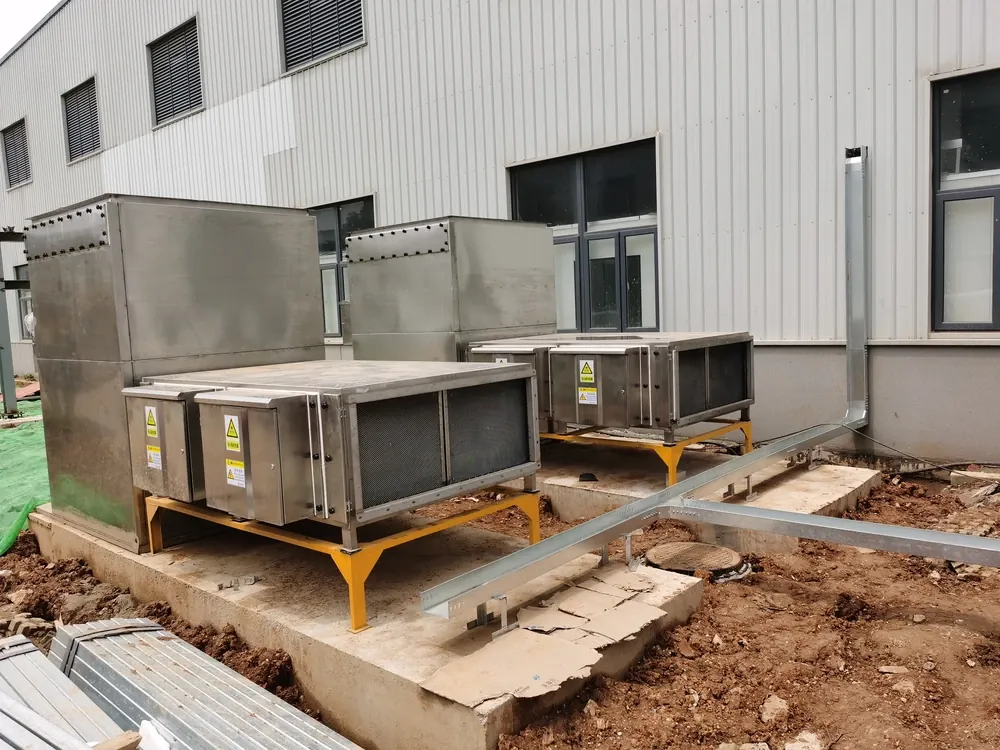
Installed UV photolysis and spray units
Spray tower linked to UV unit
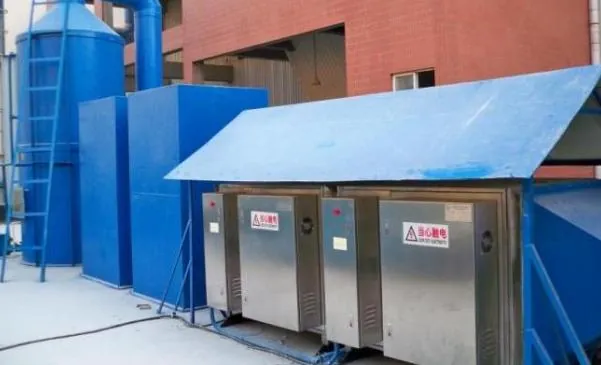
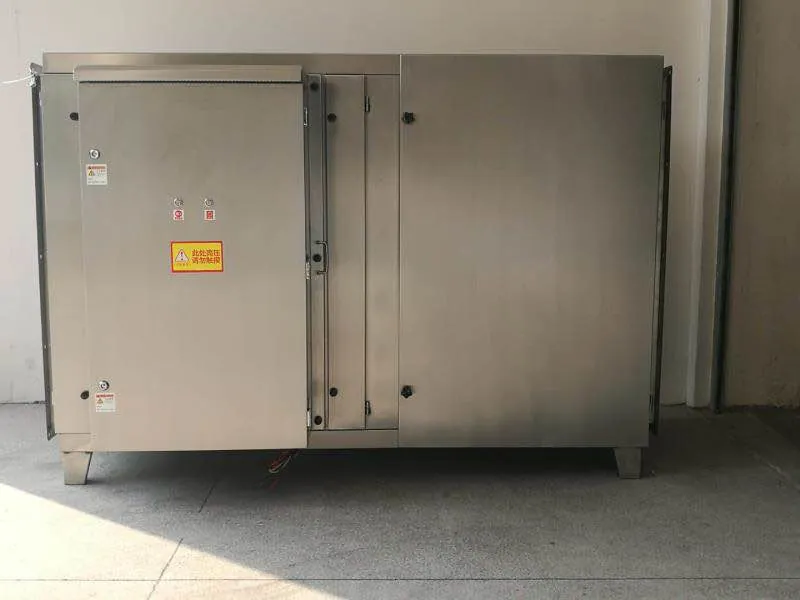
UV photolysis equipment
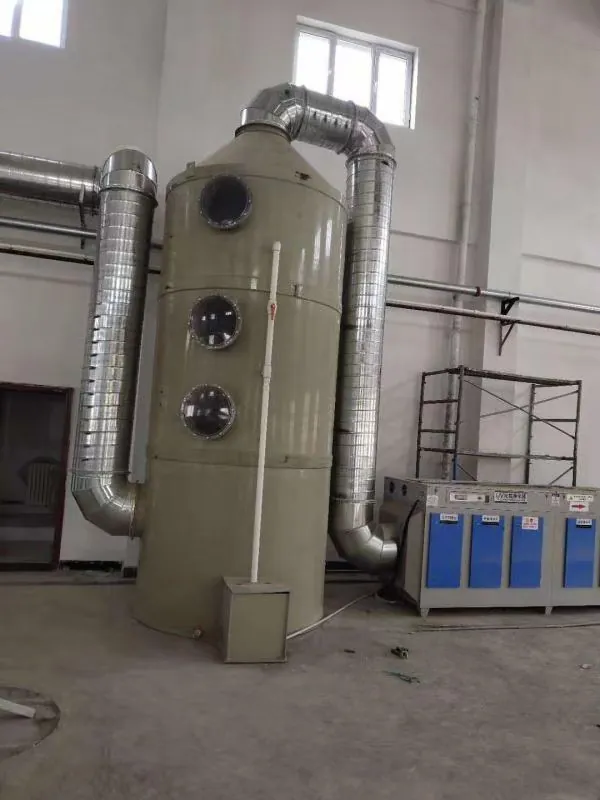
Spray and UV combination unit
Explore Our Waste Gas Treatment Solutions
Looking for the right equipment for your facility? Browse our complete range of waste gas treatment systems, including the animal room waste gas treatment system, UV photolysis purifiers, wet scrubber towers and activated carbon adsorption units. We engineer every product for industrial reliability and customize it to your specific emission requirements.
All Waste Gas Treatment Products
View our complete catalog of exhaust gas purification equipment
Browse All Products →Wastewater Treatment Equipment
DAF, MBR, sedimentation, and filtration systems for industrial wastewater
Browse All Products →Need Help Choosing?
Contact our engineers for a free consultation and customized quote
Get Expert Advice →Need a UV Deodorization System for Your Campus?
Contact Soto Machinery today for a free consultation and a customized quote for your university or research animal facility.
Get a Free Quote