Environmental protection equipment supplier

Industrial Odor Control Equipment Comparison Guide
Understanding Industrial Odor Control and Emission Challenges
Effective Industrial Odor Control Equipment: Technology Comparison starts with understanding the complex chemical and physical makeup of industrial exhaust streams. Manufacturing plants, chemical facilities, and municipal treatment stations generate diverse airborne pollutants that require targeted air pollution control equipment rather than one-size-fits-all filtration. Selecting the right system depends on accurately identifying pollutant compositions, airflow volumes, moisture levels, and operating temperatures before specifying treatment hardware.
Common Sources of Industrial Odors and Harmful Compounds (H2S, VOCs, Fumes)
Industrial exhaust rarely consists of a single compound. Across different production sectors, facilities must capture and neutralize distinct categories of emissions:
- Volatile Organic Compounds (VOCs): Emitted heavily during printing, packaging, chemical processing, and pharmaceutical manufacturing, requiring targeted decomposition or adsorption.
- Hydrogen Sulfide (H2S) and Corrosive Gases: Common in municipal wastewater treatment, animal facilities, and chemical operations, creating both severe odor nuisances and equipment corrosion risks.
- Oil Fumes and Particulate Matter: Generated by food processing, industrial cooking, and mechanical operations, where airborne grease and fine dust can foul downstream odor treatment units if not removed first.
- Soluble Acidic and Alkaline Gases: Process vapors that dissolve readily in liquid scrubbing media before secondary deodorization takes place.
Regulatory Compliance, Safety, and Environmental Standards
Modern industrial facilities operate under strict environmental discharge limits designed to protect worker health, surrounding communities, and local air quality. Failing to control exhaust emissions exposes operations to regulatory penalties, forced shutdowns, and accelerated structural corrosion caused by aggressive gases like H2S.
To ensure reliable, verifiable emission compliance, industrial air treatment systems must be built to certified manufacturing and safety benchmarks:
- International Equipment Standards: Systems manufactured under ISO 9001 quality management and carrying CE certification ensure structural safety, factory-tested performance, and alignment with global emission regulations.
- Material Resistance for Harsh Environments: Engineering equipment to withstand corrosive exhaust requires strict material thresholds—wet gas streams rule out standard carbon steel, operating temperatures above 80°C exclude most plastic housings, and chloride concentrations exceeding roughly 200 mg/L require upgrades beyond 316L stainless steel.
- Verified Removal Efficiency: Properly engineered treatment systems—such as multi-stage VOC and particulate setups handling 30,000 to 50,000 m³/h—consistently achieve 95% to 97% purification rates to keep facility exhaust safely within permitted discharge limits.
Key Advantages of Modern Odor Control Systems
Investing in the right industrial odor control equipment does more than clear the air—it directly protects your staff, keeps operations compliant, and lowers long-term plant expenses.
Enhancing Workplace Safety and Air Quality
Uncontrolled exhaust containing VOCs, hydrogen sulfide, and oil fumes puts daily operations at risk. Deploying targeted air pollution control equipment—such as activated carbon adsorption, UV photolysis, or electrostatic precipitation—captures harmful airborne pollutants right at the source.
- Healthier Workspaces: Dedicated https://www.soto-ephttps://www.soto-epmachinery.com/laboratory-environmental-protection-and-odor-control-guide/”>laboratory environmental protection and odor control setups and facility exhaust purifiers keep breathable air clean for technicians and floor operators.
- Equipment Longevity: Removing corrosive moisture and acidic gases early prevents premature rusting and structural damage to downstream ductwork and fans.
Achieving Regulatory Compliance and Community Goodwill
Strict environmental regulations leave zero room for unmonitored emissions. Every system we engineer at our ISO 9001 certified facility is factory-tested prior to shipment and built to meet CE-marked international emission standards.
- Verified Pollutant Removal: Proven multi-stage configurations achieve measurable purification results, such as 95% VOC removal at 30,000 m³/h in chemical plants and 97% purification at 50,000 m³/h in packaging facilities.
- Neighbor Relations: Consistent deodorization eliminates nuisance odors before they cross your property line, preventing community complaints and costly regulatory shutdowns.
Operational Efficiency and Cost Reduction
Modern systems balance high capture efficiency with practical operating budgets, especially when sized around your exact gas composition and airflow rate.
- Factory-Direct Savings: Sourcing directly from our Qingdao manufacturing plant eliminates middleman markups, saving facilities up to 30% on upfront equipment costs.
- Tailored Multi-Stage Efficiency: Instead of overpaying for oversized single units, custom-engineered trains sequence filtration stages logically—capturing particulates and soluble gases first so polishing media lasts longer and requires less frequent replacement.
Core Industrial Odor Control Technologies Compared
When we design air pollution control equipment at our manufacturing facility in Qingdao, we rarely rely on a single standalone unit for complex exhaust streams. Matching the right technology—or building a custom multi-stage treatment train—depends entirely on your gas composition, moisture levels, and airflow volume.
Biological Filtration and Bio-Trickling Filters
Biological degradation is a core middle stage in multi-step odor treatment trains, especially for organic odors and compounds like hydrogen sulfide. After upstream filtration strips out particulates and soluble gases, biological media breaks down remaining organic pollutants naturally.
- Best role: Secondary odor and VOC reduction in multi-stage setups, such as laboratory animal facilities and wastewater treatment plants.
- Key selection detail: Proper https://www.soto-epmachinery.comhttps://www.soto-epmachinery.com/biofilter-odor-treatment-media-choice-and-residence-time/”>biofilter odor treatment media choice and residence time ensure consistent microbial activity without clogging.
- Material rule: Because biological processes involve high moisture and corrosive gases like H2S, we avoid carbon steel housings and select corrosion-resistant materials suited to the gas stream.
Chemical Scrubbers and Ammonia Strippers
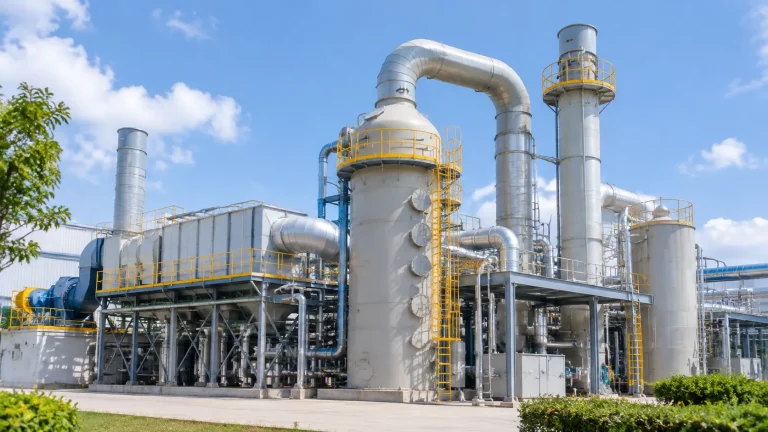
Wet scrubbing systems and chemical scrubbers are our go-to frontline defense for soluble gases and heavy-load industrial fumes. By passing exhaust through liquid scrubbing media, these towers neutralize acidic or alkaline compounds before they reach downstream equipment.
- Core function: Captures soluble gases and reduces high pollutant loads early in the treatment sequence.
- Process integration: We position wet scrubber towers right after particulate pre-filtration to protect sensitive downstream stages.
- Corrosion thresholds: When handling wet gas with high chloride levels above 200 mg/L, even 316L stainless steel falls short, requiring specialized corrosion-resistant construction.
Vapor Phase Neutralization and Misting Systems
For broad-area odor management and targeted gas-phase reactions, we use spray deodorization systems alongside UV photolysis and low-temperature plasma waste gas units. Rather than relying solely on liquid absorption, UV photolysis and cold plasma technology break down volatile organic compounds (VOCs) and odor molecules directly in the air stream.
- Spray deodorization systems: Disperse fine neutralizing mist to knock down odors in open or high-volume exhaust environments.
- UV photolysis waste gas purifiers: Use targeted UV light to decompose VOCs and control persistent organic odors.
- Low-temperature plasma systems: Offer an effective alternative for breaking down complex waste gas molecules in compact footprints.
Electrostatic Precipitators (ESP) and Mist Collectors
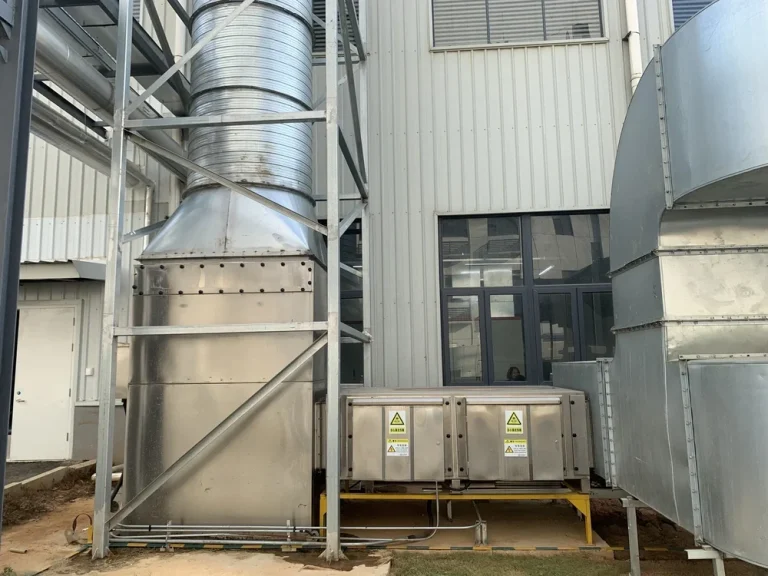
Oil fumes, aerosols, and fine particulates will quickly foul carbon beds or UV lamps if left untreated. We manufacture electrostatic oil fume purification units and baghouse dust collectors specifically to strip these physical contaminants out first.
- Electrostatic precipitation: Uses high-voltage ionization to trap oil mist and sticky fumes from food processing or industrial operations.
- Baghouse dust collectors: Capture dry particulate matter at the front of the line.
- Proven scale: In our packaging and printing factory projects handling 50,000 m³/h, combining particulate capture with VOC treatment achieves a 97% purification rate.
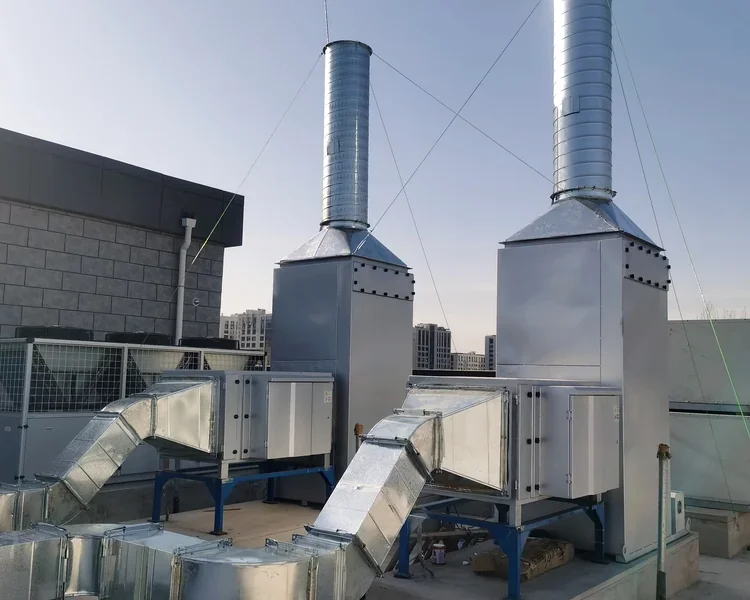
Activated Carbon Adsorption and Thermal Oxidation
While high-temperature thermal oxidation is one industry route for destroying concentrated exhaust, we focus on activated carbon adsorption units—often paired with UV photolysis—to deliver reliable VOC capture without extreme fuel demands.
- Polishing power: Activated carbon acts as the final polishing stage in multi-stage trains, trapping trace VOCs and residual odors to meet strict emission standards.
- Verified performance: In our chemical plant projects running at 30,000 m³/h, pairing UV photolysis with activated carbon delivers 95% VOC removal.
- Temperature limits: Because activated carbon adsorption operates at lower temperatures, we verify your exhaust profile first—temperatures exceeding 80°C rule out standard plastic housings and require specialized https://www.soto-epmachinery.com/https://www.soto-epmachinery.com/industrial-off-gas-treatment-systems-standards-and-sizing/”>industrial off-gas treatment systems standards and sizing.
Technology Comparison Matrix: Performance, Cost, and Maintenance
Choosing the right industrial odor control equipment comes down to matching your specific exhaust profile with the right removal mechanism. At Soto Machinery, we engineer and manufacture complete waste gas treatment lines—meaning we don’t push a single technology for every problem. Instead, we look at gas composition, airflow volume, moisture levels, and budget to configure single-stage or multi-stage systems that meet strict emission standards.
| Technology | Primary Target Pollutants | Typical Role in Treatment Train | Key Operational & Material Considerations |
|---|---|---|---|
| UV Photolysis Waste Gas Purifiers | Organic odors, volatile organic compounds (VOCs) | Primary odor & VOC decomposition | Requires pre-filtration if particulates or oil mist are present; compact footprint |
| Activated Carbon Adsorption Units | Residual VOCs, trace odors, solvent vapors | polishing stage or standalone unit | Media requires periodic replacement; sensitive to high moisture and temperatures |
| Wet Scrubber Towers & Spray Deodorization | Soluble gases (e.g., H2S, ammonia), acid/alkali fumes | Primary absorption & gas conditioning | Handles high gas loads; requires corrosion-resistant materials for wet/acidic gas |
| Low-Temperature Plasma Systems | Complex organic odors, low-to-medium VOCs | Primary or intermediate treatment | Effective on multi-component odors; often paired with carbon polishing |
| Electrostatic Oil Fume Purifiers | Oil mist, grease aerosols, smoke particulates | Pre-treatment or kitchen/machining exhaust | Prevents fouling of downstream UV lamps or activated carbon beds |
Removal Efficiency by Pollutant Type
No single piece of air pollution control equipment handles every pollutant equally well. Efficiency depends entirely on matching the unit to your gas chemistry:
- VOCs and Organic Odors: In our project installations, combining UV photolysis with activated carbon adsorption achieves 95% VOC removal on a 30,000 m³/h chemical plant exhaust stream. For high-volume printing and packaging facilities (50,000 m³/h), tailored multi-stage VOC and particulate treatment delivers up to 97% purification efficiency.
- Soluble Gases and High-Load Odors: When dealing with water-soluble compounds or heavy odor loads, https://www.soto-epmachinery.com/how-does-the-integrated-spoiler-spray-deodorization-system](https://www.soto-epmachinery.com/how-does-the-integrated-spoiler-spray-deodorization-system)https://www.soto-epmachinery.com/how-does-the-integrated-spoiler-spray-deodorization-system-achieve-efficient-odor-removal/”>integrated spoiler spray deodorization systems and wet scrubber towers strip soluble contaminants early in the process before downstream polishing.
- Particulates and Oil Fumes: Dust and grease must be captured first using baghouse dust collectors or electrostatic oil fume purification units so they do not coat UV lamps or blind activated carbon pores.
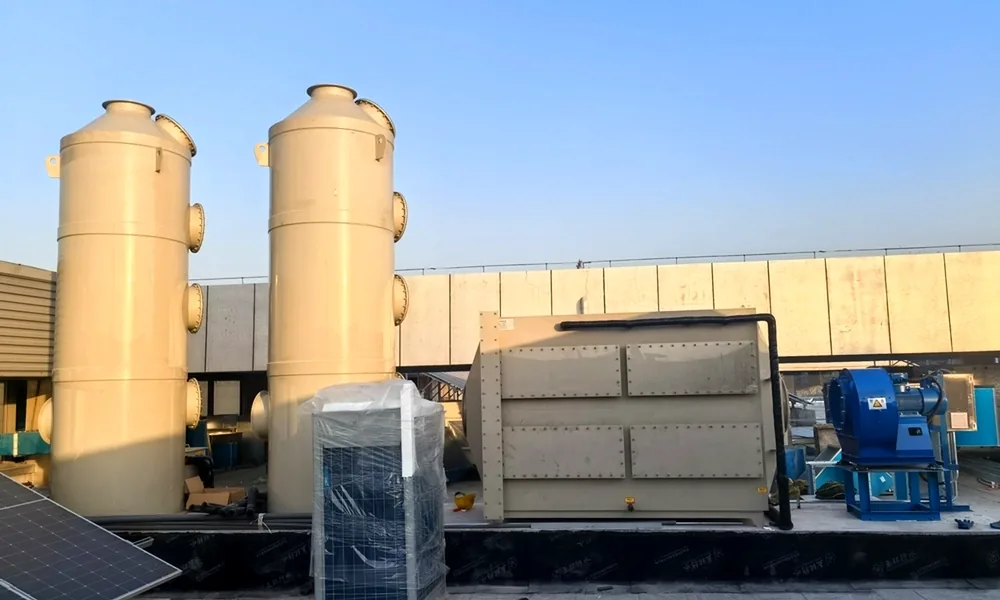
Capital Expenditure (CAPEX) vs. Operating Costs (OPEX)
Evaluating total lifecycle cost requires balancing upfront equipment pricing against ongoing consumables and material durability:
- Factory-Direct CAPEX Savings: Because we manufacture all waste gas equipment directly at our ISO 9001 certified facility in Qingdao without middlemen, our clients typically save up to 30% on initial capital equipment costs. Standard units ship within 15–30 days, while custom-engineered multi-stage trains ship in 30–60 days.
- Material Selection Protects OPEX: Choosing the wrong housing material leads to premature corrosion and costly replacements. Based on our engineering standards, wet gas streams rule out standard carbon steel, exhaust temperatures above 80°C rule out most plastics, and chloride levels exceeding 200 mg/L require upgrading beyond 316L stainless steel.
- Consumables & Energy: Activated carbon systems have lower upfront complexity but require ongoing carbon media replacement based on pollutant load. Wet scrubbers and spray towers rely on water circulation and chemical dosing, while UV photolysis and low-temperature plasma units center their operating costs on electrical power and periodic lamp or module servicing.
Maintenance Requirements and System Footprint
Space constraints and maintenance accessibility play a major role in daily plant operations:
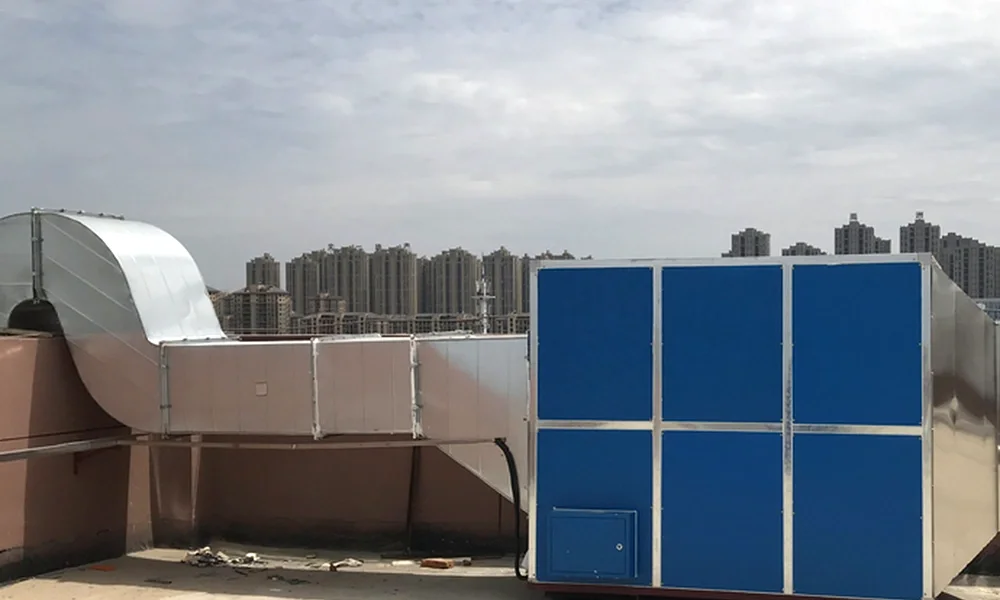
- Compact Modular Units: UV photolysis purifiers, low-temperature plasma units, and electrostatic oil fume collectors feature compact, skid-mounted footprints that fit easily into tight mechanical rooms or rooftop spaces. Routine maintenance focuses on periodic cleaning of UV lamps, plasma plates, or collector cells.
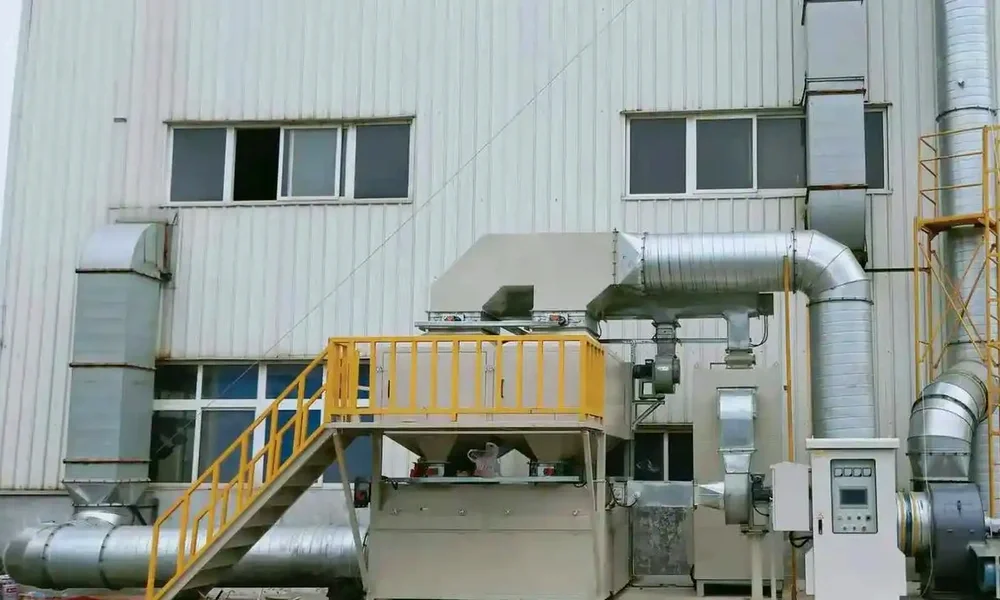
- Larger Process Towers & Multi-Stage Trains: Wet scrubber towers and multi-stage odor control trains—which sequence particulate removal, soluble gas scrubbing, biological or UV treatment, and final carbon polishing—require more vertical clearance and floor area.
- Built-In Serviceability: Every CE-marked system we build undergoes factory testing before shipment and includes detailed installation drawings, operator training, routine maintenance schedules, and a 12-month warranty backed by 24/7 technical support and spare parts supply.
Primary Industrial Applications and Use Cases
Choosing the right air pollution control equipment comes down to matching the system to your specific exhaust stream. At Soto Machinery, we engineer custom setups across several high-emission industries where gas composition, moisture, and airflow rates vary drastically.
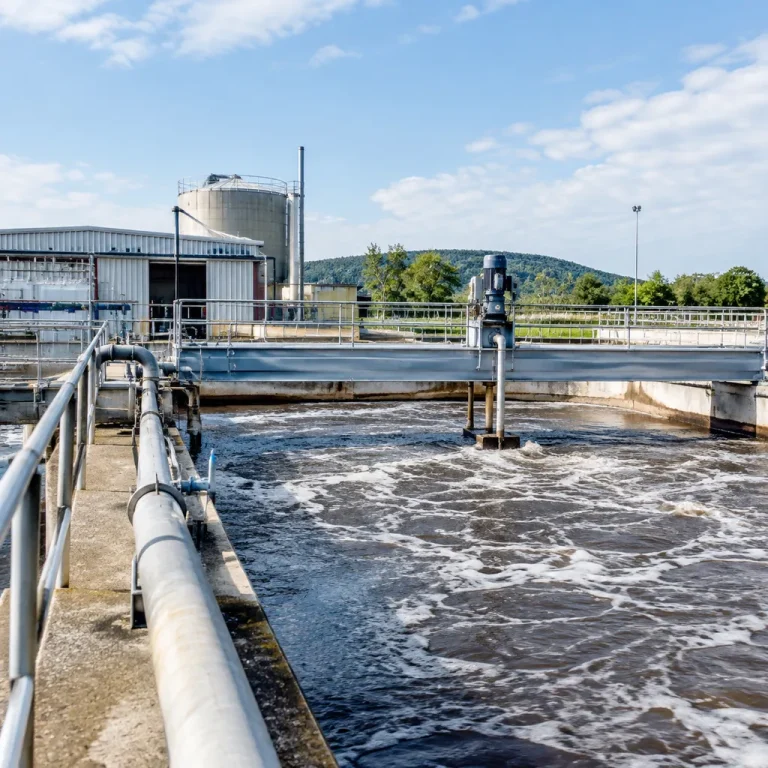
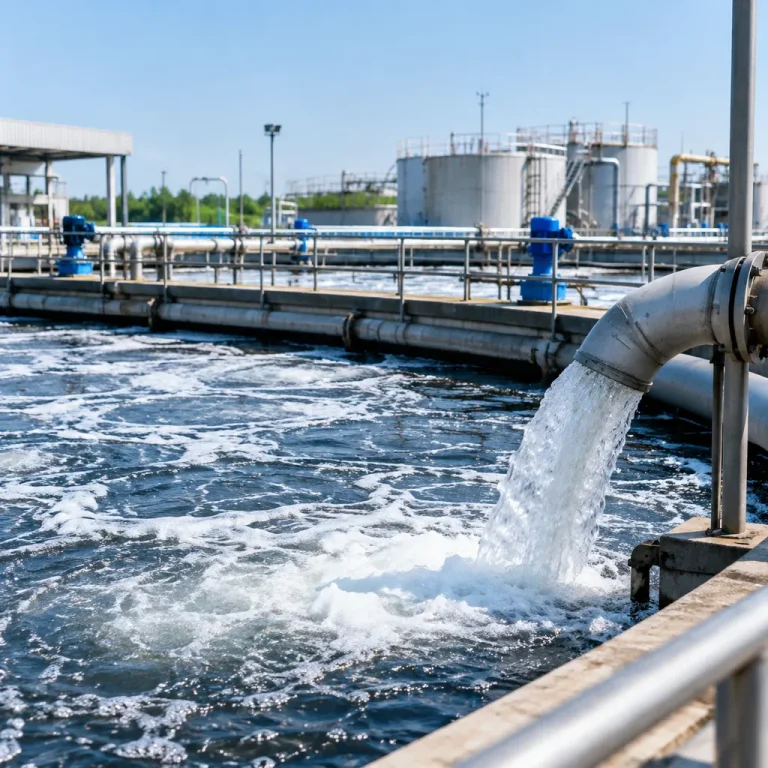
Wastewater Treatment, Sludge, and Manure Management
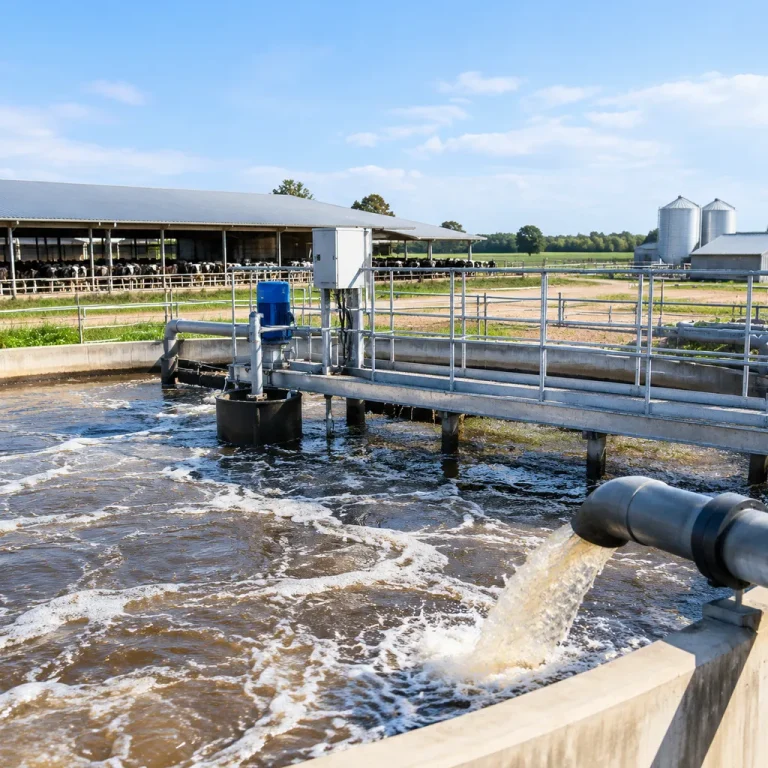
Municipal plants, livestock operations, and sludge processing facilities release heavy loads of hydrogen sulfide and ammonia.
- Targeted Odor Scrubbing: We pair wet scrubbing systems and spray deodorization units to capture soluble gases before they escape the facility perimeter.
- Livestock & Animal Facilities: For confined agricultural exhaust and cattle and pig farm wastewater treatment methods, our dedicated animal room waste gas systems handle high-humidity air streams without clogging.
- Corrosion Protection: Because wet gas and hydrogen sulfide accelerate corrosion, we build these units using corrosion-resistant materials tailored to moisture levels rather than standard carbon steel.
Solid Waste, Landfills, and Composting Facilities
Waste transfer stations and organic composting sites generate complex, fluctuating odor profiles mixed with airborne dust.
- Multi-Stage Filtration: Effective odor control starts by trapping airborne solids with baghouse dust collectors or mechanical pre-filters.
- Odor Decomposition: Once particulates are cleared, UV photolysis or cold plasma technology breaks down persistent organic odor molecules, followed by activated carbon adsorption for final exhaust polishing.
Food and Beverage Processing and Coffee Roasting
Commercial kitchens, food plants, and roasteries produce dense grease vapors, smoke, and strong organic aromas that trigger local nuisance complaints.
- Oil Fume Capture: Our electrostatic oil fume purification units trap fine grease droplets and smoke particles right at the exhaust hood.
- Aroma & VOC Polishing: Downstream activated carbon adsorption units or UV photolysis purifiers neutralize lingering roasting and cooking odors to meet strict urban discharge standards.
Metalworking, CNC Machining, and Chemical Manufacturing
Heavy manufacturing, surface finishing, and chemical synthesis release aggressive acid mists, oil aerosols, and high-concentration VOCs.
- Chemical & Pharmaceutical Exhaust: In high-volume chemical plants, combining UV photolysis with activated carbon handles airflows like 30,000 m³/h while achieving 95% VOC removal.
- Surface Finishing & Metal Lines: Facilities running https://www.soto-epmachinery.com/electroplating-wastewater-treatment-methodshttps://www.soto-epmachinery.com/electroplating-wastewater-treatment-methods-and-solutions/”>electroplating wastewater treatment methods and solutions or acid pickling baths rely on chemical scrubbers and wet scrubber towers to neutralize corrosive acid fumes before venting.
- Thermal & Chloride Limits: When metalworking or chemical exhaust exceeds 80°C or carries chlorides above 200 mg/L, we bypass standard plastics and 316L stainless steel in favor of custom-engineered alloy or lined housings.
How to Select the Right Industrial Odor Control Equipment
Choosing the right industrial odor control equipment comes down to matching your exhaust stream’s actual chemistry and volume to the right treatment stage. At Soto Machinery, we engineer systems around your exact site parameters so you hit local emission standards without overspending on unnecessary hardware.
Assessing Airflow Volume, Pollutant Concentration, and Composition
Before comparing equipment quotes, you need a clear baseline of what is inside your exhaust duct and how fast it moves. We evaluate every project using three core engineering rules:
- Airflow Capacity & Stage Sequencing: High-volume streams—such as our 30,000 m³/h chemical plant VOC systems or 50,000 m³/h printing exhaust lines—rarely rely on a single unit. We sequence treatment in stages: removing particulates first, capturing soluble gases through wet scrubbing systems, breaking down odors with UV photolysis or low-temperature plasma, and finishing with activated carbon adsorption.
- Material Selection Thresholds: Gas conditions dictate construction materials. Wet gas rules out standard carbon steel, exhaust temperatures above 80°C rule out most plastics, and chloride levels exceeding roughly 200 mg/L require upgrading beyond 316L stainless steel.
- Target Pollutant Profile: Whether you are dealing with hydrogen sulfide, oil fumes, or mixed VOCs, matching the unit to the specific compound ensures high purification rates (up to 95%–97% on verified installations). For a deeper breakdown of multi-stage air pollution control equipment, review our https://www.soto-epmachinery.com/waste-gas-treatment-https://www.soto-epmachinery.com/waste-gas-treatment-industrial-air-pollution-control-guide/”>industrial air pollution control guide.
Evaluating Custom-Engineered vs. Modular Systems
Deciding between standard pre-built units and a tailored treatment train depends on your timeline, floor space, and exhaust complexity.
| Selection Factor | Standard Modular Units | Custom-Engineered Systems |
|---|---|---|
| Best Application | Single-pollutant streams or straightforward odor capture | Multi-pollutant exhaust, corrosive gases, or strict outlet limits |
| Production Lead Time | 15–30 days factory turnaround | 30–60 days custom fabrication and factory testing |
| Engineering Approach | Pre-sized capacities ready for rapid dispatch | Designed around your specific inlet/outlet parameters and gas analysis |
| Pricing Structure | Factory-direct pricing (saving up to 30% vs. middlemen) | Custom project quote delivered within 24–48 hours |
Whether you need a standalone unit or a complex multi-stage setup like our https://www.soto-ephttps://www.soto-epmachinery.com/animal-room-odor-control-equipment/”>animal room odor control equipment, every system is built in our ISO 9001 certified facility and CE-marked for international compliance.
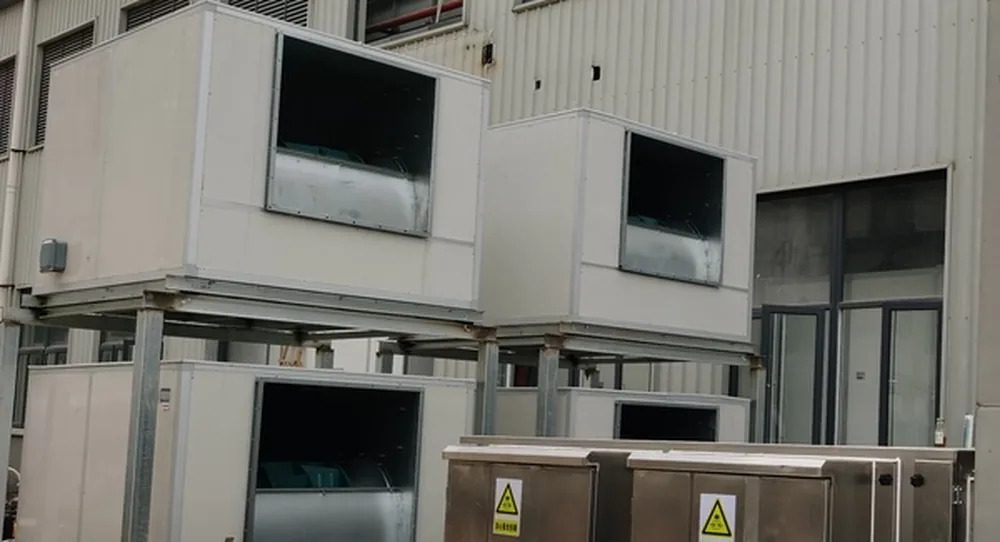
Integrating Online Air Quality Monitoring and After-Sales Support
Long-term compliance depends on consistent operation after commissioning. When finalizing your equipment package, prioritize operational visibility and reliable manufacturer backing:
- Process Control & Verification: Ensure your system layout accommodates inlet and outlet sampling ports or monitoring integration so your team can verify ongoing emission compliance and track media saturation.
- Installation & Commissioning Support: We provide detailed installation drawings and remote video guidance for standard setups, plus on-site installation supervision for larger custom projects.
- Lifecycle Maintenance & Warranty: Every unit ships after strict factory testing and includes a 12-month warranty, operator training, routine maintenance schedules, direct spare parts supply, and 24/7 urgent technical support to prevent costly downtime.
Frequently Asked Questions About Industrial Odor Control
What is the most cost-effective odor control technology for high-volume airflow?
Choosing the most cost-effective air pollution control equipment for high-volume exhaust depends directly on your specific gas composition, moisture levels, and target emission standards rather than airflow volume alone.
- High-Volume VOCs & Organic Odors: Combining UV photolysis waste gas purifiers with activated carbon adsorption units delivers strong economic performance. In our chemical and printing projects, this setup reliably handles large airflows—such as 30,000 m³/h to 50,000 m³/h—achieving 95% to 97% purification rates without excessive operating overhead.
- Soluble Gases & Heavy Fumes: Wet scrubbing systems and spray deodorization towers offer a practical, durable approach when dealing with water-soluble pollutants or wet gas streams where dry media would quickly saturate.
- Factory-Direct Savings: Because we manufacture our systems directly in our Qingdao facility without middlemen, our clients typically save up to 30% on initial equipment costs while getting custom-engineered sizing matched to their exact inlet and outlet parameters.
Can multiple odor control technologies be combined into a hybrid system?
Yes—and for complex industrial exhaust, a multi-stage hybrid train is usually the most reliable way to meet strict regulatory compliance. Single-stage units often struggle when an exhaust stream contains a mix of dust, moisture, soluble gases, and volatile organic compounds (VOCs).
At Soto Machinery, we sequence hybrid systems based on pollutant behavior:
- Particulate Pre-Filtration: Baghouse dust collectors or mechanical filters capture solid dust and oil mist first so downstream equipment stays clean.
- Primary Gas & Odor Treatment: Wet scrubber towers neutralize soluble gases, while UV photolysis or cold plasma technology breaks down stubborn organic odor molecules.
- Polishing: Activated carbon adsorption captures remaining trace VOCs before clean air exits the stack.
This staged engineering approach is especially critical in sensitive environments, as detailed in our guide on https://www.soto-epmachineryhttps://www.soto-epmachinery.com/methods-for-odor-control-in-laboratory-animal-facilities/”>methods for odor control in laboratory animal facilities, where fluctuating biological odors and strict safety rules demand multi-layer protection.
How often do industrial scrubbers and filters require maintenance?
Maintenance intervals depend on your daily operating hours, pollutant concentration, and the specific air pollution control equipment installed. Rather than following a rigid calendar, we recommend scheduled inspections paired with condition-based servicing:
- Activated Carbon Adsorption Units: Media replacement depends on inlet VOC concentration and airflow volume; higher pollutant loads require more frequent carbon bed swaps to prevent breakthrough.
- Wet Scrubbers & Spray Towers: Circulation pumps, spray nozzles, and pH or chemical dosing levels should be checked routinely to prevent scaling and ensure continuous gas absorption.
- UV Photolysis & Plasma Systems: UV lamps and plasma modules need periodic surface cleaning to remove dust or oil film that can block decomposition efficiency, followed by scheduled lamp replacement based on operating hours.
Every system we ship undergoes strict factory testing prior to delivery and includes detailed installation drawings, routine maintenance guidance, spare parts availability, a 12-month warranty, and 24/7 urgent technical support to keep your facility running without unscheduled downtime.