Environmental protection equipment supplier

Case Study / Waste Gas Treatment
Vaccine Manufacturer Animal Lab Deodorization Project
Soto Machinery delivered a comprehensive exhaust air deodorization system. Specifically, the system combines UV photocatalytic oxidation and cyclonic spray technology for a leading vaccine manufacturer’s animal lab in Southern China.
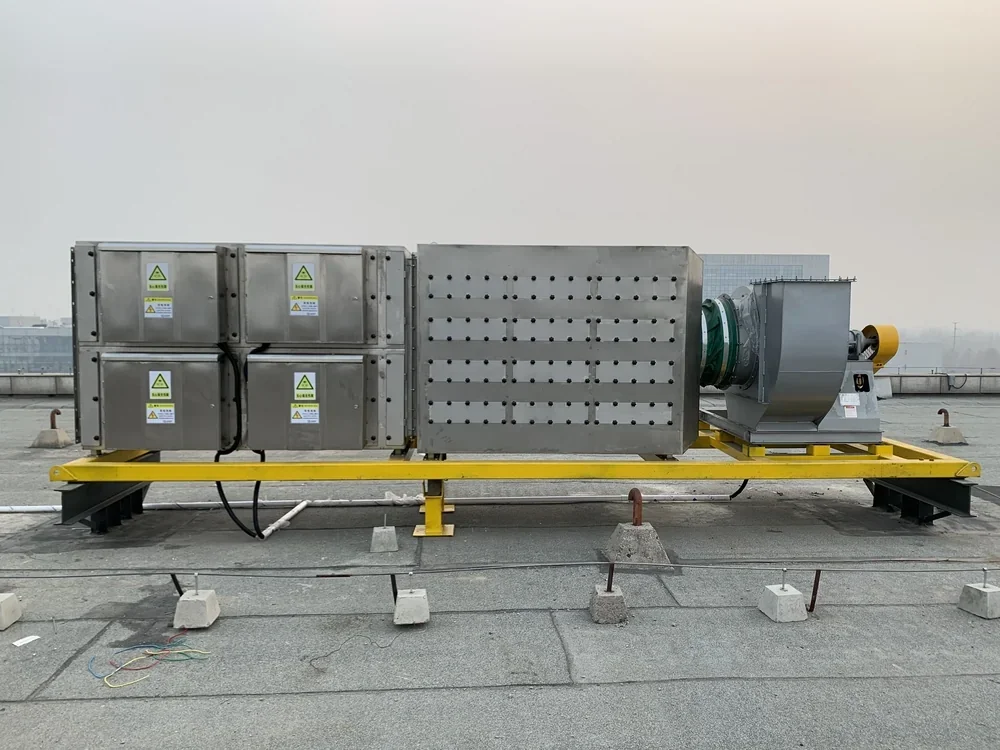
Project Overview
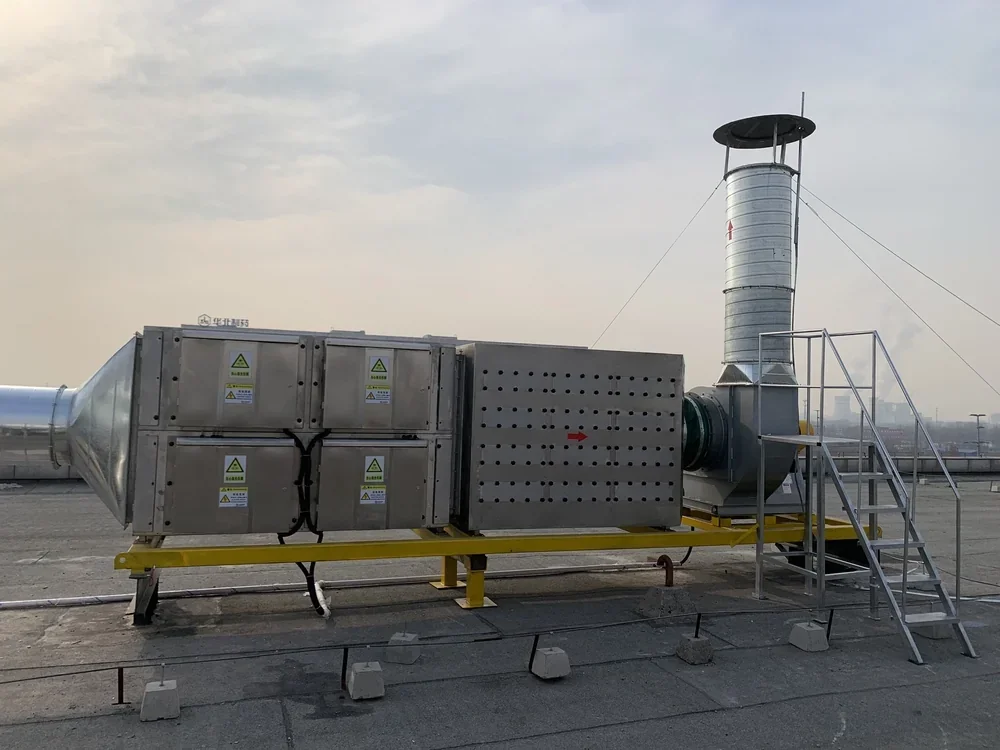
First, this project serves a prominent vaccine manufacturing company in Southern China. The client operates a state-of-the-art animal laboratory facility. In fact, it houses various laboratory animals used in vaccine research, development, and quality control testing. Additionally, the facility generates significant amounts of exhaust air. This exhaust contains malodorous compounds and harmful contaminants that require effective treatment before discharge.
Soto Machinery contracted to design, manufacture, and install a customized waste gas treatment system. The system handles the facility’s high air volume requirements. Furthermore, it ensures compliance with China’s national odor emission standards (GB14554-93 Class II). Therefore, the solution needed to be both technically effective and operationally efficient. It also required low maintenance and reliable long-term performance.
The Challenge
Key Challenges Identified
- Complex Odor Composition: First, the animal facility exhaust contains a mixture of ammonia (NH3), hydrogen sulfide (H2S), mercaptans, indole, skatole, and other VOCs. Specifically, these come from animal waste, bedding materials, and biological processes.
- High Air Volume Requirements: Additionally, the laboratory runs substantial ventilation rates to maintain animal health and indoor air quality. Therefore, the treatment system needs high throughput capacity.
- Regulatory Compliance: Moreover, the treated exhaust must meet GB14554-93 Class II emission standards. In particular, it covers odor concentration, ammonia, hydrogen sulfide, and other specified pollutants.
- Continuous Operation: Furthermore, the animal facility operates 24/7. Consequently, the treatment system must maintain consistent performance without interrupting laboratory activities.
- Bio-Safety Considerations: Finally, as a vaccine manufacturing facility, the system design included bio-safety features. Importantly, these prevent any potential cross-contamination risks.
After conducting a thorough site assessment, our engineering team determined that a single-stage approach could not address the complex pollutant mixture. Specifically, the varying concentrations of inorganic odorous gases (ammonia, H2S) and organic compounds (mercaptans, VOCs) required a multi-stage strategy. Therefore, the system needed to handle both hydrophilic and hydrophobic contaminants effectively.
Our Solution
Soto Machinery designed an integrated two-stage waste gas treatment system. It combines cyclonic spray deodorization and UV photocatalytic oxidation technologies. Consequently, this synergistic approach removes both water-soluble and water-insoluble pollutants. In fact, it provides comprehensive treatment for the complex exhaust air stream.
1
Air Collection & Ducting
Custom-designed ductwork collects exhaust air from multiple animal rooms and laboratory zones. Furthermore, the system ensures balanced air distribution and optimized flow rates across all collection points.
2
Cyclonic Spray Deodorization (Stage 1)
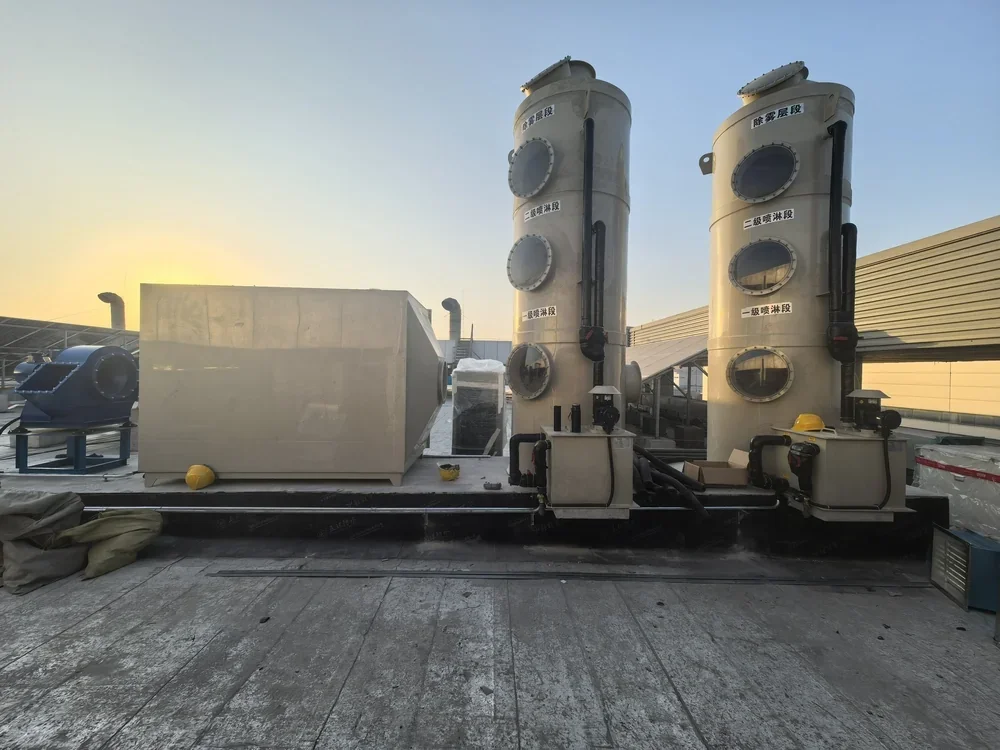
First, the exhaust enters a cyclonic spray tower. There, it receives treatment with a specialized plant-based deodorizing solution. Specifically, this stage removes soluble gases like ammonia and H2S. Additionally, it captures particulate matter through the scrubbing action.
3
UV Photocatalytic Oxidation (Stage 2)
Next, after spray treatment, the air passes through a UV photolysis chamber. This chamber features high-energy UV-C lamps and nano-TiO2 photocatalyst panels. Consequently, the advanced oxidation process breaks down residual organic compounds, mercaptans, and remaining odor-causing molecules into harmless CO2 and H2O.
4
Induced Draft & Discharge
Finally, a centrifugal induced draft fan pulls the treated air through the system. Then, it discharges the air through a dedicated stack at the required height. Additionally, the system includes pressure sensors and variable frequency drive (VFD) control for energy-efficient operation.
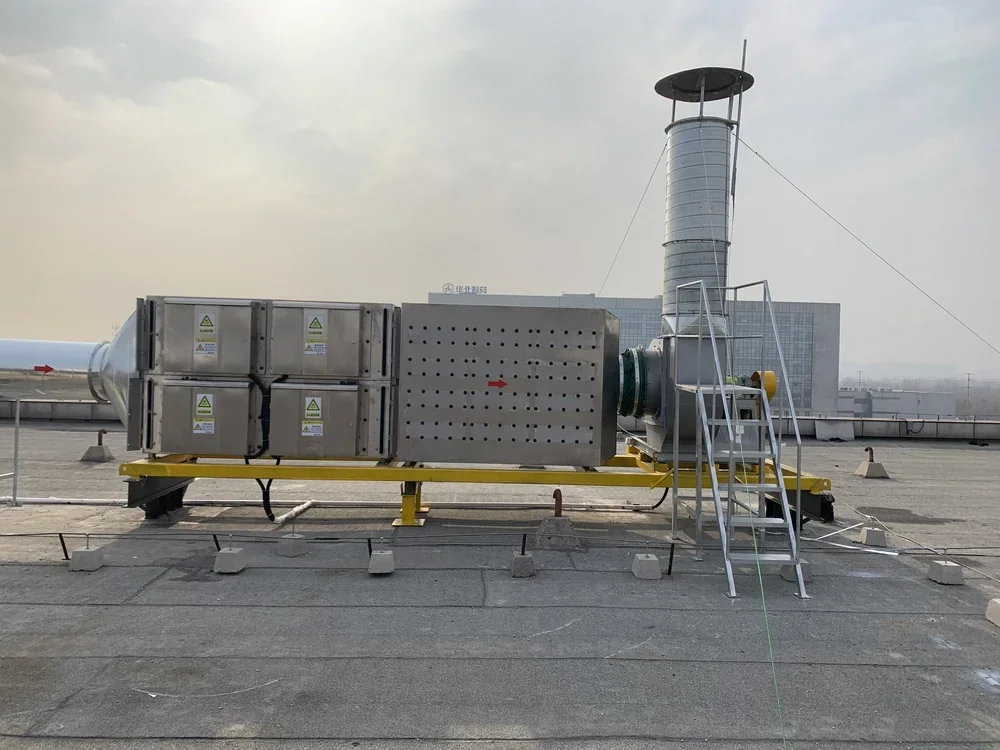
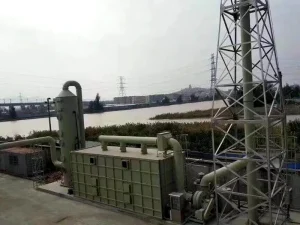
Exhaust gas treatment unit for vaccine manufacturer animal facility
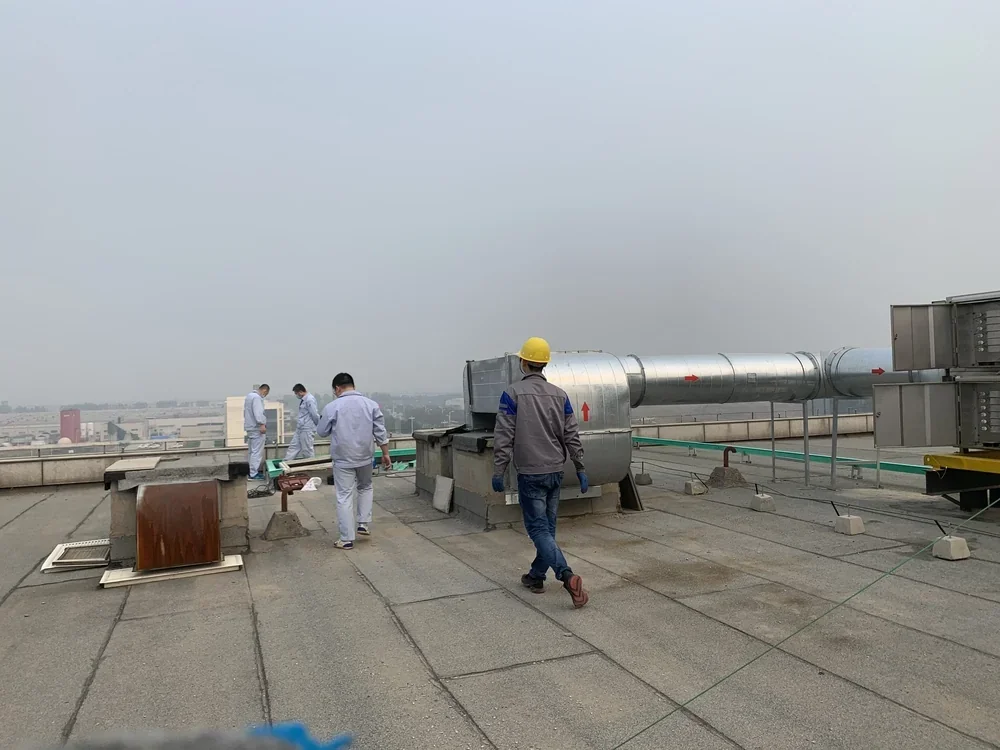
UV deodorization system for vaccine animal laboratory odor control
Why This Combination Works
The cyclonic spray deodorization stage serves as an effective pre-treatment. Specifically, it removes the bulk of water-soluble pollutants (ammonia, H2S) and particulate matter. Therefore, this protects the downstream UV photocatalytic equipment. Additionally, it extends the service life of UV lamps and photocatalyst media. Meanwhile, the UV photolysis stage handles the remaining recalcitrant organic compounds. Notably, these compounds are not effectively removed by wet scrubbing alone.
Overall, this two-stage approach achieves higher removal efficiency than either technology used independently. Furthermore, it provides operational redundancy and flexibility. In particular, operators can adjust treatment parameters based on fluctuating exhaust conditions.
Key Equipment Used
The system incorporates Soto Machinery’s premium waste gas treatment equipment. Importantly, each unit delivers industrial-grade reliability and performance.
☀
UV Photolysis Waste Gas Purifier
High-efficiency UV-C photocatalytic oxidation system with nano-TiO2 catalyst. Specifically, it decomposes VOCs and odor compounds.
Learn More →💧
Spray Deodorization System
Cyclonic spray tower with plant-based deodorant. In fact, it removes ammonia, H2S, and other water-soluble odorous gases.
Learn More →☂
Wet Scrubber Tower
Industrial-grade wet scrubber. Additionally, it handles particulate removal and gas-liquid mass transfer applications.
Learn More →Project Results
Since commissioning, the system has operated continuously with outstanding performance. In addition, third-party testing and regular monitoring confirmed the following results:
90%+
Overall Odor Removal Rate
GB14554-93
Meets Class II Standard
24/7
Continuous Operation
Low
Maintenance Requirement
Verified Performance
Independent environmental monitoring tests confirmed that all emission parameters meet GB14554-93 Class II standard requirements. Specifically, ammonia removal efficiency exceeds 92%, hydrogen sulfide removal reaches 95%, and total VOC removal rate stays consistently above 90%. Furthermore, the client reported complete elimination of odor complaints from neighboring areas. Additionally, staff noticed a significant improvement in the working environment.
Moreover, the system’s intelligent control panel allows remote monitoring and automated operation adjustments. Consequently, this reduces operational costs and ensures consistent treatment performance. Notably, the client has since expanded their facility. Therefore, they ordered additional Soto Machinery treatment systems for their new laboratory wing.
Project Gallery
Browse photos from the project installation, equipment, and system commissioning below.
Vaccine manufacturer animal lab UV photolysis system installed on rooftop
UV purification equipment for vaccine animal laboratory exhaust treatment
Exhaust gas treatment unit for vaccine manufacturer animal facility
UV deodorization system for vaccine animal laboratory odor control
Spray tower installation at vaccine manufacturer animal lab
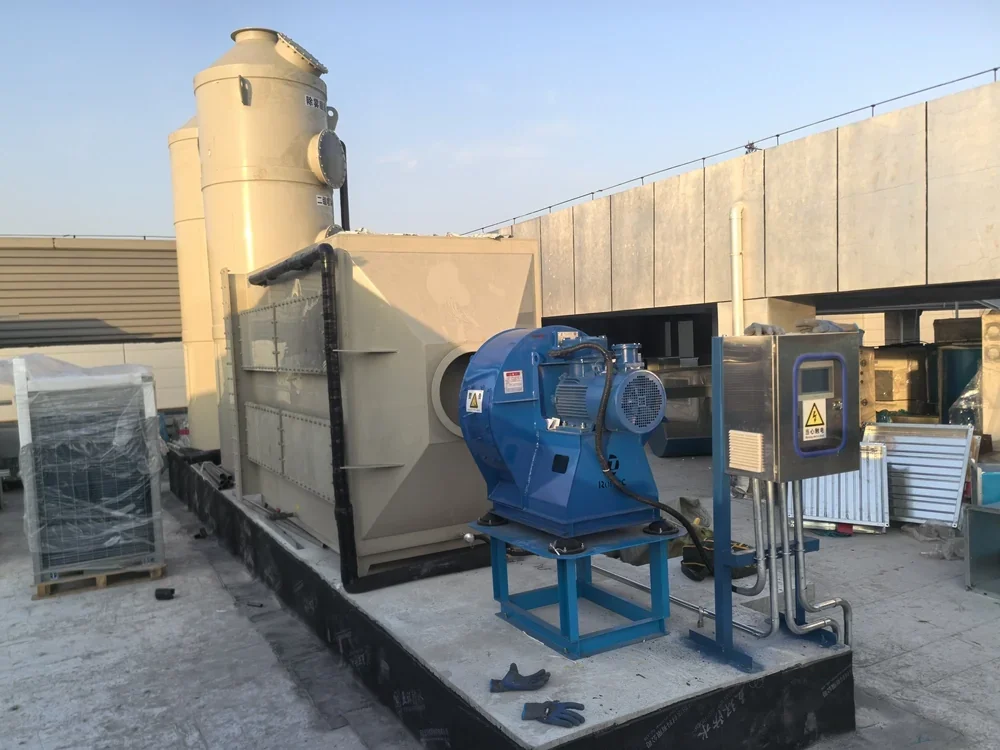
Waste gas scrubber system for vaccine animal facility exhaust treatment
Explore Our Waste Gas Treatment Solutions
Looking for the right equipment for your facility? Browse our complete range of waste gas treatment systems, including UV photolysis purifiers, spray deodorization towers, activated carbon adsorption units, wet scrubbers, and specialized animal room treatment systems. Each product is engineered for industrial-grade reliability and customized to your specific emission requirements.
All Waste Gas Treatment Products
View our complete catalog of exhaust gas purification equipment
Browse All Products →Wastewater Treatment Equipment
DAF, MBR, sedimentation, and filtration systems for industrial wastewater
Browse All Products →Need Help Choosing?
Contact our engineers for a free consultation and customized quote
Get Expert Advice →Need a Custom Solution for Your Facility?
Contact Soto Machinery today for a free consultation. In addition, get a customized quote for your animal facility or laboratory exhaust treatment needs.
Get a Free Quote