Environmental protection equipment supplier

Lab Scale Small Airflow UV Photolysis Unit Design Guide
Looking to benchmark VOC degradation or eliminate stubborn odors before investing in full-scale industrial gas treatment?
That is where bench testing makes all the difference.
A high-precision lab-scale small airflow UV photolysis unit gives you the exact reaction kinetics, retention times, and removal efficiency data you need—saving you thousands in costly scaling mistakes.
In this comprehensive guide, you will discover the core working principles, essential reactor configurations, and proven design guidelines to maximize photolytic performance in your lab.
Let’s dive right in.
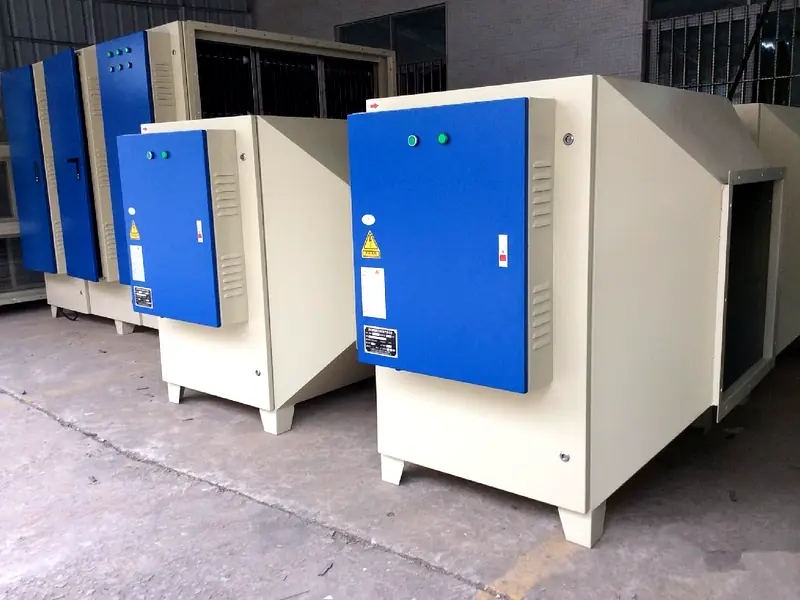
Introduction to Lab-Scale Small Airflow UV Photolysis Units
Managing localized hazardous emissions and process exhausts requires compact, highly efficient gas treatment technologies. A lab-scale small airflow UV photolysis unit delivers targeted photochemical oxidation for low-volume exhaust streams, enabling precise treatment and reliable data collection in controlled environments.
What Is a Lab-Scale UV Photolysis System?
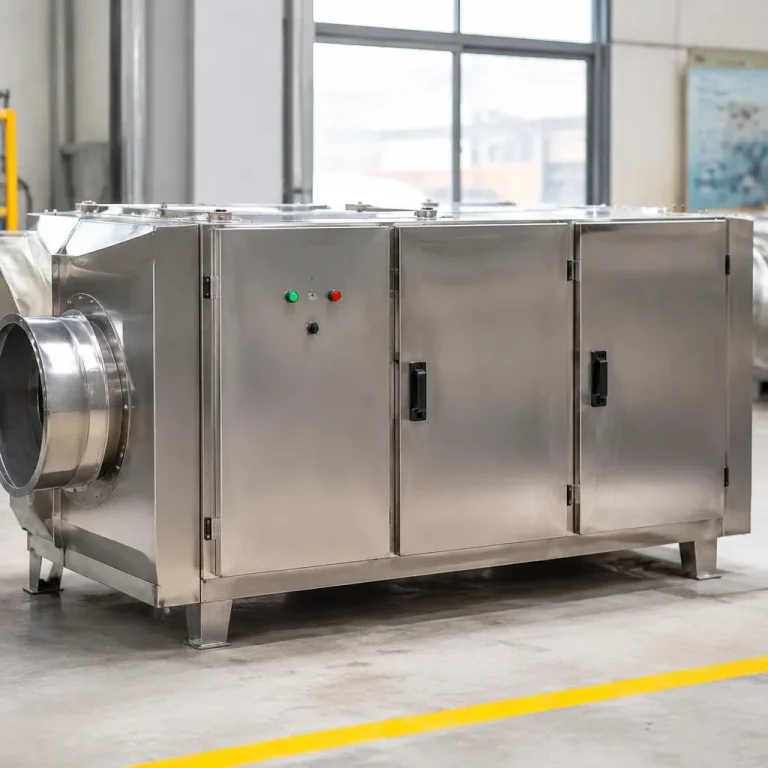
A lab-scale UV photolysis system is a compact photoreactor engineered to treat low-flow continuous gas streams. Unlike massive industrial installations, these units feature a minimal footprint suitable for benchtop setups, mobile testing stations, and pilot laboratories.
Soto Machinery manufactures high-performance environmental protection equipment, designing specialized low-flow UV units that maintain optimal residence times and irradiation profiles within a modular casing.
- Compact Form Factor: Designed for easy integration with standard laboratory fume hoods and benchtop extraction lines.
- Continuous Flow Processing: Delivers steady-state decomposition of gaseous emissions under controlled flow rates.
- Configurable Setup: Allows researchers and facility engineers to adjust flow velocity, lamp output, and retention times.
Core Working Principles of Airflow UV Photolysis
The unit operates on direct photodecomposition coupled with advanced photo-oxidation:
- Direct Photolysis: High-energy UV radiation breaks the molecular bonds of volatile organic compounds (VOCs) and hazardous air pollutants whose bond energies are lower than the photon energy.
- Active Oxidant Generation: Specific UV wavelengths excite oxygen and moisture in the airstream to generate ozone ($O_3$), hydroxyl radicals ($·OH$), and active oxygen atoms.
- Deep Oxidation: These highly reactive free radicals rapidly oxidize decomposed intermediate molecules into stable, harmless end-products such as carbon dioxide ($CO_2$) and water ($H_2O$).
| Step | Mechanism | Target / Outcome |
|---|---|---|
| Primary Cleavage | High-energy UV photon impact | Molecular bond dissociation of complex organics |
| Radical Formation | Photolysis of ambient $O_2$ and $H_2O$ | Production of $·OH$, $O(1D)$, and ozone |
| Final Mineralization | Radical-driven chain oxidation | Conversion into basic mineralized compounds |
Key Applications in Gas Purification and Odor Control
A lab-scale small airflow UV photolysis unit serves vital roles across research, quality control, and light manufacturing:
- Laboratory Fume Hood Treatment: Direct purification of low-volume solvent exhausts, acid-base vapors, and synthetic reaction off-gases.
- Odor Mitigation: Rapid decomposition of malodorous compounds such as hydrogen sulfide, mercaptans, and amine-based streams.
- Pilot Feasibility Testing: Bench-scale validation of photolytic degradation rates prior to scaling up to full-capacity industrial abatement systems.
- Targeted VOC Abatement: Efficient destruction of trace volatile organic compounds in pharmaceutical, chemical, and materials testing facilities.
Key Components and Experimental Setup
We design our lab-scale small airflow UV photolysis unit to deliver precise, repeatable results in benchtop testing and pilot research. Every component—from the photoreactor housing to the diagnostic ports—is engineered to handle low-flow gaseous emissions under controlled conditions.
Reactor Architecture and UV Lamp Configurations
The core of the unit is a compact, corrosion-resistant photoreactor built for benchtop and mobile laboratory operations.
- Reactor Chamber: High-grade, reflective internal surfaces maximize UV radiation intensity across the entire reaction zone.
- UV Lamp Array: High-output UV lamps generate targeted wavelengths to break chemical bonds directly and produce active free radicals for secondary oxidation.
- Modular Layout: Lamps are positioned along the flow path to ensure uniform light exposure without causing unnecessary pressure drops across the system.
Airflow Dynamics and Flow Rate Control
Stable flow conditions are critical when evaluating continuous flow photodecomposition.
| Feature | Engineering Function | Benefit |
|---|---|---|
| Precision Flow Meters | Regulate low-volume air input | Ensures consistent gas retention time |
| Variable-Speed Blower | Delivers fine-tuned small airflow | Matches specific lab exhaust parameters |
| Flow Straighteners | Eliminates turbulence at the inlet | Provides laminar flow across UV lamps |
This setup guarantees that residence time within the UV radiation zone remains fully adjustable for diverse testing protocols.
Target Pollutant Injection and Gas Sampling System
To evaluate odor mitigation and volatile organic compounds (VOCs) removal accurately, our system features dedicated dosing and monitoring points:
- Controllable Pollutant Dosing: An upstream injection port allows researchers to introduce precise concentrations of target gaseous pollutants or solvent vapors into the airstream.
- Multi-Point Gas Sampling: Quick-connect sampling ports at the inlet and outlet enable real-time gas chromatography and sensor readings to measure degradation performance.
- Hermetic Sealing: Gas-tight fittings ensure zero fugitive emissions, keeping testing safe inside standard laboratory spaces.
Performance and Removal Efficiency
Evaluating treatability data requires reliable, repeatable reaction conditions. We engineer each lab-scale small airflow UV photolysis unit to deliver precise degradation metrics across diverse gaseous emissions. By maintaining a stable continuous flow inside the photoreactor, our units provide the exact baseline data needed to assess removal efficiency before scaling up to industrial installations.
Volatile Organic Compound (VOC) Degradation
Our benchtop photolysis systems target a broad spectrum of volatile organic compounds found in chemical synthesis, solvent handling, and material testing. The process combines direct photolysis and advanced oxidation:
- Molecular Bond Cleavage: High-energy UV radiation directly breaks the chemical bonds of complex VOC chains (such as aromatics, ketones, alcohols, and aliphatic hydrocarbons).
- Free Radical Oxidation: Photogenerated ozone and reactive free radicals rapidly attack intermediate species, converting hazardous organics into simpler compounds.
- Complete Mineralization: Optimized residence times drive the reaction toward stable, low-toxicity end products, primarily carbon dioxide ($CO_2$) and water vapor ($H_2O$).
| Contaminant Group | Primary Target Compounds | Dominant Reaction Pathway |
|---|---|---|
| Aromatic Hydrocarbons | Benzene, Toluene, Xylene | UV-C bond rupture + Radical ring opening |
| Oxygenated Solvents | Acetone, Ethyl Acetate, Alcohols | Direct photo-cleavage + Fast photo-oxidation |
| Chlorinated Organics | Trichloroethylene, Dichloromethane | Dechlorination via active oxidative species |
Odorous Compound and Ammonia Reduction
Effective odor mitigation is essential for laboratory fume hoods, pilot testing, and chemical storage exhausts. Our lab-scale small airflow UV photolysis unit handles malodorous gas streams with high reactivity:
- Reduced Sulfur Compounds: Rapidly breaks down hydrogen sulfide ($H_2S$), methyl mercaptan, and dimethyl sulfide into non-odorous sulfate and sulfur dioxide intermediates.
- Ammonia and Nitrogenous Bases: Neutralizes ammonia ($NH_3$) and volatile amines by disrupting $N-H$ and $C-N$ bonds, preventing strong pungent odors from escaping into surrounding workspace areas.
- Instant Deodorization: Eliminates complex mixed odors at the molecular level rather than merely masking them with chemical agents.
Greenhouse Gas Mitigation Potential
Beyond conventional VOCs and odors, small-scale photolytic systems offer valuable insights into low-concentration gaseous emission control:
- Energy-Efficient Abatement: Provides a low-power, non-thermal alternative to direct thermal oxidizers for treating trace hazardous emissions.
- By-Product Characterization: Enables researchers and operators to monitor oxidation pathways, trace carbon conversion, and ensure that discharge streams comply with strict local environmental standards.
- Pilot Data Precision: Generates the kinetic and flow data required to design larger, lower-carbon industrial air pollution control systems.
Factors Influencing UV Photolysis Efficiency
To maximize the performance of a lab-scale small airflow UV photolysis unit, we focus on several critical operating variables. Because benchtop testing and pilot research deal with lower gas volumes, fine-tuning these parameters provides the exact baseline data needed before scaling up to full industrial systems.
Impact of Light Wavelength and Radiation Intensity
The core of UV photodecomposition relies on providing sufficient photon energy to break target molecular bonds:
- Targeted Wavelengths: Utilizing high-energy UV-C spectrum bands (such as 185 nm and 254 nm) ensures direct photolysis of volatile organic compounds while simultaneously generating ozone and reactive oxygen species.
- Radiation Intensity: Higher UV irradiance increases photon density within the photoreactor, accelerating the breakdown rate of stubborn gaseous emissions.
- Lamp Positioning: Proper spatial distribution of UV lamps minimizes dead zones and ensures uniform exposure across the entire cross-section of the reaction chamber.
Role of Airflow Rate and Retention Time
In any continuous flow setup, contact time governs the extent of pollutant destruction:
- Residence Time Control: Lowering the airflow rate increases the gas retention time inside the unit, allowing complex organic chains more time to cleave and oxidize.
- Flow Uniformity: Maintaining a steady, laminar velocity prevents gas short-circuiting, ensuring every parcel of contaminated air receives adequate UV irradiation.
- Design Optimization: Calibrating flow dynamics specifically for small airflow capacities guarantees high removal rates without requiring oversized reactor housings.
Effect of Relative Humidity and Environmental Conditions
Environmental parameters inside the duct directly alter photochemical reactions:
- Humidity Levels: Water vapor acts as a primary source for generating powerful hydroxyl free radicals (•OH). Moderate moisture levels enhance oxidation efficiency, though excessive condensation on quartz sleeves can scatter UV light.
- Gas Temperature: Standard laboratory operating temperatures maintain optimal lamp surface temperatures, preventing output degradation.
- Particulate Interference: Clean, dust-free inlet streams prevent coating on the lamp surfaces, ensuring unobstructed UV transmission for consistent odor mitigation and VOC degradation.
Advantages and Operational Challenges
Deploying a lab-scale small airflow UV photolysis unit provides the exact operational data needed to treat hazardous emissions without the heavy capital expense of full-size systems. While small-scale testing delivers precise control over process parameters, managing real-world operational trade-offs remains essential for achieving optimal gas degradation.
Benefits of Lab-Scale Testing for Industrial Scaling
We use small-footprint photoreactors to bridge the gap between theoretical gas-phase chemistry and industrial-scale execution. Running pilot trials on a compact footprint allows us to validate treatment efficacy before committing to large infrastructure investments.
- Accurate Kinetic Modeling: Directly measure reaction rates, free radical generation, and retention requirements under steady continuous flow conditions.
- Cost-Effective Parameter Tuning: Optimize UV lamp configurations, power density, and flow velocity without disrupting plant-wide operations.
- Modular Adaptability: Test multiple exhaust profiles easily, whether set up on a mobile laboratory bench or integrated into localized fume extraction lines.
- De-risking Full-Scale Projects: Establish precise energy consumption metrics to avoid oversizing or undersizing future commercial equipment.
Operational Limits and By-Product Formation
UV photodecomposition must be carefully managed to maintain high destruction efficiencies and prevent unwanted secondary emissions. Incomplete molecular breakdown can result in intermediate compounds that require targeted process adjustments.
| Operational Challenge | Primary Cause | Practical Solution |
|---|---|---|
| Ozone Accumulation | Excess vacuum-UV generation without complete catalytic consumption | Incorporate downstream ozone-destruct catalysts or balanced airflow velocity |
| Intermediate VOC By-Products | Insufficient residence time or low radiation intensity | Optimize airflow rates and increase UV power density in the active reaction zone |
| Lamp Sleeve Fouling | Particulate matter and aerosol deposition on quartz sleeves | Install pre-filtration stages and implement routine sleeve wipe protocols |
| Humidity Sensitivity | Moisture-induced radical scavenging or excessive UV light scattering | Regulate inlet relative humidity through integrated conditioning modules |
Selection and Design Guidelines for Lab Scale Units
Selecting and configuring a lab-scale small airflow UV photolysis unit requires balancing compact physical dimensions with precise oxidation kinetics. We design these benchtop systems to deliver predictable, reproducible treatment metrics that scale seamlessly to pilot-scale and full-size industrial installations.
Determining Design Parameters for Small Airflow Systems
Proper sizing ensures target volatile organic compounds (VOCs) and gaseous emissions receive sufficient irradiation without causing excessive pressure drop across the photoreactor.
- Target Airflow Range: Typically calibrated for low flow rates between 5 to 50 m³/h (3 to 30 CFM) to match laboratory fume hoods or micro-stream test points.
- Residence Time: Designed to maintain an optimal contact window of 1.0 to 3.0 seconds inside the active radiation chamber.
- UV Dosage & Wavelength: Sized to provide high-energy photodecomposition using dual-band UV lamps (185 nm for ozone generation and 254 nm for direct molecular cleavage).
- Chamber Material: Fabricated from corrosion-resistant 304 or 316 stainless steel to withstand aggressive solvent vapors and continuous exposure to ozone.
| Design Parameter | Laboratory Benchmark | Sizing Consideration |
|---|---|---|
| Airflow Volume | 5 – 50 m³/h | Tuned for continuous flow testing |
| Retention Time | 1.0 – 2.5 seconds | Ensures complete free radical interaction |
| Lamp Configuration | Multi-tube quartz sleeve | High-output UVC/VUV low-pressure lamps |
| Pressure Drop | < 150 Pa | Minimizes drag on small lab exhaust blowers |
| Inlet Concentration | 10 – 500 ppm | Standard range for bench VOC profiling |
Integrating UV Photolysis with Photocatalysis (UV/TIO2)
Combining direct UV photolysis with titanium dioxide (TiO_2) catalytic media significantly enhances purification performance for complex exhaust streams.
- Synergistic Free Radical Generation: While deep-UV light cleaves chemical bonds directly, the TiO_2 catalyst activates under 254 nm radiation to produce powerful hydroxyl (·OH) free radicals on the media surface.
- Broad-Spectrum Odor Mitigation: The combined UV/photocatalysis process breaks down recalcitrant organics, mercaptans, and amine-based odors that resist single-stage photolysis.
- Catalyst Form Factor: We utilize honeycomb or coated mesh substrates that maintain open flow channels, keeping static resistance low in mobile laboratory and pilot-scale testing rigs.
Safety Considerations and Maintenance Protocol
Operating a small-footprint photo-oxidation system in confined research spaces demands strict safety hardware and straightforward servicing routines.
- Optical Interlocks & Shielding: Units incorporate automated shut-off switches on all access doors and viewports to prevent accidental UV-C exposure to personnel.
- Ozone Management: Downstream exhaust requires either an active carbon polishing bed or an integrated catalytic ozone-destroyer before indoor or ambient venting.
- Quartz Sleeve Maintenance: Inspect and wipe lamp sleeves monthly using pure ethanol to remove particulate build-up that blocks UV transmission.
- Lamp Replacement Schedule: Low-pressure amalgam lamps maintain peak efficiency for 8,000 to 12,000 operational hours before requiring replacement.