Environmental protection equipment supplier

Oil Fume Purifier Selection Guide for Commercial Kitchens
Understanding Commercial Kitchen Oil Fume Purifiers
Selecting the right ventilation equipment is a critical decision for any foodservice operation. Use this Oil Fume Purifier Selection Guide for Commercial Kitchens to understand how modern exhaust filtration systems capture grease, eliminate smoke, and keep your facility compliant with environmental regulations.
What Are Commercial Oil Fume Purifiers and How Do They Work?
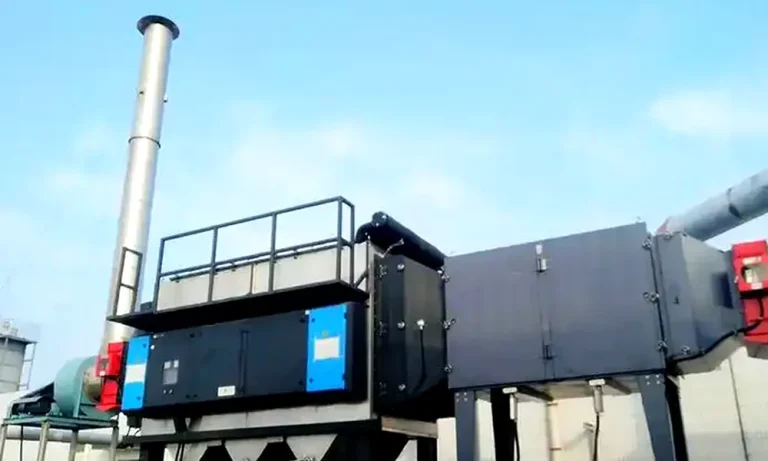
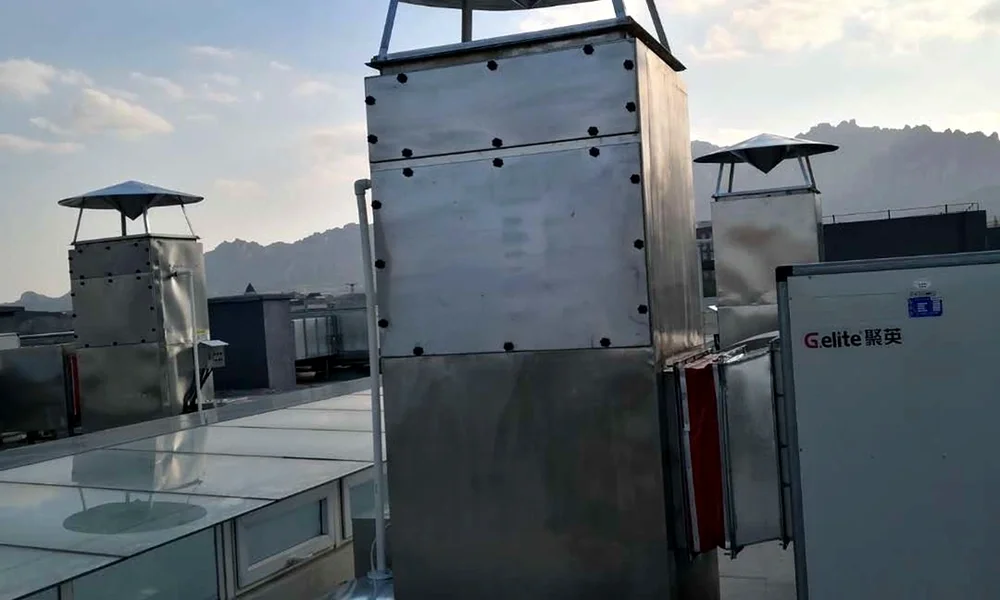
A commercial oil fume purifier is an industrial waste gas treatment unit installed directly within a kitchen’s exhaust ductwork. Unlike standard mechanical hood baffles that only trap large grease droplets, a dedicated grease filtration system captures microscopic oil aerosols, smoke particulates, and volatile organic compounds (VOCs) before the air exits the building.
Depending on the cooking load and emission requirements, commercial kitchen exhaust filtration relies on proven treatment stages:
- Mechanical Pre-Filtration: Captures heavy grease splatters and large particles to protect downstream components.
- Core Particulate Collection: Uses targeted separation technologies—such as electrostatic precipitation—to trap fine oil mist and visible smoke.
- Deodorization & Gas Treatment: Integrates secondary modules like a UV Photolysis Waste Gas Purifier or an Activated Carbon Adsorption Unit to break down cooking odors and gaseous pollutants.
Why Air Filtration and Exhaust Control Matter in Foodservice
Unfiltered kitchen exhaust creates immediate operational, safety, and neighborhood liabilities. Installing an engineered commercial ventilation equipment setup protects your business across three core areas:
- Fire Risk Reduction: Vaporized grease condenses inside unpurified exhaust ducts, creating a severe fire hazard. High-efficiency capture prevents grease buildup in ductwork and exhaust fans.
- Neighborhood & Property Relations: Dense urban locations, shopping malls, and mixed-use buildings cannot tolerate visible smoke plumes or lingering cooking odors. Effective kitchen odour control prevents neighbor complaints and lease violations.
- Equipment Longevity: Clean exhaust air protects rooftop exhaust fans from grease fouling, reducing motor strain, imbalance, and premature mechanical failure.
Emission Regulations and Environmental Compliance Standards
Municipal authorities and environmental agencies enforce strict limits on particulate matter, visible smoke opacity, and odor emissions from commercial foodservice operations. Failing to meet local discharge standards can result in heavy fines, forced kitchen shutdowns, or rejected building permits.
When evaluating equipment for international compliance, look for systems manufactured under verified quality management frameworks:
| Compliance Factor | Operational Requirement | Engineering Standard |
|---|---|---|
| Factory Quality Control | Consistent manufacturing tolerances and reliable component assembly | ISO 9001 certified production |
| International Safety & Emissions | Electrical safety and verified pollutant capture performance | CE-marked equipment compliant with international emission standards |
| Custom Discharge Matching | System capacity aligned with local municipal exhaust limits | Engineered to specific gas composition and airflow rates |
At Soto Machinery, our Oil Fume Purification Units and complementary deodorization systems are custom-engineered to match your exact exhaust flow rate and local discharge regulations—helping commercial kitchens pass environmental inspections without costly retrofits.
Key Features and Advantages of Modern Fume Purification Systems
When we help facility managers and kitchen operators upgrade their commercial ventilation equipment, we focus on three operational outcomes: clean air discharge, lower running costs, and fire-safe reliability. Modern commercial kitchen exhaust filtration goes far beyond basic grease traps to solve real compliance and maintenance headaches.
High Purification Efficiency and Odor Control
Standard mechanical hood filters only catch large oil droplets, letting fine smoke and volatile compounds escape into the neighborhood. Modern multi-stage filtration systems capture sub-micron grease aerosols before they reach the exhaust outlet, helping kitchens meet strict international emission standards.
- Multi-Stage Grease Capture: Combining mechanical pre-filtration with an Oil Fume Purification Unit traps both heavy grease mist and fine cooking smoke.
- Targeted Kitchen Odour Control: When kitchens operate near residential buildings or dense commercial zones, pairing grease removal with UV photolysis or activated carbon adsorption breaks down persistent cooking odors and VOCs.
- Custom Airflow Matching: Systems are engineered around your exact exhaust airflow capacity and cooking load so purification efficiency stays consistent during peak service hours—similar to how https://www.soto-epmachinery.com/https://www.soto-epmachinery.com/industrial-off-gas-treatment-systems-standards-and-sizing/”>industrial off-gas treatment systems match treatment stages to specific gas compositions and flow rates.
Energy Saving and Reduced Life Cycle Costs
Upfront equipment price is only one part of your budget. Working directly with our Qingdao manufacturing facility eliminates middleman markups—saving up to 30% on initial procurement—while smart system design keeps ongoing operational expenses low.
| Cost Factor | Traditional / Basic Exhaust | Modern Fume Purification System |
|---|---|---|
| Collector Media | Frequent disposable filter replacements | Washable, reusable collector cells reduce consumable waste |
| Fan Power Draw | High static pressure buildup strains exhaust fans | Low-resistance airflow design lowers continuous electricity use |
| Duct Cleaning | Heavy grease accumulation requires frequent deep cleans | Upstream capture keeps downstream ductwork cleaner for longer |
| Procurement & Support | Markups from third-party resellers | Factory-direct pricing backed by a 12-month warranty and direct spare parts supply |
Operational Safety, Fire Prevention, and Reliability
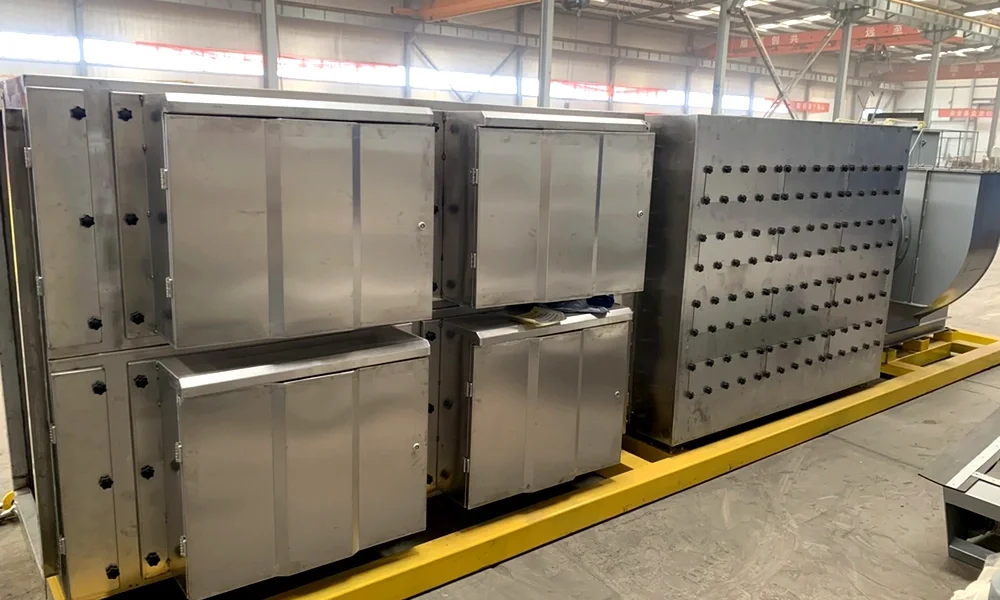
Grease buildup inside exhaust ducts is one of the biggest fire hazards in foodservice. Capturing oil mist right at the purification unit prevents flammable residue from coating interior duct walls and rooftop fans.
- Reduced Fire Risk: Removing grease aerosols early stops sticky deposits from accumulating in hard-to-reach duct runs.
- Certified Build Quality: Our systems are built in an ISO 9001 certified factory with CE-marked components designed for continuous commercial duty.
- Dependable Support: Every unit undergoes factory testing prior to shipment and comes with installation drawings, routine maintenance guidance, and 24/7 technical support to prevent unexpected kitchen downtime.
Types of Commercial Kitchen Oil Fume Purifiers
Choosing the right commercial kitchen exhaust filtration setup comes down to your cooking load, local discharge rules, and building layout. In my experience helping facility managers and contractors spec out systems, no single unit fits every kitchen. Here is how the main equipment categories break down so you can match the hardware to your actual site conditions.
Electrostatic Precipitators (ESP) for Grease and Smoke
An https://www.soto-epmachinery.com/oil-fume-purifier-https://www.soto-epmachinery.com/oil-fume-purifier-electrostatic-precipitation/”>electrostatic precipitator oil fume purifier is the workhorse for capturing fine smoke and airborne grease droplets. Instead of relying on disposable filter pads that clog quickly, these units charge oil particles as they enter the airflow and trap them onto metal collector plates.
- Best for: Heavy frying, grilling, wok stations, and high-volume commercial cooking.
- Key operational advantage: Washable collector cells reduce long-term consumable expenses compared to single-use media filters.
- What to watch: Collector plates need scheduled washdowns to maintain stable purification efficiency and prevent pressure drop across your ductwork.
UV Photolysis and Activated Carbon Deodorizing Units
Standard grease filtration stops oil mist, but gaseous odors and volatile organic compounds (VOCs) pass right through. When your kitchen sits near residential neighbors, shopping mall walkways, or strict municipal air-quality zones, I recommend building a multi-stage filtration line by adding secondary deodorizing equipment downstream from your primary Oil Fume Purification Unit.
- UV Photolysis Waste Gas Purifier: Uses high-energy ultraviolet light to break down odor molecules and airborne grease vapors before they exit the duct.
- Activated Carbon Adsorption Unit: Traps residual cooking smells and organic compounds inside porous carbon media—ideal as a final polishing stage for dense urban locations.
- Spray Deodorization System: Handles higher-volume exhaust streams where continuous mist scrubbing helps neutralize persistent odors and cool the air stream.
Integrated Exhaust Hood and Fume Purifier Systems
If you are working inside a tight footprint—such as a basement kitchen, food court stall, or retrofitted storefront—running separate ceiling-hung purifiers and long duct runs isn’t always realistic. Integrated systems combine the capture hood and grease filtration hardware into a single compact unit above the cooking line.
- Space efficiency: Eliminates bulky inline duct cabinets when ceiling clearance is limited.
- Shorter grease paths: Captures oil mist right at the source before it coats long stretches of exhaust ductwork.
- Custom sizing: Because kitchen layouts vary widely, we engineer custom configurations based on your exact hood dimensions, airflow capacity, and cooking equipment layout.
Low-Altitude vs. High-Altitude Discharge Purifiers
Where your exhaust pipe terminates determines the purification standard your system must hit. Local environmental codes draw a sharp line between street-level outlets and rooftop stacks.
| Feature | Low-Altitude Discharge | High-Altitude Discharge |
|---|---|---|
| Outlet Location | Ground level, building sidewalls, or alleyways near pedestrians | Routed through a vertical stack well above the roofline |
| Purification Requirement | Strict; requires high-efficiency grease capture plus active odor control | Moderate; relies partly on atmospheric dispersion at height |
| Typical Setup | Oil Fume Purification Unit + UV Photolysis or Activated Carbon | Standard mechanical pre-filtration + primary Oil Fume Purification Unit |
| Best Use Case | Urban storefronts, malls, and buildings without rooftop duct access | Standalone restaurants, hotels, and facilities with dedicated roof risers |
Commercial Application Scenarios
Different foodservice environments generate vastly different grease loads, airflow volumes, and odor profiles. In our manufacturing experience, matching an Oil Fume Purification Unit to your exact kitchen operation prevents compliance headaches and avoids overspending on unnecessary capacity.
| Kitchen Type | Primary Exhaust Challenge | Recommended Filtration Setup |
|---|---|---|
| Fine Dining & Casual Restaurants | Street-level odor complaints and tight spaces | Compact purifier + UV photolysis or activated carbon |
| Hotels & Large Resorts | Continuous multi-line exhaust volume | High-capacity custom-engineered modular systems |
| Schools & Healthcare | Strict indoor air quality and operational safety | Reliable grease capture + low-maintenance collectors |
| BBQ & Heavy Frying | Dense smoke, heavy grease, and strong VOCs | Heavy-duty multi-stage purification + deodorization |
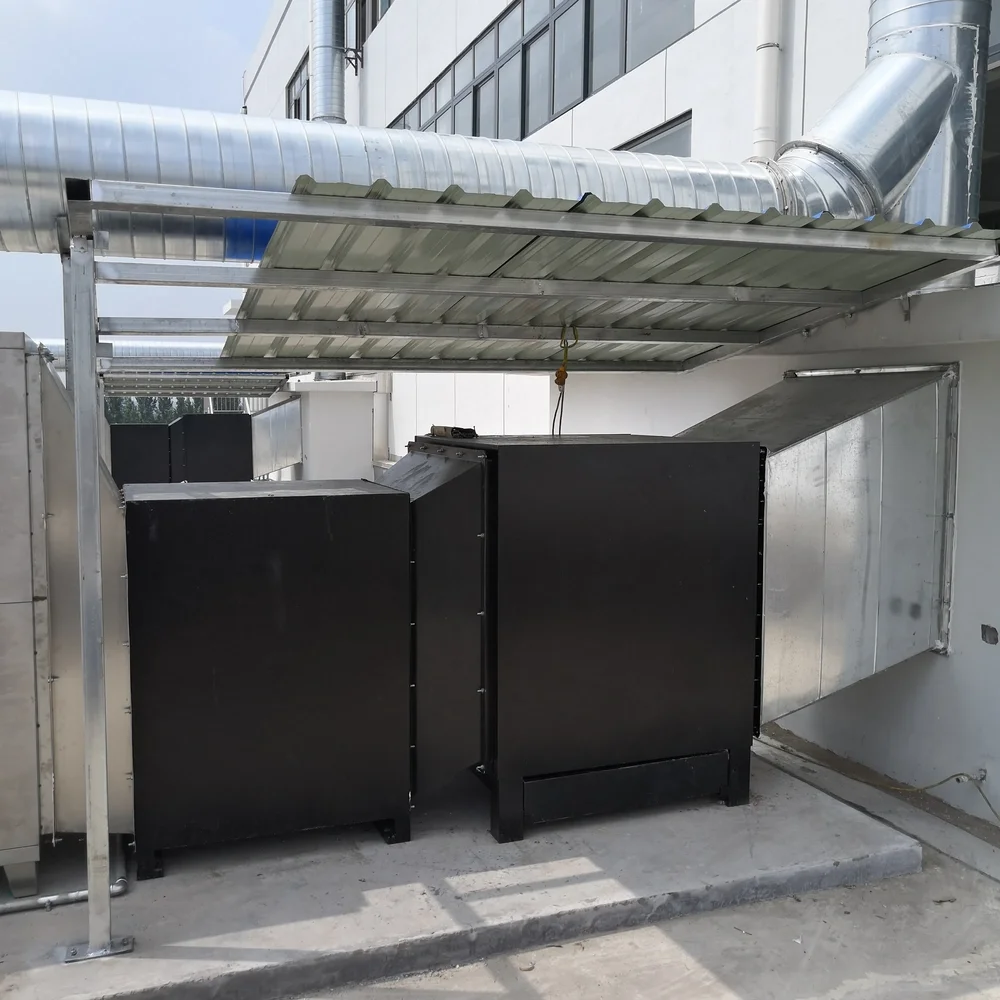
Fine Dining and Casual Restaurants
Independent restaurants and street-front cafes usually operate in dense commercial districts or ground-floor retail spaces where low-altitude exhaust discharge is strictly monitored. Even moderate pan-searing or sautéing creates visible smoke and cooking smells that quickly draw neighbor complaints.
- Space-Saving Layouts: We engineer compact units that fit tight ceiling plenums or narrow alleyways without choking your existing exhaust fan airflow.
- Targeted Kitchen Odour Control: Pairing a standard Oil Fume Purification Unit with an Activated Carbon Adsorption Unit or UV Photolysis Waste Gas Purifier neutralizes lingering food odors before air reaches the street.
Hotels, Resorts, and Large Hospitality Kitchens
Hotel kitchens, banquet halls, and resort dining complexes run multiple cooking lines simultaneously from early breakfast service through late-night events. These facilities require commercial ventilation equipment built for long operating hours and high air volumes.
- Custom Airflow Matching: We size and build custom systems tailored to combined hood exhaust rates, ensuring consistent capture across grill, wok, and pastry stations.
- Centralized Duct Integration: Large hospitality projects often benefit from centralized rooftop or mechanical-room filtration, backed by our factory installation drawings and remote video commissioning support.
Institutional Kitchens in Schools and Healthcare
University dining halls, K–12 cafeterias, and hospital kitchens prioritize hygiene, fire prevention, and predictable maintenance schedules over high-heat specialty cooking. While grease concentrations are typically moderate, exhaust systems must run reliably every day without disrupting campus or patient environments.
- Simplified Maintenance: Washable collector components allow facility teams to follow routine cleaning schedules without constant spending on disposable filter media.
- Compliance & Safety: Built under ISO 9001 quality standards with CE-certified components, these systems help institutional operators meet local fire and environmental discharge codes cleanly.
High-Smoke Operations: BBQ and Heavy Frying
Charcoal grills, wood-fired ovens, commercial fryers, and high-heat stir-fry lines produce the heaviest sub-micron grease aerosols and thick smoke. Standard mechanical baffle filters let fine oil mist pass straight into the ductwork, creating fire hazards and heavy exhaust plumes.
- Multi-Stage Filtration: High-smoke kitchens need primary grease capture paired with secondary deodorizing stages—such as Spray Deodorization Systems or UV Photolysis—to strip both particulate smoke and volatile organic compounds (VOCs).
- Heavy-Duty Durability: Because high-grease environments stress standard fans and ducts, we customize unit configurations based on exact gas composition and cooking intensity to keep discharge compliant year-round.
How to Select the Right Oil Fume Purifier for Your Kitchen
Choosing the right commercial kitchen exhaust filtration system comes down to matching your equipment specs to your actual kitchen workload. When we engineer custom waste gas systems for foodservice clients, we start with four core operational variables rather than guessing at standard sizes.
Calculating Required Airflow Volume (CFM / m³/h)
Your airflow capacity needs to match both your exhaust hood dimensions and how hard your line cooks run the stoves. Undersizing lets smoke spill into the dining area, while oversizing wastes electricity and raises upfront equipment costs.
- Measure your hood footprint: Larger canopy hoods require higher cubic meters per hour (m³/h) or CFM to maintain proper capture velocity across the entire cooking surface.
- Account for cooking intensity: Light prep and steaming generate far lower thermal updrafts than high-heat frying, searing, or open-flame grilling.
- Add a practical buffer: Always factor in ductwork resistance so your system maintains its rated purification efficiency at the point of discharge.
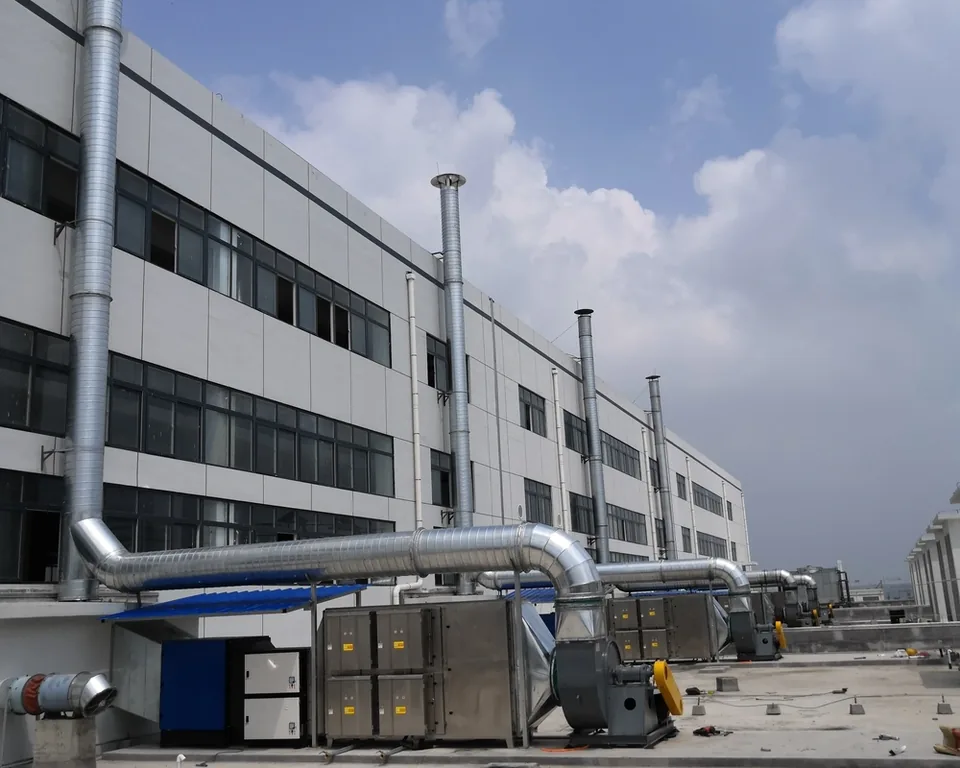
Matching Purifier Technology to Cooking Styles and Odor Levels
A standalone grease filtration system captures oil droplets and visible smoke, but it will not strip away volatile organic compounds (VOCs) or heavy cooking smells. Depending on your menu and local municipal codes, you may need multi-stage filtration:
| Kitchen Operation | Primary Exhaust Challenge | Recommended System Setup |
|---|---|---|
| Cafes & Light Prep | Light steam and minimal grease mist | Standard Oil Fume Purification Unit |
| Casual & Full-Service Dining | Moderate grease aerosols and mixed food odors | Oil Fume Purification Unit + Activated Carbon Adsorption Unit |
| BBQ, Wok & Heavy Frying | Dense smoke, sub-micron grease, and strong odors | Oil Fume Purification Unit + UV Photolysis Waste Gas Purifier |
For dense commercial zones or strict property line rules, pairing grease capture with https://www.soto-epmachinery.com/how-does-the-https://www.soto-epmachinery.com/how-does-the-integrated-spoiler-spray-deodorization-system-achieve-efficient-odor-removal/”>how an integrated spoiler spray deodorization system achieves efficient odor removal or activated carbon beds keeps neighbors and inspectors satisfied.
Integrating Exhaust Fans, Ductwork, and Make-Up Air Systems
Your purifier does not work in isolation—it sits inside a complete commercial ventilation equipment loop.
- Static pressure matching: Every filter stage adds resistance. Your exhaust fan must have enough static pressure to pull air cleanly through the purifier without stalling.
- Duct layout: Sharp 90-degree bends right before the unit create uneven airflow, reducing contact time and lowering overall purification efficiency. Keep transitions smooth and straight where possible.
- Make-up air balance: If you exhaust high volumes of air without bringing tempered replacement air back in, negative pressure will build up, causing doors to slam and pilot lights to flicker.
Evaluating Space Constraints and Noise Levels
Before locking in an equipment model, walk your mechanical room, alley, or rooftop to check physical limits.
- Clearance for maintenance: Leave enough room on the access side to slide out collector cells or replace filter media without dismantling ductwork.
- Indoor vs. outdoor mounting: Rooftop installations save valuable back-of-house floor space, provided the housing is weatherproofed and structurally supported.
- Acoustic control: In urban areas or mixed-use buildings, fan vibration and exhaust noise trigger complaints fast. Using acoustic duct liners, vibration isolators, and properly sized low-RPM fans keeps decibel levels under control.
Installation, Maintenance, and Lifecycle Management
Buying the right commercial kitchen exhaust filtration system is only half the job. How you install, clean, and support that equipment over its lifespan determines whether your kitchen stays compliant or runs into costly downtime. I always advise operators to treat installation planning and routine upkeep as core parts of the initial purchase.
Essential Documentation and Site Assessment Before Purchasing
Before requesting a quote or ordering equipment, gather accurate site details so your supplier can engineer a system that fits your exact kitchen layout and local emission standards. Missing measurements or unclear gas conditions often cause expensive ductwork modifications later.
Prepare the following details for your site assessment:
- Exhaust Airflow & Hood Specs: Total exhaust flow rate (m³/h or CFM), hood dimensions, and existing fan capacity.
- Cooking Profile: Types of cooking equipment (heavy frying, grilling, steaming) and peak operating hours, which dictate grease load and odor intensity.
- Installation Footprint: Available indoor ceiling space, rooftop load limits, and clearance needed for opening unit doors during maintenance.
- Discharge & Compliance Rules: Local municipal exhaust standards, including whether you need add-on stages like UV photolysis or activated carbon for strict kitchen odor control.
Routine Cleaning Checklists and Maintenance Logs
Even the best grease filtration system loses purification efficiency if oil builds up inside the unit. When collector cells or filter media clog, static pressure rises, airflow drops, and smoke backs up into your kitchen. Keeping a simple maintenance log prevents sudden breakdowns and keeps your fire safety compliance intact.
| Maintenance Frequency | Key Inspection & Cleaning Tasks | Operational Goal |
|---|---|---|
| Weekly | Check pre-filter baffles and drain pans; wipe down exterior housings and access doors. | Prevent heavy grease buildup before air enters the main purification stage. |
| Monthly | Inspect and wash internal collector plates or filter modules; check power supply indicators and seals. | Restore full purification efficiency and keep airflow capacity steady. |
| Quarterly | Inspect exhaust fan belts, duct joints, and secondary deodorizing media (such as activated carbon or UV lamps). | Maintain strong kitchen odor control and prevent air leaks or pressure drops. |
| Annually | Conduct a full system inspection, test electrical safety interlocks, and replace worn gaskets or consumables. | Extend equipment service life and verify compliance with local emission rules. |
If your facility handles severe odor challenges alongside grease, understanding proper media selection is critical—similar to the principles covered in our guide on https://www.soto-epmachinery.com/biofilter-odor-treatment-media-https://www.soto-epmachinery.com/biofilter-odor-treatment-media-choice-and-residence-time/”>biofilter odor treatment media choice and residence time.
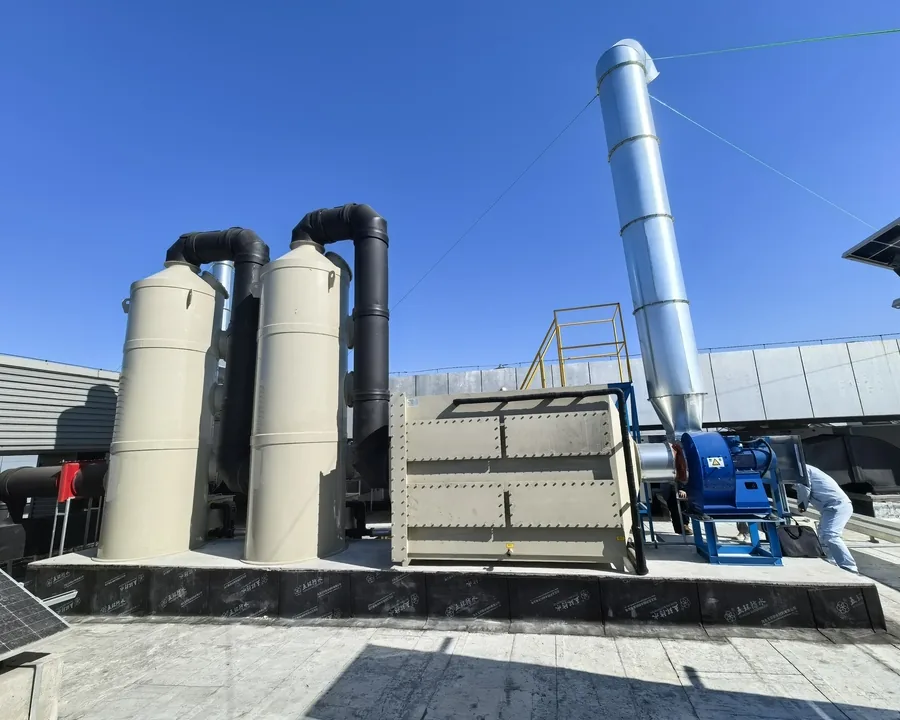
Choosing a Reliable Manufacturer and Warranty Support
Working directly with an experienced manufacturer protects your budget and simplifies long-term service. At Soto Machinery, we build our Oil Fume Purification Units and complementary waste gas systems in our own ISO 9001-certified facility in Qingdao, eliminating middleman markups so you can save up to 30% while getting CE-marked equipment built to international emission standards.
When comparing suppliers for commercial ventilation equipment, verify what happens after delivery:
- Factory Testing & Customization: Confirm that every unit is engineered to your specific flow rate and tested at the factory prior to shipment.
- Clear Lead Times: Plan your kitchen build-out around realistic schedules—standard equipment typically ships in 15–30 days, while custom-engineered systems take 30–60 days.
- Installation & Training Support: Look for complete installation drawings, remote video guidance, on-site installation supervision for larger projects, and operator training so your staff knows how to run the unit safely.
- Warranty & Spare Parts: Ensure your investment is backed by a solid 12-month warranty, readily available spare parts, and 24/7 technical support whenever operational questions come up.
To get started on your project, send over your kitchen airflow rate, cooking type, and local discharge requirements to david@sotomachinery.com or reach us on WhatsApp at +86 18653221918 for a custom engineering recommendation and factory-direct quote within 24–48 hours.