Environmental protection equipment supplier

Animal Room Odor Control Equipment: The Three Core Systems Explained
Animal room odor control equipment removes ammonia, hydrogen sulfide and other odorous gases from exhaust air. The treated air then leaves the building clean. Most facilities choose between three core systems: biological, physical adsorption and chemical oxidation. Each has a different footprint, running cost and maintenance profile. The right choice depends on your airflow, pollutant load and operating hours. This guide explains how each system works and what to check before you buy.
Why Animal Rooms Need Odor Control
Odor in an animal room comes from urine, feces, soiled bedding and feed residue. As waste breaks down it releases ammonia, hydrogen sulfide, mercaptans and volatile organic compounds. These gases have very low odor thresholds. A room can sit well inside occupational limits and still smell strong to anyone who walks in.
The consequences reach past comfort. Ammonia irritates the respiratory tract of rodents, so sustained exposure can affect animal welfare and the consistency of study data. Staff who work in the room face the same exposure, because odor is a common source of complaints. Neighboring buildings raise the issue as well, since exhaust stacks often sit close to windows and fresh-air intakes.
Good equipment therefore does two jobs at once. It protects the animals and the people who care for them. It also keeps the facility clear of discharge limits and neighbor disputes.
The Three Main Types of Animal Room Odor Control Equipment
Almost every system on the market belongs to one of three families. Each family uses a different mechanism, so each one fits a different set of conditions.
1. Biological Odor Control
Biological systems pass exhaust air through a media bed or a trickling tower where microorganisms live. The microbes oxidize ammonia into nitrate and sulfide into sulfate. Pollutants therefore leave as biomass and dissolved salts, not as odorous gas. Because the reaction runs at ambient temperature, energy use stays low and the system consumes no chemicals.
The trade-offs are physical. A biofilter needs several times the footprint of a carbon unit, and it needs stable moisture, temperature and pH. The microbial population also takes two to four weeks to acclimatise, so a new system is weak at start-up. Long shutdowns and sudden high-sulfide loads upset the bed, and recovery takes time.
2. Physical Odor Control
Physical systems rely on adsorption and filtration. Exhaust air first passes a pre-filter that catches hair, dust and bedding particles, then flows through activated carbon. Odorous molecules bind to the carbon surface, and the cleaned air discharges to atmosphere.
This approach is compact, simple and cheap to install, which makes it common in small rooms and in retrofit projects. The lifetime cost sits in the media, because carbon saturates and needs replacement. Ordinary carbon also adsorbs ammonia poorly, so rooms with a heavy ammonia load need impregnated carbon instead. High humidity lowers capacity further, and local rules may class spent carbon from animal rooms as hazardous waste.
3. Chemical Odor Control
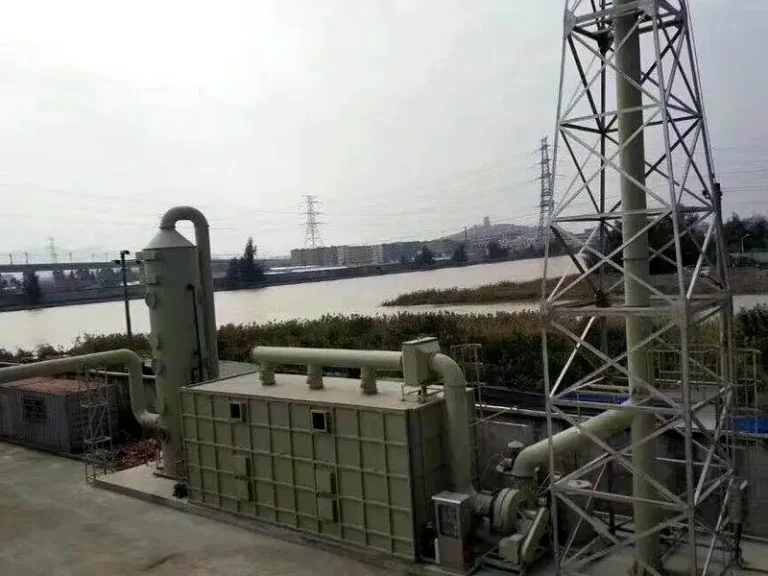
Chemical systems use a reaction to destroy or capture odorous compounds. Wet scrubbers are the most common form. An acid solution absorbs ammonia, while a caustic or hypochlorite solution absorbs hydrogen sulfide. Some designs add UV photolysis or ozonation to break down residual organics.
Chemical systems respond fast and handle high inlet concentrations in a small footprint. They suit heavy-load rooms and tight roof space. The drawbacks are operating chemicals, corrosion risk and secondary waste such as spent scrubber liquor. Ozone-based designs also need tight control, because ozone in the discharge is a problem of its own.
Comparing the Three Systems
| System | Best for | Strengths | Watch out for |
| Biological | Continuous operation, moderate load, spare roof area | Low running cost, no chemicals | Large footprint, slow start-up |
| Physical (carbon) | Small rooms, intermittent use, retrofits | Compact, low capital cost | Media replacement, humidity limits |
| Chemical (scrubber) | High ammonia or sulfide load, limited space | Fast response, small footprint | Chemical supply, corrosion, waste liquor |
How to Match Animal Room Odor Control Equipment to Your Exhaust
Selection starts with the exhaust stream, not with the catalogue. Four numbers decide most of the design: airflow, inlet concentration, target outlet concentration and running hours. Designers express airflow in cubic metres per hour and concentration in milligrams per cubic metre.
The source of the air matters as much as the volume. Room exhaust carries a moderate load spread across a large airflow. IVC rack exhaust is the opposite, because a small airflow carries a concentrated pollutant stream. Cage-change stations and dirty-cage holding areas are intermittent but very strong. Treating all three with one specification usually overpays on one and underperforms on another.
Five practical checks before you place an order:
- Roof space and structural load, since biological units are heavy and large
- Pressure drop, because fan energy is the largest running cost of an adsorption unit
- Discharge height, plus distance to windows and fresh-air intakes
- Local discharge limits and waste classification for spent media
- Maintenance access, because you will move media and chemicals by hand
What Separates a Reliable Equipment Factory
Two quotations for animal room odor control equipment can look identical and still perform very differently after two years. The gap usually sits in materials and in testing.
Ammonia and hydrogen sulfide attack mild steel quickly, so wetted parts should be polypropylene, FRP, or 304/316L stainless steel. Fans, seals and fasteners deserve the same attention, because one corroded fan stops the whole system. Measure pressure drop on a prototype rather than estimating it, since the fan choice follows from that number.
Controls decide how the system behaves day to day. Variable-frequency drives, differential pressure monitoring and remote alarms help here. They let a manager spot a saturated carbon bed or a blocked pre-filter before odor escapes. Ask for a factory leak test, a documented airflow test and a commissioning report. A factory that tests its units will show you the data.
Reference Project
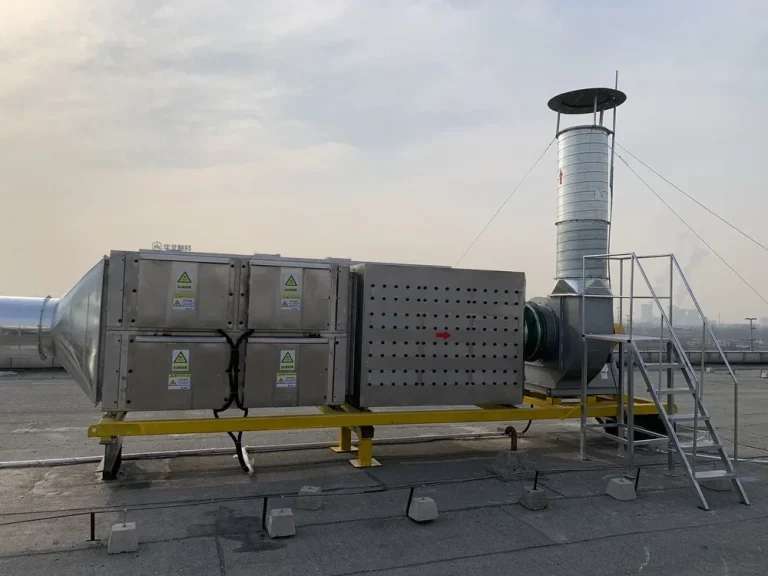
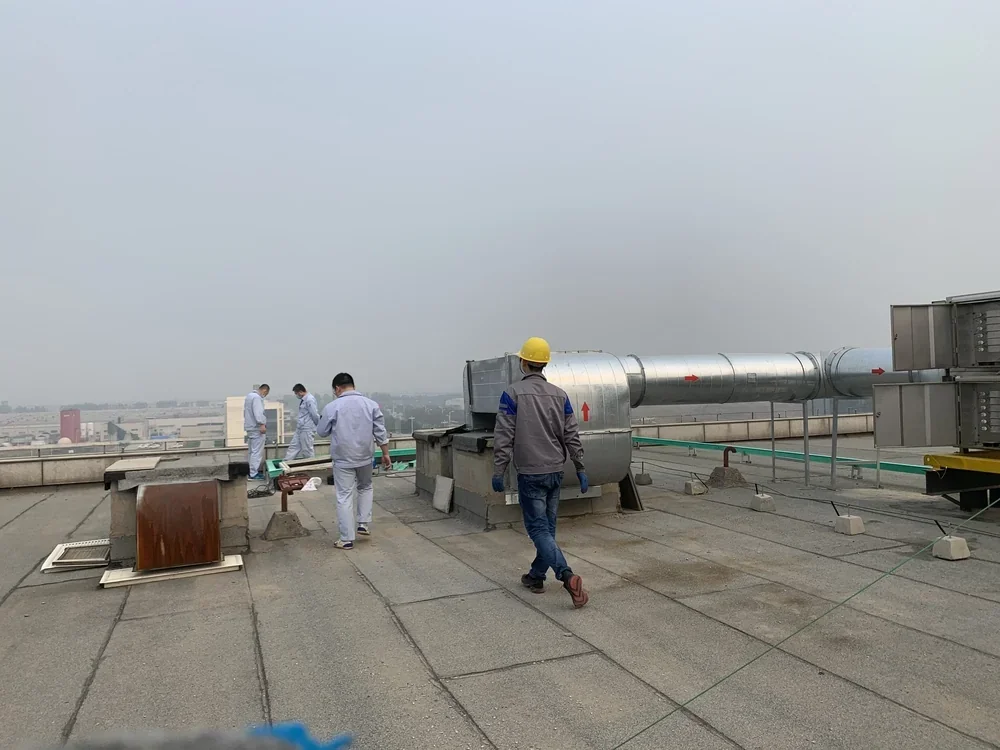
A university laboratory animal center in Beijing runs exhaust odor control equipment on its mouse housing rooms. Ammonia is the dominant odorant in that exhaust stream. Engineers size these systems on measured airflow and inlet concentration. They then verify performance against an outlet target agreed at commissioning.
Frequently Asked Questions
These are the questions buyers ask us most often about animal room odor control equipment.
What causes odor in an animal room?
Urine and feces release ammonia as they break down, while sulfur-containing waste and feed release hydrogen sulfide and mercaptans. Bedding and feed dust add particles that carry odor, so designers often combine filtration with adsorption.
Is activated carbon effective for ammonia?
Ordinary activated carbon adsorbs ammonia poorly, because ammonia is small, polar and volatile. Carbon with an acid impregnation performs much better. For rooms with a heavy ammonia load, a biological or chemical stage is often cheaper over the equipment’s life.
Which system suits a small facility with intermittent use?
Carbon adsorption usually wins in that case. A biological bed needs continuous moisture and a steady load to stay active. It struggles when a room runs only two or three days a week. A small carbon unit can switch on and off without losing performance.
Can odor control equipment be retrofitted to an existing room?
Yes, and most projects are retrofits. The usual constraints are roof space, duct routing and available electrical capacity. A retrofit leaves less room to work with, so measure the existing duct pressure and airflow first. Then pick a compact system, rather than forcing a biological bed into a space that cannot carry it.
How do I size the airflow?
Start from the design exhaust volume of the room, then add rack or cage-change exhaust if you treat it separately. Add a modest margin for filter loading, but keep it tight. An oversized fan wastes energy every hour of the year.
Next Step
Choosing animal room odor control equipment comes down to matching the technology to the exhaust stream and to the building. Send us your airflow, inlet concentration and available space. We will recommend a configuration, with an estimate of running cost.