Environmental protection equipment supplier

Methods for Deodorizing Exhaust Air from Animal Facilities in Medical Laboratories
What qualifies as a laboratory animal?
The term “laboratory animal” carries a specific definition:
- ① they must be artificially bred, with clearly defined genetic backgrounds and origins (i.e., genetically defined animals);.
- ② the microorganisms and parasites they carry must be subject to artificial control (i.e., microbiologically and parasitologically defined animals);.
- ③ they are primarily used for scientific experiments.
What impact do laboratory animals have on the environment?
In the housing and testing stages, these creatures emit foul‑smelling gases, chiefly ammonia, hydrogen sulfide, methyl mercaptan, trimethylamine, styrene, acetaldehyde, and dimethyl disulfide. These emissions are detrimental to both the environment and the animals; releasing them untreated leads to serious ecological contamination and, importantly, a markedly adverse social effect.
What methods are available to treat the waste gases generated by laboratory animals?
China has many methods for treating organic waste gases. Each method has its own features. Common approaches include:
- Water scrubbing
- Condensation
- Absorption
- Combustion
- Catalytic oxidation
- Adsorption
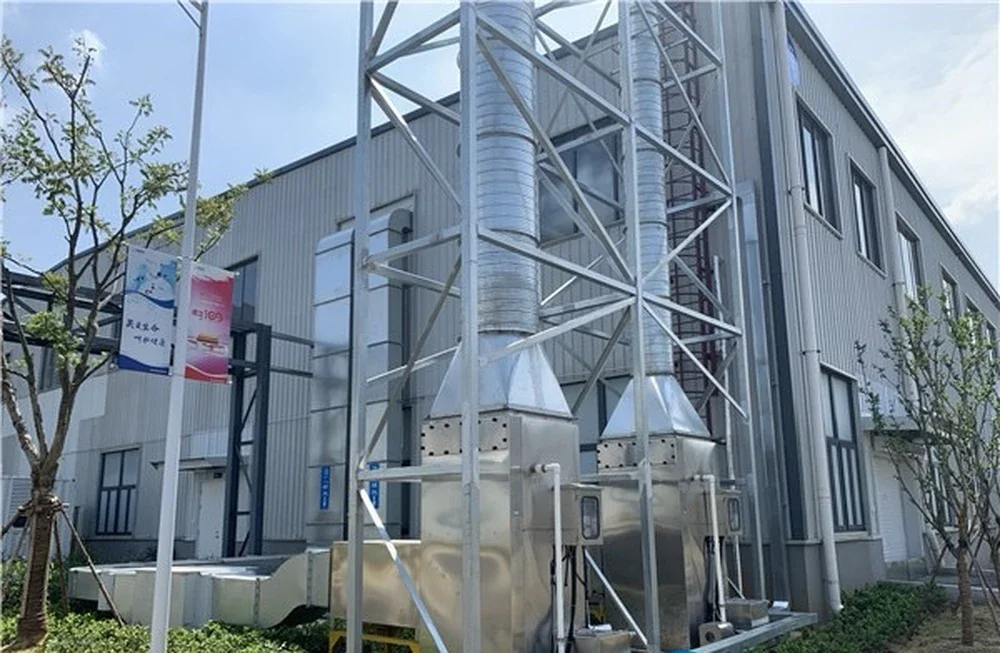
7 specific waste gas treatment methods.
Spraying Method
Spraying technology helps control air pollution. It removes water-soluble substances and particles from waste gas. This process separates pollutants from clean gas. Its advantages are lowering waste gas temperatures and easy access to water. Plus, the water can be reused after filtration and sedimentation, which cuts down on waste. Water spraying is great for removing large particles. It’s often used as a pre-treatment in waste gas processing.
Condensation and recovery method
This process involves condensing waste gas. You can condense it right away or after adsorption and concentration. Then, separate and recover valuable organic compounds from the condensate. This method works well for waste gas streams. They have high concentrations, low temperatures, and low flow rates. But it requires a lot of money, uses a lot of energy, and has high operating costs. This method is usually found in the chemical industry.
Absorption method
This can be split into two types: chemical absorption and physical absorption. However, since the waste gases usually have low chemical reactivity, chemical absorption is rarely used. Physical absorption uses a liquid absorbent. This absorbent has low volatility and a strong attraction to the target gas components. When it becomes saturated, it is heated to release the absorbed substances, a process called desorption. Then, it is cooled for reuse. This method is applicable to waste gas streams with high flow rates, low temperatures, and low concentrations. It requires expensive equipment and investment. Choosing the right absorbent can be tough, and there’s also a risk of secondary pollution.
Combustion method
This is a high-temperature oxidation process. It changes smelly substances into harmless CO₂ and vapor H₂O. Depending on whether a catalyst is used, it is classified as either thermal combustion or catalytic combustion.
Combustion methods work well when:
- The organic waste gas concentration is high.
- The organic compounds have low flash points.
- The heat from combustion can be recovered and used.
In catalytic combustion, waste gas flows through a catalytic burner. Once ignition happens, the heat from burning organic compounds keeps the process going. For organic compounds with low concentrations or low calorific values, auxiliary fuel is needed to finish combustion. Direct combustion uses heat from burning fuels like gas or oil. This heats the gas mixture to about 700–800°C. It keeps the temperature steady for a set time, burning off harmful gases. This method is particularly well-suited for treating high-temperature, high-concentration organic waste gas.
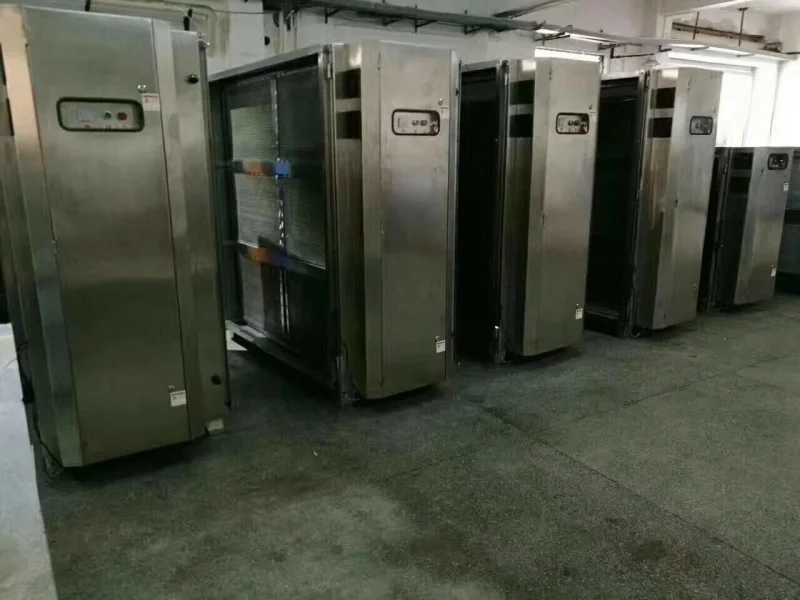
Photocatalytic Oxidation:
Photocatalytic oxidation is a new technology for treating waste gas. It uses light and a catalyst to break down volatile organic compounds (VOCs) in a photocatalytic purification unit. Photolysis depends on high-energy UV light. This light breaks down atmospheric oxygen, turning oxygen molecules into free oxygen atoms. Free oxygen atoms have an unbalanced electronic state. So, they easily combine with oxygen molecules to create ozone. Ozone, being a strong oxidizer, helps break down VOCs. UV photocatalytic purification units use ultraviolet lamps. These lamps can produce photon energies of up to 647 kJ/mol and 742 kJ/mol. High photon energy can quickly break the molecular bonds of VOCs. This happens when bond energies are lower than the photon energy, turning them into small inorganic molecules.
Adsorption Method
- Direct Adsorption: Organic gases move through activated carbon. This can purify up to 95%.
This method uses simple equipment and has low costs. It’s easy to operate. However, the activated carbon needs to be replaced often. It works well for situations with low pollutant levels where recovery isn’t needed.
- Adsorption-Recovery Method: Organic gases stick to activated carbon. When the carbon is full, hot air desorbs the gases to regenerate it.
Plant-based Liquid Spray Deodorization
This method uses wet spraying techniques. It employs special sprayers to atomize the liquid and spread droplets in a specific area. The active deodorizing molecules in these droplets have functional groups. These groups can interact with different substances that cause odors. They include those with biological activity, chemical reactivity, or conjugated double bonds. These molecules not only adsorb airborne odors but also change how those molecules are arranged. This process breaks down the chemical bonds in odor molecules. As a result, these molecules become more unstable and reactive with others. This leads to complete odor removal and better air purification.
Choosing the Right Deodorization Method for Your Animal Facility
Each deodorization method discussed above has its strengths, but no single technology can handle the complex mixture of ammonia, hydrogen sulfide, VOCs, and bioaerosols found in laboratory animal facilities. In practice, the most effective approach combines multiple technologies in a staged treatment system — for example, pre-filtration for particulate matter, acidic spray for ammonia, UV photolysis for VOCs, and activated carbon for residual odors.
Key Factors to Consider
- Pollutant profile: Identify the primary pollutants in your facility (NH3, H2S, VOCs, pathogens) through air quality testing before selecting a treatment method.
- Air exchange rate: Laboratory animal rooms typically require 10-20 air changes per hour (ACH). Your treatment system must handle this airflow volume efficiently.
- Space constraints: Vivariums and barrier rooms often have limited mechanical room space. Compact, integrated systems are preferred over standalone units.
- Compliance standards: Ensure your chosen method meets institutional requirements (AAALAC, GLP, local environmental regulations) for animal welfare and emissions.
- Maintenance accessibility: Filter replacement, media regeneration, and equipment servicing should be straightforward to minimize system downtime.
Integrated Animal Room Waste Gas Treatment Solutions
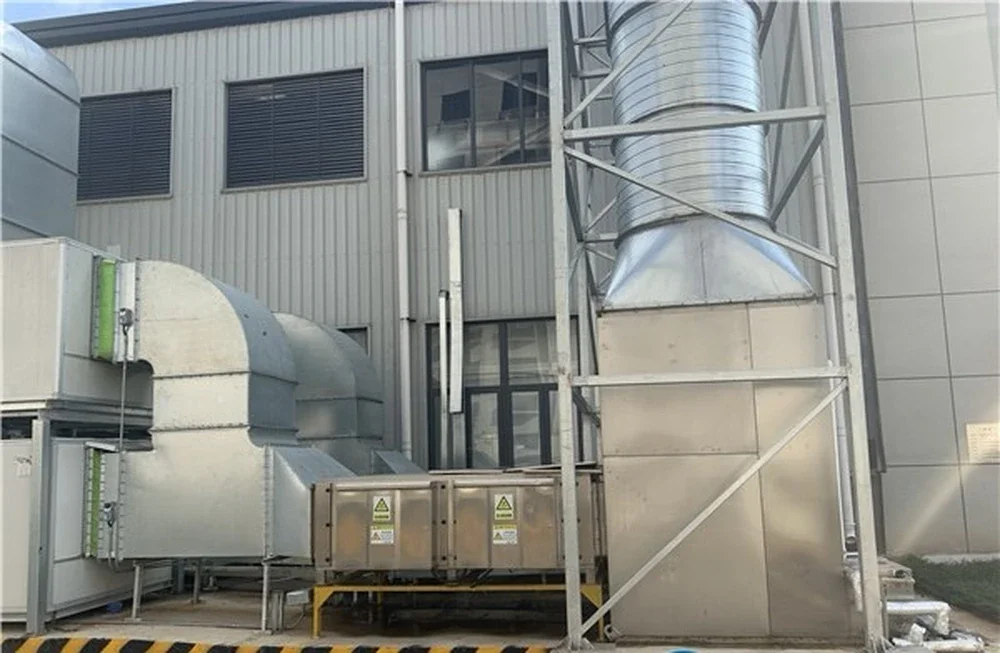
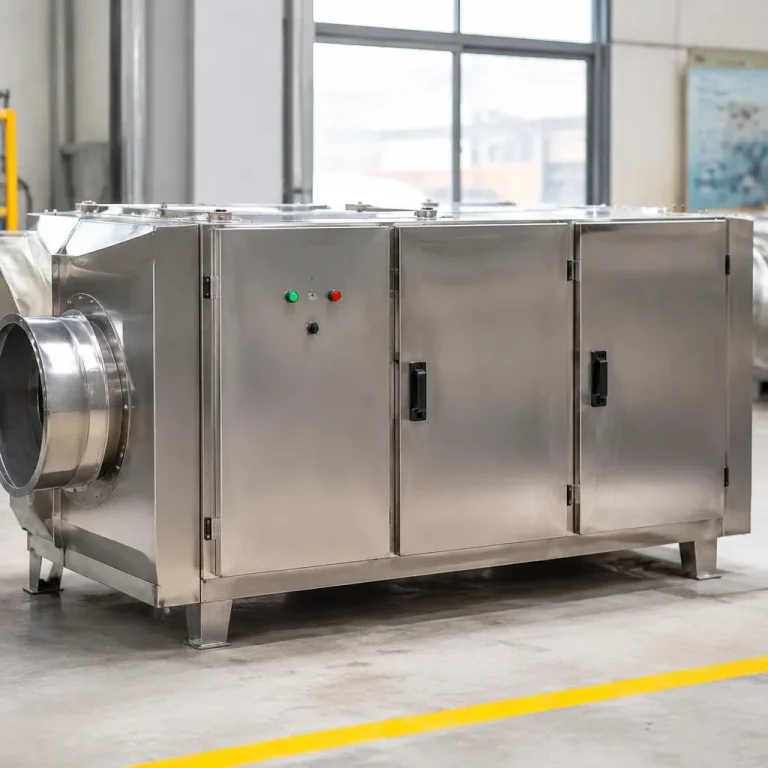
For facilities seeking a turnkey solution, Soto Machinery’s animal room waste gas treatment system combines four treatment stages — pre-filtration, chemical scrubbing, UV photolysis, and activated carbon adsorption — into a single, PLC-controlled unit. This multi-stage approach addresses the full spectrum of pollutants typical in laboratory animal environments.
The system is engineered to achieve over 90% ammonia removal and 95%+ hydrogen sulfide removal, with HEPA filtration options for biological containment in BSL-2 and BSL-3 facilities. Custom configurations are available for barrier rooms, conventional rooms, quarantine areas, and procedure rooms, with airflow capacities ranging from 1,000 to 30,000 m³/h.
| Method | Best For | Ammonia Removal | H2S Removal | VOC Removal | Pathogen Control |
|---|---|---|---|---|---|
| Water Spraying | Pre-treatment, dust removal | 40-60% | 30-50% | Low | None |
| Acidic Spray | Ammonia-rich exhaust | 85-95% | 20-40% | Low | None |
| UV Photolysis | VOCs, odorous compounds | 10-30% | 60-80% | 80-90% | Moderate (UV-C) |
| Activated Carbon | Residual odors, organic gases | 20-40% | 70-90% | 90-95% | None |
| Multi-stage Combined | Complete treatment | 90%+ | 95%+ | 90%+ | High (HEPA+UV-C) |
Conclusion
Selecting the appropriate deodorization method for laboratory animal facilities requires understanding both the pollutant composition and the operational requirements of the facility. While individual methods like water spraying, UV photolysis, and activated carbon adsorption each play an important role, a combined multi-stage system delivers the most reliable and comprehensive treatment for complex animal room exhaust.
For detailed specifications, customization options, and project consultation, visit our animal room waste gas treatment system page, or contact our engineering team for a site-specific treatment proposal within 24 hours.