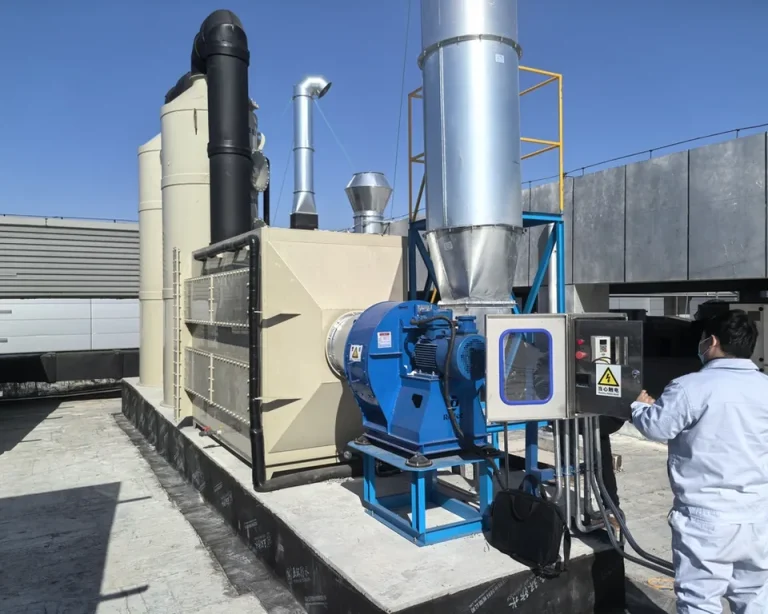
Environmental protection equipment supplier

What Industrial Exhaust Gases Can a Scrubber Tower Treat
Are you trying to figure out what industrial exhaust gases a scrubber tower can treat—and which system fits your facility’s emission stream?
Choosing the wrong air pollution control equipment can lead to costly compliance penalties, rapid corrosion, and inefficient pollutant removal. From acidic fumes like SO2 and HCl to ammonia, VOCs, and hydrogen sulfide, different exhaust streams demand very different scrubbing media and tower designs.
In this complete guide, you’ll learn exactly how industrial scrubber towers capture and neutralize hazardous emissions, which specific gas categories they handle best, and how to select the right system for your plant’s compliance goals.
Let’s dive right in.
Understanding Industrial Scrubber Towers and Exhaust Gas Treatment
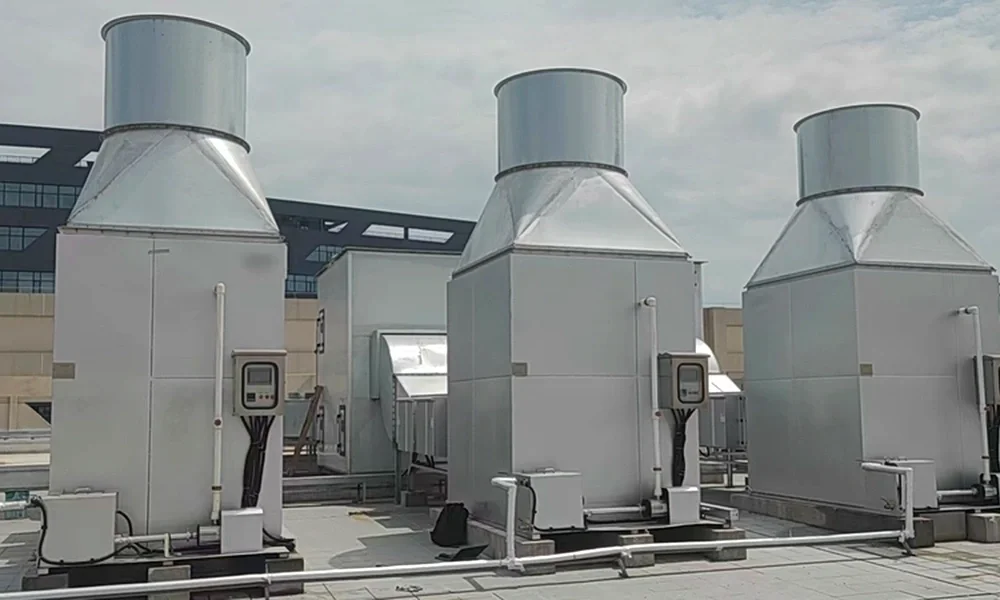
Industrial facilities across chemical manufacturing, printing, packaging, and food processing rely on specialized air pollution control systems to remove harmful contaminants before releasing exhaust air into the atmosphere. Understanding what industrial exhaust gases a scrubber tower can treat is essential for selecting compliant, cost-effective emission control equipment.
What Is an Industrial Scrubber Tower?
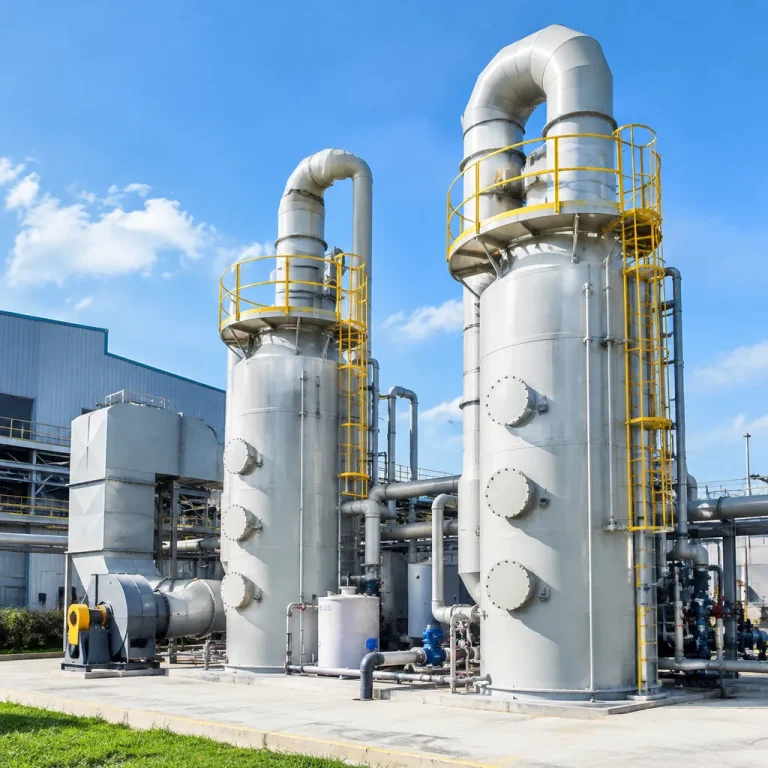
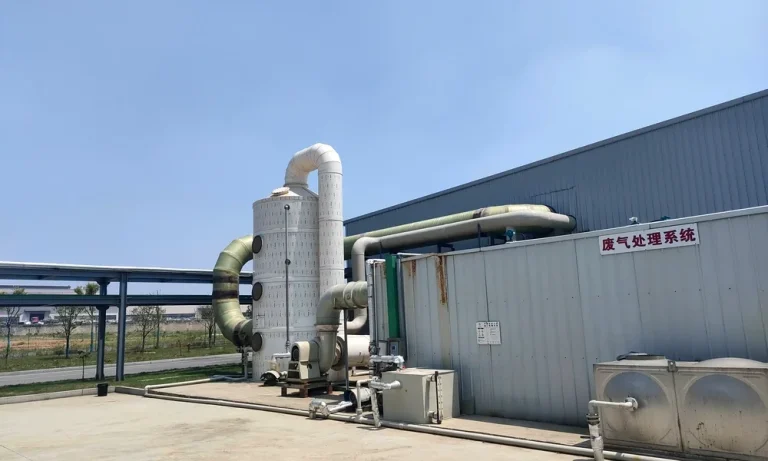
An industrial scrubber tower—commonly engineered as a wet scrubber system or spray deodorization tower—is a vertical pollution control vessel designed to clean contaminated exhaust streams. Rather than simply filtering out solid debris, a scrubber tower targets soluble gases, industrial fumes, and odorous vapors so facilities can meet strict international discharge standards.
- Core Function: Removes water-soluble gases, persistent odors, and hazardous fumes from industrial airflows.
- System Role: Acts as either a standalone deodorization unit or a primary stage within multi-technology waste gas treatment lines.
- Custom Configuration: Built around specific gas compositions, exhaust airflow rates (m3/h), and required outlet emission limits.
How Scrubber Towers Capture and Neutralize Exhaust Gases
Wet scrubber systems clean industrial exhaust through direct gas-liquid contact inside the tower chamber. As contaminated air flows upward through the unit, a scrubbing liquid is sprayed downward to intercept, dissolve, and neutralize targeted pollutants.
- Gas-Liquid Absorption: Soluble compounds such as ammonia, hydrogen sulfide, and solvent vapors dissolve into the liquid phase upon contact.
- Fume and Mist Knockdown: Fine liquid droplets capture airborne industrial fumes and wash soluble contaminants down into a collection sump for safe discharge or wastewater treatment.
- Multi-Stage Integration: When exhaust streams carry heavy dry dust or non-soluble volatile organic compounds (VOCs), scrubber towers are paired with upstream baghouse dust collectors or downstream activated carbon and UV photolysis units for complete purification.
Key Categories of Industrial Exhaust Gases Treated by Scrubber Towers
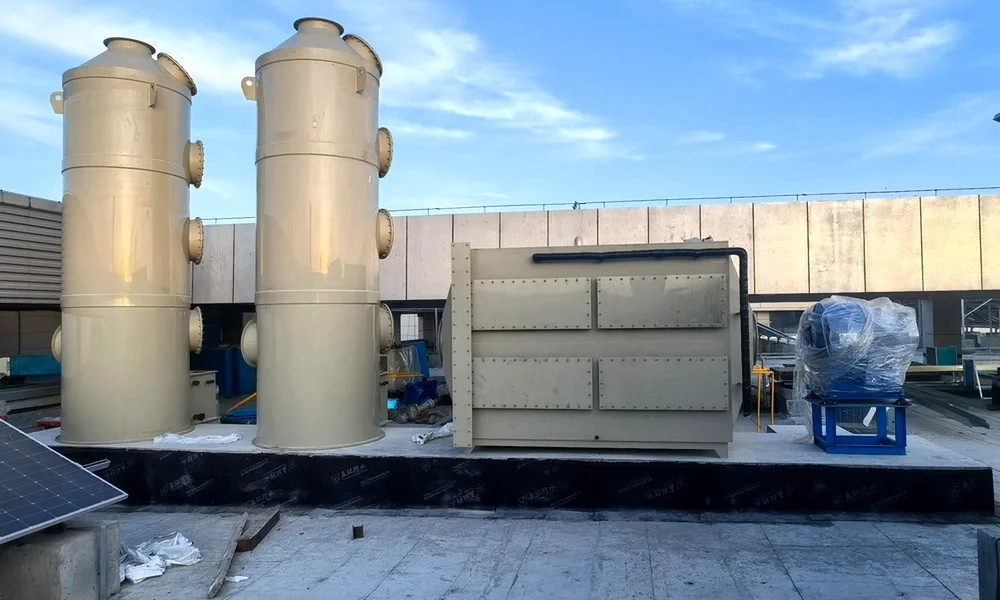
When we engineer an industrial air pollution control system, the first step is identifying the exact gas composition in your exhaust stream. A wet scrubber system captures soluble gases, chemical fumes, and persistent odors before they leave your facility, helping you meet strict international emission standards.
| Gas Category | Key Compounds Covered | Common Industrial Sources | Typical Treatment Approach |
|---|---|---|---|
| Acidic Gases | Sulfur compounds, industrial acid fumes | Chemical & pharmaceutical processing | Wet scrubbing tailored to specific exhaust compositions |
| Alkaline Gases | Ammonia (NH3) | Laboratory animal rooms, biomedical facilities | Wet scrubbing & spray deodorization |
| VOCs & Solvents | Volatile organic compounds, solvent odors | Printing, packaging, chemical production | Multi-stage wet scrubbing + activated carbon or UV photolysis |
| Odorous Compounds | Hydrogen sulfide (H2S), skatole, sulfur odors | Wastewater facilities, food processing, animal rooms | Wet scrubber tower + targeted deodorization units |
Acidic Gases (SO2, HCl, HF, and NOx)
Chemical and pharmaceutical facilities regularly generate acidic and reactive industrial fumes that corrode equipment and violate discharge limits. Instead of relying on a one-size-fits-all unit, we analyze your specific gas composition and inlet concentrations to configure a custom wet scrubber tower that captures water-soluble acid fumes and sulfur-based emissions reliably.
Alkaline Gases and Ammonia (NH3)
Ammonia gas is a primary air quality concern in laboratory animal rooms, biomedical centers, and specialized processing lines. In controlled barrier environments—such as facilities operating under strict benchmarks like China’s GB 14925-2026 cap of 14 mg/m³—our https://www.soto-epmachinery.com/factory-for-animal-facility-odor-control-equipment-an-inside-look-at-the-equipment-and-its-advantages](https://www.soto-epmachinery.com/factory-for-animal-facility-odor-control-equipment-an-inside-look-at-the-equipment-and-its-advantages)https://www.soto-epmachinery.com/factory-for-animal-facility-odor-control-equipment-an-inside-look-at-the-equipment-and-its-advantages/”>animal facility odor control equipment uses targeted wet scrubbing and spray deodorization to keep ammonia levels safely within compliance limits.
Volatile Organic Compounds (VOCs) and Hazardous Air Pollutants
Volatile organic compounds and solvent odors are common in high-volume printing, packaging, and chemical manufacturing exhaust streams. While a wet scrubber tower captures water-soluble fumes and reduces particulate load, complex solvent mixtures often perform best in a multi-stage setup. Combining a scrubber with an activated carbon adsorption unit or UV photolysis purifier ensures thorough purification across high airflow rates—supporting systems engineered from 30,000 m³/h up to 50,000 m³/h with removal efficiencies reaching 95% to 97%.
Odorous Compounds and Hydrogen Sulfide (H2S)
Persistent organic and sulfur-based odors—including hydrogen sulfide (H2S) and skatole—require dedicated deodorization to prevent community complaints and regulatory penalties. In food processing plants, wastewater treatment areas, and animal facilities, properly https://www.soto-epmachinery.com/industrial-off-https://www.soto-epmachinery.com/industrial-off-gas-treatment-systems-standards-and-sizing/”>sizing industrial off-gas treatment systems around your exact airflow and odor profile allows a wet scrubber tower to neutralize foul gases consistently.
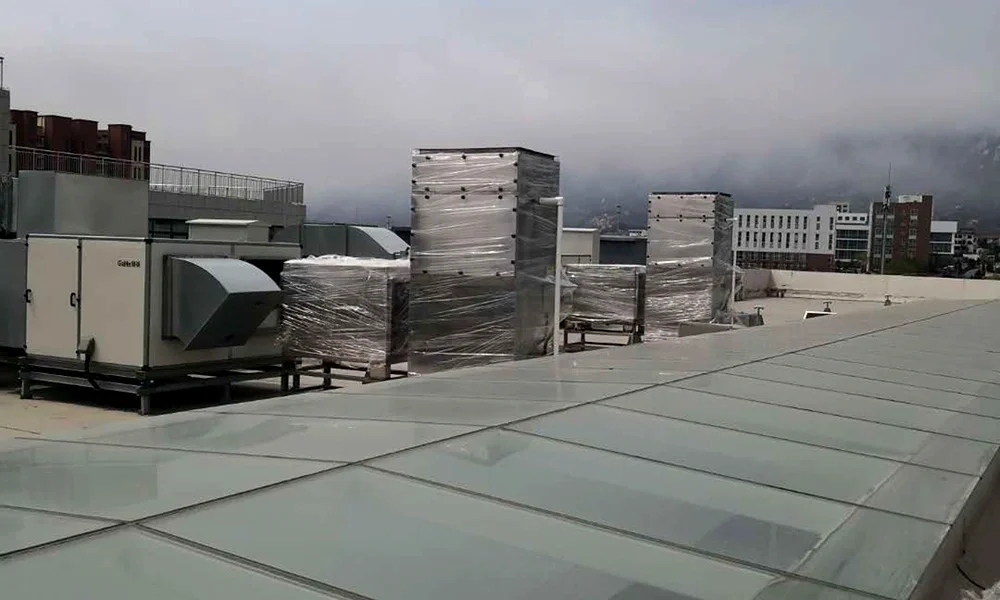
Types of Scrubber Towers Based on Gas Characteristics
Selecting the right air pollution control configuration comes down to matching the system design to your specific gas composition, exhaust airflow rate, and required outlet emission standards. At our Qingdao manufacturing facility, we engineer each solution around the actual contaminants in your exhaust stream rather than relying on a one-size-fits-all unit.
Wet Scrubbers and Packed Bed Towers
A custom-engineered https://www.soto-epmachinery.com/waste-gas-treatment/wet-scrubber-https://www.soto-epmachinery.com/waste-gas-treatment/wet-scrubber-tower/”>wet scrubber tower is the standard choice when your facility needs to capture water-soluble gases, persistent odors, and industrial fumes. We design these wet scrubber systems for applications ranging from chemical and pharmaceutical processing to deodorization in laboratory animal facilities, targeting compounds like ammonia, hydrogen sulfide, skatole, and sulfur odors.
- Targeted Odor and Gas Removal: Ideal for neutralizing soluble fumes and keeping facility exhaust within strict regulatory limits, such as China’s GB 14925-2026 barrier-room ammonia cap of 14 mg/m³.
- Spray Deodorization Capabilities: Works effectively alongside spray deodorization setups to knock down airborne contaminants and process fumes before discharge.
Dry Scrubbers and Flue Gas Desulfurization (FGD) Systems
While wet scrubbing relies on liquid contact to absorb soluble pollutants, dry treatment approaches address gas streams where dry capture or solid-phase removal is required. Depending on the specific industrial process and inlet conditions, some facilities evaluate dry scrubbing or flue gas desulfurization concepts when minimizing liquid handling is a priority. However, for most mixed industrial exhausts containing soluble vapors, odors, and fine particulates, we focus on wet scrubbing and dry filtration pairings tailored directly to your inlet concentrations.
Multi-Stage and Hybrid Gas Treatment Systems
Complex industrial exhaust rarely contains just one type of pollutant, which is why different treatment stages solve different problems far better than simply oversizing airflow. When a single wet scrubber tower cannot handle every compound in your exhaust stream, we build multi-stage systems that combine complementary technologies from our https://www.soto-epmachinery.comhttps://www.soto-epmachinery.com/waste-gas-treatment-industrial-air-pollution-control-guide/”>industrial air pollution control guide:
| System Combination | Target Exhaust Characteristics | Primary Industrial Application |
|---|---|---|
| Wet Scrubber + Activated Carbon Adsorption | Water-soluble fumes paired with stubborn solvent odors and residual VOCs | Chemical manufacturing and printing/packaging lines |
| Wet Scrubber + UV Photolysis or Low-Temperature Plasma | Odorous gases, light VOC loads, and airborne microbes in compact spaces | Laboratory animal rooms and food & beverage processing |
| Wet Scrubber + Baghouse Dust Collector | Heavy dry particulate matter mixed with gaseous fumes | High-volume industrial exhausts requiring dust pre-filtration |
By analyzing your gas composition and airflow volume upfront—whether your line runs at 30,000 m³/h or 50,000 m³/h—we combine the exact stages needed to achieve reliable removal rates while keeping equipment and operating costs under control.
Core Components and Media for Effective Gas Absorption
At Soto Machinery, we engineer every wet scrubber tower around a simple goal: maximizing contact between your exhaust stream and the scrubbing liquid to meet strict emission standards. Rather than relying on generic sizing, our team configures the internal components based on your specific gas composition, airflow rate, and target discharge limits.
Tower Packing Media (Tri-Packs, Pall Rings, and Ceramic Saddles)
Packing media creates the surface area needed for gas-liquid mass transfer inside the tower. Depending on the specific industrial fumes, odors, or volatile organic compounds (VOCs) in your exhaust stream, we select media geometries—such as hollow spheres, slotted rings, or saddle shapes—that balance high gas absorption with low airflow resistance. Proper media selection ensures your system captures soluble pollutants efficiently without creating excessive pressure drop across your exhaust fans.
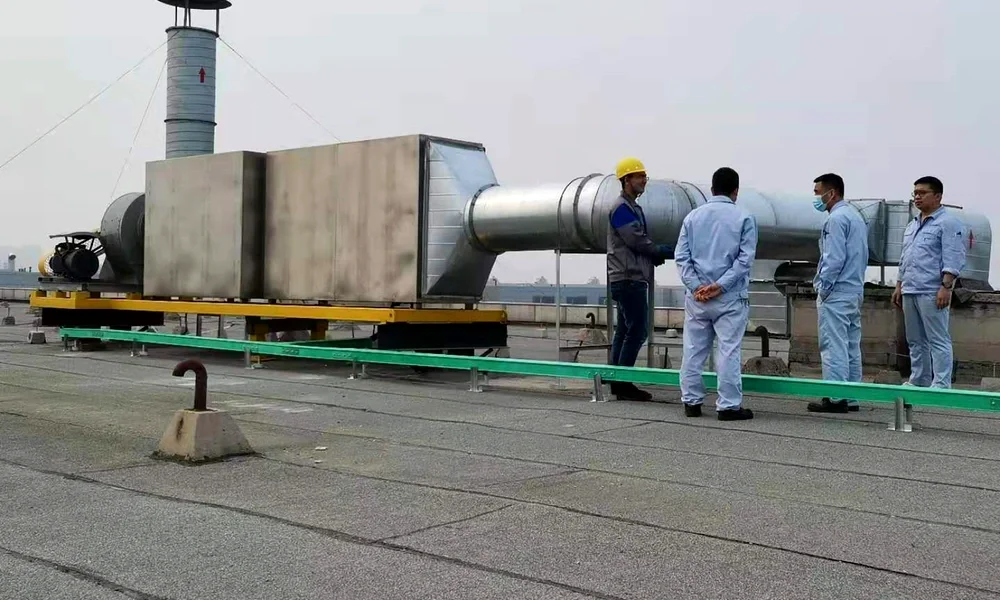
Mist Eliminators and Tower Internals
Even the best absorption zone fails if liquid droplets escape out the stack. We build each tower with dedicated internal distribution and separation stages to keep operations clean and compliant:
- Liquid Distribution Headers: Evenly spray scrubbing liquid across the top of the packing bed to prevent dry spots and gas channeling.
- Support Grids: Hold the packing media securely in place while allowing upward exhaust gas and downward liquid to pass freely.
- Mist Eliminators (Demisters): Capture fine liquid entrainment at the top of the wet scrubber system so only clean, treated air exits the outlet.
Chemical Reagents and Scrubbing Solutions
Water alone handles highly soluble gases and dust, but stubborn industrial odors and reactive gases require targeted liquid chemistry. By matching the circulating scrubbing solution to your exact exhaust profile, we neutralize compounds like ammonia, hydrogen sulfide, and sulfur-based odors on contact.
For facilities dealing with complex odor loads—such as chemical plants or laboratory animal rooms—maintaining proper dosing balance is critical. You can read more about https://www.soto-epmachinery.com/chemical-scrubhttps://www.soto-epmachinery.com/chemical-scrubbing-odor-control-ph-orp-and-dosing-explained/”>chemical scrubbing odor control and dosing to see how controlled liquid chemistry stabilizes removal efficiency across fluctuating inlet concentrations.
Major Industrial Applications and Exhaust Scenarios
Different industries produce distinct exhaust streams, and we engineer our wet scrubber systems around the specific gas compositions and airflow rates found in each facility.
Chemical, Petrochemical, and Pharmaceutical Manufacturing
Chemical and pharmaceutical plants generate complex exhaust mixtures containing volatile organic compounds (VOCs), solvent odors, and corrosive fumes. Because discharge regulations are strict in these sectors, we analyze your exact gas makeup and inlet-to-outlet targets first.
- Primary pollutants: Industrial solvents, VOCs, sulfur odors, and process fumes.
- System setup: For high-load chemical lines, we often pair a wet scrubber tower with UV photolysis or activated carbon adsorption—a multi-stage setup proven to hit 95% VOC removal at airflow rates around 30,000 m³/h.
Power Generation, Refineries, and Waste-to-Energy
Large-scale industrial combustion and processing lines release heavy volumes of sulfur-based compounds, fumes, and airborne particulate matter. High-capacity air pollution control is essential here to keep exhaust stacks compliant with international emission standards.
- Primary pollutants: Sulfur odors, industrial fumes, and fine dust.
- System setup: Wet scrubbers capture soluble gases and cool hot exhaust streams, often working alongside baghouse dust collectors to strip out heavy particulate matter before discharge.
Metal Finishing, Plating, and Steel Production
Surface treatment lines—such as pickling, plating, and metal finishing—produce corrosive chemical mists and fumes that quickly damage unlined ductwork and threaten worker safety. Alongside managing https://www.sotohttps://www.soto-epmachinery.com/steel-pickling-and-phosphating-wastewater-treatment/”>steel pickling and phosphating wastewater treatment, facilities must capture airborne fumes directly at the process tanks.
- Primary pollutants: Acidic and chemical fumes, industrial mists, and airborne particulates.
- System setup: Corrosion-resistant wet scrubber towers neutralize soluble fumes efficiently, protecting plant infrastructure while keeping exhaust emissions within permitted limits.
Food Processing, Wastewater Treatment, and Odor Control
Food and beverage plants, laboratory animal facilities, and municipal treatment stations deal with persistent organic odors and nitrogen- or sulfur-based gases. Meeting neighborhood odor rules and strict indoor benchmarks—such as the 14 mg/m³ ammonia cap required for barrier animal rooms—requires reliable deodorization.
- Primary pollutants: Ammonia, hydrogen sulfide, skatole, oil fumes, and airborne microbes.
- System setup: Wet scrubbers and spray deodorization towers absorb water-soluble odor compounds directly from the air. Many facilities integrate these towers with dedicated https://www.soto-epmachinery.com/wastewater-plant-odor-controlhttps://www.soto-epmachinery.com/wastewater-plant-odor-control-equipment-and-processes/”>wastewater plant odor control equipment and processes to eliminate nuisance smells across the entire site.
How to Select the Right Scrubber Tower for Your Exhaust Stream
Choosing the right air pollution control setup starts with matching the equipment to what is actually coming out of your exhaust stack. At Soto Machinery, we never recommend simply oversizing an airflow system when a targeted multi-stage layout solves the problem more efficiently. When sizing a custom wet scrubber system, we look at three core engineering factors.
Analyzing Gas Composition, Concentration, and Temperature
Before we calculate equipment dimensions, we analyze your exact exhaust stream parameters. Knowing the specific mix of gases—whether you are dealing with ammonia gas, hydrogen sulfide, solvent fumes, or volatile organic compounds—determines how we design the system.
To get an accurate system specification, we evaluate:
Gas Type and Composition: Identifying water-soluble gases, odorous compounds, or sticky industrial fumes.
Exhaust Airflow Rate: Measuring total volume (such as 30,000 m³/h to 50,000 m³/h in large manufacturing lines) to size the tower properly.
Inlet Concentrations and Outlet Targets: Comparing current pollutant loads against your required discharge limits so the system hits the exact removal efficiency needed.
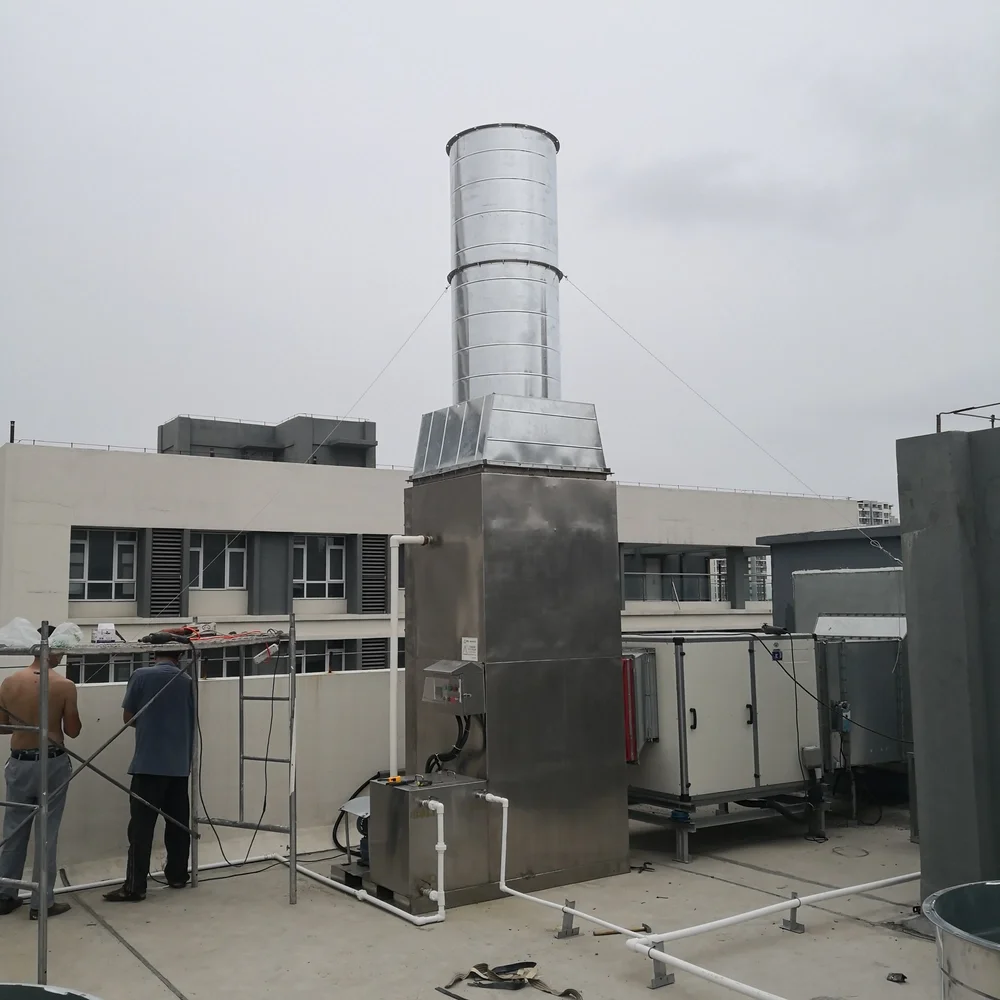
Wet vs. Dry Scrubbers vs. Alternative Air Pollution Control Systems
Different exhaust stages solve different gas problems. While a wet scrubber tower or spray deodorization unit handles water-soluble gases, odors, and general fumes effectively, complex industrial exhaust often requires pairing technologies together. For deeper insights into sizing and multi-stage layouts, review our https://www.soto-epmachinery.https://www.soto-epmachinery.com/wet-scrubber-tower-design-guide/”>wet scrubber tower design guide.
| Exhaust Challenge | Recommended Equipment Setup | Primary Target Pollutants |
|---|---|---|
| Water-Soluble Gases & Odors | Wet Scrubber Tower / Spray Deodorization | Ammonia, hydrogen sulfide, sulfur odors, skatole |
| Persistent VOCs & Solvents | Wet Scrubber + Activated Carbon Adsorption | Solvent odors, chemical VOCs |
| Light Odors & Microbes | Wet Scrubber + UV Photolysis or Low-Temp Plasma | Airborne microbes, light VOC loads |
| Heavy Dry Dust + Gases | Baghouse Dust Collector + Wet Scrubber | Particulate matter, industrial dust, fumes |
Meeting Environmental Emissions Compliance Standards
Strict local and international regulations leave zero room for guesswork. Whether your facility must satisfy strict barrier-room limits—such as China’s GB 14925-2026 cap of 14 mg/m³ for ammonia in laboratory animal rooms—or meet export-grade international discharge rules, your equipment has to perform reliably day after day.
We manufacture our systems in an ISO 9001 certified facility and provide CE-marked equipment built to satisfy strict global emission standards. Every custom-engineered system undergoes factory testing prior to shipment to verify its structural and operational readiness before it ever arrives at your plant.
Frequently Asked Questions About Scrubber Tower Gas Treatment
Can One Scrubber Tower Treat Multiple Exhaust Gases Simultaneously?
Yes, a custom-engineered wet scrubber tower can handle mixed exhaust streams containing multiple soluble gases and odors at the same time, such as ammonia, hydrogen sulfide, skatole, and general industrial fumes. Because different stages solve different gas problems, we analyze your exact gas composition, airflow rate, and inlet/outlet concentrations before sizing the equipment.
When a single scrubber stage isn’t enough for complex exhaust mixtures, we pair the tower with complementary units in a multi-stage setup:
- Persistent VOCs and Solvent Odors: Adding an activated carbon adsorption unit or a https://www.soto-epmachinery.com/uv-photolysis-exhaust-gashttps://www.soto-epmachinery.com/uv-photolysis-exhaust-gas-purifier-manufacturer-guide/”>UV photolysis exhaust gas purifier downstream helps break down remaining volatile organic compounds and airborne microbes.
- Heavy Dust and Particulate Matter: Installing a baghouse dust collector upstream prevents heavy dry dust from overloading the scrubber system.
- High-Odor Facility Exhaust: For specialized environments like laboratories, combining wet scrubbing with targeted animal room exhaust scrubber solutions keeps ammonia and sulfur odors safely below strict emission limits.
What Exhaust Gases Are Not Suitable for Standard Scrubber Towers?
A standalone wet scrubber tower is not ideal for exhaust streams made up primarily of water-insoluble volatile organic compounds, heavy dry dust, or dense oil fumes. On their own, these pollutants pass through standard liquid scrubbing without reaching strict international discharge standards.
To treat these challenging exhaust streams effectively, we integrate dedicated air pollution control equipment alongside or in place of a standard tower:
- Insoluble VOCs and Concentrated Solvents: Best captured using activated carbon adsorption units, UV photolysis purifiers, or low-temperature plasma systems.
- Dry Industrial Dust and Particulates: Require mechanical filtration through a baghouse dust collector rather than wet scrubbing alone.
- Greasy or Oil-Laden Exhaust: Need specialized oil fume purification units designed to separate oil mist cleanly.