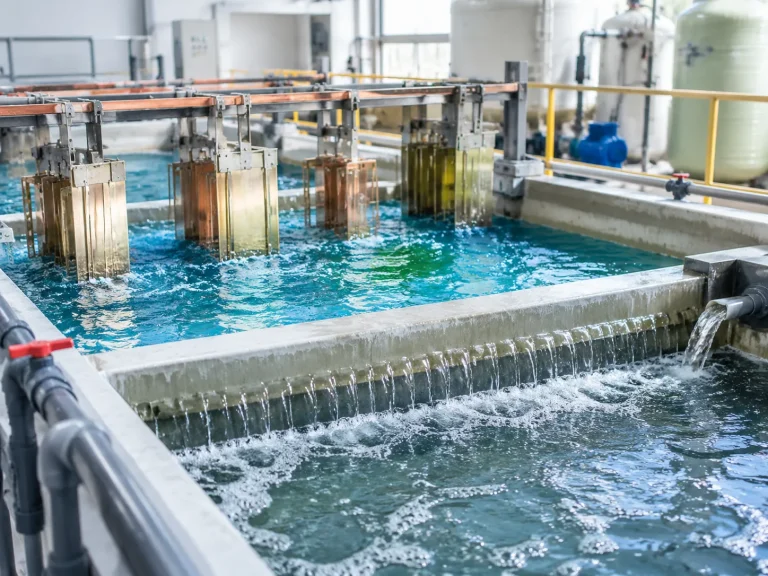
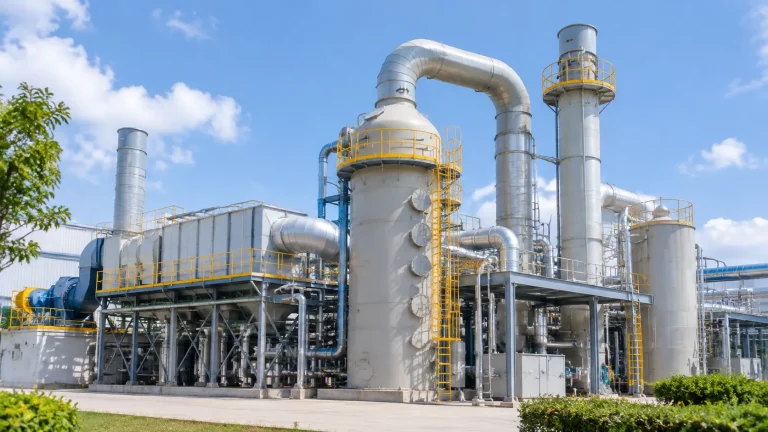
Environmental protection equipment supplier

Wet Scrubber Tower Design Guide Packed Bed vs Spray Tower
Introduction to Industrial Wet Scrubber Towers
Modern manufacturing demands robust, continuous environmental compliance. Industrial wet scrubber towers are the primary defense line against hazardous air pollutants, toxic exhausts, and particulate emissions. By optimizing gas-liquid contact mechanics, our scrubbing solutions deliver maximum removal efficiency while keeping operating footprints and lifecycle costs exceptionally low.
What is a Wet Scrubber Tower?
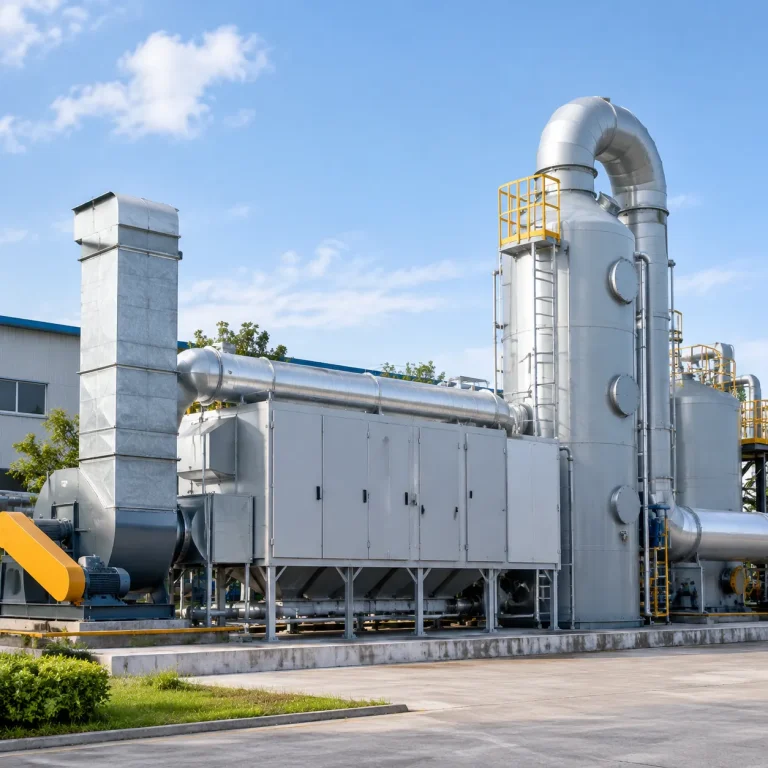
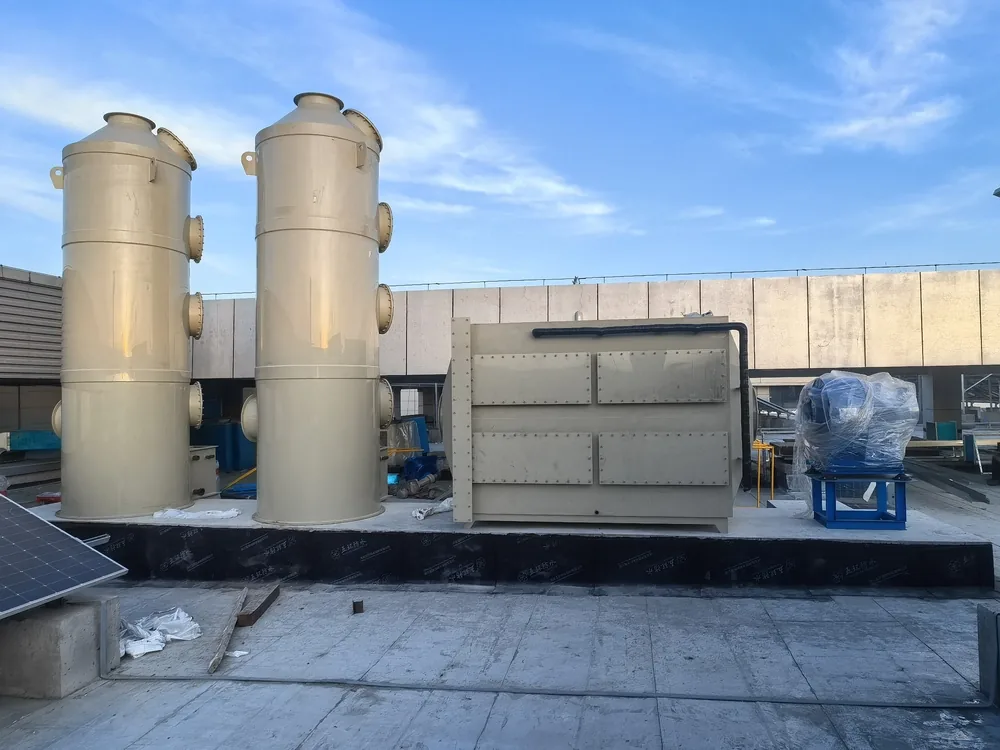
A wet scrubber tower is a specialized gas cleaning system designed to strip pollutants, corrosive gases, and fine particulate matter from industrial exhaust streams. The process works by bringing a contaminated gas stream into direct, intimate contact with an engineered scrubbing liquid—typically water or a chemically dosed scrubbing solution.
- Primary Function: Neutralize, absorb, and capture airborne contaminants before discharge.
- Core Advantage: Safely processes hot, humid, combustible, and highly corrosive gas loads without explosion hazards.
- Standard Integration: Operates as a centralized unit within a comprehensive air pollution control setup, protecting downstream equipment and surrounding environments.
Fundamental Principles of Wet Gas Absorption
Wet gas absorption relies on driving contaminants across a phase boundary from gas to liquid. The efficiency of this process hinges on three mechanical and thermodynamic pillars:
- Mass Transfer Gradient: Pollutant molecules diffuse through the gas boundary layer and dissolve into the scrubbing solvent, driven by concentration differentials.
- Countercurrent Flow Dynamics: Polluted exhaust enters near the bottom and travels upward, while the clean scrubbing liquid flows downward. This countercurrent flow orientation sustains a strong driving force along the entire height of the tower.
- Chemical Reaction Kinetics: When treating acid or alkali fumes, targeted reagents (such as NaOH, H2SO4, or NaOCl) are introduced to transform volatile contaminants into stable, non-volatile salts via rapid neutralization.
Key Applications in Industrial Air Emission Control
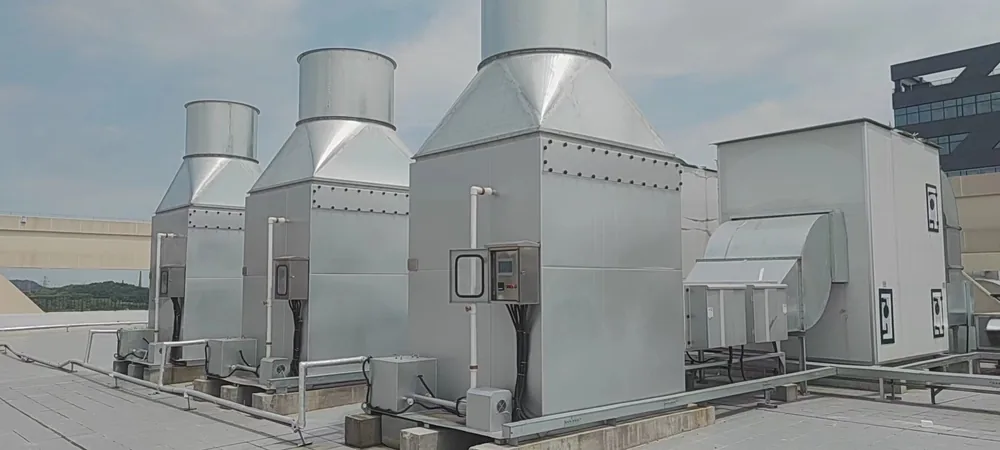
Wet scrubbers handle complex, multi-pollutant exhaust challenges across heavy processing industries:
- Chemical & Petrochemical Refining: Continuous removal of acidic gases, including sulfur dioxide (SO2), hydrochloric acid (HCl), and chlorine (Cl2).
- Semiconductor & Electronics Manufacturing: High-efficiency abatement of corrosive etching vapors, toxic fluorides, and ammonia emissions.
- Metal Finishing & Electroplating: Immediate suppression of sulfuric acid mist, chromic acid plumes, and metal oxide particulates.
- Wastewater & Municipal Facilities: Reliable odor control focusing on the elimination of hydrogen sulfide (H2S) and organic mercaptans.
- Pharmaceutical & Chemical Synthesis: Safe condensation and capture of volatile organic vapors and soluble hazardous synthesis residues.
Understanding Packed Bed Towers
Working Principle and Key Components
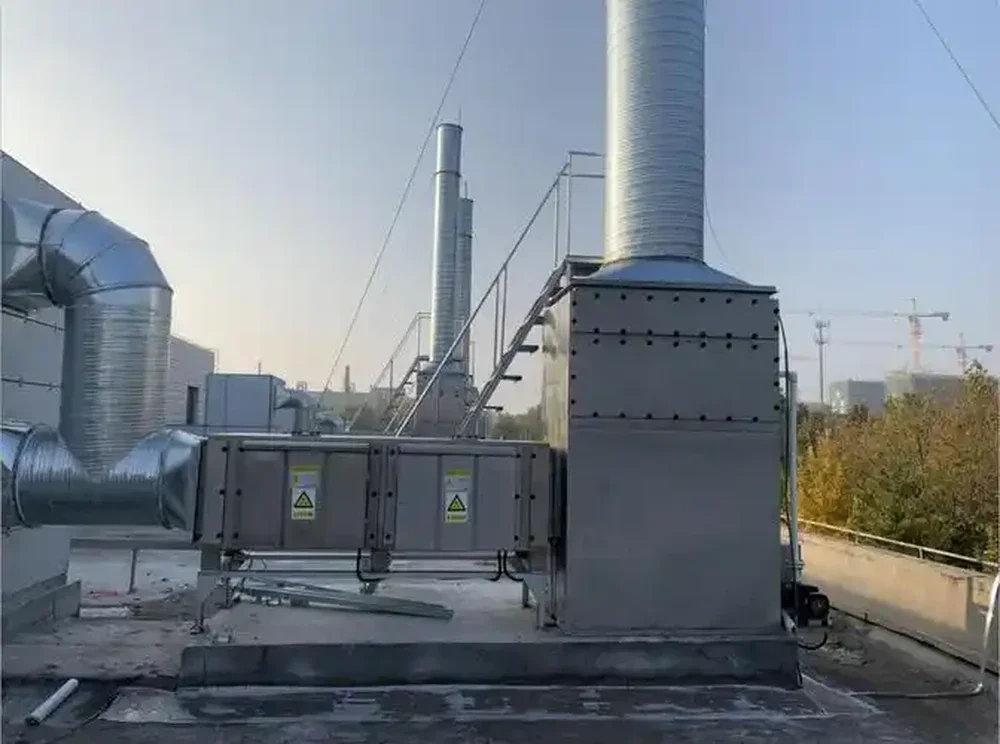
In our wet scrubber design systems, a packed bed tower operates primarily on a countercurrent flow mechanism. The dirty gas enters near the bottom of the column and moves upward, while the scrubbing liquid sprays downward from top-mounted headers. The magic happens inside the packed section, where the packing media forces the gas and liquid into continuous, intimate contact.
Every robust packed tower relies on several non-negotiable core components:
Gas Inlet & Distribution Plenum: Balances the incoming gas velocity across the full diameter before it hits the bed.
Packing Support Plate: Holds the physical weight of the media and liquid hold-up without restricting gas flow.
Packing Bed: The active mass transfer zone providing massive wetted surface area.
Liquid Distributor & Re-distributors: Eliminates wall channeling by continuously directing the wash fluid evenly across the bed.
Mist Eliminator: Captures entrained liquid droplets before the clean gas exits the stack.
Recirculation Sump & Pump: Collects, neutralizes, and cycles the scrubbing chemical back to the top.
Packing Media Types, Internals, and Liquid Distribution
Choosing the right packing media dictates both mass transfer rates and total operating power. We typically specify two distinct styles:
- Random Packing (Dumped): Components like Pall rings, saddles, and Tellerettes. They provide exceptional contact area per unit volume, facilitate easy replacement, and offer high chemical resistance in materials like Polypropylene (PP), PVDF, or FRP. For facilities dealing with corrosive off-gases, such as dedicated animal facility odor control equipment, random media delivers reliable, multi-directional liquid renewal.
- Structured Packing: Corrugated sheets formed into precise geometric blocks. This configuration delivers significantly lower system pressure drop and handles higher gas throughputs, making it ideal for deep vacuum operations or tight footprint constraints.
Even the best packing fails without flawless liquid distribution. If the liquid streams cling to the vessel wall, the gas simply bypasses the chemical reagent through dry channels. We engineer low-pressure-drop, multi-orifice distributors and intermediate re-distributors every 10 to 15 feet of bed depth to keep the entire surface uniformly wet.
Advantages and Limitations of Packed Bed Scrubbers
Packed towers are workhorses for soluble gas removal, but they require the right process conditions to succeed.
The Advantages:
Maximum Gas Absorption: Massive interfacial surface area guarantees high removal efficiency (often exceeding 99%) for water-soluble acid gases, ammonia, and chemical fumes.
Compact Footprint: High mass transfer coefficients mean shorter overall column heights compared to open spray vessels handling identical gas volumes.
Customizable Packing Depths: Bed heights can be extended or staged to handle severe inlet concentration spikes.
The Limitations:
Clogging by Particulate Matter: Suspended solids, dust, and sticky precipitates quickly lodge inside the packing voids, creating severe channeling and soaring pressure drop.
Higher Bed Pressure Drop: The dense packing naturally resists gas movement, requiring higher-horsepower exhaust blowers compared to open spray chambers.
Fouling Maintenance: Cleaning a fouled, scale-encrusted packed bed demands chemical backwashing or intensive media removal and repacking.
Understanding Spray Towers
Working Principle and Nozzle Configuration
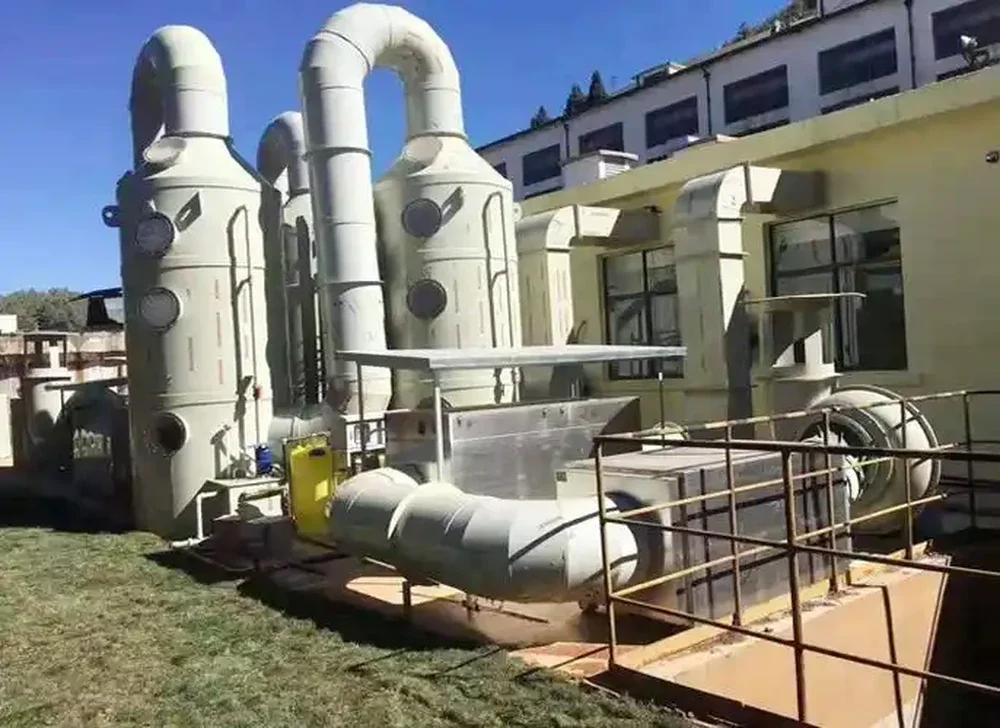
A spray tower operates as an open vessel without internal packing media, relying directly on pressurized atomization to capture contaminants. In our standard designs, the dirty exhaust enters near the bottom and travels upward in a countercurrent flow against a falling curtain of scrubbing liquid. Alternatively, specific processes utilize a crosscurrent gas stream where gas moves horizontally through vertical spray banks.
The core of this system lies in the spray nozzle arrangement. We position multiple spray headers at calculated elevations across the column cross-section. Key nozzle configurations include:
- Full Cone Nozzles: Deliver a uniform, circular impact area with completely distributed droplets, ideal for heavy particulate wetting.
- Hollow Cone Nozzles: Produce smaller droplets with a ring-shaped pattern, maximizing residence time along the outer edges of the plume.
- Spiral Pigtail Nozzles: Offer a clog-resistant, open-orifice design capable of spraying high-solids slurries without bridging.
By overlapping each liquid plume by 30% to 50%, we eliminate gas bypassing along the vessel walls and guarantee complete cross-sectional coverage.
Droplet Size, Gas Velocity, and Contact Dynamics
Effective scrubbing in an open tower depends on the physical mechanics of liquid atomization. Because there is no packing to spread the liquid into a thin film, droplet diameter dictates the available contact surface area:
- Target Droplet Spectrum: We target a droplet size distribution between 500 and 1,000 microns. Droplets below 300 microns improve target impaction for fine dust but easily become entrained in the clean gas stream. Droplets larger than 1,500 microns fall too rapidly, reducing contact time.
- Design Gas Velocity: Superficial gas velocity inside the tower must stay within 1.5 to 2.5 m/s (300 to 500 fpm). Pushing beyond 3.0 m/s overwhelms the gravitational settling of droplets and causes liquid carryover into downstream ductwork.
- Dynamic Contact: Gas cleaning relies on direct inertial impaction for heavy particulate matter and gas-film diffusion across the liquid droplet boundary. Aligning these physical parameters with established industrial off-gas treatment systems standards and sizing ensures the gas stream achieves sufficient residence time without overloading the draft fan.
Advantages and Limitations of Spray Scrubbers
Spray towers solve clear operational problems where other wet collectors fail, but they carry distinct trade-offs:
| Key Advantages | System Limitations |
|---|---|
| Total Clogging Resistance: With no packing internals, sticky dust, heavy tars, and reacting precipitates pass directly to the sump without blinding the bed. | Lower Mass Transfer Efficiency: Fewer theoretical transfer stages mean spray towers struggle with low-solubility gases and high-efficiency VOC removal. |
| Extremely Low Pressure Drop: Operating static resistance typically ranges between 0.5 to 1.5 in. w.g. (125 to 375 Pa), cutting system power usage. | Higher Pumping Energy: Atomizing high volumes of liquid requires high-pressure recirculation pumps, increasing liquid-to-gas (L/G) pumping costs. |
| High-Temperature Quenching: Handles hot, unconditioned flue gases safely by flash-cooling gas streams before secondary treatment. | Larger Tower Footprint: Requires larger column diameters and taller vertical shells to achieve sufficient gas residence time. |
Packed Bed vs. Spray Tower: In-Depth Comparison
Choosing between a packed bed tower and an open spray tower comes down to your stream composition. When we engineer a gas cleaning system, we balance mechanical simplicity against required contact surface area. Both setups operate on direct gas-liquid contact, but their internal physics lead to entirely different operational trade-offs.
| Performance Metric | Packed Bed Scrubber | Spray Tower Scrubber |
|---|---|---|
| Mass Transfer Efficiency | High (95% – 99%+) | Moderate (60% – 85%) |
| Particulate Handling | Low (< 2 grains/cu. ft; prone to plugging) | High (Handles heavy particulate loads) |
| Gas-Side Pressure Drop | Moderate to High (1.5 – 6 in. w.g.) | Very Low (0.5 – 1.5 in. w.g.) |
| Liquid-Side Pumping Energy | Low to Moderate | High (Needs high-pressure atomization) |
| Vessel Internals | Packing media, support grids, distributors | Open vessel, spray headers, atomizing nozzles |
| Maintenance Profile | Media cleaning/replacement cycles | Spray nozzle cleaning and erosion checks |
Particulate Loading and Clogging Resistance
Solid particulates dictate the hardware limit. If your exhaust contains sticky dust, fly ash, or salts that precipitate out during neutralization, a packed tower will foul quickly:
- Packed Bed Limitations: Solid particulate matter traps within the void spaces of dumped or structured packing. Once scaling begins, liquid channeling worsens, liquid flow chokes, and the static pressure drop spikes until the bed blinds completely.
- Spray Tower Strength: Constructed as an open vessel with no internal packing grids, a spray tower easily handles heavy particulate loading. The gas moves upward through an open liquid plume where high-velocity droplets capture dust particles without any physical media to clog.
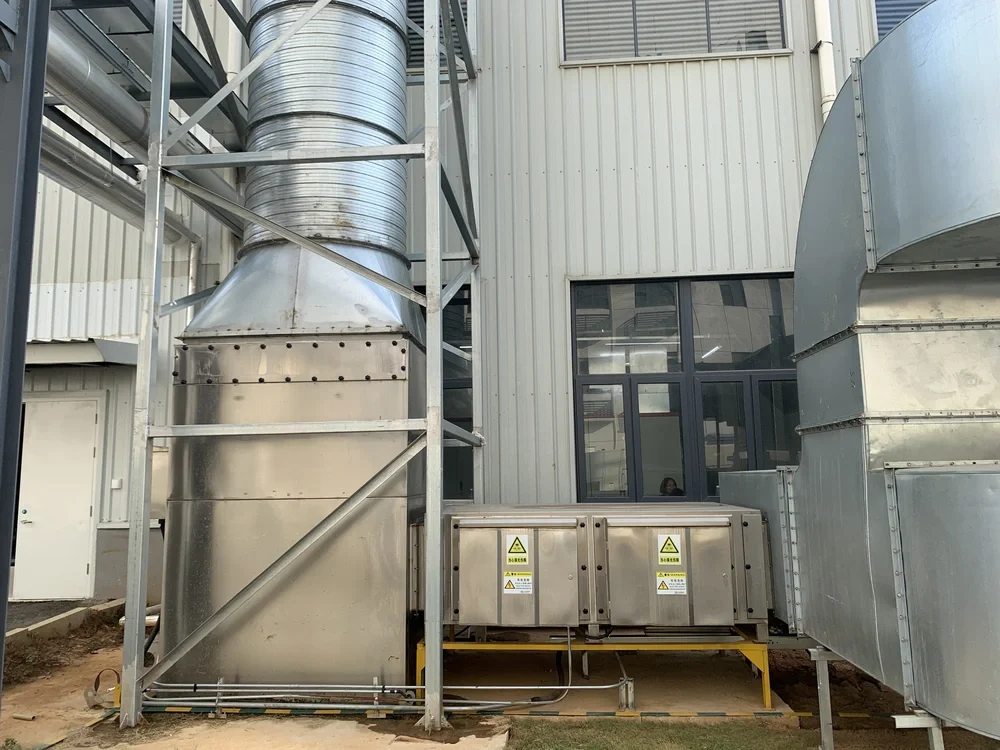
For facilities managing corrosive, particulate-heavy exhaust—often seen when integrating wastewater plant odor control equipment and processes—a spray tower or a multi-stage cyclonic design avoids constant shutdown cycles for media washouts.
Gas Absorption Efficiency and Mass Transfer Rates
When your primary target is stripping soluble gases, acid fumes (like HCl, SO2, HF), or ammonia, mass transfer dictates the geometry:
- Mass Transfer Rates: A packed bed forces a true countercurrent flow, spreading scrubbing liquid into a thin, constantly refreshed film over extensive packing media. This structure delivers vastly superior interfacial surface area per unit of tower volume (often exceeding 30 to 50 ft²/ft³), achieving over 99% removal efficiency in a compact shell.
- Absorption Constraints: Spray scrubbers rely entirely on the surface area generated by the spray nozzle arrays. Because liquid droplets coalesce rapidly as they fall, contact time is brief, and the liquid-to-gas boundary renewal is lower. Spray towers require much taller shells or multiple sequential stages to match the gas absorption performance of a single packed bed.
Pressure Drop, Energy Consumption, and Footprint
Operating costs reflect how mechanical energy is distributed across the fan and pump circuits:
- Gas-Side Energy & Pressure Drop: A packed bed introduces tortuous paths for the gas stream, resulting in higher pressure drops across the column (typically 2 to 6 inches of water column). This forces your air pollution control blower to work harder, consuming continuous fan horsepower. In contrast, an open spray tower offers virtually no static resistance to the crosscurrent gas stream or vertical flow, keeping system backpressure minimal.
- Liquid Pumping Requirements: Packed beds utilize low-pressure gravity distributors that require minimal pump pressure (typically 5 to 15 psi). Spray towers demand high liquid pressures (25 to 50+ psi) to properly atomize the wash liquid into target droplet sizes, transferring operational energy costs directly to the recirculation pump.
- Footprint and Plant Layout: Because packed beds provide high mass transfer per cubic foot, they need significantly less vertical height and overall floor space. A spray tower delivering equivalent gaseous pollutant capture demands larger diameters to control gas velocity and extended vertical height to provide adequate residence time.
Wet Scrubber Design and Engineering Guidelines
Designing a reliable wet scrubber tower requires balancing chemical thermodynamics, fluid dynamics, and operational realities. Whether we configure an open vessel spray tower or an intensive packed tower, precision engineering prevents common operational failures like bed channeling, excessive static pressure drop, and chemical corrosion.
Calculating Gas Flow Rate (CFM) and Liquid-to-Gas Ratio
Every sizing calculation starts with defining the total gas flow rate in Actual Cubic Feet per Minute (ACFM), adjusting standard volume (SCFM) for stream temperature, elevation, and moisture content:
- Gas Velocity Sizing: For a vertical countercurrent flow design, tower cross-sectional area is sized to maintain superficial gas velocities between 300 and 500 feet per minute (FPM). Staying in this range ensures sufficient residence time while avoiding bed flooding in packed towers.
- Liquid-to-Gas (L/G) Ratio: Sizing the scrubbing liquor flow depends entirely on solubility and reaction kinetics. Most chemical absorption systems operate at an L/G ratio of 5 to 10 gallons per 1,000 CFM of gas for packed beds, whereas particulate matter scrubbers and open spray towers often require 10 to 20 gallons per 1,000 CFM to ensure adequate droplet coverage.
- Turn-Down Margin: We factor in a 15–20% safety margin above peak exhaust rates to handle facility surges without choking the ventilation system.
Material Selection: FRP, PP, and Corrosion Resistance
Harsh gas cleaning system duties quickly destroy standard metallic equipment. We match specific structural materials to the chemical constituents, mechanical loads, and thermal conditions of the incoming stream:
- Polypropylene (PP): An economical, lightweight thermoplastic ideal for strong acid and alkaline streams at continuous temperatures below 160°F (71°C). It delivers exceptional chemical inertness against hydrochloric and sulfuric acid fumes common in steel pickling and phosphating wastewater treatment environments.
- Fiberglass Reinforced Plastic (FRP): Structural premium vinyl ester resins engineered for structural strength, outdoor UV resistance, and elevated operating temperatures up to 220°F (104°C). Dual-laminate designs (PVC/FRP or PP/FRP) combine thermoplastic chemical barriers with FRP mechanical shells.
- High-Alloy Stainless Steels (316L, 2205 Duplex): Selected primarily when process streams contain solvent traces, abrasive dusts, or high thermal spikes that exceed thermoplastic heat-deflection limits.
- Fluoropolymers (PVDF, PTFE): Reserved for aggressive oxidizers like chlorine gas, nitric acid blends, and chromic acid mists generated during heavy electroplating wastewater treatment methods and solutions.
Mist Eliminators and System Pressure Drop Optimization
Entrainment separation prevents corrosive droplets from exiting the stack as an unmanageable liquid plume or ruining the downstream induced draft (ID) fan. Selecting and placing the right demister profile controls overall system pressure drop:
| Demister Type | Velocity Range | Particle Cut Size | Typical Pressure Drop | Best Application |
|---|---|---|---|---|
| Chevron / Vane Blades | 600 – 1,000 FPM | Droplets > 20–40 microns | 0.2 – 0.5 in. w.g. | Heavy liquid loads, fouling/particulate streams |
| Knitted Wire/Poly Mesh | 300 – 600 FPM | Droplets > 5–10 microns | 0.5 – 1.5 in. w.g. | Clean acid gas absorption, low solids |
To optimize operating costs:
Minimize static drag: Position low-pressure-drop chevron profiles directly above the top spray nozzle headers to shed bulk water without blinding.
Incorporate wash-down headers: Automated spray nozzles positioned below mesh pads periodically flush captured scale and particulate, keeping system pressure drop consistently within targeted operating limits (typically under 4 to 6 inches of water column total across the entire air pollution control train).
Industrial Selection and Application Scenarios
Choosing between a packed bed tower and an open spray tower comes down to your plant’s specific process conditions: your target pollutants, inlet temperatures, and dust loads. In real-world air pollution control projects, matching the right gas cleaning system to the stream properties ensures compliance without driving up maintenance costs.

Best Scrubber Choice for VOC and Acid Gas Removal
When high absorption efficiency is the primary goal, a packed tower running a countercurrent flow configuration is almost always the superior choice. Packing media provides the massive interfacial surface area needed for gas-liquid mass transfer.
- Acid Gas Removal (HCl, SO2, HF, Cl2): Packed beds excel here. Chemical scrubbing with dilute caustic (NaOH) yields over 99% removal efficiency by sustaining continuous liquid contact. Understanding what industrial exhaust gases can scrubber towers treat helps match packing depth and reagent dosing to specific chemical limits.
- Water-Soluble VOCs (Alcohols, Acetone, Formaldehyde): Packed beds provide the extended residence time required for gas absorption into water or oxidizing scrub solutions.
- Solvent Recovery and Printing Operations: When paired with targeted recovery systems, packed scrubbers knock down volatile vapors effectively. In solvent-heavy lines, integrating our scrubbers alongside dedicated printing plant VOCs treatment solutions for emission control prevents secondary organic releases.
Handling High-Temperature, Corrosive, or Particulate-Laden Streams
Heavy particulate matter and extreme temperatures quickly plug standard packed beds. For these tough streams, an open vessel spray tower or a dual-stage hybrid design performs best.
| Exhaust Stream Condition | Primary Risk | Recommended Scrubber Design |
|---|---|---|
| High Particulate (> 200 mg/m³) | Packing blockage and channel channeling | Open spray tower with non-clogging spray nozzle arrays |
| High Temperature (> 180°F / 82°C) | Thermal damage to plastic packings (PP/FRP) | Upstream quench spray tower to cool gas before bed entry |
| Heavy Acid Mist + Dust | Scaling and high pressure drop | Spray chamber rougher followed by a wide-pitch packed bed |
An open vessel configuration relies on atomized droplets from overlapping spray nozzles. The resulting liquid plume scrubs large dust particles and quenches hot gas streams without creating media build-up or unplanned pressure spikes.
Key Considerations for Purchasing and Custom Sizing
When we engineer and size a custom wet scrubber system for manufacturing facilities, we evaluate four mechanical factors:
- Design Gas Velocity: Packed towers typically operate between 2.0 to 2.5 m/s to avoid liquid flooding, while open spray towers can run slightly higher velocities to handle larger gas volumes within a smaller footprint.
- Liquid-to-Gas (L/G) Ratio: Packed beds operate efficiently at lower L/G ratios (typically 1.5 to 3.0 L/m³), which lowers pumping horsepower. Spray towers require higher L/G ratios (3.0 to 6.0 L/m³) to maintain sufficient droplet surface area.
- Pressure Drop Limits: If your plant has limited fan capacity, a spray tower delivers a minimal pressure drop (often under 500 Pa), whereas packed towers run higher resistance (750 to 1,500 Pa) depending on packing depth and mist eliminator design.
- Construction Materials: Match your chemistry accurately. We build standard corrosive systems using premium Polypropylene (PP) or Fiber-Reinforced Plastic (FRP), stepping up to PVDF or 316L stainless steel for hot, solvent-laden streams.