Environmental protection equipment supplier

Waste Gas Washing Tower Selection for Acid and Alkali Mist
Are you struggling to figure out the right waste gas washing tower selection for acid fumes and alkali mist? Choosing the wrong scrubber doesn’t just risk failed emission inspections—it leads to rapid equipment corrosion, costly downtime, and compliance headaches.
As an industrial air pollution control specialist, I know that matching a wet scrubber to your exact chemical exhaust requires more than just guessing tower dimensions. In this complete guide, I’m breaking down everything you need to know—from analyzing gas flow rates and choosing corrosion-resistant materials like PP and FRP, to sizing packing media and optimizing liquid-to-gas ratios.
Whether you are outfitting a chemical plant, a semiconductor facility, or a metal plating line, this step-by-step breakdown will help you specify a system built for peak neutralization efficiency and long-term durability.
Let’s dive right in!
Understanding Waste Gas Washing Towers for Acid Fumes and Alkali Mist
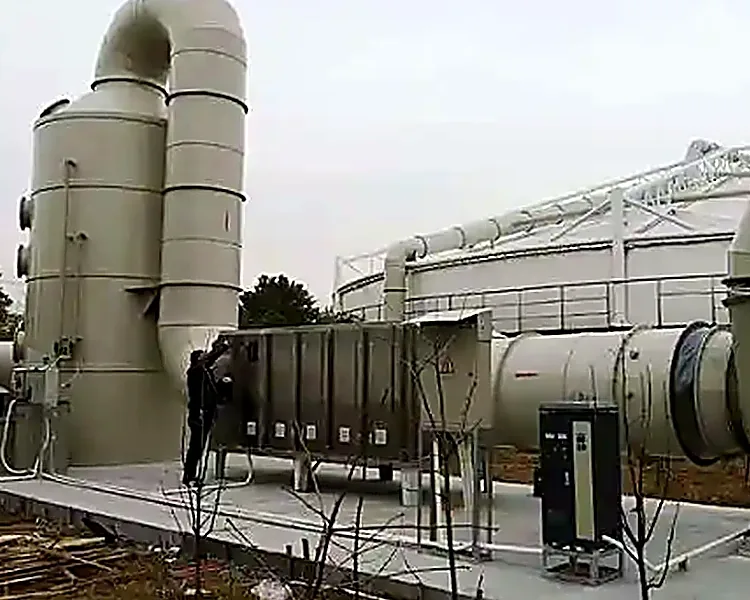
Proper waste gas washing tower selection for acid fumes and alkali mist protects both plant infrastructure and surrounding air quality from corrosive industrial exhaust. When chemical reactions, pickling, or manufacturing lines release hazardous vapors, standard ventilation is not enough—pollutants must be captured and neutralized before discharge.
What Is a Waste Gas Washing Tower (Wet Scrubber)?
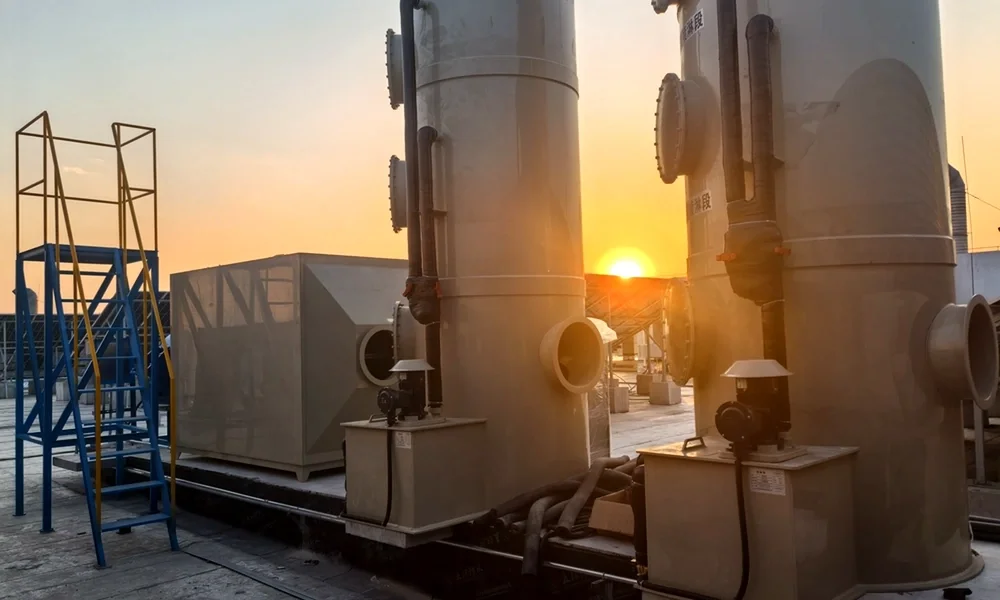
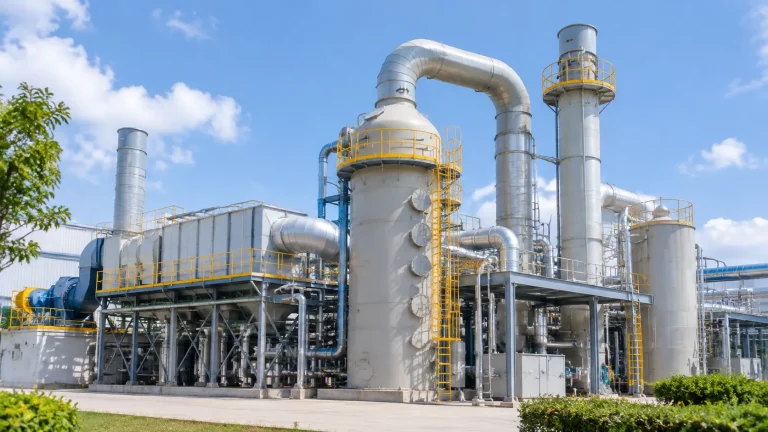
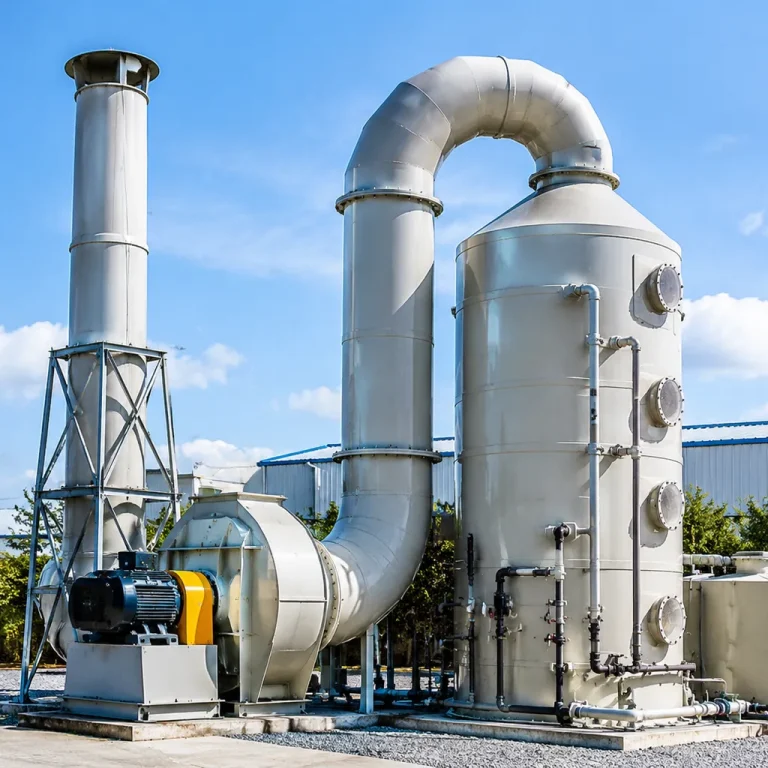
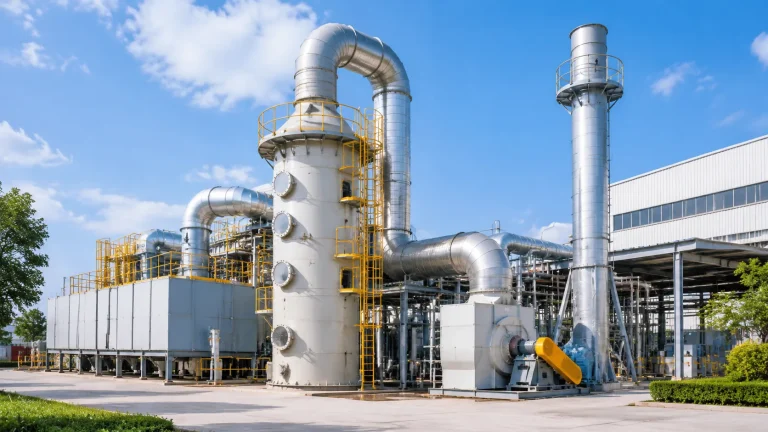
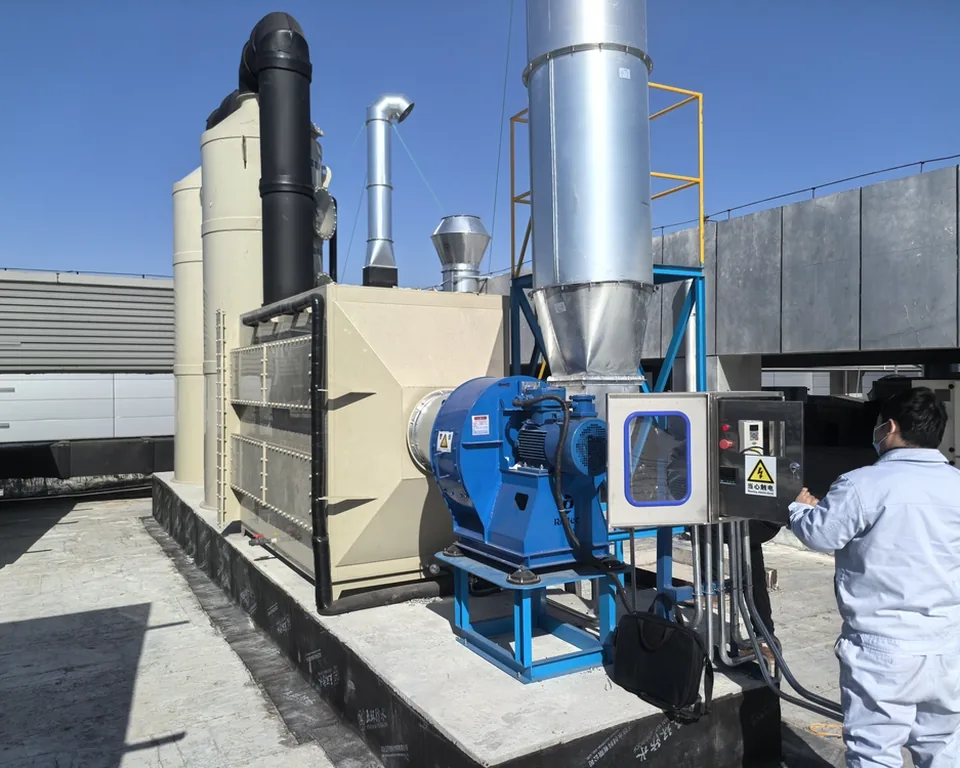
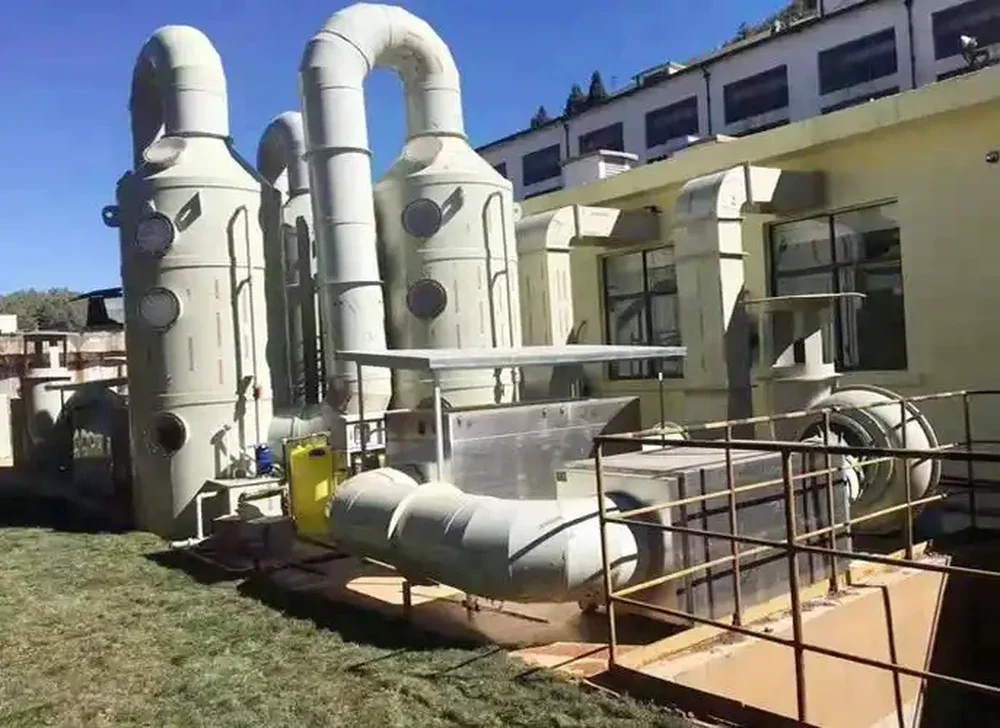
A waste gas washing tower—commonly known as a wet scrubber or wet scrubber tower—is an air pollution control system engineered to remove soluble gases, acid fumes, alkali mists, and odors from industrial exhaust streams. By bringing contaminated gas into direct contact with a scrubbing liquid inside a vertical column, the system transfers harmful airborne pollutants into a liquid phase through gas-liquid absorption.
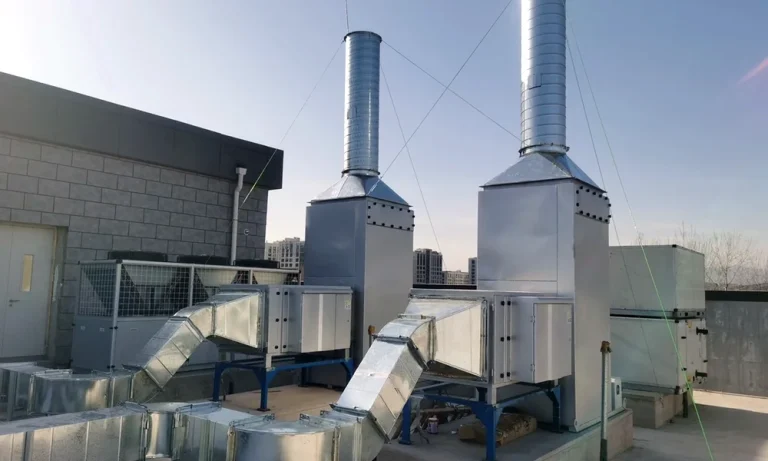
At Soto Machinery Co., Ltd., we manufacture custom-engineered wet scrubber towers designed around specific exhaust compositions and air flow rates. Whether integrated as a standalone unit or paired with downstream filtration, a properly configured wet scrubber prevents equipment corrosion and keeps facility emissions under control.
How Acid-Base Neutralization Works in Fume Scrubbing
Effective acid gas control and alkali mist removal rely on targeted chemical neutralization inside the scrubbing tower:
- Acid Fume Treatment: Exhaust containing acidic vapors—such as hydrochloric, sulfuric, or nitric fumes—is washed with an alkaline scrubbing solution (typically sodium hydroxide). The reaction converts volatile acids into stable, non-volatile salts dissolved in the circulation liquid.
- Alkali Mist Treatment: Exhaust carrying alkaline mists, such as ammonia vapors, is scrubbed using a mild acidic reagent to neutralize pH levels and trap droplets before clean air exits the stack.
- Continuous Gas-Liquid Contact: As contaminated air rises through the tower, downward-flowing scrubbing liquid maximizes surface contact, ensuring rapid chemical reaction and high removal efficiency.
Key Environmental Regulations and Emission Compliance
Global industrial operators face strict local and international emission standards governing toxic and corrosive air discharges. Operating without compliant air pollution control equipment exposes facilities to regulatory fines, forced shutdowns, and workplace safety hazards.
To ensure reliable compliance across global markets, every wet scrubber system we build in our ISO 9001 certified Qingdao facility is engineered to meet strict international emission standards and carries CE-marked quality assurance. Before shipment, each unit undergoes factory testing to verify structural integrity and readiness for site-specific inlet concentrations and target outlet thresholds.
Core Components and Tower Internals
When we build a custom wet scrubber at our Qingdao facility, the outer shell is only half the story. What happens inside the column determines whether your plant meets strict air pollution control standards or struggles with carryover and high fan power costs. Proper industrial off-gas treatment systems sizing relies heavily on matching internal components to your exact gas composition and air flow rate.
Tower Packing Media (Tri-Packs, Pall Rings, and Ceramic Saddles)
Packing media creates the surface area needed for efficient gas-liquid absorption. As dirty exhaust rises and scrubbing liquid flows down, the media breaks the liquid into thin films to maximize contact with corrosive gases.
- Tri-Packs: Spherical hollow media engineered to prevent nesting and dry spots. We use them when you need high mass transfer with minimal pressure drop.
- Pall Rings: Slotted cylindrical rings that handle higher liquid loads and offer solid mechanical strength for standard acid gas control.
- Ceramic Saddles: Heavy-duty media built for high-temperature exhaust streams where standard plastics would warp or degrade.
Vane-Type Mist Eliminators and Droplet Separation
Once chemical neutralization takes place, clean gas still carries fine liquid droplets toward the exhaust stack. Without proper separation, corrosive mist escapes into the atmosphere and damages downstream ductwork.
- Chevron Blade Design: Vane-type mist eliminators force the rising gas stream to change direction rapidly.
- Inertia Capture: Heavy liquid droplets cannot make the sharp turns, hitting the blades and draining back into the sump while clean air exits the tower.
Spray Nozzles, Circulation Pumps, and Ventilation Systems
Even the best packed bed scrubber fails if liquid distribution is uneven or airflow stalls. We engineer the mechanical delivery loop as a single balanced unit before pre-shipment factory testing.
| Component | Core Function | Engineering Focus |
|---|---|---|
| Spray Nozzles | Distribute neutralizing solution evenly across the packing bed | Wide-angle, non-clogging orifice design to prevent channeling |
| Circulation Pumps | Continuously recirculate scrubbing liquor from the bottom sump | Corrosion-resistant seals and housings rated for continuous duty |
| Ventilation Systems | Pull exhaust fumes through the tower at target velocity | Sized to overcome total static pressure drop across packing and mist eliminators |
Types of Wet Scrubbers for Corrosive Gas Treatment
Not every exhaust stream responds to the same scrubber setup. At Soto Machinery, we engineer each https://www.soto-ephttps://www.soto-epmachinery.com/waste-gas-treatment/wet-scrubber-tower/”>wet scrubber tower around your exact exhaust composition, airflow rate, and international emission standards so your facility stays compliant without overspending on unnecessary hardware.
Packed Bed Scrubbers for Acid Fumes and Alkali Mist
A packed bed scrubber is our primary workhorse for handling soluble acid fumes and alkali mists. By filling the tower with high-surface-area packing media, we maximize gas-liquid contact time so the scrubbing reagent neutralizes corrosive vapors efficiently.
- Best suited for: Water-soluble acid gases, alkaline vapors, and chemical deodorization.
- Key advantage: High gas-liquid absorption efficiency within a compact footprint.
- Operational focus: Works best on clean gas streams with minimal heavy dust to prevent media clogging.
Multi-Stage Wet Scrubbing Systems
Industrial exhaust rarely contains just a single pollutant. When your production line releases mixed corrosive fumes alongside odors, VOCs, or fine particulates, we design integrated multi-stage scrubbing systems tailored to your exhaust profile:
- Two-stage chemical neutralization: Uses separate scrubbing zones—such as an acid wash followed by an alkaline wash—to capture complex, multi-component gas streams in one continuous pass.
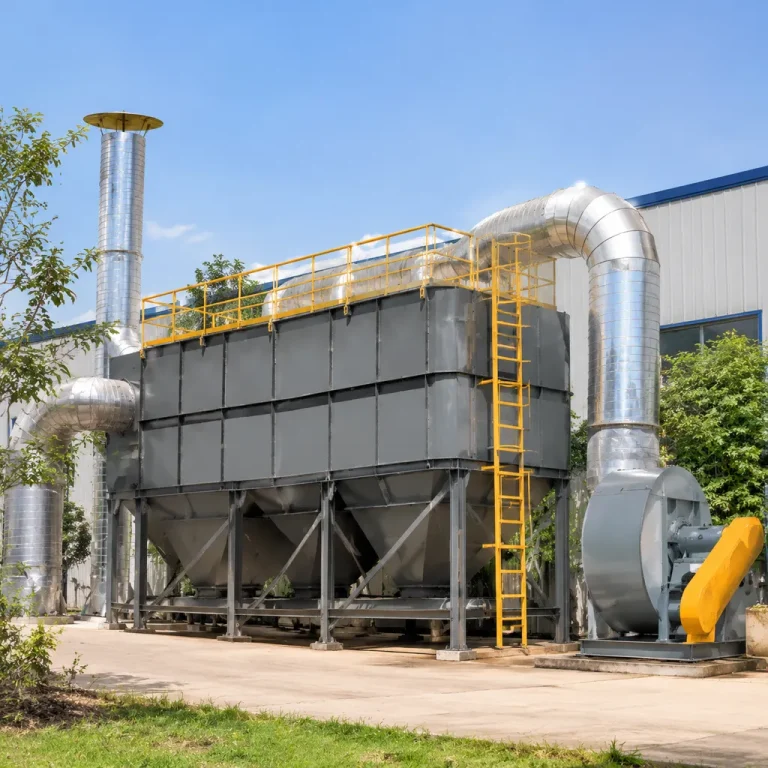
- Scrubber + dust collection: Pairs a wet scrubber with a baghouse dust collector upstream when heavy dry particulates would otherwise foul the packing bed.
- Scrubber + VOC/odor polishing: Combines wet scrubbing with activated carbon adsorption or UV photolysis when organic solvents or persistent odors accompany corrosive mists.
Wet Electrostatic Precipitators (WESP) and Specialized Scrubbers
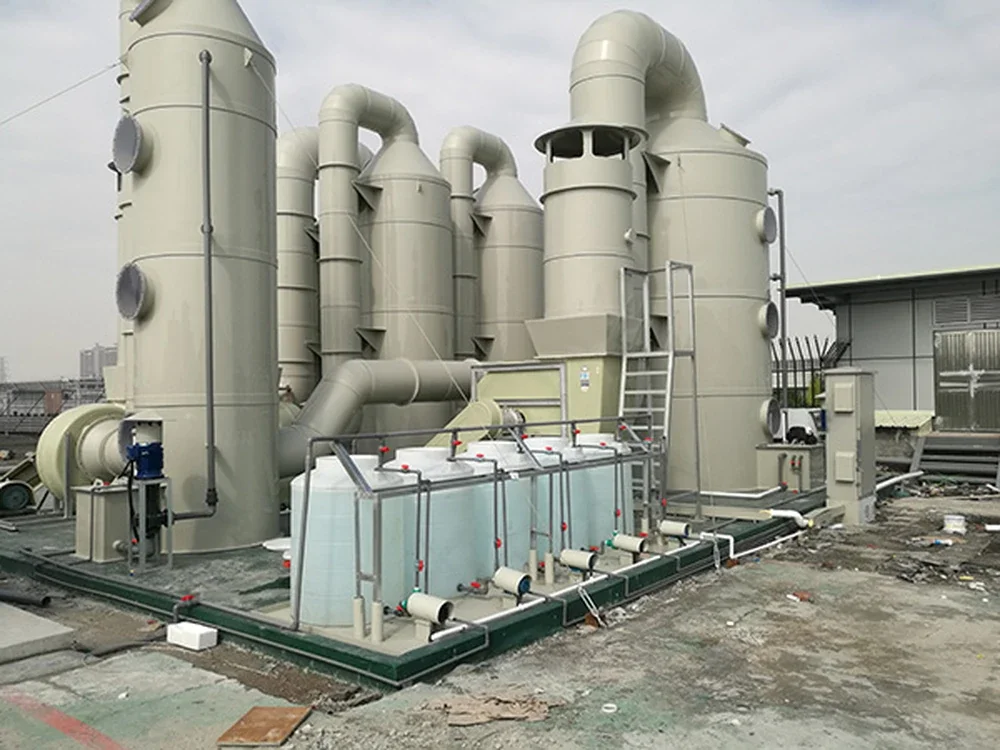
When your exhaust carries ultra-fine acid aerosols or sub-micron mists that standard packing media cannot trap, specialized configurations step in to finish the job:
| Scrubber Configuration | Primary Target | Ideal Application Scenario |
|---|---|---|
| Open Spray Tower | High-load particulates & soluble gases | Pre-cooling hot exhaust or scrubbing dusty gas streams without plugging |
| Wet Electrostatic Precipitator (WESP) | Sub-micron acid mist & fine aerosols | High-purity final polishing where visible plume or fine mist carryover is strictly regulated |
| Spray Deodorization System | Corrosive odor compounds | Wastewater stations, food processing, and laboratory exhaust |
Key Factors in Waste Gas Washing Tower Selection
Choosing the right system for waste gas washing tower selection for acid fumes and alkali mist comes down to matching the equipment to your exact plant conditions. At Soto Machinery, our engineering team always reviews your specific emission profile and international compliance targets before recommending a custom wet scrubber setup.
Analyzing Exhaust Gas Composition, Concentration, and Flow Rate
Before we size a tower or calculate chemical dosing, we need clear baseline data from your facility. Understanding https://www.soto-epmachinery.com/what-industrialhttps://www.soto-epmachinery.com/what-industrial-exhaust-gases-can-scrubber-towers-treat/”>what industrial exhaust gases scrubber towers can treat starts with measuring four core operating inputs:
- Specific Gas Composition: Identify whether your stream carries acidic vapors, alkaline mists, or mixed pollutants so we can match the proper neutralizing reagent.
- Air Flow Rate (m³/h): Total exhaust volume sets the tower diameter and fan capacity—for example, our custom industrial systems regularly handle high-volume streams from 30,000 m³/h up to 50,000 m³/h.
- Inlet vs. Outlet Targets: Knowing your incoming pollutant concentration and required discharge limits determines bed depth and removal efficiency.
- Co-Existing Contaminants: If heavy dust or organic odors accompany corrosive gases, we pair the wet scrubber with upstream baghouse dust collectors or downstream activated carbon and UV photolysis units.
Choosing Corrosion-Resistant Construction Materials (PP, FRP, PVC)
Corrosive gases quickly destroy standard carbon steel, leading to leaks and premature failure. Selecting durable, chemical-resistant housing ensures long-term reliability under strict ISO 9001 and CE manufacturing standards:
| Material | Best Suited For | Key Advantage |
|---|---|---|
| PP (Polypropylene) | Most common acid fumes and alkali mists | Lightweight, cost-effective, and resists broad chemical corrosion |
| FRP (Fiberglass Reinforced Plastic) | High-strength outdoor or large-diameter towers | High structural durability and strong resistance to harsh acid gas control |
| PVC (Polyvinyl Chloride) | Lower-temperature corrosive gas streams | Reliable chemical resistance for standard indoor exhaust setups |
Sizing Calculations: Liquid-to-Gas Ratio and Pressure Drop
Proper internal sizing ensures maximum gas-liquid absorption without overloading your exhaust fans or wasting scrubbing liquid.
- Liquid-to-Gas (L/G) Ratio: This measures the volume of scrubbing solution circulated relative to the exhaust air flow. Higher pollutant concentrations require a higher L/G ratio to keep the neutralizing solution active across the packing media.
- System Pressure Drop: Every layer of packing media and mist eliminator adds airflow resistance. We balance packing depth to achieve high purification rates while keeping pressure drop low enough to save fan energy.
- Pre-Shipment Testing: At our Qingdao facility, we verify pump circulation, nozzle spray coverage, and structural integrity before shipping so your system performs as calculated on day one.
Industrial Application Scenarios
Selecting the right waste gas washing tower depends heavily on the specific pollutants your facility generates. At Soto Machinery, we engineer wet scrubbers tailored to the exact gas compositions and flow rates of diverse global industries, ensuring full compliance with international emission standards.
Chemical, Petrochemical, and Pharmaceutical Manufacturing
Chemical and pharmaceutical plants deal with complex, fluctuating exhaust streams containing corrosive gases and volatile compounds. We custom-design wet scrubber systems to handle high-volume industrial air flows, neutralizing acid fumes and alkali mists at the source.
- Acid Gas Control: Neutralizes aggressive acidic emissions generated during chemical synthesis and active ingredient production.
- Multi-Stage Integration: When corrosive fumes are mixed with volatile organic compounds (VOCs) or heavy odors, we pair our wet scrubbers with activated carbon adsorption units or UV photolysis waste gas purifiers for complete air pollution control.
- Proven Industrial Scale: Our custom waste gas systems reliably manage high-capacity exhaust volumes—such as 30,000 m³/h to 50,000 m³/h—achieving up to 95%–97% purification and VOC removal rates.
Electronics, Semiconductors, and Plating & Metal Finishing
Surface treatment, pickling, and etching processes release concentrated acid mists and alkaline vapors that damage facility infrastructure and violate strict workplace air quality rules. A properly sized packed bed scrubber captures these corrosive droplets before they escape into the atmosphere.
- Targeted Fume Capture: Effectively treats exhaust from acid baths, plating lines, and metal cleaning tanks.
- Complete Facility Compliance: Because surface finishing lines generate both hazardous exhaust and contaminated rinse water, many facilities pair our air scrubbers with dedicated https://www.soto-https://www.soto-epmachinery.com/electroplating-wastewater-treatment-methods-and-solutions/”>electroplating wastewater treatment solutions to manage plant-wide environmental compliance from a single factory-direct manufacturer.
Water Treatment, Odor Control, and Food Processing
Municipal sewage plants, animal facilities, and food processing lines produce corrosive, odorous gases alongside organic fumes. Using a spray deodorization system or wet scrubber tower neutralizes these emissions efficiently while handling high-moisture exhaust streams.
- Municipal & Facility Odor Control: Treats acidic and alkaline odorous gases emitted during sludge handling and biological treatment, integrating seamlessly with https://www.sotohttps://www.soto-epmachinery.com/wastewater-plant-odor-control-equipment-and-processes/”>wastewater plant odor control equipment and processes.
- Food & Beverage Processing: Removes steam, corrosive cleaning vapors, and organic odors generated during cooking, sanitation, and packaging operations, keeping surrounding communities odor-free.
Installation, Maintenance, and Custom Engineering
Getting the right equipment on your floor is only half the job—how we build, install, and support your system determines whether you hit long-term emission compliance without costly downtime. At Soto Machinery, we manufacture directly in our ISO 9001 certified facility in Qingdao, eliminating middlemen to give you factory-direct pricing and full control over build quality.
Custom-Engineered Solutions vs. Standard Scrubbing Units
Every facility deals with a different mix of corrosive gases and layout limits. While standard units work well for straightforward exhaust streams, complex industrial operations often need a tailored approach to meet strict international discharge rules.
| Feature | Standard Wet Scrubber Units | Custom-Engineered Scrubbing Systems |
|---|---|---|
| Best Fit | Consistent, predictable exhaust streams | Variable acid/alkali loads, high air flow rates, or tight footprints |
| Engineering Input | Pre-configured sizing and flow specs | Tailored around your exact gas composition, flow rate, and outlet targets |
| Production Lead Time | 15–30 days | 30–60 days |
| Quality Assurance | Pre-shipment factory testing & CE compliance | Pre-shipment factory testing & CE compliance |
If your facility handles specialized exhaust—such as combined fumes in a research wing or high-volume chemical processing—our engineering team evaluates your exact gas composition and flow rate before fabrication begins. For facilities managing sensitive lab exhaust alongside air purification, our https://www.soto-epmachinery.com/laboratory-environmental-protection-https://www.soto-epmachinery.com/laboratory-environmental-protection-and-odor-control-guide/”>laboratory environmental protection and odor control guide outlines how integrated ventilation and scrubbing systems protect both staff and equipment.
Routine Maintenance, Packing Replacement, and Aftermarket Service
A well-maintained wet scrubber runs reliably for years, provided you stay ahead of salt buildup, nozzle clogging, and media wear. We design our systems for straightforward upkeep and back every shipment with end-to-end technical support so your team is never left guessing:
- Smooth Installation & Commissioning: We provide detailed installation drawings for every unit, paired with remote video guidance—or on-site installation supervision for larger, multi-stage projects.
- Operator Training: We train your on-site staff on daily chemical dosing checks, pressure drop monitoring, and safe routine maintenance procedures.
- Parts & Upkeep: When tower packing media, spray nozzles, or mist eliminator blades eventually wear down, we supply direct replacement parts from our factory to keep your air pollution control system running at peak efficiency.
- Warranty & 24/7 Support: Every unit includes a 12-month warranty and access to 24/7 urgent technical support whenever unexpected operational issues arise.
To request a system sizing review or quotation within 24–48 hours, share your waste gas composition, air flow rate, and target emission standards with our engineering team directly at david@sotomachinery.com or via WhatsApp at +86 18653221918.