Environmental protection equipment supplier

Chemical Scrubbing Odor Control: pH, ORP and Dosing Explained
Chemical scrubbing odor control runs on two control loops, and most failures are loop failures rather than chemistry failures. One loop holds pH, because pH decides whether the odorant stays dissolved. The other holds oxidation potential, because some compounds have to be destroyed after they are absorbed. A third element, dosing, moves the chemicals. Get the three working together and a scrubber holds its outlet for years. Get one wrong and the tower is blamed for a fault that sits in a probe or a pump.
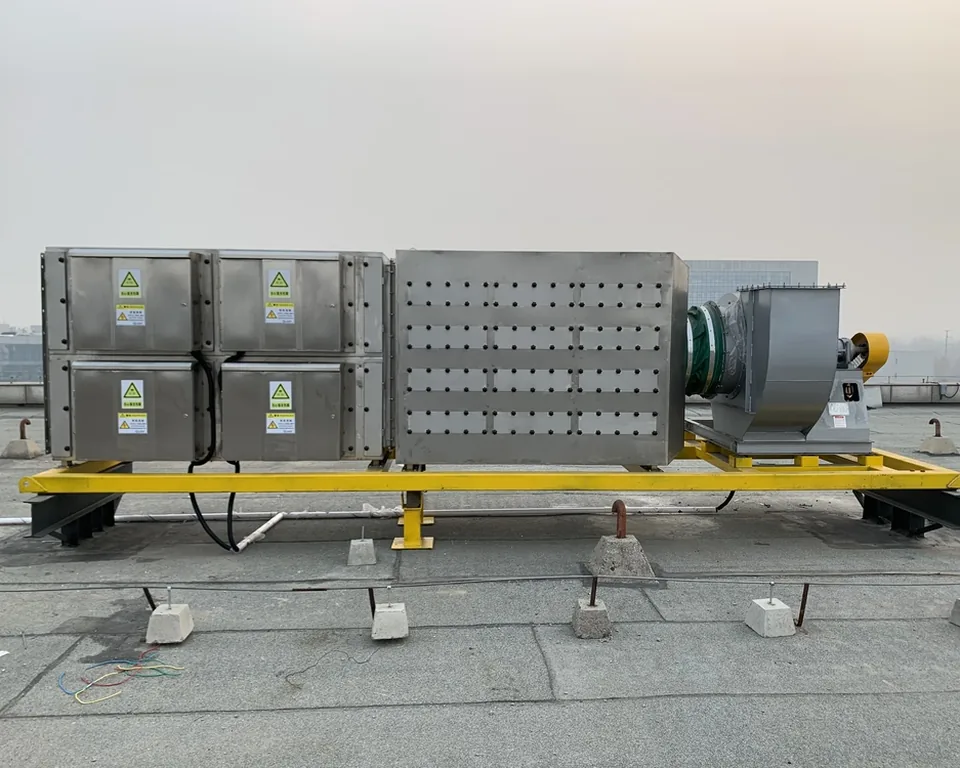
Why chemical scrubbing odor control fails at the loop, not the tower
Absorption depends on the form a molecule takes in water, so the chemistry decides the setpoint. Hydrogen sulfide leaves the liquid as a gas below pH 7, and stays as a dissolved ion above pH 9. Ammonia does the opposite, because it is volatile above pH 9 and locked as an ion below pH 5. So the same tower can remove one compound well and pass another one straight through, with no mechanical fault at all.
| Compound | pKa | Target pH in the loop | What happens at the wrong pH |
|---|---|---|---|
| Hydrogen sulfide | about 7.0 | 9.5 to 10.5, alkaline | Below 8 the gas strips back out of the liquor |
| Ammonia | about 9.25 | 2 to 4, acid | Above 6 it leaves as gas, untreated |
| Methyl mercaptan | about 10.4 | 10.5 plus oxidant | Absorption alone is weak, so oxidation carries it |
| Organic acids | 4.8 to 5.0 | 6 to 8, near neutral | Below 4 they stay volatile and pass through |
That table explains most site arguments we are called to. A plant reports poor removal and asks for a taller tower, while the probe reads a pH that suits one compound and not the other. Which gases a single tower can handle is set out in our note on what industrial exhaust gases scrubber towers can treat.
Two loops, and what each one is for
Loop 1
pH
- Measures
- Acidity of the recirculating liquor
- Typical setpoint
- 9.5 alkaline, or 3.0 acid
- Drifts because
- Gas load changes, caustic runs out, CO2 absorbs
- Fails as
- Probe fouled by sulfur, reading low and steady
Loop 2
ORP
- Measures
- Oxidant to reductant balance, in millivolts
- Typical setpoint
- 250 to 350 mV
- Drifts because
- Load swings, bleach decay, electrode coating
- Fails as
- Stuck value, or a reading that never moves
Drive
Dosing
- Moves
- Caustic, acid, oxidant, antifoam
- Typical mode
- Flow paced, trimmed by pH or ORP
- Drifts because
- Pump stroke, worn diaphragm, blocked foot valve
- Fails as
- Pump runs and nothing arrives at the tower
The two loops are not interchangeable, and neither one substitutes for the other. pH decides how much of the compound the liquor can hold, while ORP decides whether that compound is then destroyed. So our waste gas treatment range shows which units carry both loops and which carry only one.
The pH loop decides whether the gas dissolves
In chemical scrubbing odor control, pH is the loop that determines which compounds can be captured at all. Everything downstream depends on it, so the probe and its placement matter more than the controller.
Where the probe sits
Measure after the caustic injection point, and far enough downstream for mixing. Ten to fifteen pipe diameters is the usual rule, although a static mixer shortens it. A probe fitted at the injection tee will chase every dose, so the reading swings by half a unit.
Why 10.5 is a ceiling
Raising pH above 10.5 buys little extra sulfide absorption, yet costs a lot of caustic. The liquor starts absorbing carbon dioxide from the air. Each kilogram of CO2 takes 0.9 to 1.8 kg of sodium hydroxide with it. Above pH 11 the same reaction lays carbonate scale on the packing.
Dead band and calibration
Set a dead band of 0.1 to 0.2 pH. Without it, the dosing pump hunts and the chemical bill climbs, while the probe wears out faster. Calibrate with two buffers every week at first, because sulfide films the glass and pulls the reading down without any alarm.
The ORP loop decides whether the gas is destroyed
ORP is the loop that chemical scrubbing odor control usually gets wrong. A millivolt reading is not a concentration, so it only means something next to a load. It reflects the balance between oxidant and reductant, and it falls when sulfide arrives.
In practice the working band for sulfide oxidation is 250 to 350 mV. Below 200 mV the sulfide is not being oxidized and the outlet odour returns within minutes. Above 450 mV the liquor carries free oxidant, which leaves the stack as chlorine and attacks the packing.
Interlock worth having
Inhibit oxidant dosing whenever pH falls below 8.5. Hypochlorite in an acidic liquor releases chlorine gas instead of oxidizing sulfide, so the tower becomes the source of a new odour and a safety problem at the same time.
Dosing without a loop: ratio control
Where the flow is steady, small systems often skip ORP and dose in proportion to airflow or measured sulfide. That works, provided the ratio is set from stoichiometry rather than from a supplier’s habit. For full oxidation to sulfate, the figure is about 8.7 g of pure hypochlorite per gram of sulfide. Partial oxidation to elemental sulfur needs about 2.2 g, and that is enough for odour control in most cases.
So a plant treating 300 g/h of sulfide needs 0.7 to 2.6 kg/h of pure hypochlorite. That is 6 to 22 kg/h of a 12% solution. Ratio control then holds the figure steady, while a monthly sulfide test confirms the ratio is still right.
A control narrative you can hand to a panel builder
Because most commissioning problems come from an unwritten sequence, we put the sequence in writing. This is the order we specify for a two-stage train, and it fits on one page.
- Start the fan only after the circulation pump confirms flow. A dry tower passes gas untreated and overheats the packing.
- Confirm liquid to gas ratio at 1.5 to 3 L per m³ before enabling any dosing. Chemistry cannot fix a tower that is not wetting.
- Enable caustic dosing after 60 seconds of stable flow, paced by airflow and trimmed by pH.
- Enable oxidant after pH reaches 9, paced by ORP with a 30 second dead time. The delay is real, so the loop must not fight it.
- Alarm on high differential pressure, low liquor flow and low chemical tank level. Those three cover most trips.
- Trip oxidant on high outlet sulfide, and keep the fan running so the tower does not sit full of gas.
- Log pH, ORP, dosing rate and blowdown volume daily. A trend answers in one look what a single reading cannot.
Setpoints and alarms
Setpoints are site specific, so treat this as a starting sheet rather than a standard. The alarm band matters more than the setpoint, because it is what tells an operator that the loop has stopped working.
| Parameter | Setpoint | Alarm band | Automatic response |
|---|---|---|---|
| Alkaline stage pH | 9.5 | below 8.8 or above 10.8 | Boost caustic, or cut caustic above 10.8 |
| Acid stage pH | 3.0 | above 5.0 | Boost acid dosing |
| ORP | 300 mV | below 220 mV | Increase oxidant, alarm if unchanged in 10 min |
| Liquid to gas ratio | 2.0 L/m³ | below 1.5 | Start standby pump, alarm |
| Packing differential pressure | 300 to 600 Pa | above 900 Pa | Alarm, schedule wash |
| Outlet sulfide | below 1 ppm | above 3 ppm | Trip oxidant, alarm |
| Oxidant tank level | above 20% | below 20% | Alarm only, never auto-stop the fan |
Why pH looks right and the stack still smells
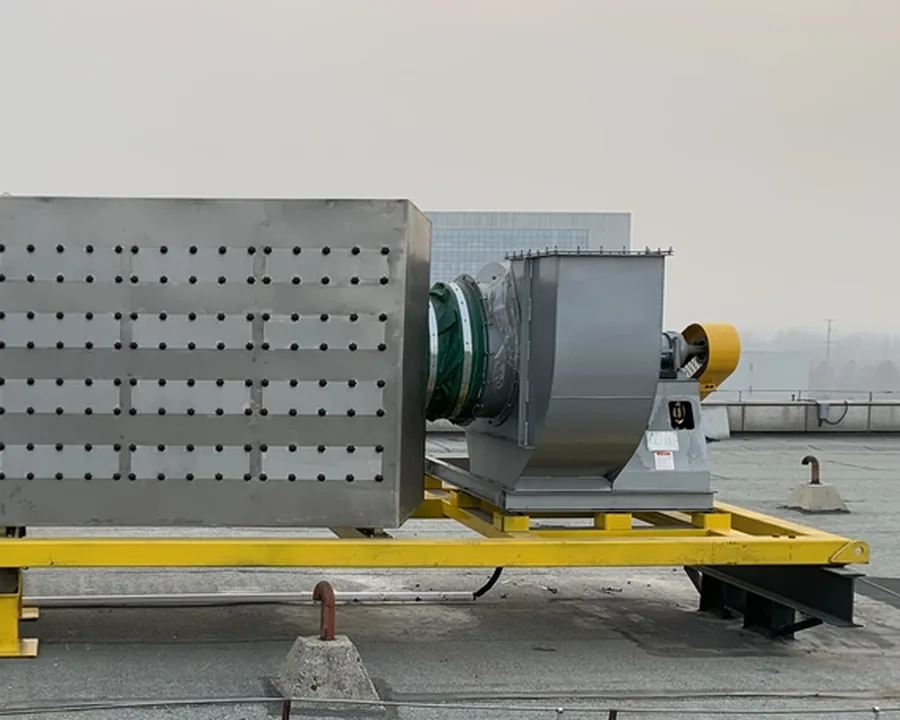
Most chemical scrubbing odor control complaints arrive as a smell rather than an alarm. The instrument panel looks healthy, so the tower gets blamed. The table below is the order we check things in.
| Symptom | What the panel shows | What it usually means | First check |
|---|---|---|---|
| Odour returns within an hour | pH normal, ORP low | Oxidant starved, or bleach has decayed | Tank strength and pump stroke |
| Odour returns after a load rise | pH normal, ORP normal | Liquid to gas ratio too low for the new load | Nozzle pressure and pump flow |
| pH swings half a unit | pH cycling | Probe too close to the injection tee | Relocate probe, add mixer |
| pH reads steady and low | pH flat at 8 or below | Probe filmed by sulfur, caustic still dosing | Clean and recalibrate probe |
| Caustic use doubles overnight | pH holding, dosing up | CO2 ingress, or blowdown has stopped | Blowdown valve and conductivity |
| White deposit on packing | pH above 11 | Carbonate scaling from over-caustic | Lower setpoint, wash the bed |
What the loops cannot fix
The two loops control the chemistry in chemical scrubbing odor control, while contact stays outside their reach. Contact is where a well-instrumented tower still fails.
Liquid to gas ratio is the first suspect, because it is the cheapest thing to check. Below 1.5 L per m³ the packing wets unevenly. Part of the gas then crosses dry surface with no absorption at all. The loop reads normal because the liquor it samples is fine.
Packing fouling comes second, and it announces itself as pressure drop. Scale, biofilm and carry-over dust all raise pressure drop and push gas into the channels with the least resistance. A bed that has tripled its differential pressure is bypassing itself.
Gas bypass comes third, and it is usually a detail. A missing gasket on a manway will do it. So will a drain leg without a water seal. So will a fan pulling from a corroded plenum, while every instrument reads healthy.
One tower, two chemistries: how to order the stages
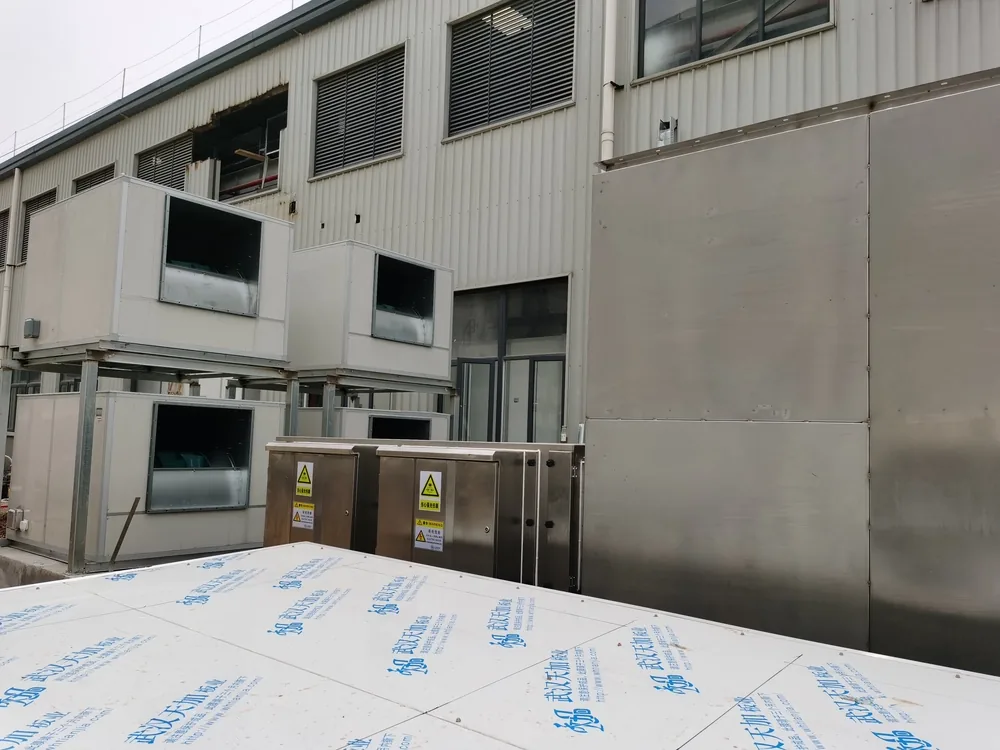
Chemical scrubbing odor control on a mixed stream needs two stages, because no single pH suits both families. The order of those stages decides how much chemical the second one spends.
Most designs put the acid stage first. Ammonia is easy to remove, and taking it out early reduces the caustic demand behind it. Ammonium salts do not consume alkali the way free ammonia does. The alkaline oxidizing stage then takes sulfide and mercaptans.
The order can reverse where the sulfide load is heavy and the gas is hot. But the acid stage then sees a gas already loaded with salts, so its packing fouls faster.
Municipal plants meet the same problem at a larger scale. Our notes on wastewater plant odor control equipment and processes split the streams instead of treating them together. That is often cheaper than one train sized for the worst case.
Where the residual odour is solvent-based, neither stage helps, and a carbon adsorption unit goes behind them as a polisher. Our comparison of common deodorization methods for environmental facilities shows how the options line up on the same duties.
Where the chemical budget leaks
Chemical scrubbing odor control costs are mostly chemical costs. So the loop settings decide the monthly bill as much as the tower design does, and four leaks account for most of the excess.
The first is pH set too high, which spends caustic on carbon dioxide instead of on sulfide. The second is oxidant over-dose from a loop that hunts. Running at 450 mV instead of 300 mV can double consumption. The third is hypochlorite decay. It loses 1 to 2% of its strength per month at 20 °C, and much faster in a warm tank. The fourth is blowdown, because dumping liquor to control dissolved solids throws away the chemicals in it.
Commissioning the loops in one shift
Commissioning is a sequence, and each step needs the previous one stable. A full day is usually enough for a two-stage train.
- Wet the packing and confirm even distribution before any chemical is dosed.
- Calibrate pH and ORP against fresh buffers, and record the millivolt reading in the liquor as a baseline.
- Set the caustic loop on manual, raise pH to setpoint, then switch to automatic and watch for hunting.
- Titrate a liquor sample for alkalinity, then set the ORP loop and confirm the response time.
- Run at design flow for 72 hours and trend outlet sulfide against ORP, so the relationship is documented rather than assumed.
Materials and safety
Hypochlorite and caustic are aggressive in different ways, so materials have to suit both. Wet chlorine attacks 304 stainless quickly, so wetted parts are usually 316L, FRP or PVDF. Caustic stress-cracks carbon steel at welded joints, and dilute acid finds every unlined patch.
Store hypochlorite below 25 °C, out of sunlight, and never in the same bund as acid. Mixing the two releases chlorine gas, and that is a genuinely dangerous event rather than a nuisance odour.
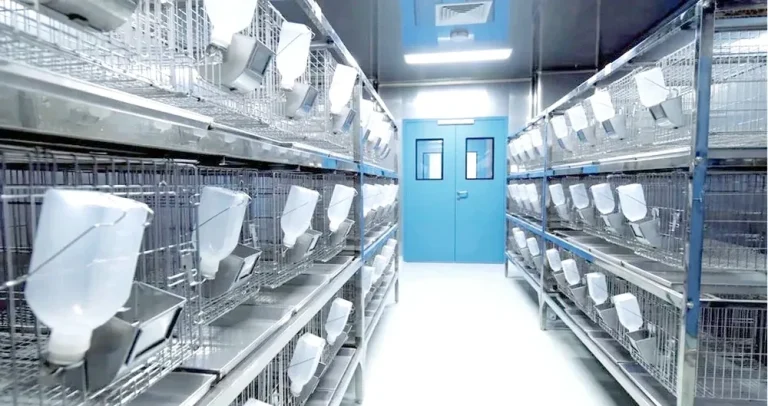
Animal rooms swing harder than most sources, because the load follows cage change and stocking density rather than the clock. The laboratory animal industry page lists the profiles we design to.
Frequently asked questions
These are the questions we hear most often about chemical scrubbing odor control. They are split by whether they concern the loop settings or the installation. More answers sit on our site FAQ.
Loop and setpoint questions
What pH should an alkaline scrubber run at?
9.5 to 10.5 for hydrogen sulfide. Below 9 the gas strips back out of the liquor, and above 10.5 caustic is spent on carbon dioxide instead of on sulfide. Set the alarm band before the setpoint, because the band is what protects the outlet.
What ORP setpoint removes hydrogen sulfide?
250 to 350 mV on a platinum electrode against a silver reference. Below 200 mV sulfide is not being oxidized, and above 450 mV free oxidant leaves the stack as chlorine. Treat the figures as a starting band and confirm them with an outlet sulfide test.
Do I need both pH and ORP control?
If the stream contains only ammonia or only acids, pH alone is enough. Once sulfide or mercaptans are present, ORP is the only signal that tells you whether the compound is being destroyed rather than merely dissolved.
Installation and operation questions
How much hypochlorite does a scrubber use?
About 8.7 g of pure hypochlorite per gram of sulfide for full oxidation to sulfate, or about 2.2 g for partial oxidation to sulfur. Most odour applications sit between the two, and the ORP setpoint is what decides where.
Why does the scrubber smell worse after a weekend shutdown?
Because the liquor sat still. Sulfide accumulates, ORP collapses and the packing drains unevenly, so the first hours after restart pass untreated gas. Keep the circulation pump on a timer during shutdowns, or accept a purge period before the stack is monitored.
Can one tower treat ammonia and hydrogen sulfide together?
Only as two stages. Ammonia needs acid and sulfide needs alkaline or oxidizing conditions, so a single tower at one pH passes one of the two families through. Two loops, two liquors, one fan is the usual arrangement.
Next step
If your tower is holding pH and still passing odour, send us the trend rather than the reading. A week of pH, ORP, dosing rate and outlet sulfide usually shows which loop is failing. Our engineers will say which one to change first in your chemical scrubbing odor control setup.