Environmental protection equipment supplier

Animal Facility Odor Containment: A Defense-in-Depth Strategy from Cage to Stack
Animal facility odor containment is a chain of defenses, and the goal is simple. Keep the smell inside the building instead of hoping a roof fan will fix it. Ammonia, hydrogen sulfide, skatole and VOCs leave a room through open doors, dry floor drains and leaky ducts, while an under-sized stack finishes the job. Once odor reaches the neighbors, you are managing a complaint, not a process. A working containment strategy covers five layers: source control, pressure cascade, local capture, end-of-pipe treatment and verified monitoring. This article walks through each layer with the numbers that matter, so you can check your own facility against it.
Why Odor Escape Costs More Than It Looks
Odor inside an animal room is an animal welfare issue, while odor outside the building is a business issue. Neighbors rarely distinguish between a research facility and a factory. So the first complaints go to the environmental hotline. Then an inspector arrives with a nose and a notebook.
The health case is just as direct. Chronic exposure to ammonia and hydrogen sulfide causes headaches, nausea and respiratory irritation among staff who spend full shifts indoors. Waste anesthetic gases also add to the load in procedure rooms. Staff absence and turnover rise quietly, and nobody connects them to the exhaust design.
Regulators, meanwhile, have already written the rules. China’s GB 14925-2023 sets ammonia at or below 14 mg/m³ inside barrier rooms. GB 14554-93 then controls what leaves the site. The stack must stand at least 15 m tall. Ammonia discharge at a 15 m stack is capped at 4.9 kg/h. The strictest boundary limit for ammonia then sits at 1.0 mg/m³. So an animal facility odor containment plan has to hold two fronts at once, indoors and at the fence line.https://www.soto-epmachinery.com/waste-gas-treatment/animal-room-waste-gas-treatment/
Where the Smell Actually Escapes
Facilities usually chase odor in the wrong place. Before adding equipment, map the escape routes, because they repeat from site to site.
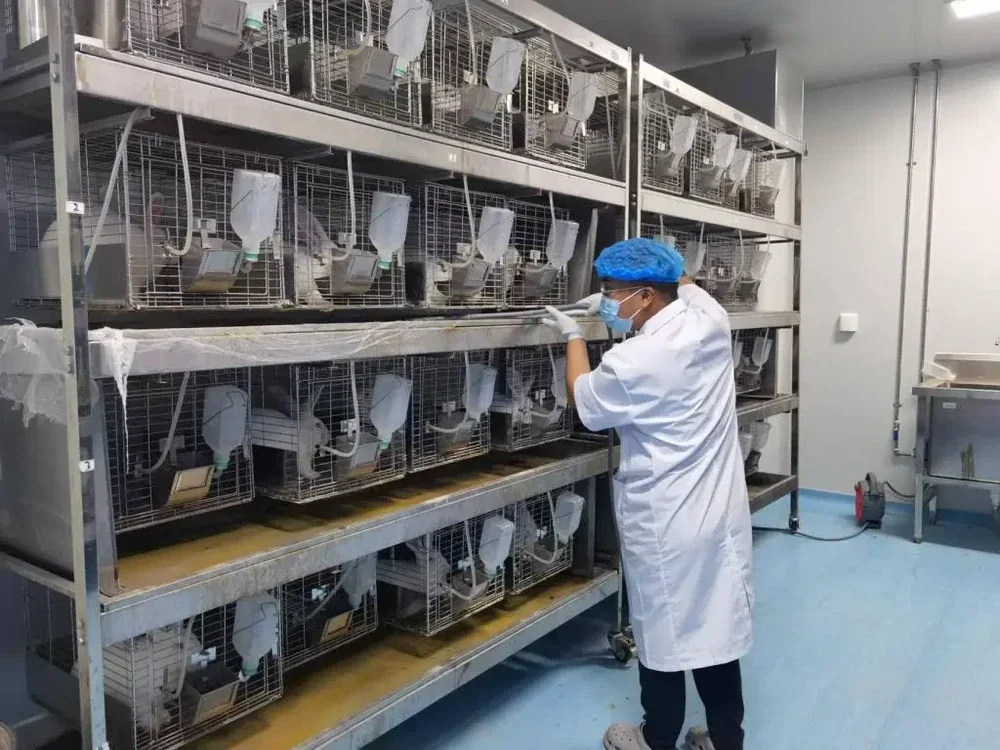
Housing areas. Urine and wet bedding ferment around the clock, and rodents add pheromones such as trimethylamine to the mix. Bedding that sits saturated for days becomes a smell factory, however good the ventilation is.
Cage wash and sanitation. Rack washing, tunnel washers and bedding dumping release bursts of wet, warm, odorous air. Meanwhile, disinfectants add their own VOC load.
Necropsy and disposal rooms. Tissue waste, chemical volatiles and anesthetic gas concentrate here. Yet it is often the smallest room with the weakest exhaust.
Waste staging and transfer. Bagged bedding and solid waste ferment in storage. Even so, a torn bag or a lidless bin undoes a week of good housekeeping.
Drains and ductwork. Dry trap seals and leaking duct joints let odor travel through building cavities. The smell then appears far from the source. This is the classic “we smell it but can’t find it” fault.
In short, every one of these paths bypasses the treatment train on the roof. Containment closes them first, and treatment handles what remains.
Layer 1: Source Control, the Cheapest Defense
Source control costs less than any duct, so start there.
Bedding choice does more than any fan. For example, corncob, paper and zeolite blends hold more urine and release less ammonia than cheap alternatives. Keep bedding dry, because anaerobic breakdown accelerates sharply once moisture climbs past roughly 40 percent. Change intervals matter as much as material. Two to three changes per week suit rodents, and one to two suit rabbits, adjusted by cage load.
Stocking density sets the emission rate. Two extra mice per cage can push a stable room into the marginal zone, even though nothing in the air system has changed. So hold density at design levels rather than squeezing in “just one more”.
Low-protein diets reduce nitrogen in the urine, which lowers the ammonia ceiling. Water system leaks deserve a weekly check, because a dripping valve soaks one cage corner and quietly feeds the bacteria.
Carcasses and tissue waste then go into sealed containers at minus 20 degrees and leave the building quickly. Waste staging runs on double-bagging, lidded bins and negative-pressure capture at the dumping point.
Layer 2: The Pressure Cascade That Holds Animal Facility Odor Containment Together
Containment lives or dies on pressure. Air must always flow from clean toward odorous, and the gradient enforces that direction even when a door opens.
| Zone | Typical setpoint | Purpose |
| Corridor | Neutral or slightly positive | Keeps corridor air out of rooms |
| Airlock / buffer room | Intermediate | Softens door-opening surges |
| Animal room | −10 to −20 Pa vs corridor | Pulls air in, holds odor in |
| Necropsy / waste room | −20 Pa, deepest | Strongest draw at worst source |
Airlock vestibules and interlocked doors matter more than most specs admit. Even with 0.5 m/s inward face velocity, an open door still sheds eddies at the frame. Supply air comes in high and wide, while exhaust leaves low at the rack ends. Above all, the two never sit close enough to short-circuit.
Air change rates follow function. Ten to fifteen per hour is a common design band for rodent rooms. IVC rooms often run lower room rates, because the cages do the work internally. One hundred percent once-through air is preferred for animal rooms, necropsy and waste zones. Recirculation would move odor back into clean space.
Layer 3: Local Capture at the Point of Release
Room-level ventilation dilutes. Local capture removes. The dirtiest jobs deserve dedicated hoods.
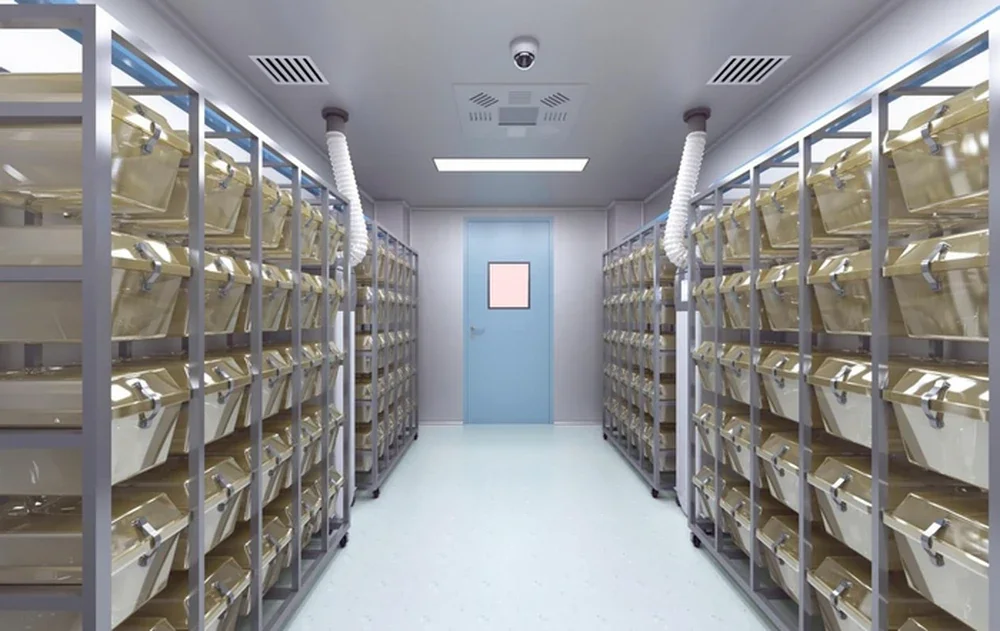
IVC racks connect directly to the exhaust system, or pass through carbon plus HEPA before discharge. Valve systems close automatically when a cage leaves the rack, so the plume does not escape during cage changes. Necropsy tables and waste-dropping ports also need capture hoods with a face velocity of at least 0.5 m/s. Cage washers and dump stations get their own exhaust branch, because their load is heavy but predictable.
Bedding handling deserves special mention. A downdraft table or negative-pressure enclosure at the dumping station stops the dust that carries both allergens and odor. This is where staff exposure concentrates, so it is also where capture pays off twice.
Layer 4: End-of-Pipe Treatment, Matched to the Pollutant
Whatever escapes the layers above is finally treated at the exhaust. The rule is to match the chemistry rather than buy one box for everything.
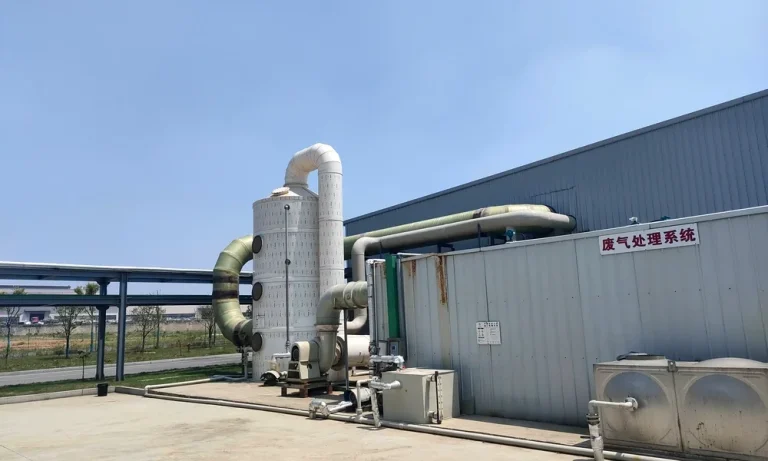
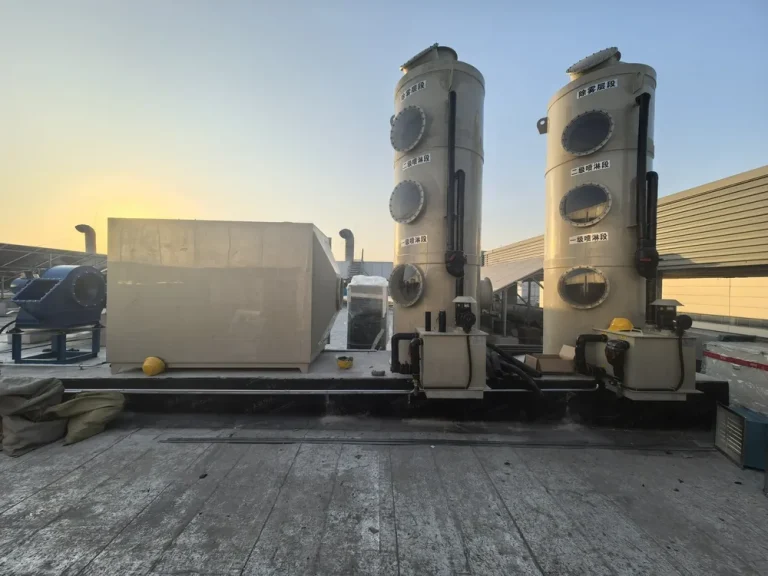
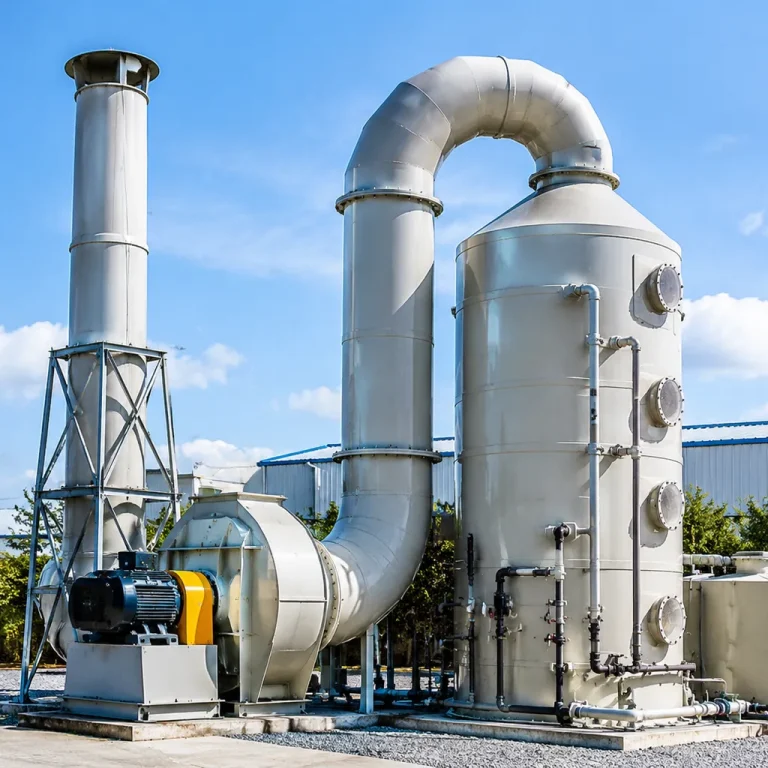
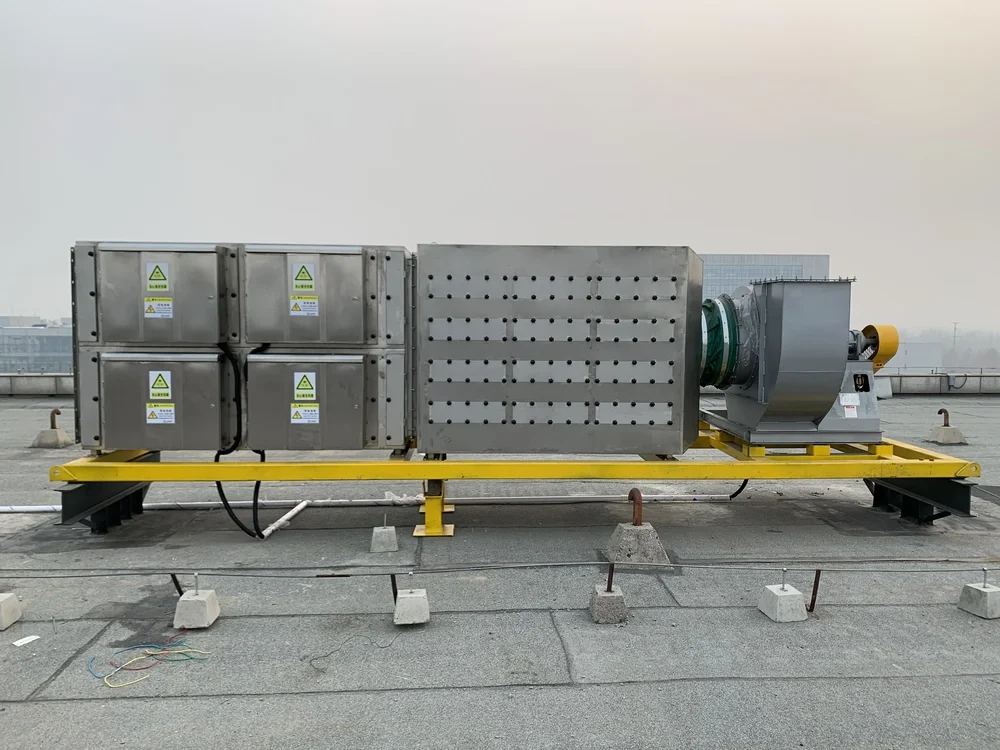
Wet scrubbing handles the water-soluble load: acid liquor takes ammonia and amines, while caustic plus oxidant takes sulfides. Photocatalytic and UV stages break down skatole, indole and larger organics that water cannot touch. Activated carbon polishes a steady, low-concentration stream, though media cost and disposal rules limit where it makes sense. Biological trickling filters suit large, low-concentration flows, but they need frost protection and steady moisture.
We cover the treatment train in depth in our guide to laboratory animal facility odor control. The equipment-level comparison then sits in animal room odor control equipment. For IVC exhaust specifically, see IVC rack exhaust odor treatment.
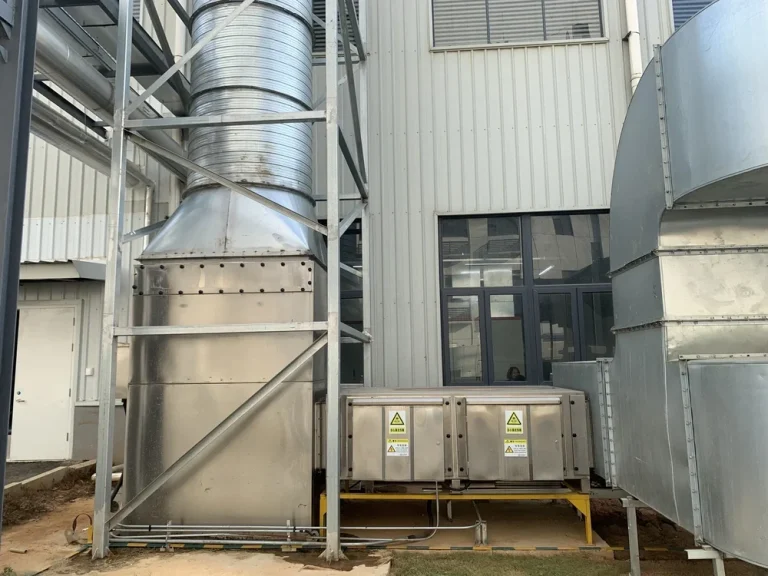
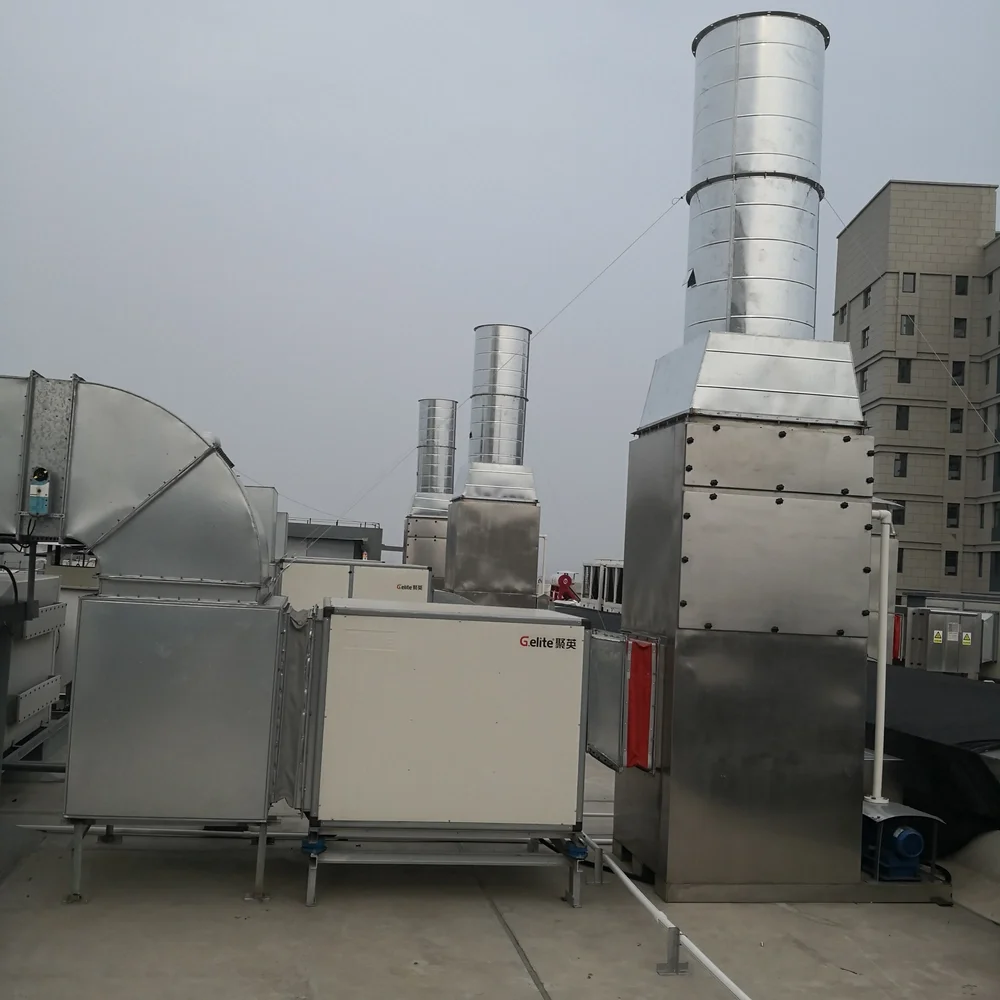
Stack design is part of treatment, not an afterthought. GB 14554-93 sets a minimum stack height of 15 m. At that height, the standard caps ammonia discharge at 4.9 kg/h. Aim for an exit velocity around 15 m/s, so the plume lifts clear of the roof. Keep the stack away from fresh-air intakes. Also leave room for a permanent sampling platform.
Layer 5: Monitoring That Finds Problems Before Neighbors Do
A containment strategy without measurement is a story, so instrument it. Animal facility odor containment then becomes verifiable: pressures, concentrations and boundary readings.
Continuous points: differential pressure in each zone, temperature and humidity, and ammonia or VOC sensors in the worst rooms. Electrochemical cells read hydrogen sulfide where it matters, and a PID gives a fast total-VOC indication. Handheld checks and a smoke pencil trace leak paths quarterly, because door seals and traps degrade silently.
Meanwhile, boundary monitoring closes the loop. Sample at the fence line on the downwind side, with an upwind reference point. Keep a complaint log even when the log is empty. Dynamic olfactometry gives you the regulatory view of odor concentration. A monthly walk-around with trained noses then catches what sensors miss.
Set the performance bar before commissioning. Removal across the treatment train should land in the 70 to 90 percent band, depending on process. The boundary target is simple: no odor detected. Written baselines turn arguments into data when a complaint does arrive.
Emergency Response in the First Hour
Failures are inevitable, so script the response.
Power loss: critical fans ride through on UPS or generator, and backdraft dampers stop odor reversing through idle units. Sudden load spikes, such as a mass cage change, trigger a purge mode with higher exhaust while source activity pauses. For a confirmed odor complaint, work the sequence. First locate and isolate the zone, then verify ventilation and seals. Neutralize and clear the source, and afterwards review records and retrain. A portable carbon unit buys time while the permanent fix is scheduled. Run one drill per year at minimum, and log it.
Design Review Checklist
| # | Check item | What to confirm |
| 1 | Pressure cascade map | Readings at every door, both states |
| 2 | Door face velocity | ≥0.5 m/s inward with doors open |
| 3 | Airflow and heat loads | ACH and load per animal type |
| 4 | Capture points list | IVC, necropsy, dump stations, washers |
| 5 | Treatment sizing | EBCT, bypass access, service space |
| 6 | Stack | ≥15 m, exit velocity, intake clearance |
| 7 | Monitoring points | Room, stack inlet/outlet, boundary |
| 8 | Media replacement | Carbon at 3–6 months, spares held |
| 9 | Emergency plan | Written, drilled, logged yearly |
| 10 | Welfare review | 3R compliance documented |
Print it, walk the building, and score each line before the next procurement decision. Most gaps found this way cost thousands, not hundreds of thousands.
Frequently Asked Questions
What does animal facility odor containment actually include?
Five layers: source control through bedding, density and housekeeping. A pressure cascade from −10 to −20 Pa. Local capture at racks, tables and dump stations. Matched end-of-pipe treatment on the exhaust. Continuous plus boundary monitoring. Each layer covers what the previous one misses.
How negative should an animal room be?
Ten to twenty pascals relative to the corridor is the common design band. Necropsy and waste rooms sit at the deep end, though. More negative than that wastes fan energy and fights door closers. Pair the pressure with at least 0.5 m/s inward velocity at door openings.
Which standard governs odor outside the building?
In China, GB 14554-93 applies. The stack must be at least 15 m tall. Ammonia discharge at that height is capped at 4.9 kg/h. The strictest boundary concentration limit for ammonia sits at 1.0 mg/m³. Check local implementation, because some regions enforce tighter schedules.
Can HEPA filters control odor?
No. HEPA media capture particles. Ammonia, however, is a gas roughly a thousand times smaller than the particles the filter is rated for. Gas-phase media such as carbon, or wet scrubbing, handle odor. HEPA still earns its place for biosecurity, but do not expect it to move an ammonia reading.
How often should activated carbon be replaced?
Three to six months is typical for animal facility loads. Set the interval by pressure drop and breakthrough testing, not by the calendar alone. Staged beds with differential pressure gauges make the remaining life visible. You can then rotate media instead of losing the whole bed at once.
What is the fastest fix for a recurring odor complaint?
Trace the path before touching the treatment train. In our experience the fault is usually simple. A dry floor drain, a door seal, or a bedding bin without a lid. Those fixes cost hours, not capital. Only when the envelope is tight does upgrading the treatment train make sense.
Put the Strategy to Work
Soto Machinery builds the exhaust and treatment side of animal facility odor containment in Qingdao. The range covers wet scrubber towers, spray deodorization systems, UV photolysis purifiers and activated carbon units. Every unit is sized for animal facility duty. Behind the factory sit more than 15 years of manufacturing and over 500 delivered projects. In addition, installations run across more than 40 countries, including university SPF laboratories and vaccine manufacturers. Send us your airflow, gas analysis and boundary limit. Our engineers will then return a treatment proposal with the running cost attached.