Environmental protection equipment supplier

Activated Carbon Adsorption Unit Guide for VOC Removal
Understanding Activated Carbon Adsorption Units for VOC Removal
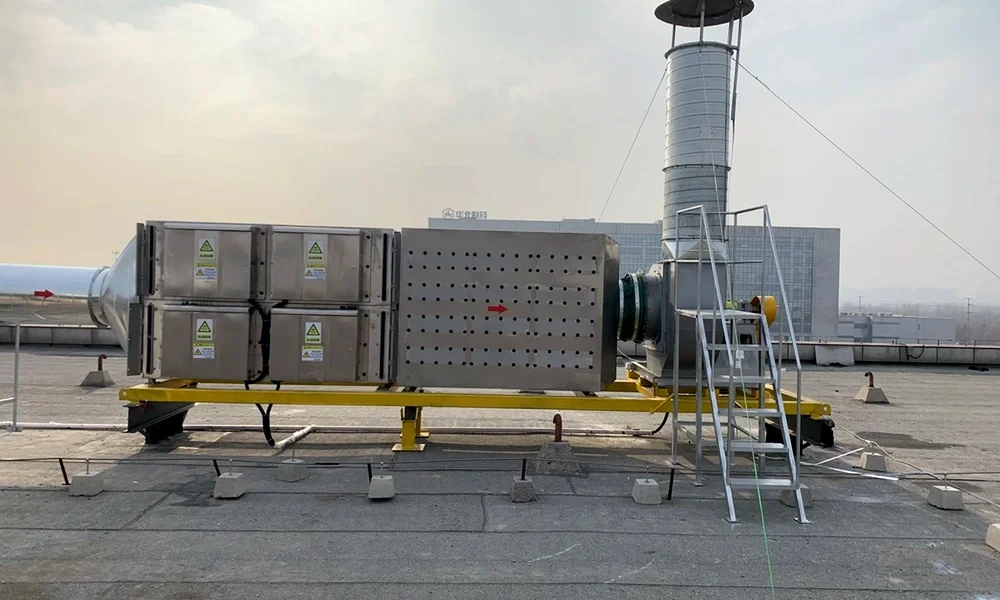
An activated carbon adsorption unit is a proven industrial air pollution control system designed to capture volatile organic compounds (VOCs), hazardous air pollutants, and industrial odors from exhaust streams. By routing contaminated process air through a bed of porous activated carbon, these towers effectively strip organic vapors before releasing clean air into the atmosphere. For facility managers and environmental engineers, deploying a properly engineered adsorption tower ensures strict adherence to environmental protection standards while maintaining reliable, continuous plant operations.
How Activated Carbon Adsorption Works
Activated carbon filtration relies on physical adsorption—a surface-level phenomenon driven by intermolecular attractions known as Van der Waals forces. Unlike absorption, where a substance dissolves into a liquid or solid, adsorption binds gas molecules directly onto the external and internal surfaces of the carbon media.
- Massive Internal Surface Area: Activated carbon is processed to create an intricate network of microscopic pores, providing an exceptionally high surface area-to-volume ratio capable of trapping vast quantities of organic molecules.
- Selective Vapor Capture: As industrial exhaust gas passes through the media bed, heavier organic compounds and VOCs are drawn into the carbon pores and held securely, while clean carrier gases (such as nitrogen and oxygen) pass through unobstructed.
- Controlled Airflow Dynamics: Properly engineered vessels distribute exhaust gas evenly across the carbon bed, ensuring sufficient contact time for thorough pollutant capture without creating excessive backpressure on exhaust fans.
Key Advantages in Industrial Air Pollution Control
Integrating an activated carbon adsorption system offers distinct operational and compliance benefits for manufacturing facilities handling organic solvents and exhaust gases:
- High Removal Efficiency: Delivers consistent, high-efficiency capture across a wide spectrum of complex organic waste gases and low-concentration VOC streams.
- Regulatory Compliance: Engineered to meet stringent local and international air emission standards, protecting facilities from regulatory fines and operational shutdowns.
- Modular Scalability: Custom-built configurations adapt easily to varying airflow volumes (CMH/CFM) and pollutant loads, scaling from compact laboratory units to high-capacity industrial towers.
- Corrosion-Resistant Durability: Constructed from robust materials—such as anti-corrosive coated carbon steel or 304/316L stainless steel—to withstand harsh, chemically aggressive exhaust environments.
- Low Energy & Maintenance Costs: Designed for low pressure drop to minimize fan power consumption, featuring accessible inspection doors and modular bed layers for rapid, straightforward carbon replacement.
Types of Activated Carbon Media for VOC Capture
Choosing the correct media is the most critical step when configuring an activated carbon adsorption unit. The performance of your system relies on matching the pore structure of the carbon to the molecular size of the VOCs being treated.
Honeycomb Activated Carbon
Honeycomb activated carbon is widely favored for systems requiring high-volume throughput. Its unique geometric structure provides a large surface area with significantly lower air resistance compared to granular beds. This design is highly efficient for treating large volumes of low-concentration exhaust gas, making it a standard choice for painting lines and commercial kitchen odor control where maintaining airflow is essential.
Coconut Shell and Coal-Based Activated Carbon
- Coconut Shell Carbon: Known for its high hardness and developed micropore structure, this media is the gold standard for capturing smaller VOC molecules. It offers excellent durability, resulting in less dust generation during operation.
- Coal-Based Activated Carbon: Produced in either columnar or granular forms, coal-based media features a balanced pore distribution. It is often more cost-effective for large-scale industrial applications and provides a robust adsorption capacity for a wider range of organic compounds.
Media Selection Criteria: Iodine Value, Pore Size, and Pressure Drop
To ensure your waste gas treatment system operates within regulatory limits, we evaluate three primary metrics:
- Iodine Value: This indicates the internal surface area and the overall adsorption capacity; a higher value typically translates to a more effective carbon lifespan.
- Pore Size Distribution: We match the carbon’s micropores, mesopores, and macropores to the specific molecular weight of the pollutants in your exhaust stream.
- Pressure Drop: Our engineers select media density and shape to ensure the pressure drop across the bed remains low, preventing excessive energy consumption by the blower system and ensuring consistent system performance.
Core System Components and Structural Design
Building a reliable activated carbon adsorption unit comes down to smart structural engineering. Every component must work together to handle varying industrial exhaust volumes, resist corrosion, and keep maintenance simple for your plant operators. When designing these systems, I focus on durability, low resistance, and clean airflow distribution.
Adsorption Vessel and Carbon Bed Configuration
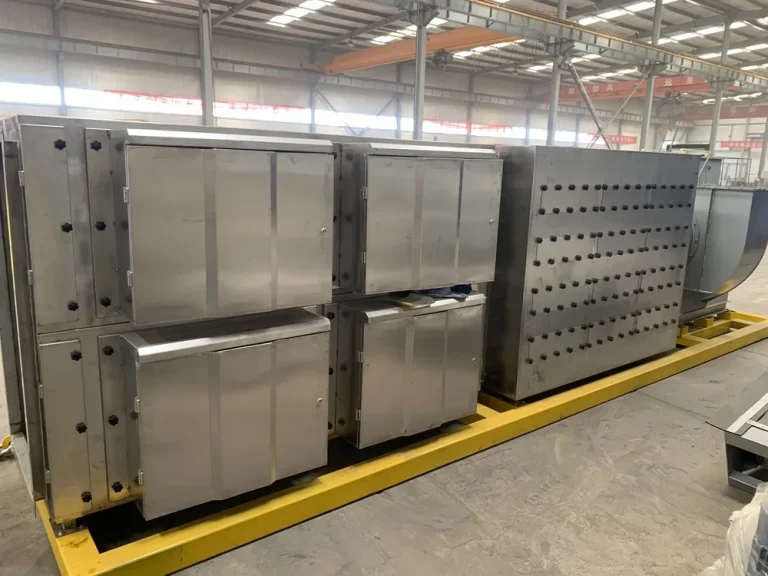
The adsorption vessel is the core housing where volatile organic compounds (VOCs) are captured. Depending on the corrosiveness of your exhaust stream, we construct these towers from anti-corrosive coated carbon steel or 304/316L stainless steel.
Inside the vessel, the carbon bed depth and layout determine how effectively pollutants get trapped:
- Modular Bed Layers: Instead of one massive pile of media, we divide the activated carbon into modular trays or drawer-style layers. This keeps airflow uniform and prevents channeling.
- Quick-Access Inspection Doors: Heavy-duty sealed hatches let maintenance crews check media condition and swap out spent carbon quickly without tearing down the unit.
- Differential Pressure Gauges: Mounted across the carbon bed, these gauges give operators a clear reading of resistance buildup, signaling exactly when a media change is due.
Pre-Treatment Systems: Filtration and Dehumidification
Raw industrial exhaust rarely enters an adsorption tower clean. Dust, paint mist, oil aerosols, and high moisture will rapidly blind the pores of your activated carbon, ruining its adsorption capacity. Proper pre-treatment protects your media investment and ensures continuous compliance.
| Pre-Treatment Stage | Target Contaminant | Operational Benefit |
|---|---|---|
| Multi-Stage Dry Filtration | Particulates, dust, and overspray | Prevents physical clogging of the carbon bed |
| Mist Eliminators / Coalescers | Oil droplets and liquid aerosols | Stops sticky residues from coating carbon surfaces |
| Dehumidification / Cooling | Excess moisture and high gas heat | Keeps relative humidity low so water vapor does not compete with VOCs |
Ductwork, Blowers, and Airflow Control
Even the best carbon bed fails if exhaust gas moves too fast or unevenly through the tower. Proper industrial off-gas treatment system sizing relies on matching your ductwork and fan assembly to the tower’s exact resistance curve.
- Low-Resistance Ducting: Smooth flange connections and gradual transitions minimize static pressure loss before the gas even reaches the vessel.
- Centrifugal Blowers: Sized specifically for your facility’s airflow (CMH or CFM) and the system’s total pressure drop, keeping fan energy consumption low.
- Airflow Dampers and Sensors: Automated dampers and variable frequency drives (VFDs) adjust fan speed in real time, maintaining steady gas velocity even when production lines ramp up or down.
Key Engineering Parameters in VOC Adsorption Design
Designing an effective activated carbon adsorption unit comes down to getting the core engineering math right. When we size these systems for clients, we focus on three interconnected variables: how fast the air moves, how long it touches the media, and the physical condition of the exhaust stream. Getting any of these wrong leads to premature media saturation, high energy bills, or regulatory fines.
Airflow Rate and Superficial Gas Velocity
Airflow rate—measured in cubic meters per hour (CMH) or cubic feet per minute (CFM)—sets the baseline size of your adsorption vessel. From there, we calculate the superficial gas velocity, which is the speed at which the exhaust gas moves through the cross-sectional area of the carbon bed.
If the velocity is too high, two problems happen:
Channeling: Air forces narrow paths through the media, bypassing most of the carbon surface area.
High Pressure Drop: Your exhaust fan works harder, driving up power consumption and operating costs.
If the velocity is too low, your vessel becomes unnecessarily massive and expensive to build. We engineer our modular bed layers to balance vessel footprint with low-resistance airflow, keeping fan energy demands manageable across both small lab units and large factory lines.
Empty Bed Contact Time (EBCT) and Adsorption Capacity
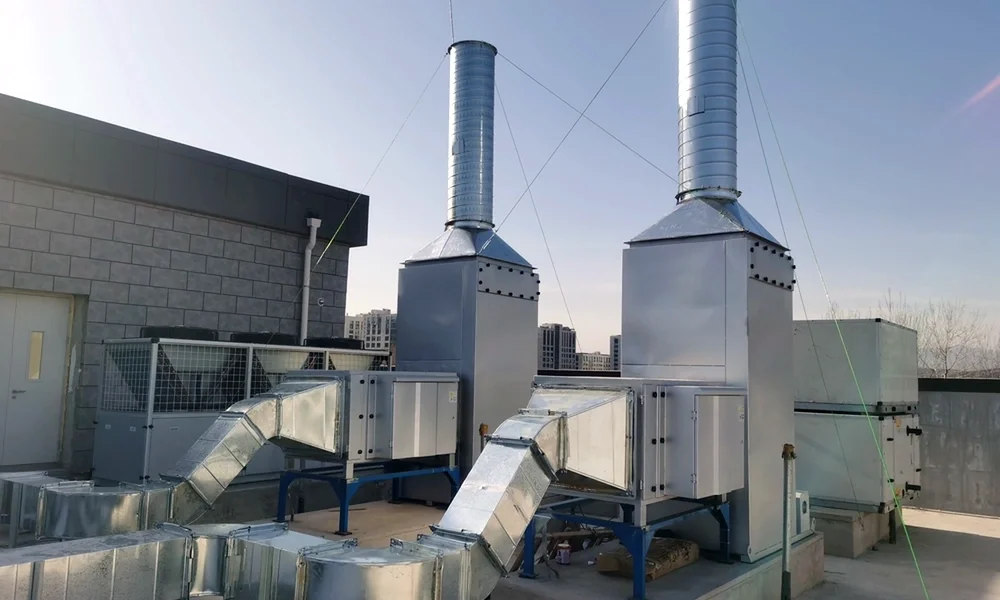
Empty Bed Contact Time (EBCT) is the single most critical metric in VOC removal. It measures how long the polluted air stays inside the volume occupied by the carbon bed—assuming the vessel were empty.
A longer EBCT gives volatile organic compounds more time to diffuse into the microscopic pores of the activated carbon. We achieve the right contact time by adjusting the carbon bed depth and vessel diameter based on the specific pollutant load.
- Light Odors & Low Concentrations: Require shorter contact times and shallower bed depths.
- Complex Solvents & Heavy VOCs: Demand deeper beds and longer EBCTs to prevent early breakthrough.
Your media’s adsorption capacity—the maximum weight of VOCs the carbon can hold before saturation—works hand-in-hand with EBCT. Properly sizing the bed ensures predictable replacement intervals and consistent emission compliance.
Temperature, Humidity, and VOC Concentration Limits
Physical adsorption relies on weak intermolecular forces (Van der Waals forces) to trap gas molecules on the carbon surface. Because this bond is physical rather than chemical, environmental conditions inside the duct directly impact capture efficiency.
| Parameter | Impact on Adsorption | Design Consideration |
|---|---|---|
| Gas Temperature | High heat weakens physical bonds and reduces adsorption capacity. | Exhaust streams must be kept cool; hot process air requires pre-cooling before entering the tower. |
| Relative Humidity | Water vapor competes with VOCs for pore space on the carbon surface. | High-moisture exhaust streams need dehumidification or specialized media to prevent rapid saturation. |
| VOC Concentration | Adsorption generates heat (exothermic reaction). Very high concentrations can cause localized heat buildup. | High-concentration streams require careful airflow monitoring and safe concentration controls. |
Whether we are sizing a compact system for https://www.soto-epmachinery.com/laboratory-https://www.soto-epmachinery.com/laboratory-environmental-protection-and-odor-control-guide/”>laboratory environmental protection and odor control or scaling up for heavy industrial exhaust, we always verify inlet temperature, moisture levels, and exact pollutant concentrations first. Matching your vessel material—such as 304/316L stainless steel for corrosive gases—and bed depth to real operating conditions guarantees reliable, long-term performance.
Regeneration and Desorption Methods
Once an activated carbon media bed reaches its maximum adsorption capacity, it can no longer trap volatile organic compounds (VOCs) effectively. At this stage, I help facility operators choose between two core operational paths: replacing the spent carbon entirely or regenerating it on-site for reuse. Proper desorption restores the carbon’s microscopic pore structure, keeps pressure drop low, and ensures your exhaust stream stays within environmental emission limits.
Thermal and Steam Regeneration
Regeneration uses controlled heat to break the physical bond holding VOC molecules to the activated carbon surface. Once released, these concentrated pollutants are safely routed to a secondary treatment unit or condensed for solvent recovery.
- Thermal Regeneration (Hot Air or Inert Gas): Hot air or nitrogen passes through the saturated carbon bed to vaporize trapped organics. The concentrated exhaust gas is then typically sent to a catalytic or thermal oxidizer for complete destruction.
- Steam Regeneration: Low-pressure steam heats the media directly, stripping out the adsorbed compounds. When the steam and solvent mixture cools in a condenser, the liquid solvents separate from the water and can be reclaimed for reuse in your production process.
Single-Use vs. Regenerative Adsorption Systems
Choosing between a disposable media setup and an on-site regenerative system depends on your daily exhaust volume, solvent concentration, and available floor space. I design both configurations using durable, corrosion-resistant stainless steel or coated carbon steel to match your plant’s exact operating demands.
| Design Feature | Single-Use Adsorption System | Regenerative Adsorption System |
|---|---|---|
| Best Application | Low VOC concentrations and intermittent airflow | High VOC loads and continuous 24/7 operation |
| Upfront Equipment Cost | Lower initial capital investment | Higher initial cost due to heating and recovery controls |
| Ongoing Maintenance | Periodic manual media change-out via inspection doors | Automated desorption cycles with longer carbon lifespan |
| Byproduct Management | Spent carbon is removed and disposed of safely | Concentrated VOCs are destroyed or reclaimed as liquid solvent |
For smaller workshops or facilities with low pollutant loads, a modular single-use tower with quick-access doors offers the simplest path to compliance. For large-scale chemical or printing lines running continuously, a regenerative design cuts long-term media replacement costs and turns waste solvents into recoverable assets.
Industrial Applications for VOC Abatement
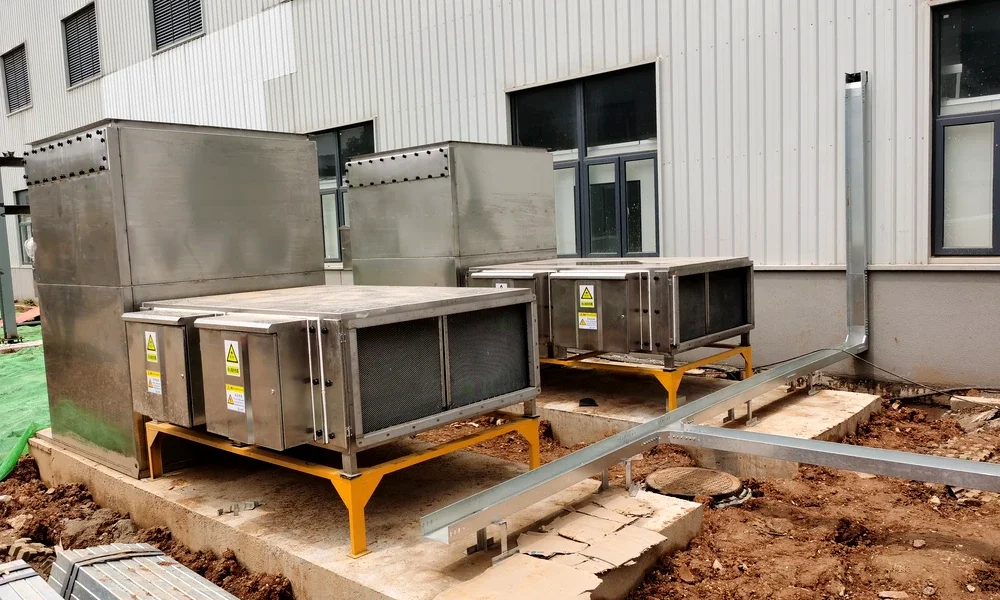
We design our activated carbon adsorption units to handle diverse industrial exhaust streams where volatile organic compounds and persistent odors threaten workplace safety and regulatory compliance. Because every facility generates a unique mix of organic solvents and airflow rates, we tailor each vessel and media bed to match your exact operational demands.
Painting, Coating, and Printing Operations
Spray booths, automotive finishing lines, and commercial pressrooms release steady volumes of solvent vapors like toluene, xylene, and ethyl acetate.
- High-Volume Capture: Our modular carbon beds handle high-airflow, low-to-medium concentration exhaust streams typical of continuous coating and curing ovens.
- Custom Pressroom Control: For facilities running flexographic or gravure presses, implementing dedicated https://www.soto-epmachinery.com/printing-planthttps://www.soto-epmachinery.com/printing-plant-vocs-treatment-solutions-for-emission-control/”>printing plant VOCs treatment solutions captures ink and solvent fumes before they reach your exhaust stack.
- Low Resistance: Engineered media beds keep pressure drop minimal, preventing backpressure issues inside sensitive paint spray booths.
Chemical, Petrochemical, and Pharmaceutical Manufacturing
Batch reactors, storage tank vents, and solvent extraction lines produce complex, often corrosive organic emissions that demand durable equipment.
- Corrosion-Resistant Construction: We build these adsorption towers using 304 or 316L stainless steel to withstand aggressive chemical vapors without degrading.
- Odor and Vapor Containment: High-surface-area pelletized activated carbon traps fugitive emissions during raw material transfer, synthesis, and pharmaceutical pill coating.
- Compliance Assurance: Our systems help plant operators meet strict local and international air pollution control standards while protecting surrounding communities from industrial odors.
Electronics, Semiconductor, and Waste Treatment Facilities
Cleanroom exhausts and municipal or industrial waste processing plants require reliable filtration to eliminate trace organic gases and nuisance odors.
- Precision Semiconductor Exhaust: Wafer cleaning, photolithography, and circuit board assembly release specialized solvent vapors that require consistent adsorption capacity to maintain cleanroom air balance.
- Waste and Odor Management: Composting halls, wastewater lift stations, and waste transfer facilities use our carbon units as a final polishing stage—often paired alongside https://www.soto-epmachinery.com/chemical-scrubbing-odor-control-ph-orp-andhttps://www.soto-epmachinery.com/chemical-scrubbing-odor-control-ph-orp-and-dosing-explained/”>chemical scrubbing odor control—to strip lingering organic odor compounds before atmospheric release.
- Rapid Media Changeouts: Inspection doors and accessible bed layers allow maintenance crews to replace spent carbon quickly, minimizing system downtime during routine service.
System Selection, Sizing, and Regulatory Compliance
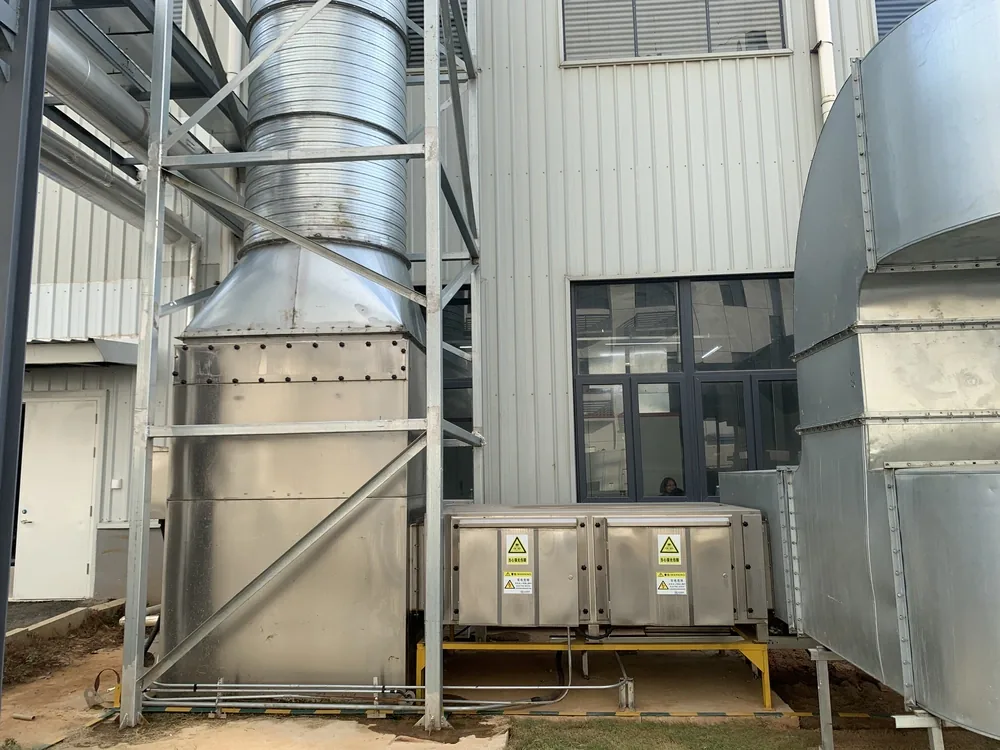
Choosing the right activated carbon adsorption unit comes down to matching your facility’s exhaust profile with reliable hardware. When we size a system for a client, we start with three core numbers: total airflow volume, pollutant concentration, and exhaust gas temperature. Getting these parameters right prevents premature media saturation and keeps fan energy costs low.
Evaluating Custom vs. Modular Air Emission Solutions
Every plant has different floor space and emission loads, so we build both standardized modular units and fully custom-engineered towers.
- Modular Units: Ideal for smaller workshops, laboratories, and steady, low-to-medium airflows. These units offer faster delivery, compact footprints, and straightforward installation with standard flange connections.
- Custom-Engineered Towers: Built for large-scale painting lines, chemical plants, and heavy industrial exhaust. We tailor the carbon bed depth, vessel geometry, and structural materials—such as anti-corrosive coated carbon steel or 304/316L stainless steel—to handle harsh environments and high gas volumes.
| Feature | Modular Units | Custom Systems |
|---|---|---|
| Airflow Capacity | Small to medium volumes | High-volume industrial exhaust |
| Lead Time | Fast, standardized build | Tailored engineering schedule |
| Material Options | Coated carbon steel or 304 SS | Coated carbon steel, 304, or 316L SS |
| Best Use Case | Labs, localized extraction, workshops | Continuous production lines, corrosive fumes |
Meeting EPA and Environmental Emission Standards
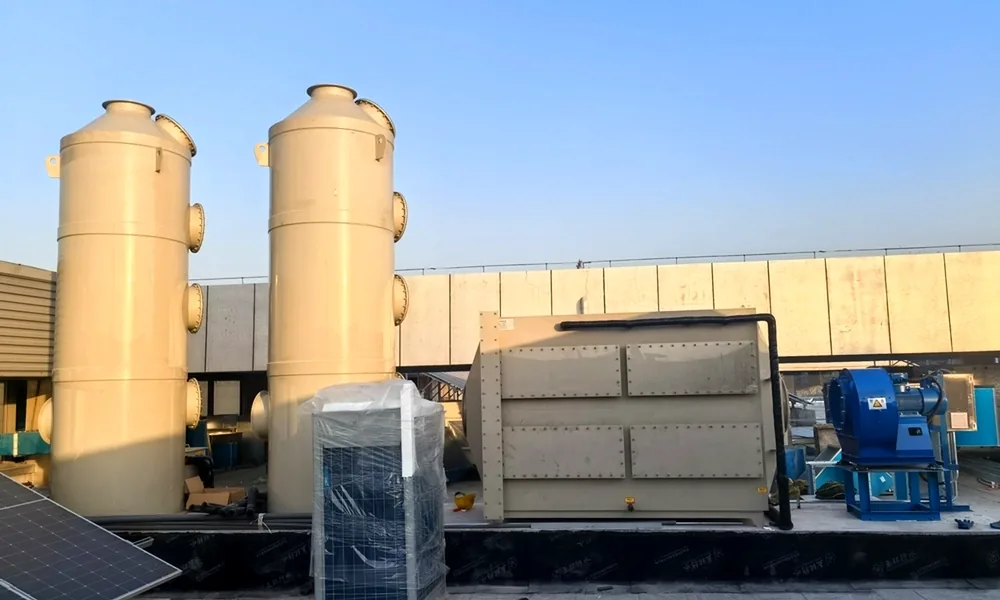
Air pollution control equipment must reliably pass local and international inspections. In our engineering process, we calculate the exact empty bed contact time and select high-grade media to ensure your exhaust stream meets strict volatile organic compounds (VOCs) limits. For facilities managing cross-border manufacturing or equipment installation, reviewing an https://www.soto-epmachinery.comhttps://www.soto-epmachinery.com/industrial-emissions-compliance-checklist-export-projects/”>industrial emissions compliance checklist for export projects helps align system specs with regional regulatory frameworks before commissioning.
Maintenance, Carbon Replacement, and Operational Safety
A well-designed adsorption tower should never slow down your maintenance crew. We integrate practical features into every vessel so operators can monitor performance and service the unit safely:
- Pressure Differential Gauges: Track pressure drop across the carbon bed in real time to spot dust buildup or media clogging early.
- Quick-Access Inspection Doors: Large, sealed service hatches allow technicians to unload spent media and load fresh pelletized or columnar carbon without dismantling ductwork.
- Temperature and Bed Monitoring: Routine checks on bed temperature and exhaust concentration help teams schedule carbon change-outs before breakthrough occurs, protecting both compliance status and workplace safety.