Environmental protection equipment supplier

Carbon Adsorber vs UV Photolysis vs RTO VOC Comparison
Understanding VOC Abatement Technologies
Selecting the right exhaust treatment equipment requires matching your facility’s specific airflow, gas composition, and site constraints to proven engineering controls. Conducting a thorough Carbon Adsorber vs UV Photolysis vs RTO: VOC Technology Comparison helps plant managers meet strict emission standards without overspending on capital or daily utilities.
What Are Volatile Organic Compounds (VOCs) and Why Control Them?
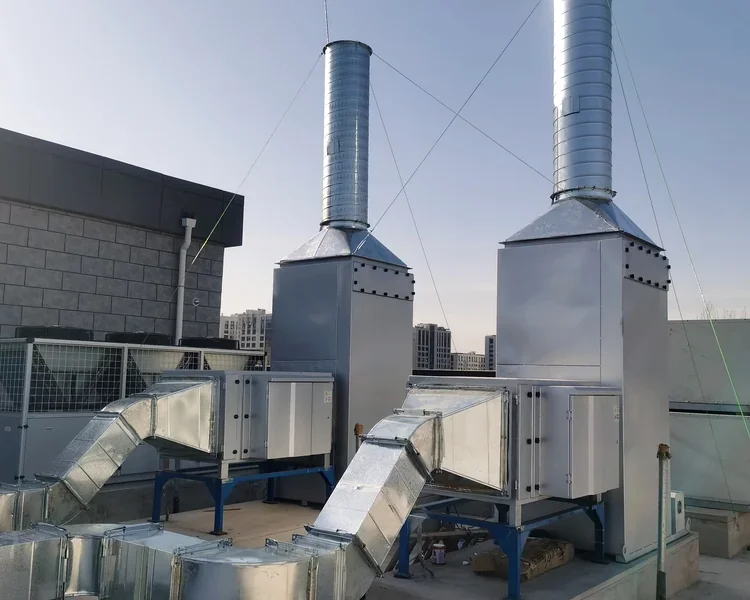
Volatile Organic Compounds (VOCs) are carbon-based industrial emissions and odors generated during chemical synthesis, solvent handling, printing, packaging, and food processing. Left untreated, these exhaust streams create serious compliance risks and workplace hazards.
Controlling VOC emissions is essential for three practical reasons:
- Regulatory Compliance: Facilities must satisfy local and international discharge limits to avoid fines, shutdowns, or permitting delays.
- Odor and Air Quality Control: Industrial exhaust often carries persistent odors and airborne pollutants that impact surrounding communities and indoor work zones.
- Operational Efficiency: Properly sizing abatement systems around real exhaust conditions prevents unscheduled downtime and excessive energy or media replacement costs.
Overview of Industrial Air Pollution Control Solutions
Modern industrial waste gas treatment relies on distinct physical, photochemical, and thermal mechanisms. At Soto Machinery Co., Ltd.—an ISO 9001 and CE-certified manufacturer in Qingdao—we engineer custom exhaust systems tailored to specific flow rates and inlet/outlet concentrations, alongside broader industry benchmarks:
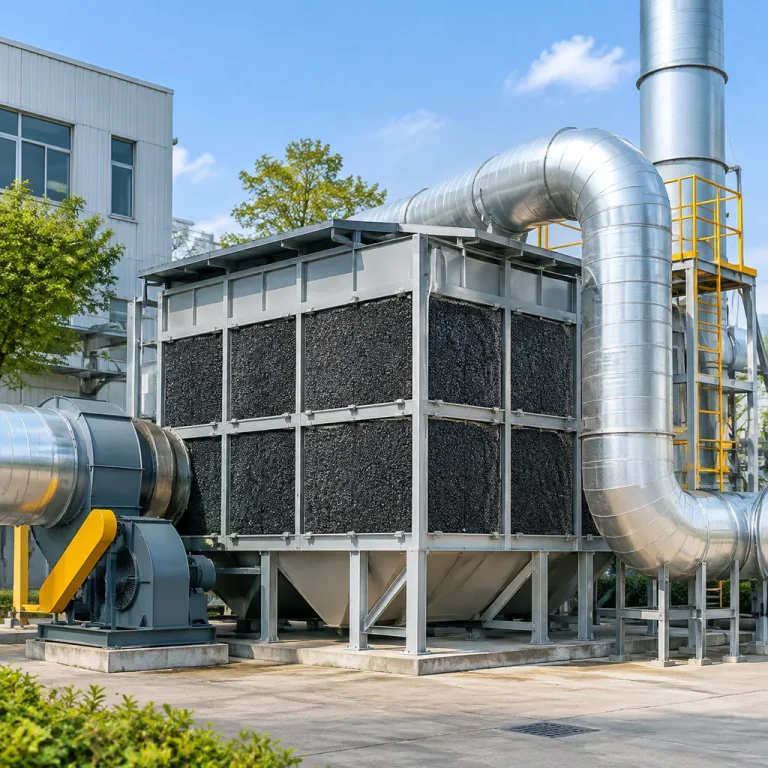
- Activated Carbon Adsorption Units: Capture VOC molecules on porous carbon media; system performance depends on bed depth, empty bed residence time (EBRT), and scheduled carbon changeouts.
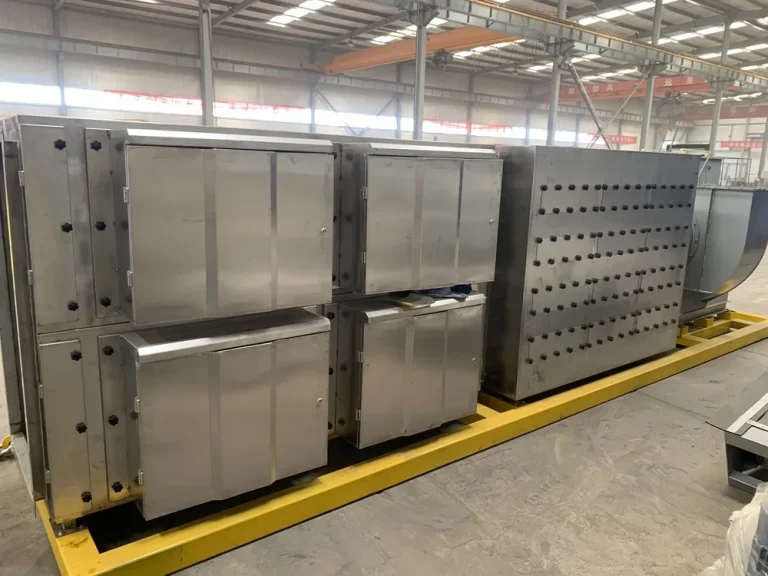
- UV Photolysis Waste Gas Purifiers: Use high-energy ultraviolet light to decompose VOCs and neutralize industrial odors without requiring fuel combustion.
- Regenerative Thermal Oxidizers (RTO): An industry-standard thermal approach that destroys VOCs at high temperatures, typically evaluated alongside adsorption and photolysis for high-load exhaust streams.
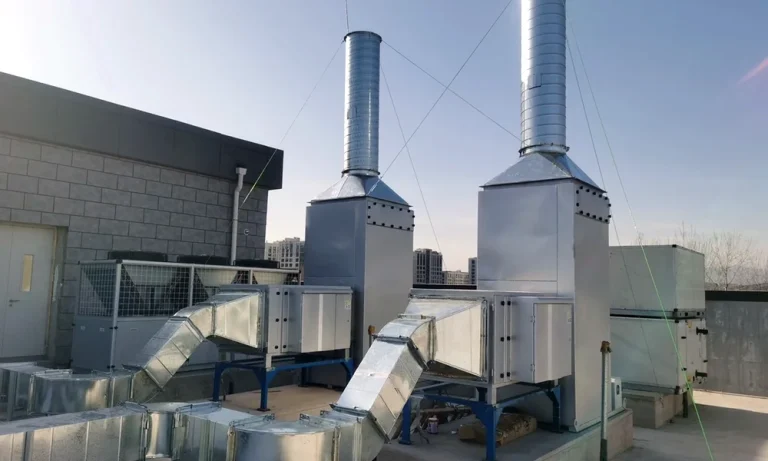
- Integrated Multi-Stage Systems: Combine complementary units—such as UV photolysis paired with activated carbon adsorption—to handle complex industrial waste gas and particulate mixtures reliably.
How Each VOC Treatment Technology Works
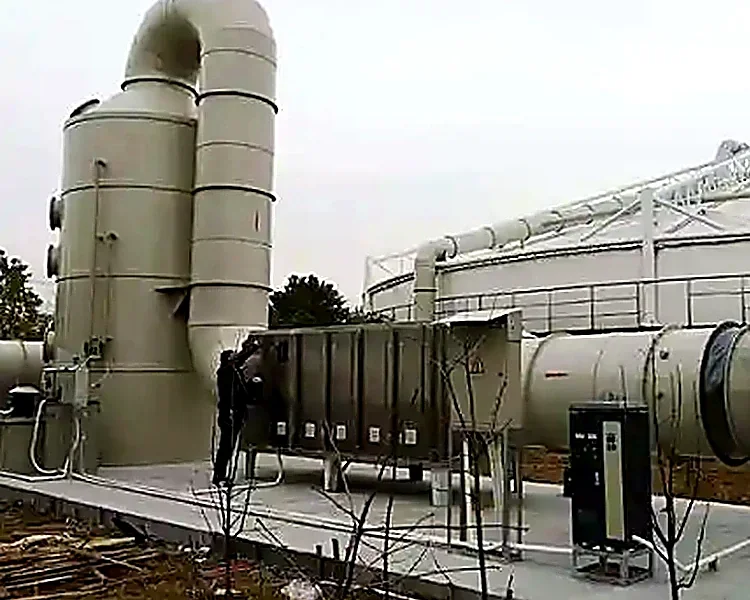
Choosing the right air pollution control system starts with understanding how each unit handles exhaust streams. In our engineering work, we evaluate three distinct mechanisms—physical capture, photochemical breakdown, and thermal destruction—to match the equipment to your specific gas composition and emission standards.
Activated Carbon Adsorption: Mechanism and Process
An https://www.soto-epmachinery.com/waste-gas-treatment/https://www.soto-epmachinery.com/waste-gas-treatment/activated-carbon-adsorption-unit/”>activated carbon adsorption unit works like a high-capacity molecular sponge. Instead of burning or breaking down pollutants, it physically traps volatile organic compounds (VOCs) inside the microscopic pores of activated carbon media as industrial exhaust passes through the vessel.
To ensure reliable capture and compliance, we engineer these units around three core factors:
Bed Depth: Controls how much carbon media the air stream must pass through before exiting.
Empty Bed Residence Time (EBRT): Measures the contact time between the polluted air and the carbon bed to prevent premature breakthrough.
Changeout Planning: Schedules media replacement based on inlet concentration and airflow volume so your facility avoids unexpected downtime.
UV Photolysis: Photo-Oxidation Principles
Unlike carbon beds that trap pollutants, a UV photolysis waste gas purifier destroys organic molecules directly using high-energy ultraviolet light. When exhaust gas flows through the reaction chamber, UV beams break the molecular bonds of VOCs and odor-causing compounds.
At the same time, the UV light splits oxygen molecules in the air stream to generate ozone and reactive radicals. These active agents oxidize the broken pollutant fragments into simple, low-impact byproducts like carbon dioxide and water. If you are weighing these two methods for your plant, our https://www.soto-epmachinery.com/uv-photolysis-vs-activated-carbonhttps://www.soto-epmachinery.com/uv-photolysis-vs-activated-carbon-adsorption-guide/”>UV photolysis vs. activated carbon adsorption guide breaks down how they perform side by side.
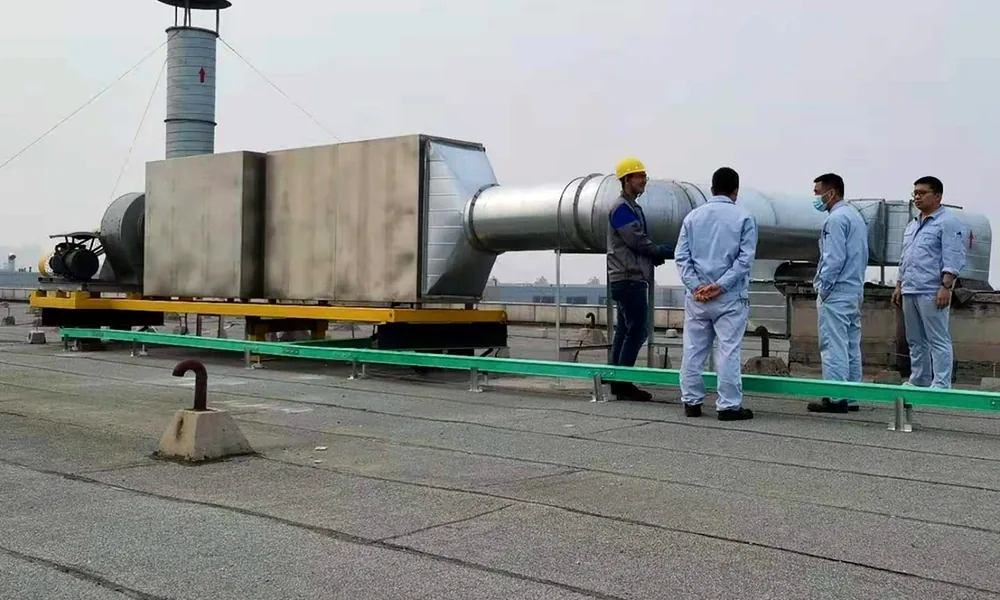
Regenerative Thermal Oxidizer (RTO): High-Temperature Destruction
While we specialize in custom-engineered adsorption, photolysis, and hybrid waste gas equipment, many high-concentration facilities also benchmark against Regenerative Thermal Oxidizers (RTOs).
An RTO relies on extreme heat rather than media capture or light waves:
Thermal Oxidation: Exhaust air enters a combustion chamber heated to high temperatures, oxidizing VOCs into water vapor and carbon dioxide.
Heat Recovery: Ceramic heat-exchange beds capture thermal energy from the outgoing clean exhaust and use it to preheat incoming dirty air, reducing the auxiliary fuel needed to keep the chamber hot.
Key Features, Advantages, and Limitations
Every VOC abatement technology comes with distinct engineering trade-offs. At Soto Machinery, we match our custom-engineered Activated Carbon Adsorption Units and UV Photolysis Waste Gas Purifiers to your exact gas composition, flow rate, and floor space constraints—while evaluating how they stack up against industry-standard Regenerative Thermal Oxidizers (RTO).
Pros and Cons of Carbon Adsorbers
Activated carbon adsorption relies on physical capture rather than chemical or thermal destruction. When we design a unit for a facility, we calculate bed depth, empty bed residence time (EBRT), and changeout schedules around your specific exhaust profile.
| Advantages | Limitations |
|---|---|
| Low Upfront Investment: Lower initial equipment cost compared to high-temperature thermal systems, especially when sourced factory-direct. | Periodic Media Changeout: Saturated carbon requires scheduled replacement and proper disposal or regeneration. |
| Simple Operation: Straightforward mechanical design with minimal operational complexity and fast startup. | Concentration Sensitivity: High-concentration exhaust streams saturate the carbon bed rapidly, driving up consumable costs. |
| High Capture Efficiency: Effectively traps a wide range of organic solvents and VOCs at ambient temperatures. | Moisture & Particulate Impact: High humidity or uncollected dust can block carbon pores, requiring upstream pretreatment. |
Pros and Cons of UV Photolysis Systems
Our UV photolysis purifiers use high-energy ultraviolet light to break down VOC molecules and control industrial odors without open flames or fuel combustion.
| Advantages | Limitations |
|---|---|
| Compact Footprint: Modular housing fits tight facility layouts where large thermal oxidizers cannot be installed. | Best for Low-to-Moderate Loads: Standalone units perform best on lower VOC concentrations and odor-heavy exhaust streams. |
| Zero Fuel Consumption: Runs entirely on electricity with no natural gas or supplemental burner fuel required. | Lamp Maintenance: UV lamps require periodic cleaning and replacement to maintain peak photo-oxidation output. |
| Rapid Response: Instant on/off capability makes it ideal for intermittent production shifts and batch processes. | Multi-Stage Needs: Complex, high-load exhausts often require pairing UV photolysis with downstream activated carbon adsorption. |
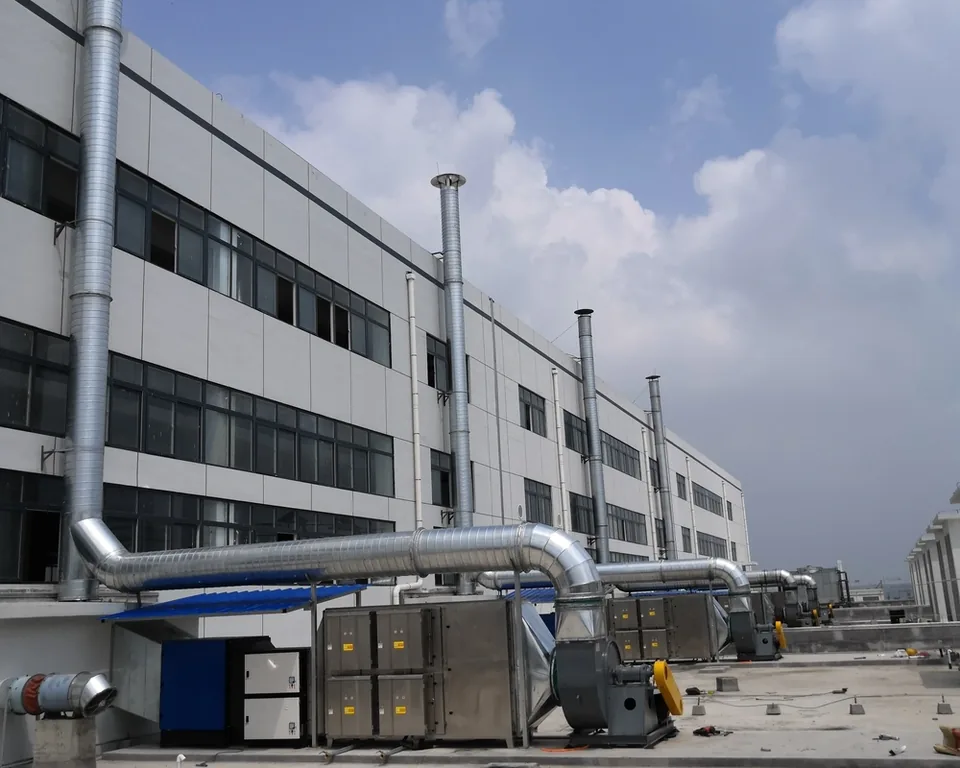
Pros and Cons of RTO Systems
While Soto Machinery focuses on adsorption, photolysis, scrubbing, and dust collection rather than manufacturing RTOs, we frequently evaluate RTOs as an industry baseline during engineering consultations. Proper https://www.soto-ephttps://www.soto-epmachinery.com/industrial-off-gas-treatment-systems-standards-and-sizing/”>industrial off-gas treatment system sizing ensures you do not overpay for thermal destruction when a lower-footprint alternative meets discharge limits.
| Advantages | Limitations |
|---|---|
| High Destruction Efficiency: Achieves high VOC destruction rates on continuous, high-concentration solvent streams. | High Capital & Installation Cost: Heavy ceramic media beds, burners, and structural steel require major upfront investment. |
| Thermal Energy Recovery: Ceramic heat-exchange media recovers heat to reduce burner fuel demand at steady loads. | Large Footprint & Weight: Demands substantial floor space and reinforced foundations. |
| No Media Changeouts: Destroys VOCs directly instead of transferring them to solid adsorbent media. | Slow Startup & Fuel Use: Requires long warm-up periods and auxiliary fuel when VOC concentrations drop too low. |
Side-by-Side Comparison: Carbon Adsorber vs. UV Photolysis vs. RTO
When we help facility managers match waste gas treatment equipment to their local emission standards, the right choice always comes down to exhaust volume, VOC concentration, and real-world operating budgets. Looking at an Activated Carbon Adsorption Unit, a UV Photolysis Waste Gas Purifier, and a Regenerative Thermal Oxidizer (RTO) side by side shows why no single system fits every plant.
| Comparison Metric | Activated Carbon Adsorber | UV Photolysis Purifier | Regenerative Thermal Oxidizer (RTO) |
|---|---|---|---|
| Core Mechanism | Physical adsorption via porous carbon media | UV-based VOC decomposition & odor control | High-temperature thermal oxidation |
| Best Concentration Fit | Low-to-moderate VOC concentrations | Low-concentration VOCs & industrial odors | Moderate-to-high continuous VOC loads |
| Airflow Capacity | Scalable (e.g., 30,000–50,000+ m³/h) | High airflow with low pressure drop | Large, steady industrial exhaust streams |
| Initial CAPEX | Low to moderate | Low | High |
| Primary OPEX Driver | Periodic activated carbon changeouts | Electrical power & UV lamp replacement | Auxiliary fuel & high-heat blower power |
| Maintenance & Waste | Spent carbon disposal or regeneration | Routine UV lamp & quartz sleeve cleaning | Refractory media & burner upkeep |
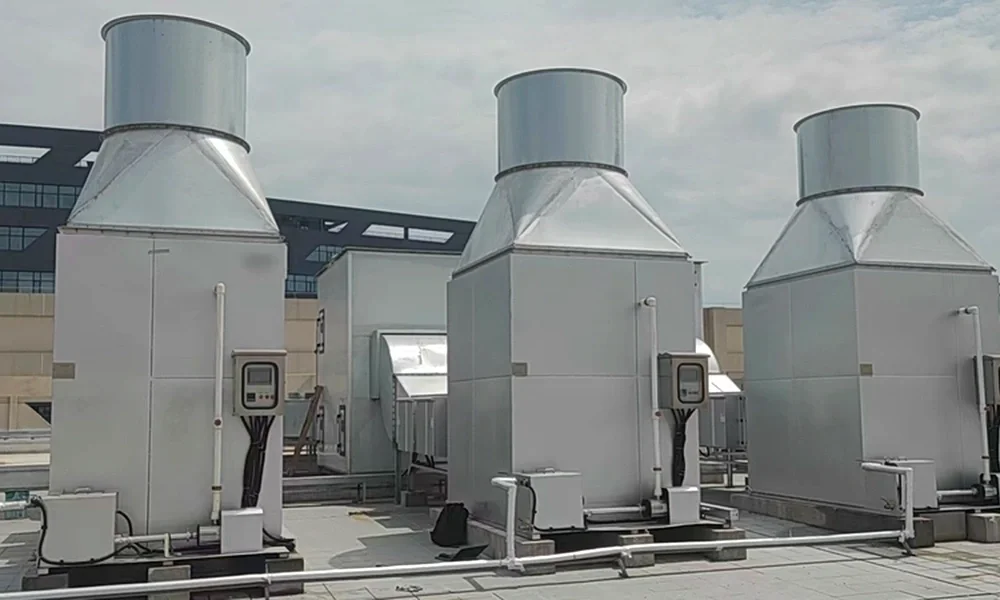
Destruction Efficiency and Exhaust Concentration Handling
Each technology responds differently to shifts in airflow rate and inlet concentration.
- Activated Carbon Adsorption Units: Efficiency depends directly on proper bed depth and empty bed residence time (EBRT). When sized for your specific gas composition and airflow, carbon beds capture low-to-moderate VOCs reliably—and when paired with UV photolysis, our custom systems have achieved 95% VOC removal at 30,000 m³/h in chemical plants and 97% purification at 50,000 m³/h in packaging and printing facilities.
- UV Photolysis Waste Gas Purifiers: Designed for fast decomposition of low-concentration VOCs and odor compounds without slowing down exhaust airflow. For facilities evaluating odor control alongside gas treatment, reviewing https://www.soto-epmachinery.com/biofilter-odor-treatmenthttps://www.soto-epmachinery.com/biofilter-odor-treatment-media-choice-and-residence-time/”>biofilter odor treatment media choice and residence time alongside UV oxidation helps clarify how retention time impacts outlet purity.
- Regenerative Thermal Oxidizers (RTO): Built for high-concentration, continuous solvent streams where high thermal destruction is required, though efficiency drops if airflow fluctuates wildly without steady VOC fuel value.
Initial Capital Expenditure (CAPEX) vs. Operating Costs (OPEX)
Budgeting for air pollution control requires balancing upfront equipment cost against day-to-day running expenses:
- Upfront Equipment Investment: UV photolysis units and activated carbon adsorbers require significantly lower initial CAPEX than an RTO, which involves heavy steelwork, ceramic heat-exchange beds, and burner assemblies. Sourcing directly from an ISO 9001 and CE-certified manufacturer also cuts out middleman markups, lowering upfront equipment costs by up to 30%.
- Ongoing Operating Expenses: An RTO runs at high temperatures and burns auxiliary fuel whenever solvent concentrations dip. By contrast, UV photolysis consumes predictable electricity with minimal pressure drop, while carbon adsorber OPEX centers on scheduled media replacement.
Maintenance Requirements, Secondary Waste, and Safety
Long-term reliability comes down to how much maintenance your team can handle and what byproducts each system leaves behind.
- Maintenance & Consumables: Carbon adsorbers need planned carbon changeouts before media saturation causes breakthrough. UV photolysis systems require simple periodic cleaning of quartz sleeves and lamp swaps. RTOs demand specialized burner, valve, and ceramic media inspections.
- Secondary Waste: Carbon adsorption generates spent activated carbon that must be safely disposed of or regenerated, whereas UV photolysis and RTOs break down pollutants directly without generating solid media waste.
- Operational Safety: Because activated carbon beds trap flammable solvents, high inlet concentrations or excessive exhaust heat require careful engineering controls. UV photolysis operates at ambient temperatures without open flames, making it straightforward to integrate into existing ventilation lines with basic operator training.
Industrial Application Scenarios
Choosing between a carbon adsorber, UV photolysis, and an RTO comes down to your facility’s daily exhaust profile. Different industries release distinct combinations of solvents, odors, and particulates, meaning a system that works in one plant can fail in another.
Chemical, Pharmaceutical, and Petrochemical Manufacturing
Chemical and pharmaceutical facilities handle complex, multi-component solvent vapors and strict odor control requirements.
- Multi-Stage Combinations: Single-stage units often struggle with fluctuating chemical loads. In our chemical plant VOC control projects, pairing UV photolysis with activated carbon adsorption at a 30,000 m³/h airflow rate achieves 95% VOC removal.
- Targeted Odor and Gas Control: For specialized lab and facility exhaust—such as https://www.soto-epmachinery.com/case-studieshttps://www.soto-epmachinery.com/case-studies/shandong-pharmaceutical-animal-room-deodorization/”>pharmaceutical animal room deodorization or acidic vapor streams—combining UV photolysis, activated carbon, or wet scrubbing ensures compliance without the heavy fuel burden of high-temperature thermal systems.
- High-Concentration Streams: Where petrochemical lines generate continuous, concentrated solvent loads, an RTO is typically evaluated for thermal destruction, whereas medium-to-low concentration vents benefit from tailored adsorption or photo-oxidation.
Painting, Coating, and Printing Operations
Printing, packaging, and surface coating lines produce high-volume airflows with lower, steady solvent concentrations alongside airborne particulates or ink mist.
- High-Airflow Efficiency: Running an RTO on massive, dilute exhaust volumes requires significant supplemental fuel. Instead, custom-engineered waste gas systems designed around proper empty bed residence time (EBRT) handle large volumes efficiently.
- Particulate Pre-Treatment: Overspray and dust will quickly blind carbon beds or coat UV lamps. For packaging and printing factories, integrating particulate filtration ahead of VOC treatment at 50,000 m³/h delivers up to a 97% purification rate.
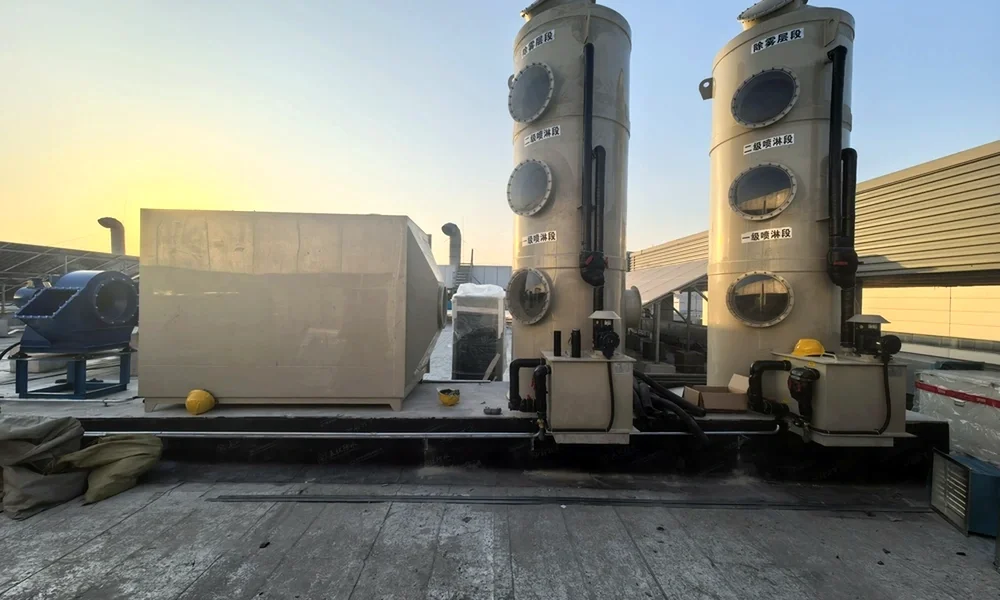
Woodworking, Furniture, and Metal Processing
Woodworking, furniture finishing, and metal processing combine heavy dust, oil mist, and intermittent solvent emissions from spraying or degreasing.
- Pre-Filtration First: Sawdust, sanding debris, and metal fines must be captured before reaching any VOC abatement stage. Installing a baghouse dust collector or an oil fume purification unit upstream prevents media clogging and fire hazards.
- Intermittent VOC Abatement: Because finishing booths and degreasing tanks often run in batches rather than 24/7, activated carbon adsorption units or UV photolysis systems offer practical start-stop flexibility without the long warm-up cycles required by an RTO.
How to Choose the Right VOC Control System for Your Facility
Selecting the best equipment for your plant starts with hard data rather than guesswork. At Soto Machinery, we review your exact site parameters—such as exhaust volume, chemical makeup, and floor space—to match your facility with a cost-effective, compliant waste gas treatment solution.
Evaluating Airflow Volume, VOC Concentration, and Composition
Before comparing quotes, map out three core operating parameters from your exhaust line:
- Airflow Volume (m³/h): High-volume, low-concentration air streams require large cross-sectional areas to keep pressure drops manageable, whereas compact exhaust lines need smaller housings.
- VOC Concentration & Inlet/Outlet Targets: Low-to-moderate concentrations work efficiently with physical capture or photo-oxidation. Proper https://www.soto-epmachinery.com/carbon-adsorber-for-voc-abathttps://www.soto-epmachinery.com/carbon-adsorber-for-voc-abatement-bed-depth-ebrt-changeout/”>activated carbon adsorber design depends heavily on matching bed depth and empty bed residence time (EBRT) to your exact inlet load so you can plan media changeouts accurately.
- Gas Composition & Pre-Treatment Needs: Sticky particulates, oil mist, or corrosive vapors will foul carbon beds and coat UV lamps. If your exhaust carries dust or aerosols—common in https://www.soto-epmachinery.com/printing-plant-vocs-treatment-https://www.soto-epmachinery.com/printing-plant-vocs-treatment-solutions-for-emission-control/”>printing and packaging plant VOC treatment—we pair pre-filtration (like baghouse dust collectors or wet scrubbers) ahead of the main abatement unit.
| Site Parameter | Recommended System Focus | Key Engineering Check |
|---|---|---|
| Low-to-Moderate VOCs + Odor | UV Photolysis Waste Gas Purifier | Confirm exhaust is free of heavy dust or moisture film |
| Steady Low Concentration / Intermittent Runs | Activated Carbon Adsorption Unit | Verify bed depth, EBRT, and changeout schedule |
| Mixed VOCs + Complex Odor Streams | Hybrid UV Photolysis + Activated Carbon | Stage UV first to break down compounds before carbon polishing |
| High-Concentration Continuous Exhaust | High-Temperature Thermal Oxidation (RTO) | Evaluate fuel consumption vs. heat recovery economics |
Combining Technologies for Optimal Emissions Abatement
Single-stage equipment often struggles when exhaust streams contain both fluctuating solvent loads and stubborn odors. In our custom engineering projects, combining two complementary stages delivers higher removal rates while keeping operating costs low.
- UV Photolysis + Activated Carbon: UV photolysis breaks down complex organic molecules and neutralizes odors first, reducing the chemical load entering the downstream activated carbon bed. This extends carbon lifespan and cuts replacement frequency.
- Proven Field Performance: In our chemical plant VOC control installation handling 30,000 m³/h, pairing a UV photolysis unit with an activated carbon adsorber achieved 95% VOC removal. On a 50,000 m³/h packaging and printing line, our integrated particulate and VOC abatement setup reached a 97% purification rate.
Regulatory Compliance and Long-Term Decarbonization Goals
Meeting local and international discharge standards requires equipment built for consistent uptime and low energy draw. Unlike fuel-burning thermal oxidizers that rely on continuous natural gas or LPG combustion—adding direct Scope 1 carbon emissions—electric-driven UV photolysis and ambient-temperature activated carbon adsorption avoid fossil-fuel burners entirely.
When we engineer a custom system at our ISO 9001-certified Qingdao facility, we align every component with CE requirements and your local emission limits:
- Custom Engineering Analysis: Share your gas type, airflow rate (m³/h), inlet/outlet concentrations, and target discharge standard to receive a tailored system configuration and factory-direct quote within 24–48 hours.
- Predictable Delivery & Support: Standard units ship in 15–30 days (30–60 days for custom builds), backed by factory pre-shipment testing, a 12-month warranty, detailed installation drawings, remote video guidance or on-site supervision, and 24/7 technical support.