Environmental protection equipment supplier

Waste Gas Treatment Industrial Air Pollution Control Guide
What Is Industrial Waste Gas Treatment?
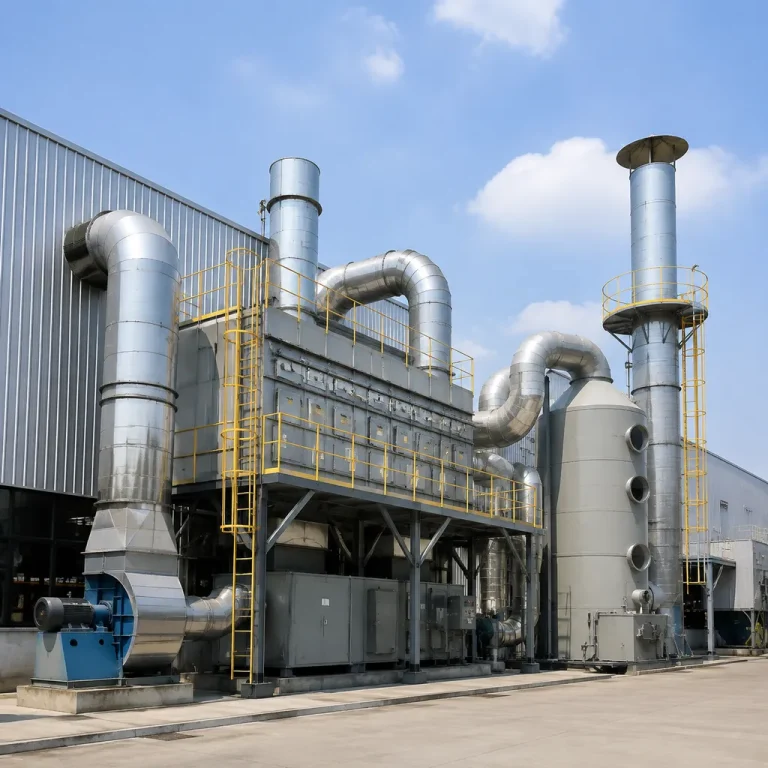
Industrial waste gas treatment refers to the engineered processes and systems designed to purify, neutralize, and remove hazardous airborne contaminants from industrial exhaust streams before they are safely released into the atmosphere. Operating modern production facilities requires robust environmental control systems to protect public health, preserve air quality, and maintain sustainable manufacturing operations.
Definition and Importance of Industrial Air Pollution Control
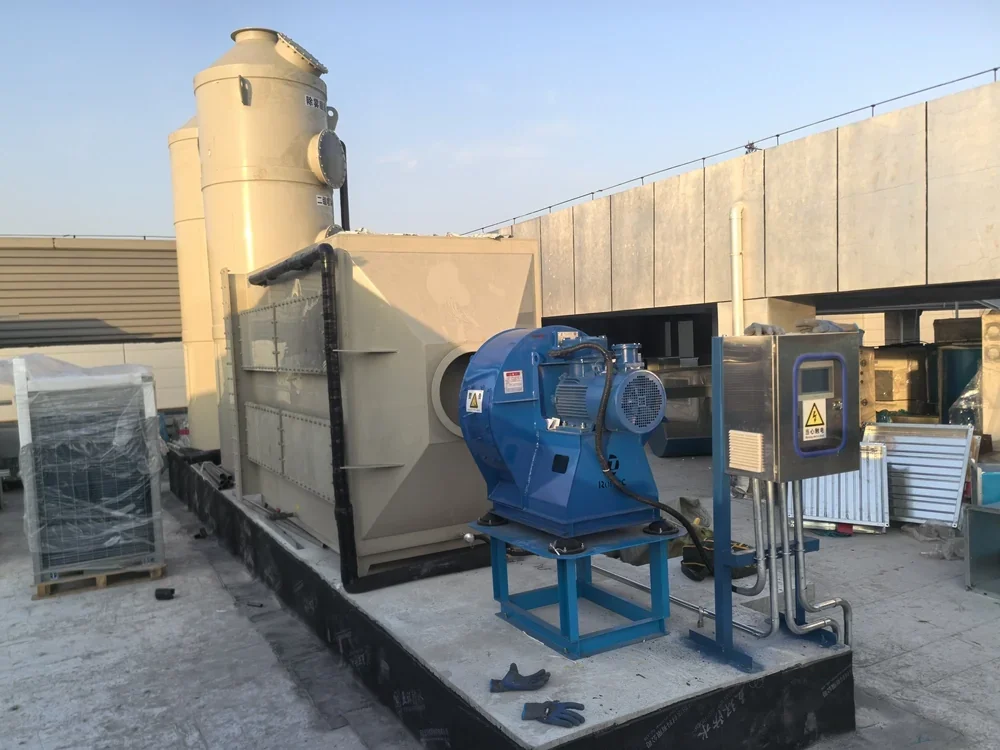
Industrial air pollution control encompasses mechanical, chemical, biological, and thermal technologies engineered to capture and eliminate harmful pollutants generated during manufacturing processes.
Implementing advanced exhaust treatment systems delivers vital operational benefits:
- Workplace Health & Safety: Prevents hazardous fumes, toxic mists, and fine particulates from accumulating in factory workspaces.
- Emission Reduction: Destroys or captures up to 98% to 99%+ of organic pollutants and acid gases before chimney discharge.
- Asset Protection: Neutralizes corrosive acid-base gases, preventing premature structural damage to plant infrastructure and ventilation ductwork.
- Community Relations: Eliminates unpleasant odors and visible plumes near residential and commercial zones.
| Key Objective | Target Metric | Engineering Solution |
|---|---|---|
| VOC Elimination | Up to 99% destruction rate | RTO, RCO, or Zeolite Rotor systems |
| Acid Mist Neutralization | High-efficiency scrubbing | Wet spray towers (chemical absorption) |
| Particulate Separation | Clean air discharge | Pulse-jet baghouses and cartridge filters |
Common Components of Industrial Waste Gas
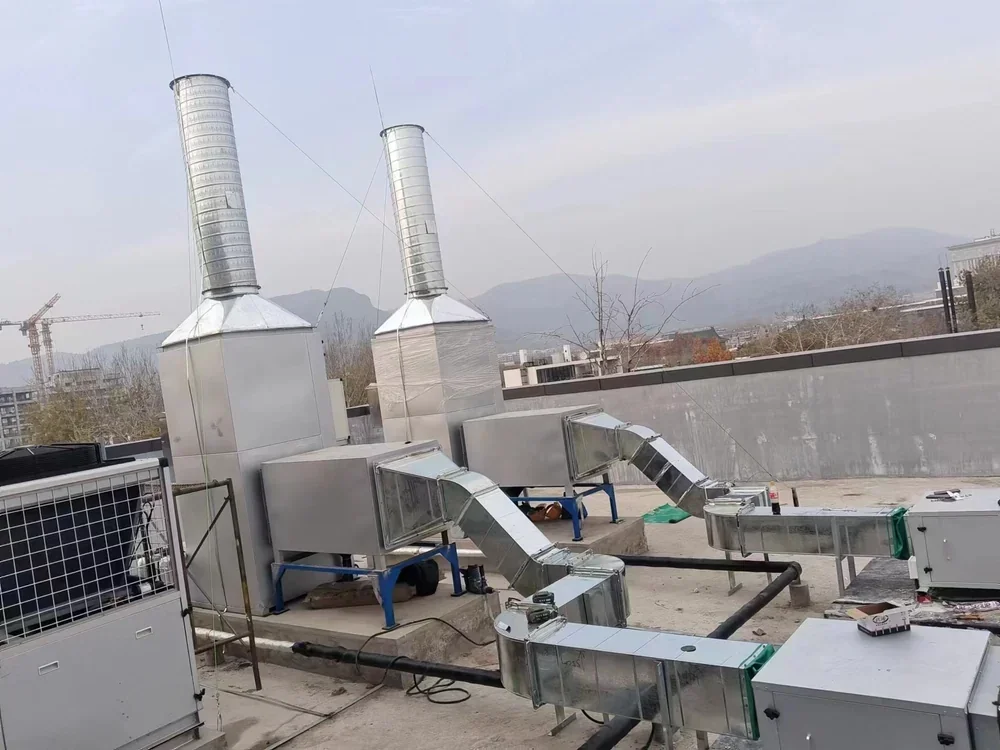
Industrial exhaust streams vary significantly depending on raw materials, operating temperatures, and production processes.
- Volatile Organic Compounds (VOCs): Industrial solvents, benzene, toluene, xylene, alcohols, ketones, and esters generated from coating, printing, and chemical synthesis.
- Inorganic & Acid-Alkali Gases: Sulfur oxides (SOx), nitrogen oxides (NOx), hydrogen chloride (HCl), hydrogen fluoride (HF), ammonia (NH3), and acid mists.
- Industrial Particulates & Dust: Sub-micron metal dust, grinding residue, carbon black, and chemical powders.
- Industrial Odors & Toxic Fumes: High-odor compounds, mercaptans, sulfides, and process fumes from rubber, smelting, and pharmaceutical plants.
Regulatory Compliance and Environmental Impact
Global environmental protection agencies enforce strict concentration and total-mass discharge limits for industrial facilities. Untreated emissions contribute to smog formation, acid rain, ozone layer depletion, and long-term ecological damage.
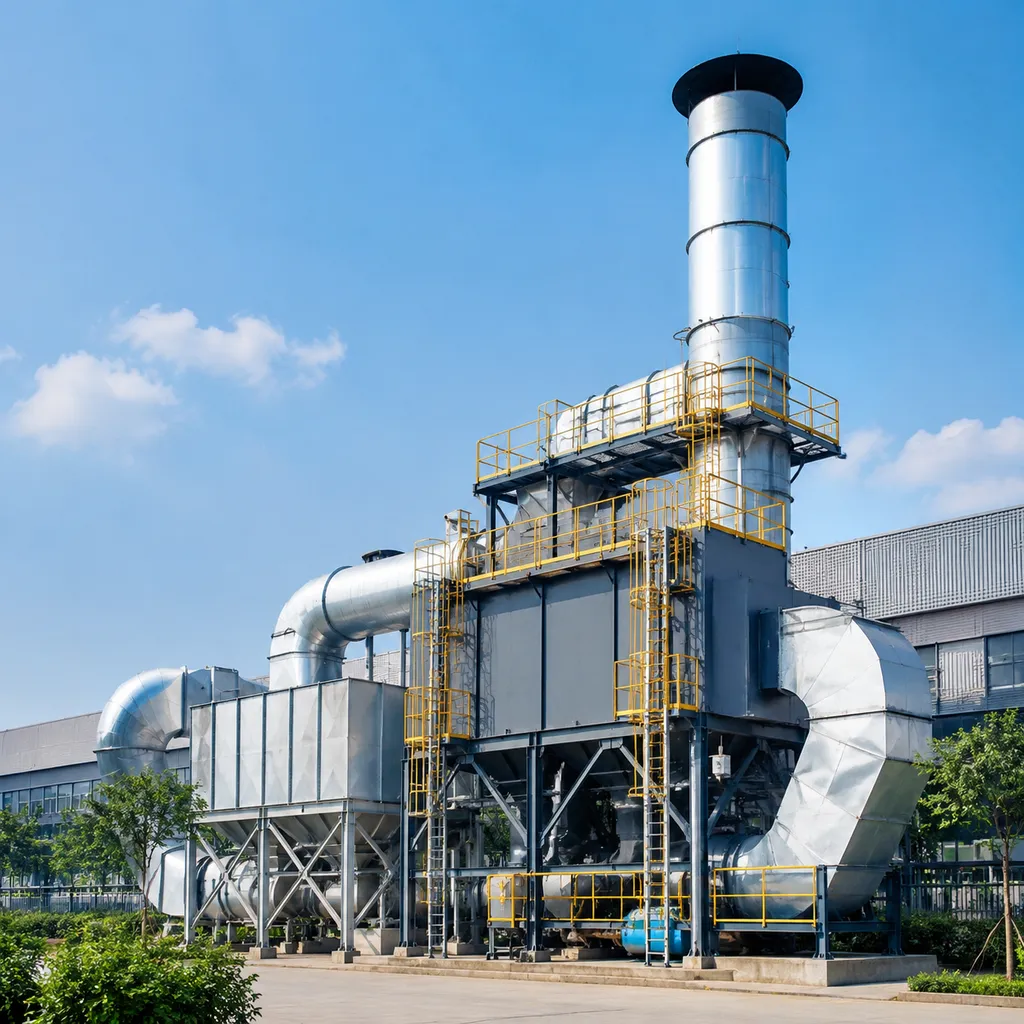
Deploying certified industrial waste gas treatment systems ensures full compliance with regional and international environmental regulations, shielding enterprises from severe fines, forced operational shutdowns, and legal liabilities while advancing corporate green initiatives.
Core Waste Gas Treatment Technologies and Methods
Selecting the right treatment process is critical for meeting strict environmental regulations and maximizing operational efficiency. Industrial exhaust streams vary widely in chemistry, temperature, and volume, requiring targeted engineering methods to eliminate airborne contaminants effectively.
Absorption and Chemical Scrubbing Systems
Wet chemical scrubber systems treat corrosive gases, water-soluble pollutants, and acid mists by bringing the exhaust into direct contact with a liquid neutralizing agent.
- Mechanism: Pollutants dissolve into the scrubbing liquid via mass transfer, undergoing rapid chemical neutralization.
- Target Compounds: Sulfur oxides (SOx), nitrogen oxides (NOx), hydrochloric acid (HCl), hydrofluoric acid (HF), and ammonia.
- Key Materials: Built using corrosion-resistant materials such as Polypropylene (PP), Fiber Reinforced Plastic (FRP), or 316L stainless steel to withstand aggressive chemical environments.
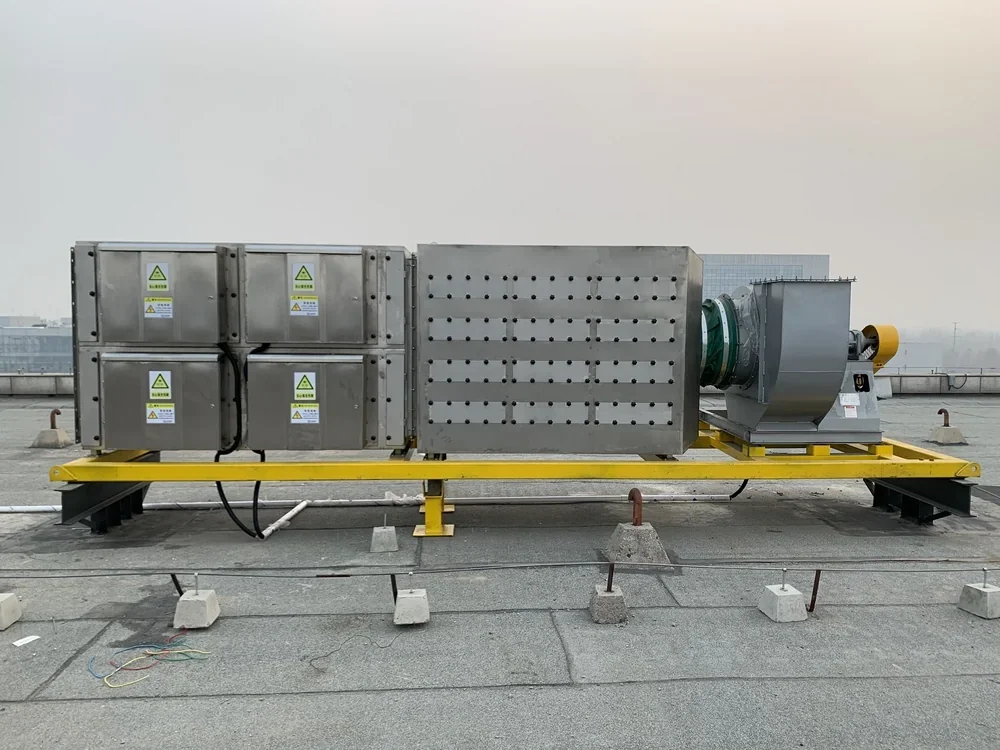
Adsorption and Activated Carbon Filtration
Adsorption technology captures volatile organic compounds (VOCs) and toxic fumes on the porous surface of solid media. For operations dealing with variable flow rates, deploying a high-capacity activated carbon adsorption unit ensures reliable pollutant capture and simple integration.
- High Surface Area: Activated carbon and zeolite media provide extensive microscopic pore networks that trap gaseous molecules.
- Flexible Configurations: Suitable for physical adsorption with solvent recovery or continuous concentration rotors that feed thermal destructors.
- Applications: Widely used in painting, electronics manufacturing, printing, and chemical storage venting.
Thermal and Catalytic Oxidation (RTO/RCO)
Thermal destruction uses high temperatures to convert organic compounds into harmless carbon dioxide and water vapor.
- Regenerative Thermal Oxidizers (RTO): Operate between 760°C and 850°C, utilizing high-efficiency ceramic heat exchange beds to achieve up to 95% thermal energy recovery and over 99% VOC destruction.
- Regenerative Catalytic Oxidizers (RCO): Leverage precious metal catalysts to lower oxidation temperatures to 250°C–400°C, significantly reducing auxiliary fuel consumption during catalytic oxidation.
- Direct Incineration: Applied to high-concentration waste streams where direct flame destruction provides immediate hydrocarbon elimination.
Biological Treatment: Biofiltration and Biotrickling
Biological air pollution control uses specialized microbial populations to metabolize biodegradable pollutants without generating secondary chemical waste.
- Biofiltration: Contaminated air passes through a moist, organic media bed where microorganisms consume low-concentration VOCs and odor-causing compounds.
- Biotrickling Filters: Continuous liquid recirculation over synthetic packing provides precise pH and nutrient control, making them ideal for heavy sulfur, hydrogen sulfide, and ammonia loads.
- Main Benefits: Low energy footprint, zero fuel consumption, and minimal operational maintenance for steady-state emission reduction.
Types of Industrial Air Pollution Control Equipment
Every manufacturing plant generates different exhaust streams, which means a one-size-fits-all approach never works. To achieve stable emissions compliance, we engineer dedicated equipment configured for specific gas chemistries, temperatures, and particulate loads.
Here are the primary equipment types deployed across modern industrial facilities:
Spray Towers and Gas Scrubbers
Wet scrubbers and spray towers are the frontline defense against water-soluble airborne contaminants, acid mists, and caustic fumes. By passing exhaust streams through an atomized neutralizing liquid or packed bed, these units dissolve and neutralize hazardous compounds on contact.
- Acid and Alkali Gas Scrubbers: Fabricated from corrosion-resistant PP, PVC, or FRP to treat $HCl$, $HF$, $SO_2$, and ammonia mists.
- Absorption Spray Towers: Utilize multi-stage packing media to maximize gas-liquid contact area with minimal pressure drop.
- Odor Abatement Systems: Integrating an advanced spray deodorization system rapidly neutralizes organic odors and sulfur compounds in chemical, composting, and food manufacturing lines.
Dust Collectors and Baghouses
Particulate matter must be filtered out before exhaust reaches downstream catalytic or thermal units. Dry filtration systems capture fine powders, metal dust, and airborne particulate down to sub-micron levels.
- Pulse-Jet Baghouses: A heavy-duty baghouse dust collector uses high-pressure compressed air pulses to automatically clean fabric filter bags without interrupting airflow, maintaining capture efficiencies above 99.5%.
- Cartridge Dust Collectors: Compact footprint units utilizing pleated media cartridges for high-efficiency filtration of dry, free-flowing dusts.
- Cyclone Pre-Separators: Centrifugal collectors that strip out coarse, abrasive particles to protect sensitive primary filtration bags and blowers.
Biofilters and Stripping Systems
For facilities dealing with continuous, low-concentration volatile organic compounds and nuisance odors, biological and mass-transfer systems provide low-energy air pollution control:
- Biofiltration Units: Contaminated air passes through moist organic or synthetic bed media where specialized micro-organisms oxidize organic vapors into harmless water and carbon dioxide.
- Biotrickling Filters: Continuous liquid recirculation systems engineered for high-sulfur and nitrogenous industrial exhaust, offering precise pH control and nutrient feeding.
- Air Stripping Towers: Packaged mass-transfer columns designed to strip volatile components out of contaminated process liquids into manageable air streams for final destruction.
Key Application Scenarios Across Industries
Different manufacturing sectors generate completely different exhaust streams. Finding the right industrial waste gas treatment setup means matching the technology to the specific pollutants, airflow volumes, and temperatures of your production line. We engineer tailored air pollution control systems to meet the unique challenges of high-demand industrial sectors.
Chemical and Petrochemical Processing
Chemical manufacturing produces complex exhaust streams containing hazardous air pollutants, toxic gases, and high-concentration volatile organic compounds. Plants in this sector require heavy-duty, corrosion-resistant systems capable of handling corrosive acid mists, sulfur compounds, and fluctuating process loads.
- Primary Pollutants: Benzene, toluene, xylene, alcohols, acid mists (HCl, $H_2SO_4$), ammonia, and sulfur oxides.
- Core Solutions: Wet scrubbers paired with high-temperature Regenerative Thermal Oxidizers (RTO) or Catalytic Oxidizers (RCO) provide reliable destruction of airborne contaminants while maintaining high thermal efficiency.
- Compliance Value: Implementing dedicated chemical and pharmaceutical emission control systems ensures complete VOC destruction rates exceeding 99%, keeping plants aligned with stringent environmental regulations.
Manufacturing and Industrial Coating
Surface coating, spray painting, automotive assembly, and metal fabrication facilities face a distinct challenge: high-volume exhaust with low-to-medium VOC concentrations. Solvent evaporation from drying ovens and spray booths releases continuous streams of hydrocarbons that require cost-effective abatement.
| Process Area | Typical Airborne Contaminants | Recommended Equipment Setup |
|---|---|---|
| Spray Paint Booths | Solvent mists, ketones, esters | Zeolite Concentration Rotor + RTO |
| Baking & Curing Ovens | High-temp VOCs, plasticizers | Direct Thermal Oxidation / RCO |
| Metal Cutting & Grinding | Fine metallic dust, welding fumes | Pulse-Jet Cartridge Dust Collectors |
Using a zeolite concentration rotor alongside thermal oxidation allows manufacturers to concentrate massive airflows into small, manageable streams. This dramatically reduces auxiliary fuel consumption and lowers daily operating costs.
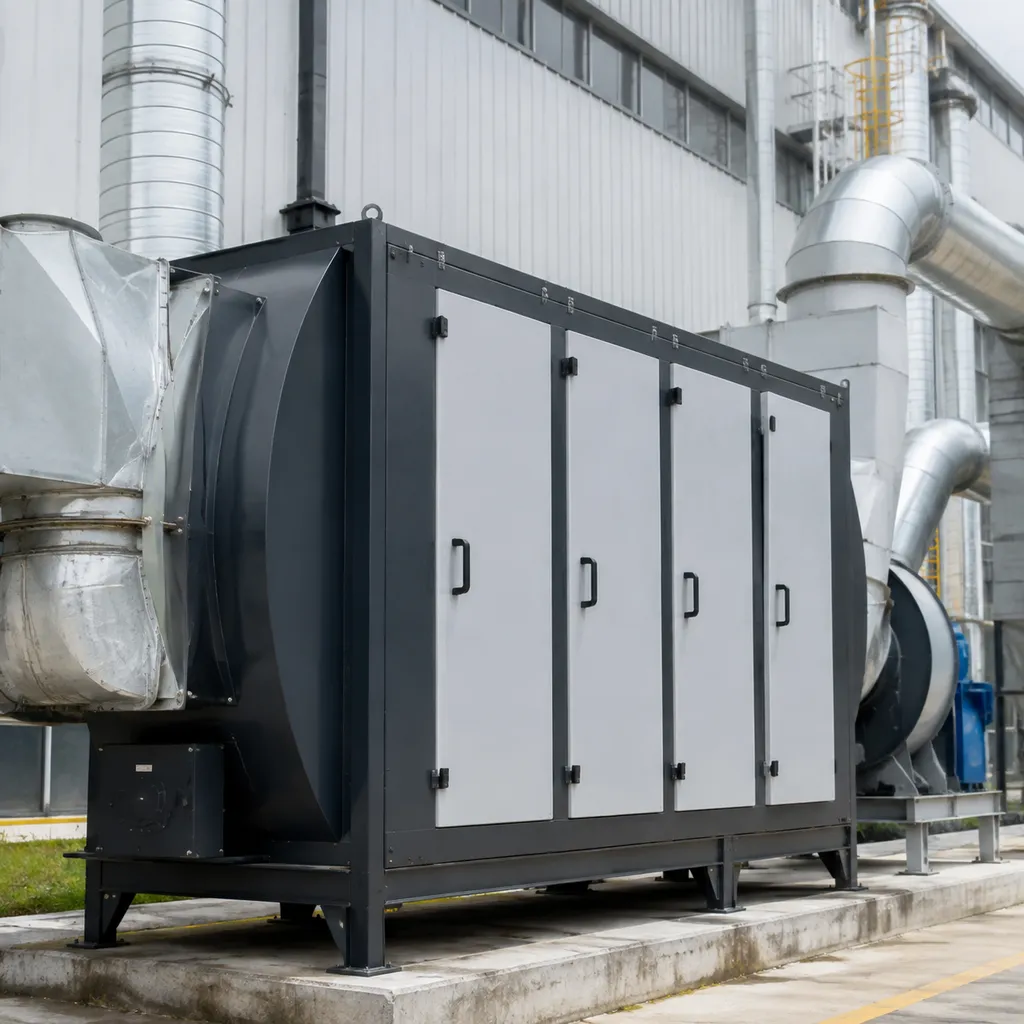
Waste Management and Odor Control
Municipal waste processing, wastewater treatment plants, and specialized research sites produce pervasive odors and biological off-gases. Even at extremely low concentrations, emissions containing hydrogen sulfide ($H_2S$), mercaptans, and amine compounds cause severe community nuisance and workplace compliance issues.
- Multi-Stage Absorption: Chemical spray towers neutralize acidic and basic odor compounds using tailored scrubbing reagents.
- Biological & Carbon Polishing: Biofiltration units and activated carbon beds capture lingering traces of organic odor molecules.
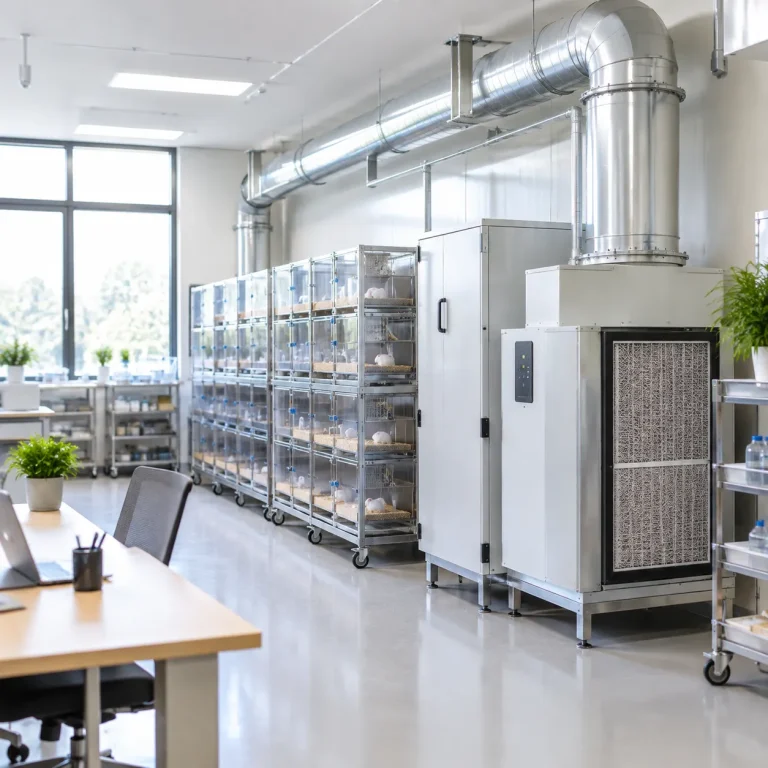
- Specialized Ventilation: Advanced containment and exhaust treatment are critical in specialized environments, such as odor control for animal facilities and laboratories, where continuous air purification protects both process integrity and surrounding air quality.
How Waste Gas Treatment Systems Work: Step-by-Step Process
Achieving reliable emission reduction requires a structured, multi-stage engineering workflow. Industrial facilities rely on integrated systems to safely capture, neutralize, and verify clean air output before venting into the atmosphere.
Pre-treatment and Particulate Collection
Raw exhaust streams often contain high temperatures, heavy moisture, grease, or abrasive solid particles that can foul downstream equipment. Effective pre-treatment protects core purification units and extends component service life:
- Cooling and Conditioning: Heat exchangers and quench towers lower exhaust temperatures to safe operational thresholds.
- Particulate Separation: Cyclones, pulse-jet baghouses, and cartridge dust collectors capture airborne contaminants and coarse dust.
- Mist and Oil Separation: Demisters and dedicated systems like an oil fume purification unit remove sticky aerosols and liquid droplets before they reach sensitive media beds.
Primary Gas Treatment and Pollutant Removal
Once conditioned, the gas enters the core reaction phase, selected according to the pollutant profile and volumetric flow rate:
- Thermal and Catalytic Destruction: High-efficiency Regenerative Thermal Oxidizers (RTO) and Regenerative Catalytic Oxidizers (RCO) destroy volatile organic compounds at high temperatures, achieving purification efficiencies of up to 98%–99% with up to 95% thermal energy recovery.
- Concentration and Adsorption: Zeolite concentration rotors compress large-volume, low-concentration VOC streams, directing concentrated streams to compact oxidation units. Activated carbon beds physically trap organic molecules for regeneration or solvent recovery.
- Chemical Absorption: Wet scrubbers and spray towers utilize acid-base neutralization reactions to eliminate corrosive gases, acid mists, and soluble chemical fumes.
- Specialized Odor Breakdown: Advanced setups, including tailored waste gas treatment equipment with UV photolysis and plasma systems, decompose complex odor chains and organic compounds.
Testing and Quality Assurance Standards
System validation ensures stable operation and strict compliance with environmental regulations:
- Automated Sensor Monitoring: Integrated PLC panels monitor multi-point differential pressure, airflow velocities, and chamber temperatures in real time to safeguard against abnormal operating conditions.
- Continuous Emission Monitoring Systems (CEMS): Online sampling at discharge stacks tracks residual VOC concentrations, particulates, and acid gases to verify compliance with discharge limits.
- Safety and Performance Commissioning: Complete pressure testing, flame arrestor checks, and thermal recovery validations are conducted to ensure airtight, fail-safe operation under continuous industrial workloads.
How to Choose the Right Waste Gas Treatment System
Selecting an effective air pollution control setup is not a one-size-fits-all process. We engineer and size systems around your facility’s real-world operating parameters to guarantee regulatory compliance and long-term reliability.
Assessing Waste Gas Composition and Volume
Before choosing any equipment, we conduct a comprehensive evaluation of your exhaust streams. Key variables include:
- Airflow Volume ($m^3/h$): Total volume dictates ducting dimensions, fan ratings, and core reactor size.
- Pollutant Types: Identifying whether you are dealing with volatile organic compounds (VOCs), acidic mists, toxic fumes, or particulate matter.
- Concentration Levels: Determining low, medium, or high concentrations ($mg/m^3$ or ppm) directly shapes the technology path—such as using a zeolite rotor concentrator before thermal destruction.
- Gas Stream Characteristics: Temperature, moisture levels, and pressure levels determine equipment materials, such as carbon steel, 304/316L stainless steel, or corrosion-proof plastics (FRP/PP).
| Gas Stream Parameter | Key Engineering Consideration | Primary Target Technology |
|---|---|---|
| High VOC concentration, moderate airflow | Self-sustaining thermal destruction | Regenerative Thermal Oxidizer (RTO) |
| Low VOC concentration, large airflow | Concentration before oxidation | Zeolite Rotor + RTO / CO |
| Acidic/Alkaline gases ($HCl, SO_x, NH_3$) | Chemical neutralization & absorption | Industrial wet scrubber tower |
| Heavy particulate loading + dry dust | Mechanical separation & fabric filtration | Pulse-jet baghouse / Cartridge collector |
Evaluating Operational Costs and Energy Efficiency
Capital expense (CAPEX) is only one part of the equation; operating expense (OPEX) dictates total cost of ownership over a 10-to-15-year lifecycle.
- Thermal Heat Recovery: We utilize high-grade ceramic heat exchange media in our regenerative systems to achieve thermal recovery efficiencies up to 95%, drastically cutting auxiliary burner fuel consumption.
- Pressure Drop Management: Optimized airflow paths reduce static resistance across filter media and packing layers, lowering fan motor power consumption.
- Media Longevity: Choosing premium catalysts for catalytic oxidation systems and robust filtration media minimizes downtime and replacement frequency.
- Intelligent PLC Controls: Automated control systems monitor differential pressure and temperature in real time, auto-modulating burner output and variable-frequency fan drives.
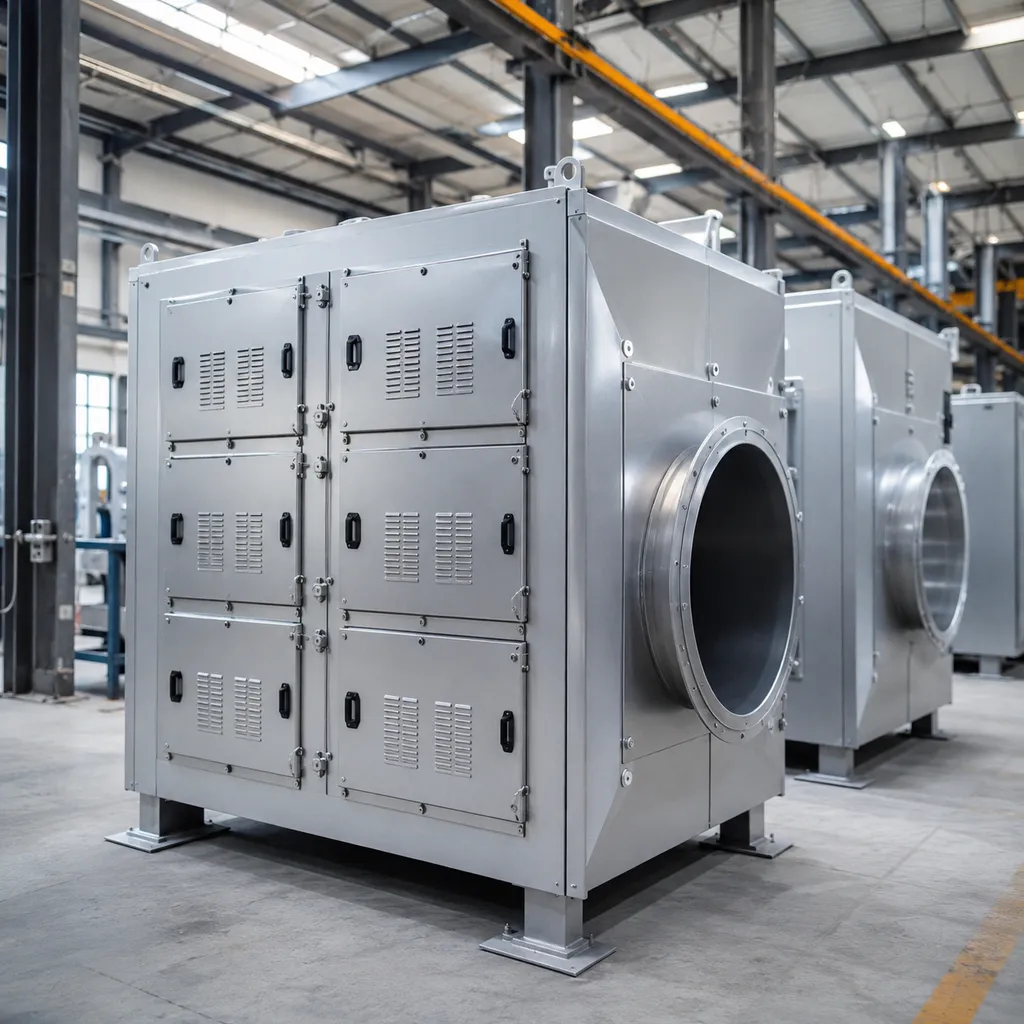
Selecting Suitable Equipment for Specific Industry Needs
Every manufacturing sector faces distinct emission challenges and local environmental regulations. Review our proven waste gas treatment project cases to see how custom-configured systems perform in demanding environments:
- Industrial Coating & Printing: High air volume, low-to-medium solvent concentrations. Ideal solution: Zeolite concentration rotor paired with an RTO or catalytic combustion unit.
- Chemical & Petrochemical Processing: Complex, multi-component streams with corrosive vapors. Ideal solution: Multi-stage scrubbing systems combined with high-temperature thermal oxidation.
- Metalworking & Smelting: High dust loads combined with high-temperature off-gases. Ideal solution: Cyclone pre-separators backed by pulse-jet baghouses.
Future Trends and Innovations in Air Pollution Control
The landscape of industrial emissions management is shifting rapidly. Strict global environmental regulations and rising energy costs demand smarter, cleaner, and more cost-effective solutions. Today, waste gas treatment is no longer just about meeting base compliance—it is about maximizing energy efficiency and achieving closed-loop resource recovery.
Advanced Catalytic Materials and Energy Recovery
Modern air pollution control systems are prioritizing thermal optimization and advanced material science to minimize fuel consumption:
- Low-Temperature Catalysts: Next-generation noble metal and transition metal formulations allow catalytic oxidation to occur at significantly lower operational temperatures (under 250°C), drastically cutting pre-heating energy requirements.
- High-Efficiency Ceramic Media: Advanced honeycomb ceramic heat storage media in regenerative thermal oxidizers (RTOs) now achieve thermal energy recovery rates of up to 95%, enabling self-sustaining operation without auxiliary fuel when treating moderate volatile organic compounds (VOCs) loads.
- Integrated Heat Exchangers: Waste heat from thermal exhaust streams is increasingly redirected to supply hot water, steam, or drying air back into the manufacturing process.
For industry insights and technical engineering updates on emerging technologies, explore our industrial waste gas treatment blog.
Smart Monitoring and Automation Technologies
Automation and intelligent control are transforming how factories operate their exhaust systems:
| Feature | Industrial Benefit |
|---|---|
| PLC Touchscreen Controls | Centralized control of airflow, pressure differentials, and combustion temperatures in real time. |
| Multi-Point Sensor Arrays | Continuous monitoring of VOC concentrations, LEL (Lower Explosive Limit) levels, and differential pressure across filter beds. |
| Safety Interlocks & Alarms | Automatic bypass dampers, explosion-proof venting, and instant shutdown protocols to prevent system failure. |
| Remote Telemetry | Cloud-based diagnostics and real-time data logging for regulatory reporting and predictive maintenance. |
These smart systems allow facilities to maintain stable 98%–99%+ purification efficiencies, lower manual labor demands, and adapt air volume automatically based on actual production loads.