Environmental protection equipment supplier

Industrial Off Gas Treatment Systems Standards and Sizing
Understanding Industrial Off-Gas Treatment
What Is Industrial Off-Gas Treatment?
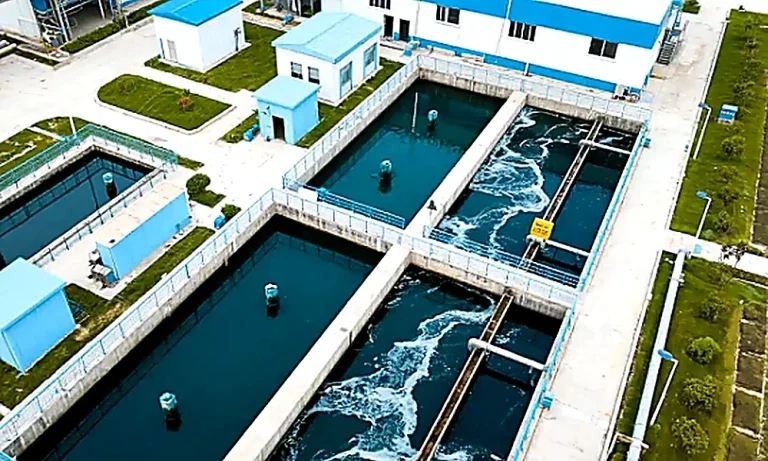
Industrial off-gas treatment refers to the engineered process of collecting, conditioning, and purifying gaseous waste streams generated during manufacturing, combustion, and raw material processing before they reach the atmosphere. Also known as waste gas treatment or flue gas cleaning, this process removes hazardous air pollutants, toxic compounds, and abrasive dust from exhaust streams.
Operating at the intersection of process engineering and environmental compliance, effective off-gas systems deploy targeted mechanical, thermal, and chemical mechanisms to neutralize harmful airborne compounds produced in harsh operating environments such as cement plants, steel mills, metallurgical processing, and power generation facilities.
Why Off-Gas Treatment Is Essential for Industrial Facilities
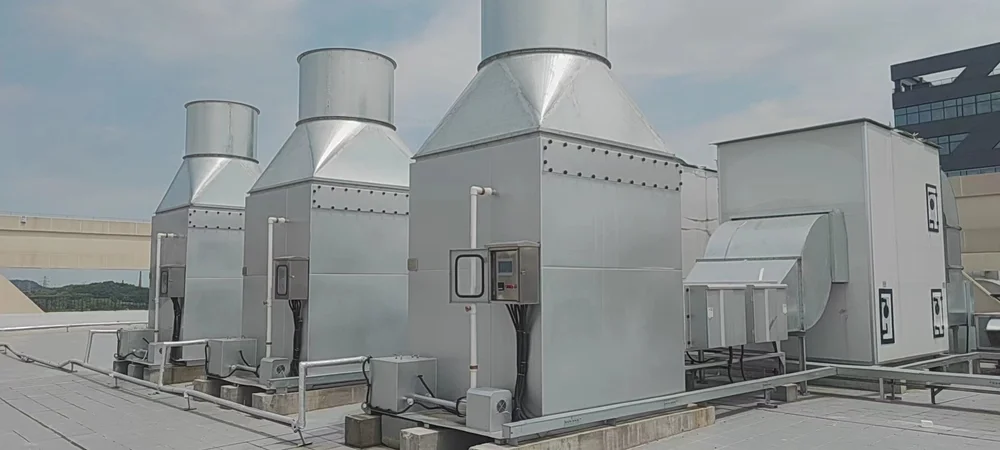
Uncontrolled emissions pose operational, legal, and environmental liabilities. Deploying robust air pollution control systems delivers critical operational advantages:
- Stringent Regulatory Compliance: Satisfies mandatory regional and international emission standards, preventing costly plant shutdowns, operational penalties, and legal sanctions.
- Asset and Equipment Protection: Eliminates acidic and corrosive compounds (such as acid gases and abrasive particulates) that deteriorate ductwork, fans, heat exchangers, and downstream infrastructure.
- Worker Safety and Community Protection: Mitigates toxic gas exposure inside the facility and prevents odor and particulate distribution into adjacent population centers.
- Operational Continuity: Sustains optimal gas flow, process draft, and thermal efficiency across high-load production cycles without unplanned maintenance halts.
Common Industrial Off-Gas Contaminants (VOCs, H2S, SO2, Dioxins)
Industrial off-gas streams vary widely depending on raw materials, process temperatures, and fuel sources. Typical target pollutants include:
- Volatile Organic Compounds (VOCs): Hydrocarbon compounds originating from solvents, paint lines, and chemical synthesis that contribute to ozone formation and require high destruction removal efficiency.
- Hydrogen Sulfide (H2S): Highly toxic, pungent gas produced in refining, pulp and paper, and wastewater operations, known for accelerating metallic corrosion.
- Sulfur Dioxide (SO2): Acid gas byproduct of heavy fuel and coal combustion in power generation, metallurgy, and cement kilns, driving acid rain formation.
- Dioxins and Furans: Highly regulated persistent organic pollutants formed during high-temperature thermal reactions and waste-to-energy operations.
- Particulate Matter (PM10/PM2.5): Fine dust, heavy metal traces, and fly ash that demand mechanical interception before secondary chemical purification can take place.
Main Types of Industrial Off-Gas Treatment Systems
Different industrial operations generate vastly different exhaust streams. Finding the right off-gas treatment system depends directly on gas temperature, moisture levels, and whether we are capturing solid particulates or neutralizing hazardous chemical fumes.
Below are the primary technologies we utilize to manage complex industrial emissions.
Wet Scrubbers and Chemical Absorption Equipment
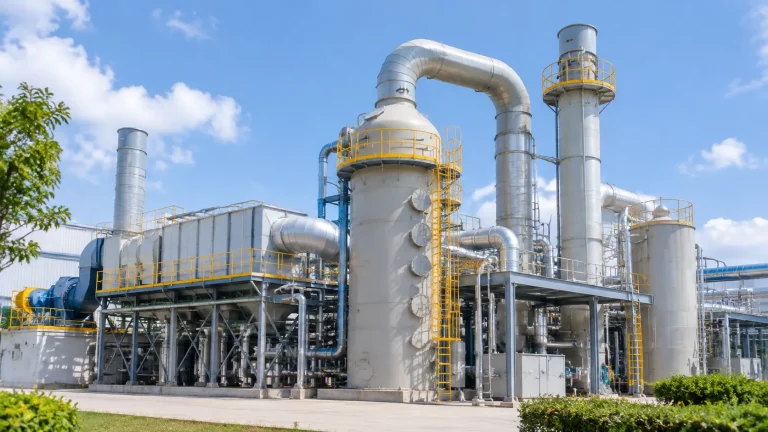
Wet scrubbers use liquid solutions to absorb gaseous pollutants, neutralize acidic vapors, and trap sticky particulates. The dirty gas stream passes through an engineered spray chamber or packed bed where scrubbing reagents react directly with target contaminants.
- Primary Uses: Neutralizing acid gases (HCl, SO2, HF), stripping ammonia, and managing water-soluble industrial pollutants.
- Specialized Setups: Facilities dealing with severe biological or processing smells integrate wet systems as specialized animal facility odor control equipment to scrub out hydrogen sulfide and volatile organic compounds before discharge.
- Core Advantage: High efficiency on hot, moist, and potentially explosive gas flows where dry filtration is not practical.
Dry Scrubbers and Adsorber Systems
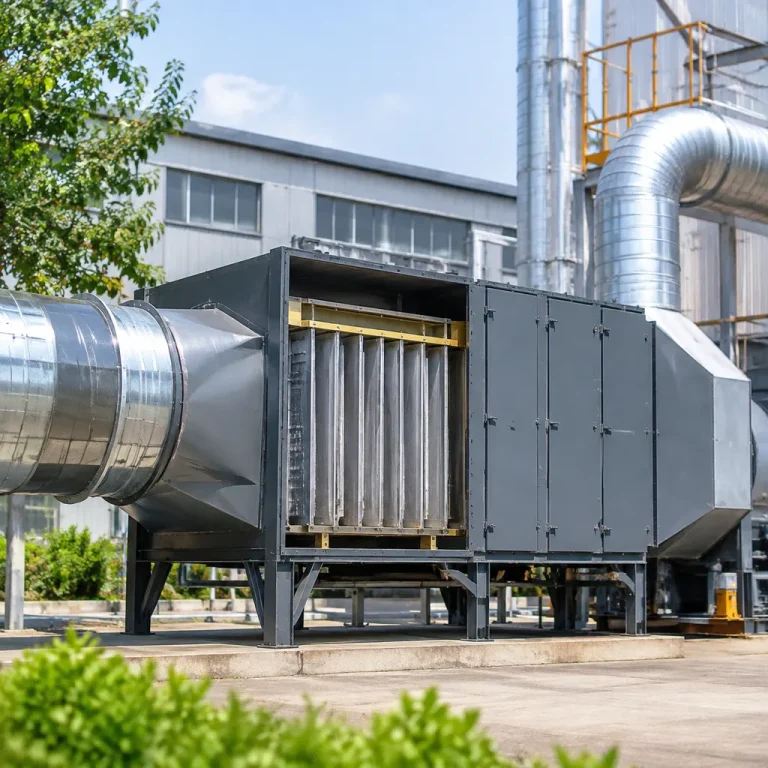
Dry scrubbers remove acidic compounds and toxic compounds without producing an effluent liquid waste stream. Reagents such as hydrated lime, sodium bicarbonate, or activated carbon are injected directly into the flue gas line or contact reactor.
- Acid Gas Neutralization: The dry reagent reacts chemically with SO2 and acid vapors to form dry solid salts.
- Adsorption Capabilities: Fixed-bed carbon adsorbers capture trace heavy metals and complex organics.
- Downstream Integration: The spent dry sorbent and reaction products are collected downstream via high-efficiency mechanical collectors or fabric filters, simplifying waste handling.
Thermal Oxidizers and Afterburners
Thermal oxidizers handle waste gas streams loaded with volatile organic compounds (VOC abatement) and hazardous air pollutants (HAPs). By heating the off-gas to temperatures between 750°C and 1,100°C, these systems break down chemical compounds into carbon dioxide and water vapor.
- High Destruction Removal Efficiency (DRE): Capable of achieving 98% to 99.9% destruction efficiency.
- Heat Recovery: Regenerative thermal oxidizers (RTO) and recuperative designs capture exhaust thermal energy to preheat incoming gas streams, reducing secondary fuel consumption.
- Best Applications: Chemical manufacturing, coating lines, printing, and resin production facilities.
Baghouse Dust Collectors and Particulate Filters
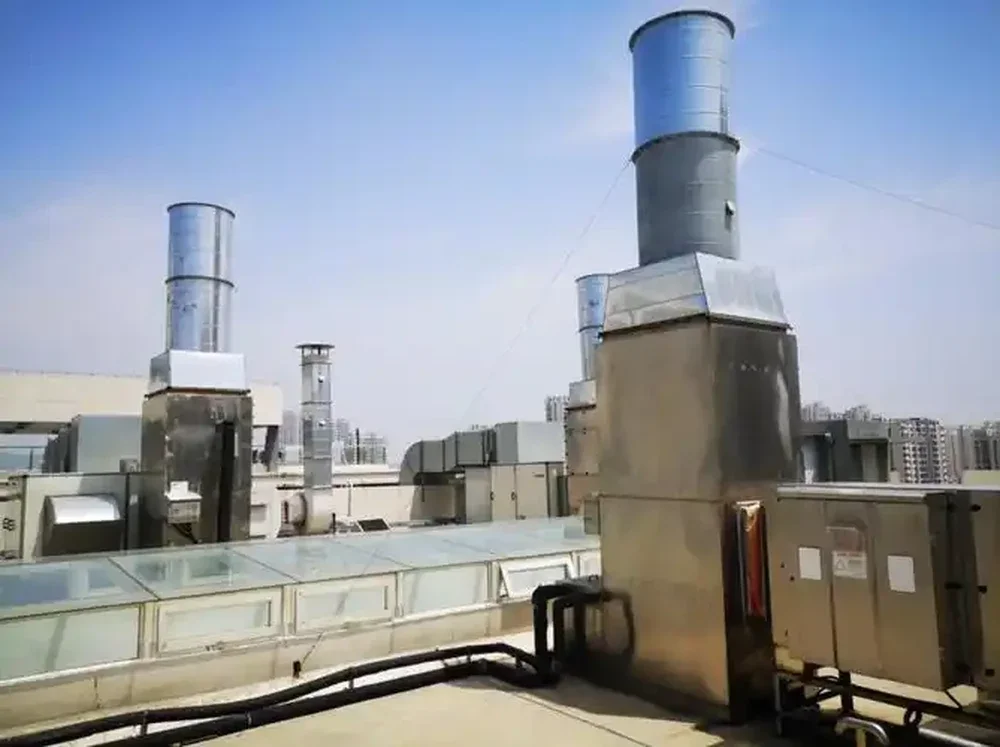
For dry particulate removal, fabric filter baghouses serve as an industry workhorse across cement kilns, steel mills, and mining operations. Flue gas is pulled through heavy-duty woven or non-woven filter bags that physically trap dust on their outer surfaces.
- Pulse-Jet Cleaning: Automated bursts of high-pressure compressed air dislodge dust cakes continuously without stopping airflow.
- High Collection Rates: Delivers reliable particulate capture rates exceeding 99.9%, even on fine sub-micron dust.
- Robust Materials: We specify specialized filter media—such as PTFE membranes, fiberglass, or PPS—to resist elevated temperatures, mechanical wear, and chemical degradation in demanding plant environments.
Regulatory Standards and Emissions Compliance
Meeting global clean-air benchmarks requires an accurate design strategy from the ground up. Industrial waste gas treatment is governed by strict statutory limits on particulate matter, acid gases, and chemical vapors. We build our air pollution control equipment to guarantee long-term operational compliance, preventing non-compliance penalties, plant shutdowns, and excess releases into local airsheds.
EPA Air Quality and Emission Standards
In North America, the US EPA sets the foundation for stationary source pollution control under the Clean Air Act. Key frameworks include:
- National Ambient Air Quality Standards (NAAQS): Establishes ambient thresholds for criteria pollutants, including sulfur dioxide ($SO_2$), nitrogen oxides ($NO_x$), lead, carbon monoxide, and particulate matter ($PM_{10}$ and $PM_{2.5}$).
- National Emission Standards for Hazardous Air Pollutants (NESHAP): Mandates Maximum Achievable Control Technology (MACT) floors to curb toxic air pollutants from heavy industry.
- New Source Performance Standards (NSPS): Dictates direct stack emission limits and continuous monitoring requirements for newly constructed, modified, or reconstructed industrial facilities.
Our industrial systems are engineered to achieve required destruction removal efficiency and lower particulate emissions well below federal thresholds.
European Industrial Transformation and Emission Guidelines
The European Union governs heavy manufacturing emissions through the Industrial Emissions Directive (IED). At the heart of European industrial guidelines is the application of Best Available Techniques (BAT):
| Regulatory Pillar | Core Requirement | Equipment Implication |
|---|---|---|
| BAT Reference Documents (BREFs) | Sector-specific benchmarks defining state-of-the-art emission levels (BAT-AELs). | Enforces high-efficiency dry or wet flue gas treatment units. |
| Continuous Emissions Monitoring (CEMS) | Real-time monitoring and reporting of flue gas parameters at the discharge stack. | Requires integrated sampling ports, differential pressure transmitters, and automated flow controls. |
| Industrial Transformation Framework | Decarbonization and energy recovery combined with end-of-pipe cleaning. | Demands minimized system pressure drop to lower fan power draw and integrated heat exchange options. |
By aligning design engineering with European BAT-AELs, we deliver installations that satisfy both national transposition laws and cross-border environmental criteria.
Permitting, Authorizations, and Environmental Regulations
Securing operating permits requires proof of predictable, stable abatement performance across all plant cycles. Regulatory bodies require thorough documentation during the authorization process:
- Mass Balance and Dispersion Modeling: Validating that ground-level pollutant concentrations remain within acceptable thresholds under peak production.
- Workplace and Perimeter Safety: Adhering to fugitive emission thresholds and specialized guidelines, such as our comprehensive laboratory environmental protection and odor control guide, which details containment protocols for hazardous indoor environments.
- Operating Limits & Enforceability: Specifying normal operating windows for gas inlet temperature, scrubbing liquid replenishment rates, and filter pressure drop limits.
Robust system engineering and factory-tested components ensure your plant satisfies local agency inspections, air permit renewals, and emissions reporting criteria throughout the facility’s life cycle.
Key Parameters for Sizing Off-Gas Treatment Systems
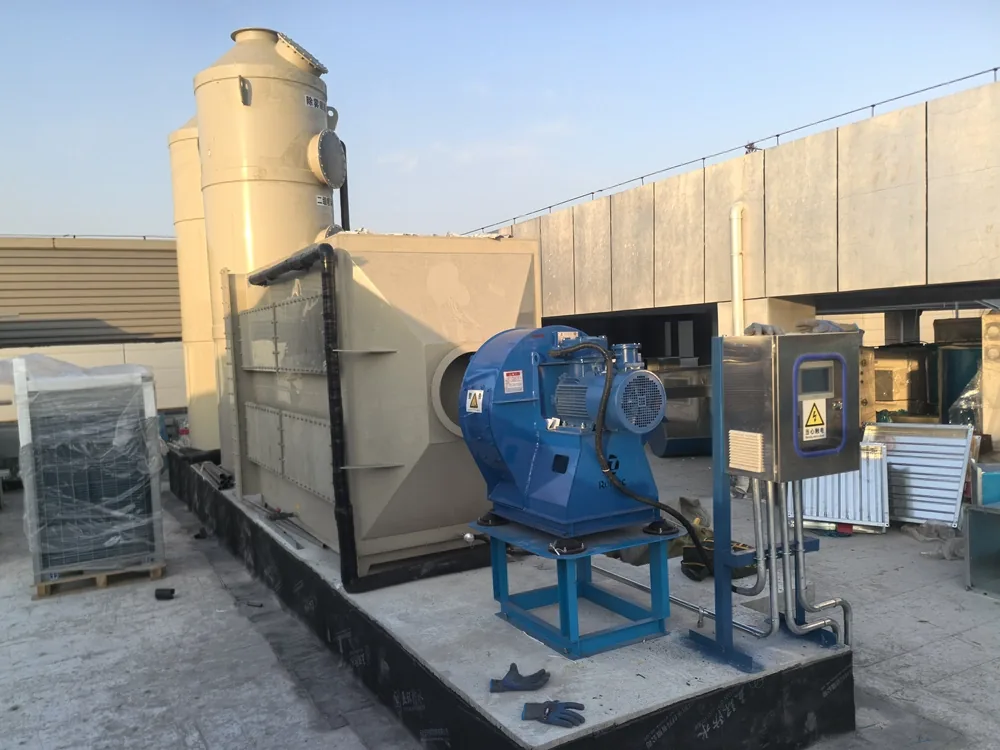
Sizing an industrial air pollution control setup is never a one-size-fits-all process. Proper dimensions protect downstream machinery, keep capital expenditures in check, and prevent compliance violations. We engineer our treatment systems around precise process inputs, balancing structural footprint with airflow demands to deliver stable, continuous operation.
| Design Parameter | Engineering Impact | Primary Risk of Undersizing |
|---|---|---|
| Volumetric Flow Rate | Dictates housing diameter, duct sizing, and fan power | Overpressurization, duct clogging, fugitive leaks |
| Pollutant Concentration | Defines media volume, reagent dosing, and cleaning cycles | Premature filter blinding, chemical breakthrough |
| Flue Gas Temperature | Dictates structural metallurgy and filter bag fabrics | Thermal degradation, high-temperature casing failure |
| Moisture & Acid Dew Point | Sets insulation, heating, or gas-conditioning limits | Acid condensation, structural corrosion, caking |
Calculating Gas Flow Rates and Pollutant Concentration
Everything starts with the volume of air your plant moves every minute. We assess both normal and peak operating conditions:
- Actual vs. Normal Volume: We convert actual cubic meters per hour (Am³/h) to normal conditions (Nm³/h) to calculate true residence times and velocities.
- Mass Loading Calculations: We quantify the raw particulate or gaseous load entering the system in mg/Nm³ or ppm. High particulate spikes demand robust pre-separation stages to avoid overloading the final collector.
- Peak Surge Allowances: Industrial furnaces and kilns cycle through uneven batches. We incorporate realistic safety margins into our gas-flow modeling so transient spikes never push emissions over regulatory thresholds.
Assessing Temperature, Pressure, and Gas Composition
Operating conditions dictate our selection of structural materials, mechanical seals, and gas conditioning hardware:
- Thermal Dynamics: Extreme process heat requires specialized dilution dampers, gas coolers, or heat exchangers. High temperatures also determine whether we specify specialized ceramic elements, fiberglass bags, or dry electrostatic precipitator fields.
- Static and Differential Pressure: We calculate resistance across duct runs, dampers, and filter media to size process fans accurately, guaranteeing steady draft across the entire duct network.
- Corrosive Chemistry: Off-gas containing acidic species like SO2, HCl, or NOx attacks carbon steel when temperatures drop near the acid dew point. We select corrosion-resistant alloys, specialized linings, or thermal insulation to keep the gas stream safely dry and above condensation limits.
Determining Sizing and Capacity Requirements for Scrubbers and Filters
Once basic process metrics are fixed, we dimension the specific collection units to achieve optimal collection efficiency:
- Baghouse Sizing (Air-to-Cloth Ratio): We balance filtration area against the incoming dust load. Maintaining a conservative filtration velocity prevents deep-bed blinding, extends filter bag service life, and lowers pulse-jet compressed air consumption.
- Wet Scrubber Dimensions: Liquid-to-gas (L/G) ratios determine the physical diameter and packing height in chemical absorption towers. Ensuring proper droplet residence time delivers reliable acid gas removal. Facilities scrubbing acidic vapors from surface finishing lines must also coordinate discharge handling alongside their pickling and phosphating wastewater treatment processes.
- Electrostatic Precipitator Specific Collection Area (SCA): For ESPs, we calculate plate area based on gas velocity, particle resistivity, and electrical migration velocity to guarantee maximum particle capture under full plant load.
How to Select the Right Off-Gas Treatment System
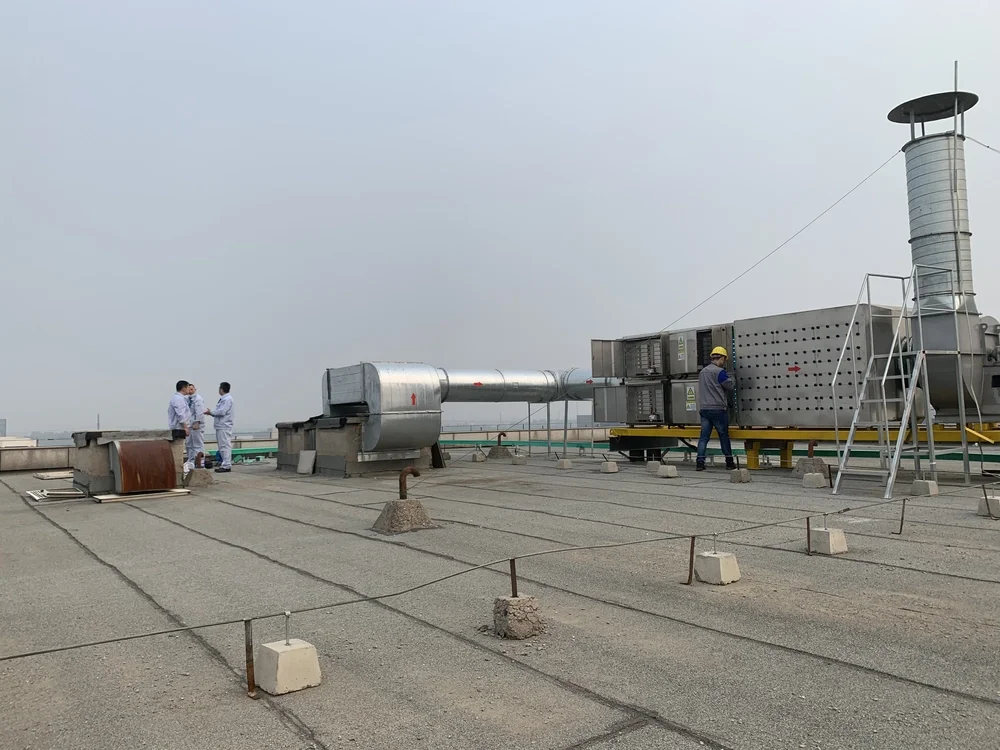
Choosing the correct equipment requires matching the physical and chemical properties of your exhaust stream with proven removal mechanisms. A misconfigured setup leads to premature equipment wear, high operating penalties, and regulatory non-compliance. We assess the process conditions directly at the source to deploy systems engineered for sustained emission control.
Matching Treatment Technology to Contaminant Types
No single technology addresses all pollutants. Particulates demand mechanical separation or electrostatic capture, while gaseous compounds require thermal destruction, absorption, or catalytic conversion.
| Contaminant Category | Common Industrial Sources | Primary Treatment Technology | Target Removal Mechanism |
|---|---|---|---|
| Heavy Particulate / Fly Ash | Cement kilns, coal boilers, smelting | Baghouse Dust Collectors / ESP | Mechanical filtration, electrostatic charging |
| Volatile Organic Compounds (VOCs) | Chemical processing, paint lines | Thermal Oxidizers / Plasma systems | Thermal oxidation, ionization cracking |
| Acid Gases (SO2, HCl, HF) | Waste incineration, glass furnaces | Wet / Semi-dry Scrubbers | Chemical neutralization via alkaline reagent |
| Industrial Odors / H2S | Wastewater plants, food processing | Chemical Scrubbers / Adsorbers | Gas-liquid mass transfer, chemical oxidation |
For complex streams containing volatile organics and nuisance smells, we integrate advanced oxidation methods like a low-temperature plasma waste gas system to achieve high destruction removal efficiency without excessive fuel consumption. When handling soluble acid vapors and process smells, installing an engineered spray deodorization system ensures complete gas-liquid contact and steady neutralization.
Turnkey Engineering vs. Custom Installation Options
Standard off-the-shelf packages work well for routine, low-volume exhaust streams with predictable ambient temperatures. However, heavy industries—such as steel manufacturing, metallurgy, and cement production—deal with harsh, variable operating parameters that standard skid units cannot withstand.
- Turnkey Engineering: Best suited for greenfield facilities requiring standardized footprints, fast lead times, and unified project delivery from system design to on-site commissioning.
- Custom Retrofits and Upgrades: Critical for existing plants facing spatial bottlenecks, high-temperature gas volumes, or severe abrasive dust loads. Custom layouts optimize ductwork transitions, incorporate specialized corrosion-resistant alloys, and balance pressure drops across the entire train.
We configure each installation to match existing plant controls, ensuring seamless PLC integration, continuous emissions monitoring (CEMS), and stable draft management.
Evaluating Operating Costs, System Efficiency, and Maintenance
Initial capital expenditure represents only a fraction of total lifecycle costs. Sizing an off-gas setup requires calculating day-to-day operating expenses (OPEX) over years of continuous operation:
- Fan Power and Differential Pressure: High-pressure-drop systems dramatically increase electrical consumption. Balancing duct velocities and filter surface area keeps fan power requirements within budget.
- Consumables and Media Replacement: Evaluate the service life of filter bags, catalyst beds, and chemical reagents. Selecting filter media suited to gas chemistry prevents premature blind-off or chemical degradation.
- Destruction and Removal Efficiency (DRE): Systems must consistently meet stringent local emission thresholds under both baseline and peak load conditions without requiring emergency process shutdowns.
- Maintenance Downtime: Industrial operations require accessible inspection hatches, automated purge cycles, and durable mechanical components to maintain high operational availability and reduce unexpected outages.