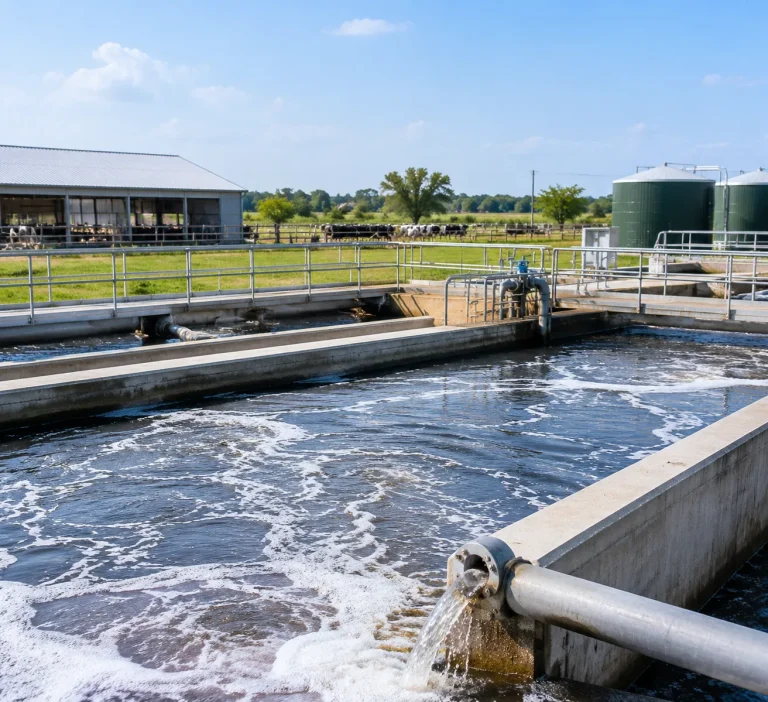
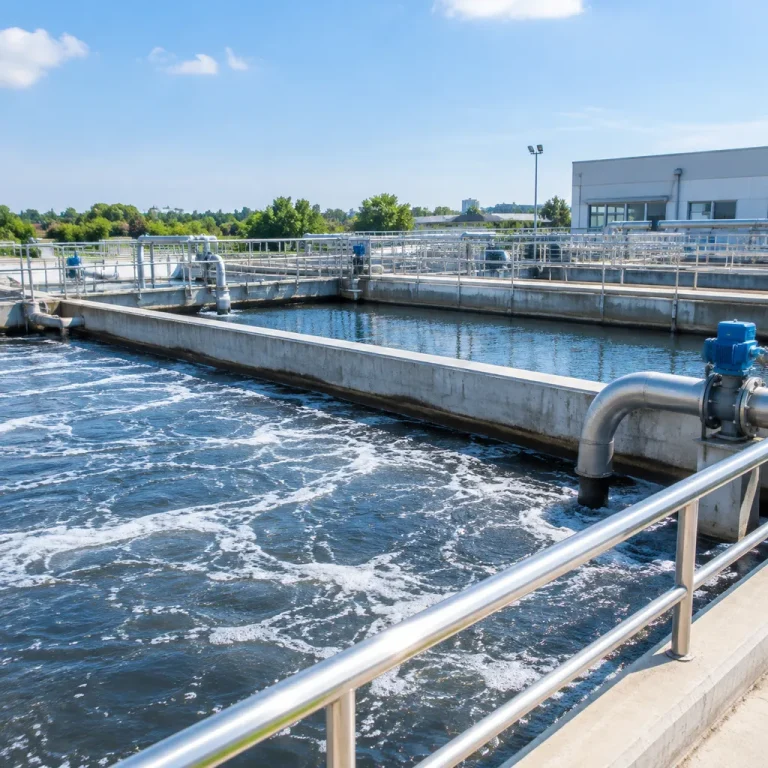
Environmental protection equipment supplier

Wastewater Plant Odor Control Equipment and Processes
Understanding Odor Generation in Wastewater Treatment Plants
Effective odor mitigation is vital for daily municipal and industrial operations. In modern wastewater facilities, noxious odors are primarily byproducts of anaerobic biological decomposition, where bacteria break down organic matter in oxygen-depleted environments. Implementing the right odor control equipment and processes in wastewater treatment plants prevents severe air quality issues, protects workers from toxic gas exposure, and mitigates corrosion across surrounding assets.
Common Odorous Compounds and Gases
Wastewater vapor phases carry complex mixtures of inorganic gases and volatile organic compounds. Identifying these compounds is the first step in sizing vapor-phase and liquid-phase treatment systems:
- Hydrogen Sulfide (H2S): The most prevalent compound, characterized by a distinct rotten-egg smell. It is highly toxic, causes rapid olfactory fatigue, and transforms into corrosive sulfuric acid.
- Mercaptans (Thiols): Organic sulfur compounds—including methyl mercaptan—producing potent skunk-like smells with extremely low human detection thresholds.
- Ammonia (NH3) and Amines: Nitrogenous compounds with sharp, pungent smells generated during the deamination of nitrogen-rich organic waste.
- Volatile Organic Compounds (VOCs): Solvents, fatty acids, and hydrocarbons that contribute to both lingering odor profiles and regulated emissions.
- Organic Sulfides: Dimethyl sulfide and dimethyl disulfide, which resist standard neutral-pH scrubbing and require specialized oxidation or adsorption.
Key Sources and High-Risk Treatment Stages
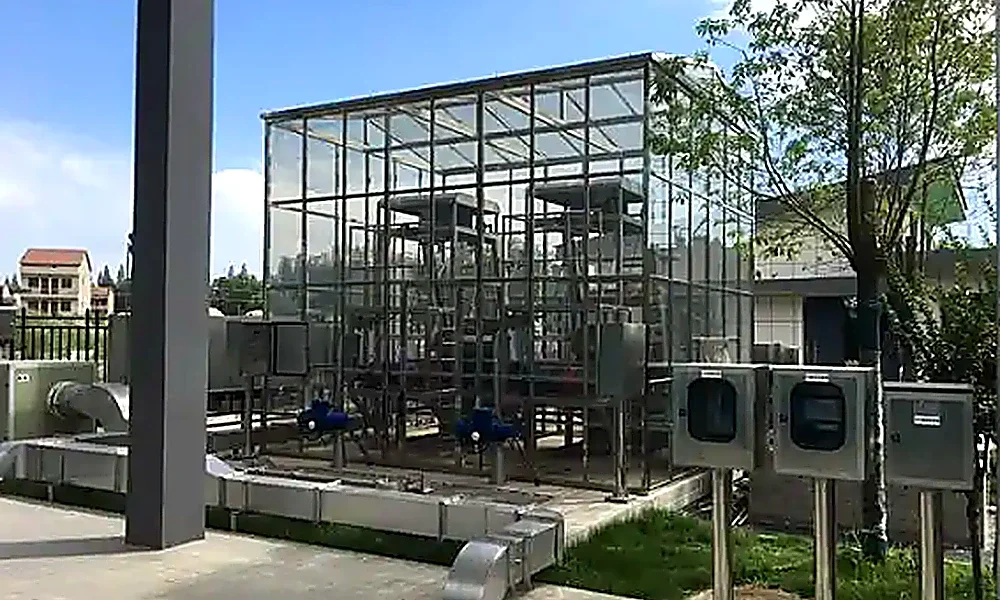
Emissions concentrate at process stages characterized by high turbulence, biological septicity, or exposed solids:
- Headworks and Preliminary Screening: Raw sewage discharge, bar screens, and grit chambers release sudden spikes of trapped H2S as influent encounters mechanical turbulence.
- Primary Clarifiers: Quiescent settling zones can quickly turn septic, releasing continuous odor plumes across large liquid surface areas.
- Sludge Thickening and Dewatering Units: Mechanical centrifuges, belt filter presses, and gravity thickeners shear volatile solids, generating concentrated odor streams.
- Biosolids Storage and Loading Areas: Stockpiles of treated cake and holding basins continuously off-gas ammonia and sulfur compounds prior to transport.
Environmental Standards and Regulatory Compliance
Regulatory authorities enforce strict compliance criteria regarding wastewater plant emissions, focusing on worker health, environmental permits, and nuisance mitigation:
- Occupational Exposure Thresholds: Strict limits govern permissible concentrations of H2S and NH3 to prevent acute health hazards in enclosed screening and dewatering galleries.
- Fence-Line Emission Caps: Municipal environmental mandates require continuous boundary monitoring to ensure odor units (OU) and target gas levels remain below nuisance standards for neighboring communities.
- Asset Preservation Directives: Capturing acidic vapors is essential to prevent microbially induced corrosion (MIC) on concrete structures, ventilation equipment, and electrical controls.
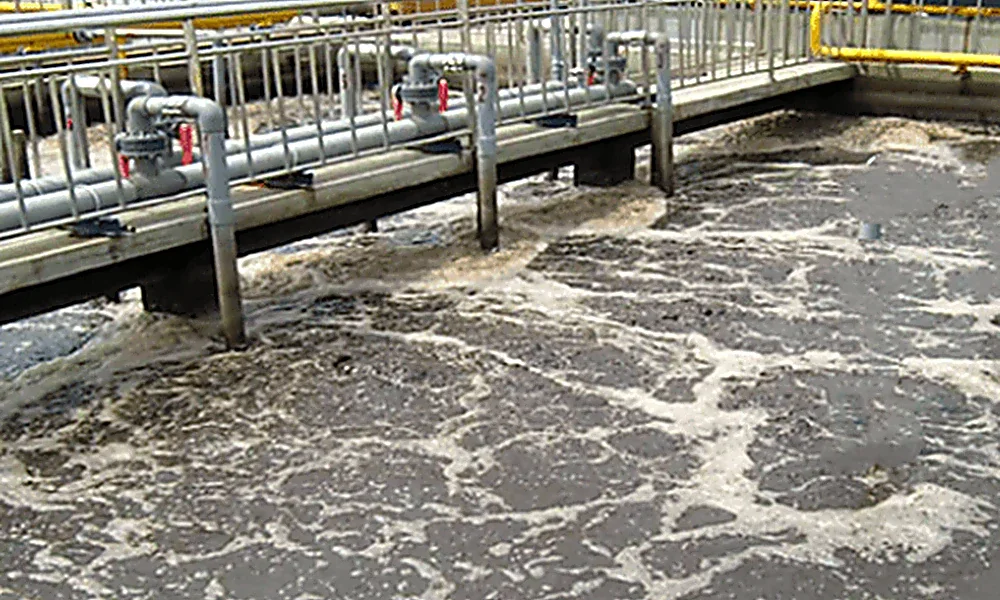
Core Odor Control Processes and Technologies
We rely on three primary treatment pathways to handle nuisance compounds and volatile organic emissions across municipal and industrial facilities. Choosing the right odor control equipment and processes in wastewater treatment plants depends directly on inlet gas concentration, variability, airflow volume, and target removal efficiencies.
Biological Odor Treatment Systems
Biological treatment harnesses living microbial colonies fixed onto packed media to oxidize odor compounds into harmless byproducts like water, sulfate, and carbon dioxide. These systems provide exceptional long-term stability with minimal chemical consumption.
- Biotrickling Filters: Synthetic media supports specialized biomass while a recirculating nutrient liquid washes the bed. They excel at high, continuous hydrogen sulfide (H2S) concentrations with minimal footprint.
- Engineered Biofilters: Exhaust gas passes upward through organic or structured inorganic media beds. These setups deliver steady, broad-spectrum removal of volatile organic compounds (VOCs) and complex organic sulfur mixtures.
- Operational Advantages: Low utility requirements, automated moisture control, zero hazardous chemical storage on site, and low life-cycle operating costs.
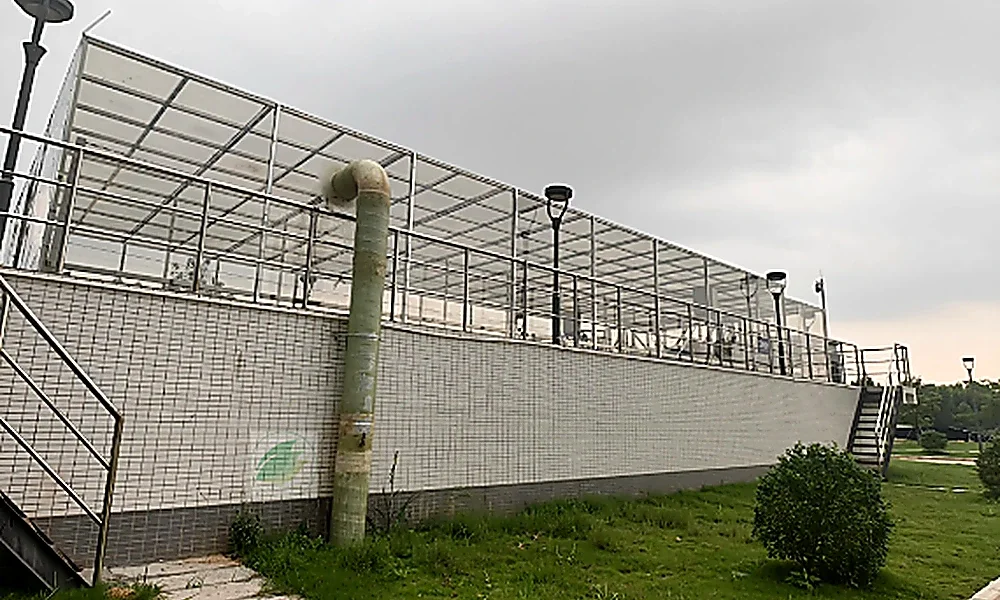
Chemical Neutralization and Wet Scrubbing
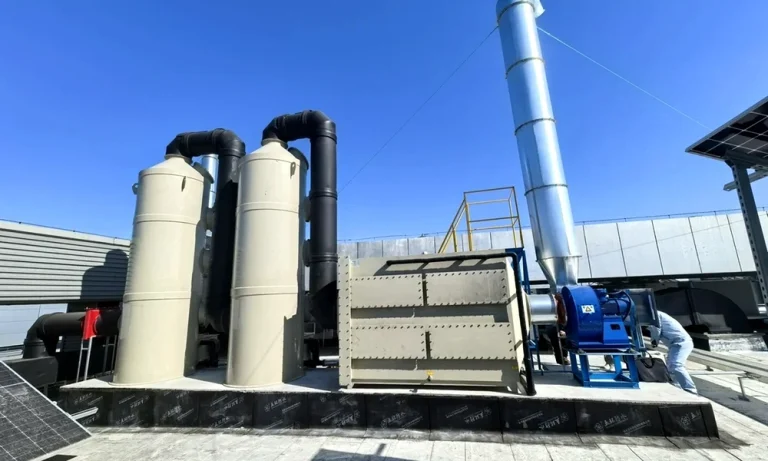
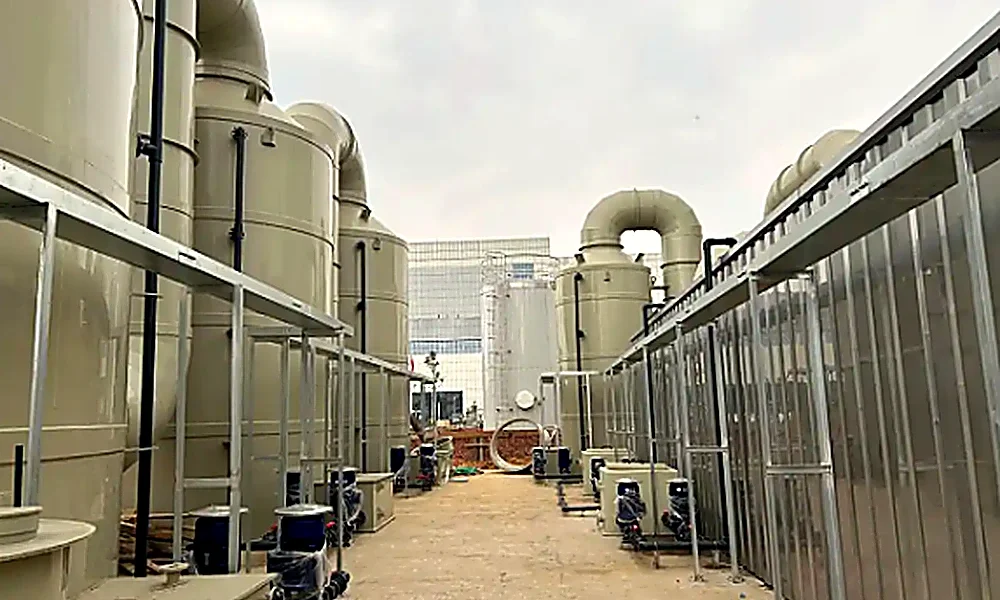
For fluctuating airstreams with extreme H2S peaks, chemical wet scrubbers provide immediate, reliable neutralization. Liquid reagents absorb and chemically transform gaseous pollutants inside multi-stage packed towers.
- Multi-Stage Chemistry: Acid scrubbing stages strip ammonia, while caustic soda (NaOH) and sodium hypochlorite (NaOCl) oxidation loops neutralize H2S and organic sulfides.
- Process Reliability: Automated oxidation-reduction potential (ORP) and pH instrumentation precisely match chemical feed rates to incoming contaminant spikes.
- Heavy-Duty Construction: Fabricated using premium fiberglass-reinforced plastic (FRP) and thermoplastic linings to withstand aggressive oxidation and acidic condensates. Similar to our heavy-duty odor control equipment deployed in demanding containment sectors, these scrubbers maintain continuous uptime under severe corrosive conditions.
Physical Adsorption and Carbon Filtration
Dry chemical adsorption captures malodorous molecules directly on porous media surfaces through physical and catalytic mechanisms. It functions exceptionally well as a standalone solution for lower airflow rates or as a final polishing stage downstream of bulk treatment units.
| Media Type | Target Pollutants | Typical Application |
|---|---|---|
| Virgin Activated Carbon | Non-polar VOCs, hydrocarbons, light mercaptans | Polishing stages, sludge press exhaust |
| Caustic-Impregnated Carbon | Hydrogen sulfide (H2S), acidic sulfur compounds | Primary headworks, lift stations |
| Catalytic Activated Carbon | High-load H2S conversion to elemental sulfur | High-concentration municipal vents |
We design these vessels with differential pressure tracking to monitor bed saturation, optimize contact time, and prevent premature breakthrough.
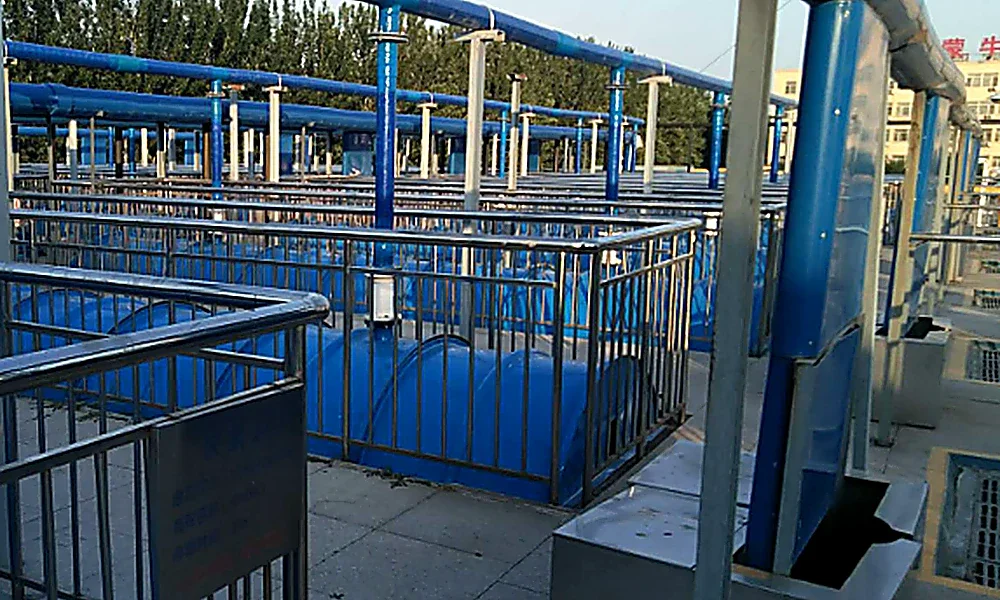
Essential Odor Control Equipment for Wastewater Facilities
Managing volatile emissions demands robust, industrial-grade odor control equipment and processes in wastewater treatment plants. We design and deploy high-performance systems engineered to target specific contaminant profiles, withstand continuous operating cycles, and handle aggressive vapor streams.
Chemical Wet Scrubbers
Chemical scrubbers offer high removal efficiency for variable airstreams carrying high concentrations of hydrogen sulfide ($H_2S$) and organic sulfur compounds.
- Packed-Tower Configurations: Counter-current vertical towers maximize gas-liquid contact by distributing scrubbing chemistry over high-surface-area packing media.
- Multi-Stage Chemistry: We utilize multi-stage chemical loops to treat complex gas mixtures:
- Acid Stage: Uses sulfuric acid to strip ammonia and amine compounds.
- Oxidizing/Caustic Stage: Uses sodium hypochlorite ($NaOCl$) and sodium hydroxide ($NaOH$) to destroy $H_2S$ and mercaptans.
- Automated Process Controls: Integrated oxidation-reduction potential (ORP) and pH instrumentation continuously adjust chemical dosing. Similar to scrubbing systems engineered to handle harsh acidic vapors in industrial wastewater treatment, these units provide stable gas neutralization under fluctuating inlet loads.
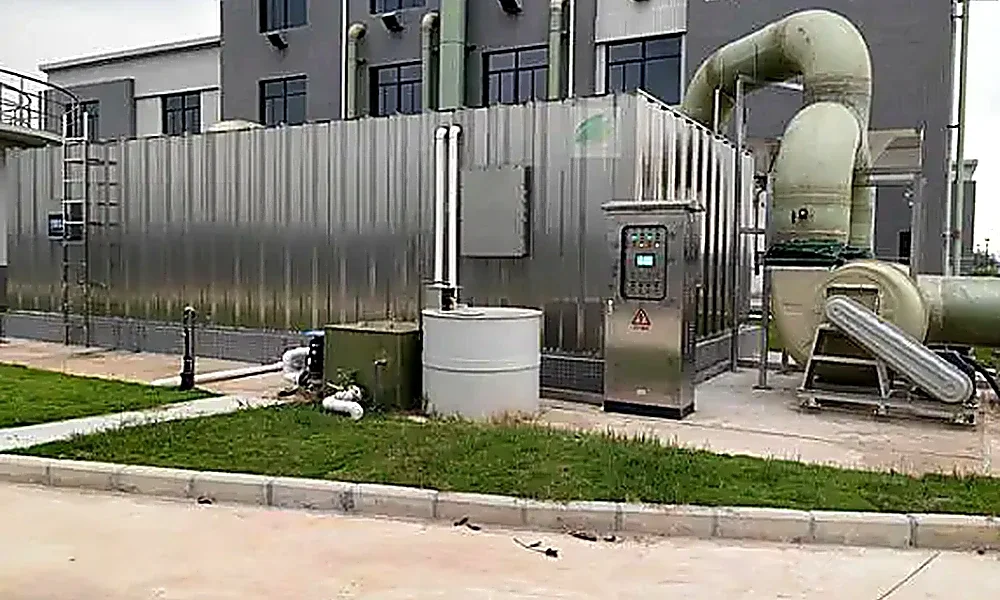
Biofilters and Biotrickling Scrubbers
Biological deodorization systems harness naturally occurring microorganisms to oxidize odorous vapors into harmless byproducts without hazardous chemical storage.
- Biotrickling Scrubbers: These systems use structured synthetic media with continuous liquid recirculation. They excel at high-concentration $H_2S$ breakdown, producing acidic blowdown while operating with minimal pressure drops.
- Engineered Biofilters: Ideal for treating large volumes of low-to-moderate odor airstreams. Using engineered inorganic or organic media beds, they provide consistent VOC and sulfur reduction with low utility demands.
| Feature | Biotrickling Scrubbers | Conventional Biofilters |
|---|---|---|
| Media Type | Synthetic / structured (non-degrading) | Organic or engineered inorganic matrix |
| Inlet $H_2S$ Tolerance | High (>100 ppm) | Moderate (<25 ppm) |
| Footprint Requirement | Small / Vertical | Medium to Large / Horizontal |
| Chemical Requirement | None (Nutrient feed only) | None |
Activated Carbon and Dry Media Systems
Dry media adsorption provides dependable final polishing, capturing residual odors down to undetectable levels.
- Virgin Activated Carbon: Captures broad-spectrum volatile organic compounds (VOCs) through physical adsorption across its deep microporous matrix.
- Catalytic and Impregnated Media: Chemically modified carbon variants promote catalytic oxidation, converting $H_2S$ into elemental sulfur or water-soluble sulfates with extended bed life.
- Dual-Bed Deep Vessels: We configure these vessels in lead-lag or single-pass arrangements with integrated sample ports to detect breakthrough long before emissions reach exhaust stacks.
Corrosion-Resistant Ventilation Fans and Ductwork
A reliable deodorization system depends on moving corrosive air safely from collection points into treatment trains.
- Heavy-Duty FRP Construction: Fiber-reinforced polymer (FRP) and high-density polyethylene (HDPE) blowers and duct runs resist sulfuric acid condensation and chemical attack.
- Negative-Pressure Capture: Centrifugal exhaust fans maintain precise draft velocity across tanks, screen channels, and headworks covers to prevent fugitive air leaks.
- Dynamic Balancing and Dampers: Automated balancing dampers and variable frequency drives (VFDs) regulate airflow across process fluctuations while minimizing energy consumption.
Application Areas Across Wastewater Treatment Operations
Deploying odor control equipment and processes in wastewater treatment plants requires a targeted approach. Odor concentrations and gas profiles vary wildly from the point raw sewage enters the facility to the point treated effluent leaves. We focus capture and treatment efforts directly on high-turbulence and biologically active zones to stop fugitive emissions before they migrate offsite.
Headworks and Preliminary Screening
The collection network discharges raw, septic influent straight into the headworks, making this area the highest-risk zone for immediate gas release. Wastewater turbulence at bar screens, grit chambers, and discharge drop structures violently strips dissolved hydrogen sulfide and volatile organic compounds (VOCs) out of the liquid stream.
- Target Gases: Heavy concentrations of hydrogen sulfide (H2S), methyl mercaptan, and coarse organic odors.
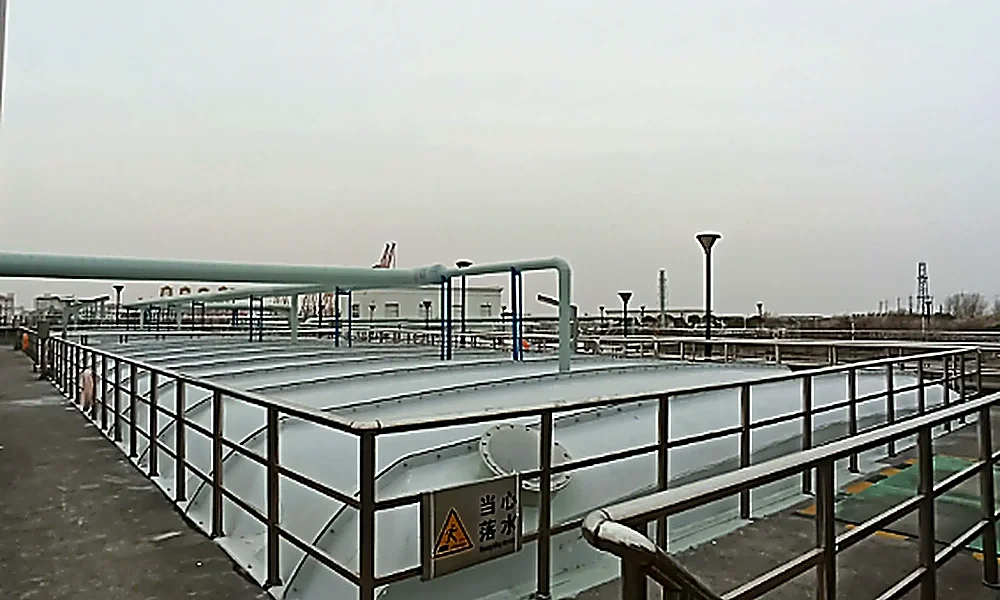
- Containment Strategy: Tight-fitting fiberglass reinforced plastic (FRP) covers and localized negative-pressure ducting to prevent vapor escape into open operating bays.
- Primary Technologies: High-capacity biotrickling filters or multi-stage chemical scrubbers built for continuous vapor phase treatment of intense, fluctuating peak loads. Integrating these capture hoods is standard practice in our comprehensive wastewater treatment configurations.
Primary Clarification and Aeration Basins
Primary settling tanks hold stagnant, un-aerated solids that quickly generate septic conditions. Odors typically escape along the perimeter weirs where falling water creates turbulence. During secondary biological processes, aeration basins can strip residual gases into the air if influent retains anaerobic characteristics.
- Target Gases: Moderate H2S levels, organic sulfides, and localized volatile fatty acids.
- Containment Strategy: Low-profile flat covers or structural domes over clarifier launders and effluent channels to minimize total exhaust air volumes.
- Primary Technologies: Centralized biofilters and bulk-bed activated carbon units. For oily waste streams or specialized clarification units utilizing a dissolved air flotation machine, dedicated point-source vapor extraction ensures skimmer operations remain completely sealed and odorless.
Sludge Thickening, Dewatering, and Storage
Sludge handling generates the most pungent, chemically complex emissions in any facility. Breaking down, conditioning, and pressing wet sludge releases trapped gases in concentrated volumes. Reliable biosolids management depends entirely on continuous ventilation and high-efficiency odor destruction in these enclosed spaces.
- Target Gases: Ammonia, dimethyl sulfide, dimethyl disulfide, and extreme spikes of hydrogen sulfide during mechanical shearing.
- Containment Strategy: Direct hooding on belt filter presses, centrifuges, and gravity belt thickeners, combined with high room-air turnover rates in cake storage rooms.
- Primary Technologies: Multi-chemistry wet scrubbers utilizing acid and oxidant stages, often followed by deep-bed impregnated carbon polishers to eliminate lingering organic nitrogen compounds.
How to Select the Right Odor Control Solution
Choosing the right setup is never a one-size-fits-all decision. When we configure odor control equipment and processes in wastewater treatment plants, we base every recommendation on three core variables: what is in the air, what it costs to run long term, and how much physical space your facility can spare.
Airflow Volume and Contaminant Load Requirements
The primary step in sizing wastewater treatment plant deodorization systems involves profiling your airstream. We analyze total airflow volume—measured in cubic meters per hour or CFM—alongside peak concentrations of hydrogen sulfide, organic sulfides, and ammonia.
- Low airflow, intermittent loads: Passive or active activated carbon adsorption systems excel here, capturing trace pollutants without demanding continuous water or chemical feeds.
- High airflow, low-to-moderate continuous loads: Biofilters and biological scrubbers handle steady volumes efficiently using micro-organisms on moist media.
- High airflow, extreme continuous or spiking loads: Multi-stage chemical scrubbers deliver instant hydrogen sulfide control during massive loading events. For facilities handling sharp pollutant surges, an integrated spoiler spray deodorization system maximizes gas-liquid contact time to knock down odors quickly.
| Technology Type | Target Airflow Range | Peak H₂S Tolerance | Best Applied For |
|---|---|---|---|
| Biofilters | Moderate to High | Up to 100 ppm | Continuous headworks & clarifier emissions |
| Wet Scrubbers | High to Very High | 500+ ppm | Severe sludge processing & septage receiving |
| Activated Carbon | Low to Moderate | Under 30 ppm | Polishing stages, tank venting, dry rooms |
Capital Investment vs. Operational Maintenance Costs
Balancing upfront capital expenditure (CAPEX) with daily operational expenditure (OPEX) determines the true lifecycle cost of your deodorization equipment.
- Chemical Wet Scrubbers: Feature moderate equipment capital costs, but carry ongoing operational costs for chemical consumables (such as caustic soda and sodium hypochlorite), steady pump electricity, and blowdown disposal.
- Biological Deodorization Systems: Demand a higher initial capital investment for vessels and specialized media beds, but yield exceptionally low long-term operational costs since they rely on water, nutrients, and biological action rather than bulk chemicals.
- Physical Deodorization (Dry Media): Delivers the lowest initial equipment cost, but media changeouts quickly drive up lifetime expenses if deployed against unscrubbed, high-concentration streams. We typically recommend them as secondary polishing polishers.
Footprint and Site Space Constraints
Facility layout frequently limits your equipment choices, especially in retrofitted or urban municipal plants:
- Vertical Configurations: Packed-bed towers and biotrickling filters utilize vertical height instead of floor area, making them ideal when plot space around headworks or solids dewatering is restricted.
- Horizontal Footprints: Traditional organic-media biofiltration systems require substantial horizontal footprints to maintain appropriate surface loading rates and air retention times. If horizontal yard space is unavailable, modular containerized units or high-rate synthetic biological vessels offer viable compact alternatives.
- Structural Loading: Rooftop and elevated installations necessitate lightweight, corrosion-resistant materials such as reinforced fiberglass (FRP) to limit structural load while resisting acidic condensation.
Best Practices for Equipment Maintenance and Monitoring
Keeping odor control equipment and processes in wastewater treatment plants running smoothly requires strict daily oversight. We design our maintenance protocols to stop gas leaks, cut operating costs, and extend system lifespans.
Real-Time Gas Detection and System Monitoring
We rely on continuous tracking to verify that our deodorization equipment handles fluctuating gas loads without failure.
- Continuous H2S Sensors: Track hydrogen sulfide control performance at both the inlet and outlet.
- Differential Pressure Gauges: Monitor pressure drops across biofilters and carbon beds to spot media compaction or clogging early.
- Airflow Verification: Ensure negative-pressure ventilation systems maintain the right air-exchange rates across all covered tanks.
Filter Media Replacement and Chemical Dosing Management
Media life cycle management and exact chemical feeds keep removal efficiency high during peak loads. Whether you operate a spray deodorization system or a dry adsorption unit, proactive upkeep prevents odor breakthrough.
| System Component | Key Maintenance Action | Operational Goal |
|---|---|---|
| Activated Carbon Adsorption | Track bed delta-P and test for media saturation | Schedule timely replacement of virgin or caustic-impregnated carbon |
| Chemical Scrubbers | Calibrate pH and ORP auto-dosing loops | Optimize sodium hypochlorite, caustic soda, and sulfuric acid usage |
| Biofiltration Systems | Check irrigation nozzles and moisture retention | Keep organic and synthetic media beds active for biological deodorization |
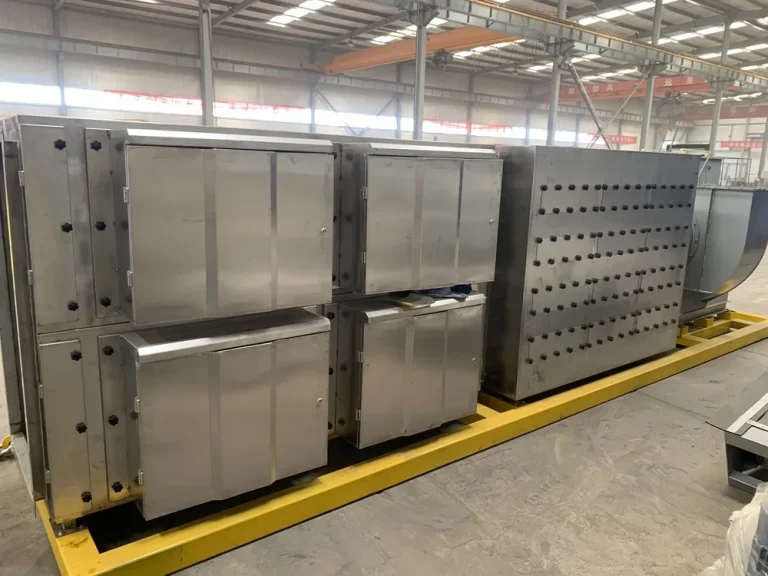
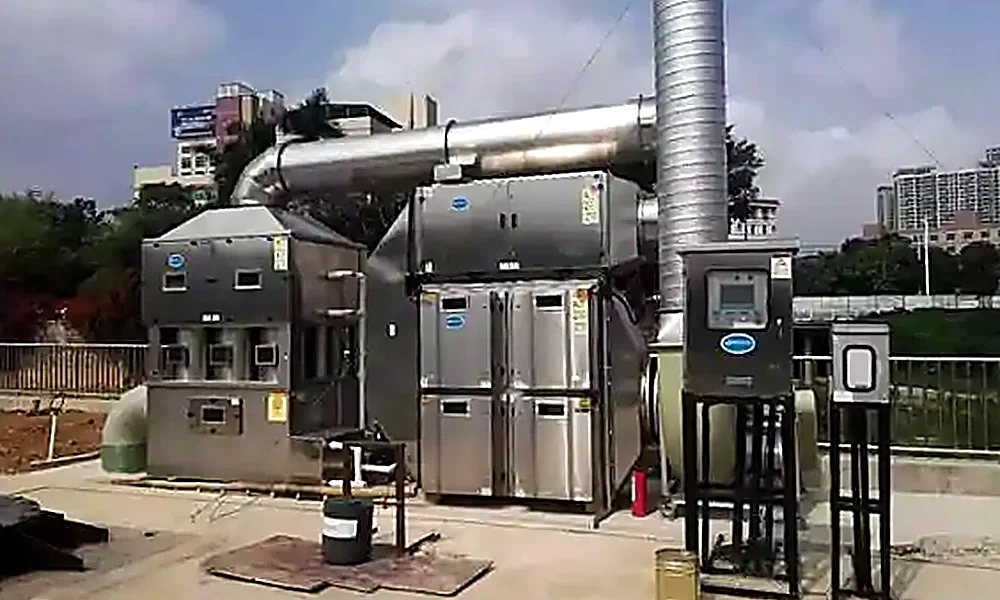
| Hybrid Polishing Units | Inspect lamps and power supplies | Maintain peak output in low-temperature plasma waste gas systems |
Preventative Maintenance to Prevent Structural Corrosion
Wastewater gases like hydrogen sulfide and ammonia aggressively eat away at standard plant infrastructure. We build and maintain our systems using heavy-duty, corrosion-resistant materials to protect your investment.
- Material Inspections: Regularly check FRP (Fiberglass Reinforced Plastic) ductwork, 316L stainless steel hardware, and HDPE piping for chemical wear.
- Containment Integrity: Inspect structural FRP covers, aluminum domes, and membrane seals to stop fugitive emissions from escaping.
- Wet Scrubber Flushing: Descale packed towers, circulation pumps, and mist eliminators to prevent salt buildup and structural degradation.