Environmental protection equipment supplier

Animal Room Exhaust Treatment: How Multi-Stage Systems Handle Dust and Odor
Animal room exhaust treatment works best as a train of stages, not as one device. Particulates come out first. Soluble gases follow, then biological degradation, and a polishing stage last. Two documented projects show what that looks like in practice, with measured numbers attached. This guide walks through the stages and the equipment behind each one. It then draws the design lessons from both cases.
What Is Actually in the Stream
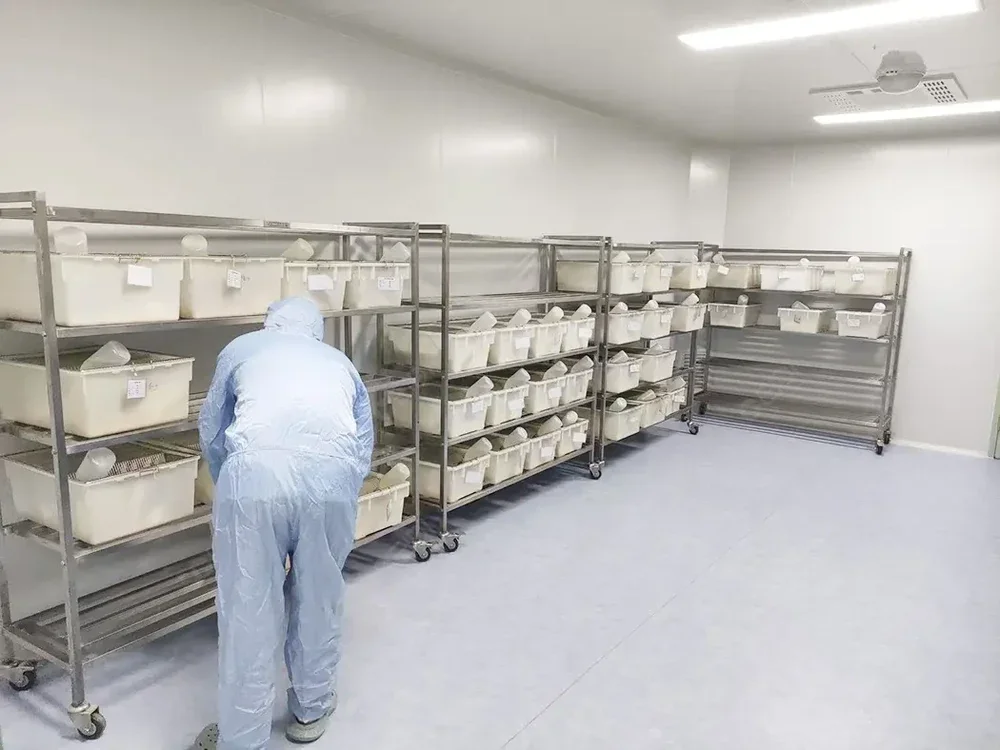
The exhaust from a laboratory animal room carries more than smell. Ammonia leads the list, and it comes from urine decomposition, with concentration tracking cage density and cleaning frequency. Sulfur compounds follow, mainly hydrogen sulfide and mercaptans from feces breakdown, and they carry the sharpest odor per unit concentration. Volatile organic compounds make up the third group, including aldehydes, ketones and aromatics from bedding, feed and animal metabolism. Carbon dioxide comes from respiration and doubles as a ventilation efficiency indicator. Disinfectant residues such as formaldehyde and peracetic acid add a small chemical load. The air also carries hair, dander and other particulates.
Three properties make this stream awkward. Concentrations stay low, yet odor remains obvious, because many of these compounds are detectable at parts-per-billion levels. The composition is mixed, so no single mechanism catches everything. And pathogenic microorganisms can ride along, which matters for anything downstream that recirculates or biosolids that workers touch. Under high-density housing, the load rises sharply and so does the difficulty.
So an animal room exhaust treatment design has to answer four problems at once. Particles. Soluble gases. Organic odorants. And variability.
Why Single-Stage Systems Keep Disappointing
A single device optimizes for one fraction of the stream and ignores the rest. A filter catches dander and misses ammonia. A carbon bed adsorbs organics and saturates quietly on humid, dusty air. A biofilter handles steady loads and stumbles on cage-change peaks. Each unit works, and the combination still fails, because the fractions are treated by the wrong stage.
That is why modern animal room exhaust treatment chains the stages instead. Each stage removes what it is good at, and the next one inherits a smaller, cleaner problem.
The Four Stages of a Working Train
Stage 1: Particulate pre-treatment
Prefilters come first, usually bag or panel filters in the G4 to F8 range. They intercept hair, dander and dust before anything else sees the air. This stage protects the equipment behind it. Dust blinds bio-media, and it loads carbon beds with solids that waste their surface. Particulate capture also matters on its own, since animal-derived aerosols are a workplace health issue.
Stage 2: Chemical scrubbing
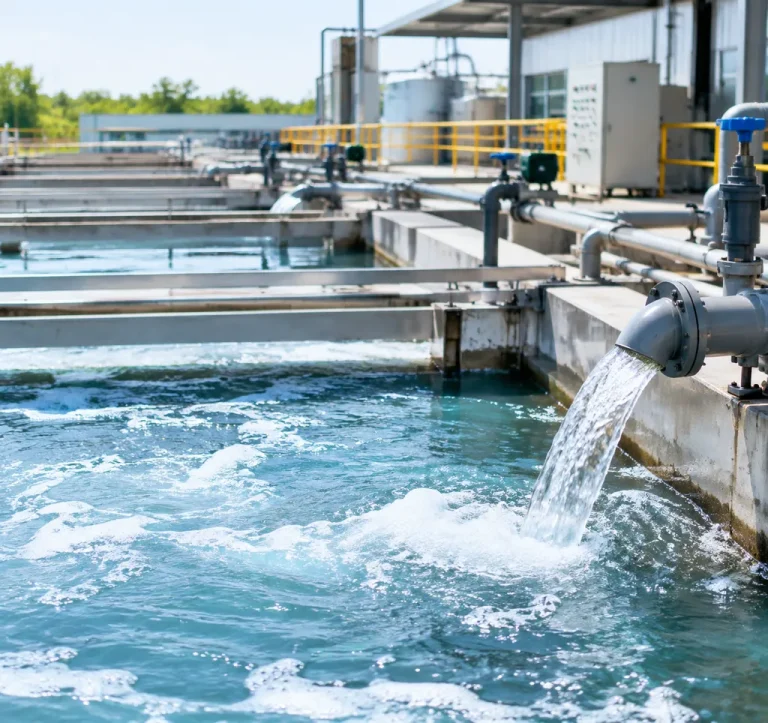
A wet scrubber takes the soluble fraction next. Acid scrubbing then converts ammonia to a salt, and the salt leaves in the drain. The tower also cools and humidifies the stream, which prepares it for the biological stage behind it. Our wet scrubber tower page covers the packing and reagent options for this duty.
Stage 3: Biological degradation
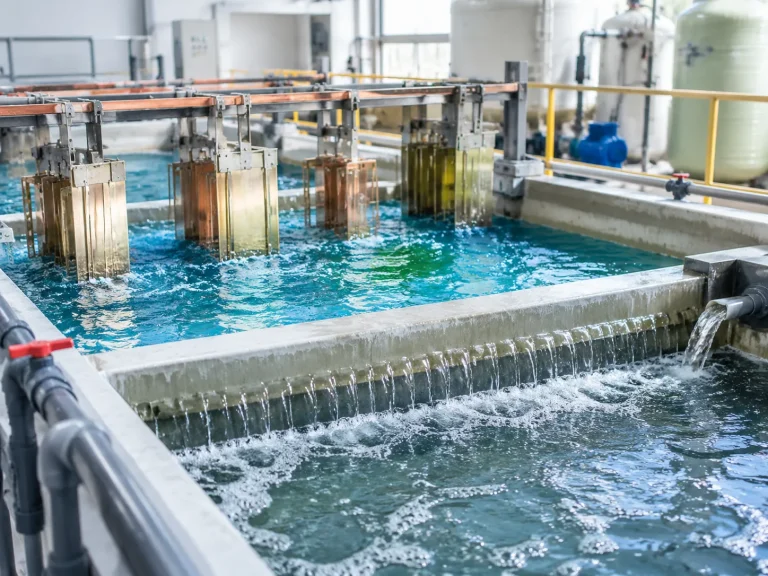
Biofilters and biotrickling filters then degrade what remains. Microbes on the media consume ammonia, hydrogen sulfide and many organics. They do it cheaply, with no chemicals consumed and no secondary pollution. Biofilters use organic packing and suit steady loads. Biotrickling filters spray a recirculating liquid over plastic packing, which gives better process control and a smaller footprint. Both need start-up time while the community adapts, so they reward steady operation.
Stage 4: Polishing
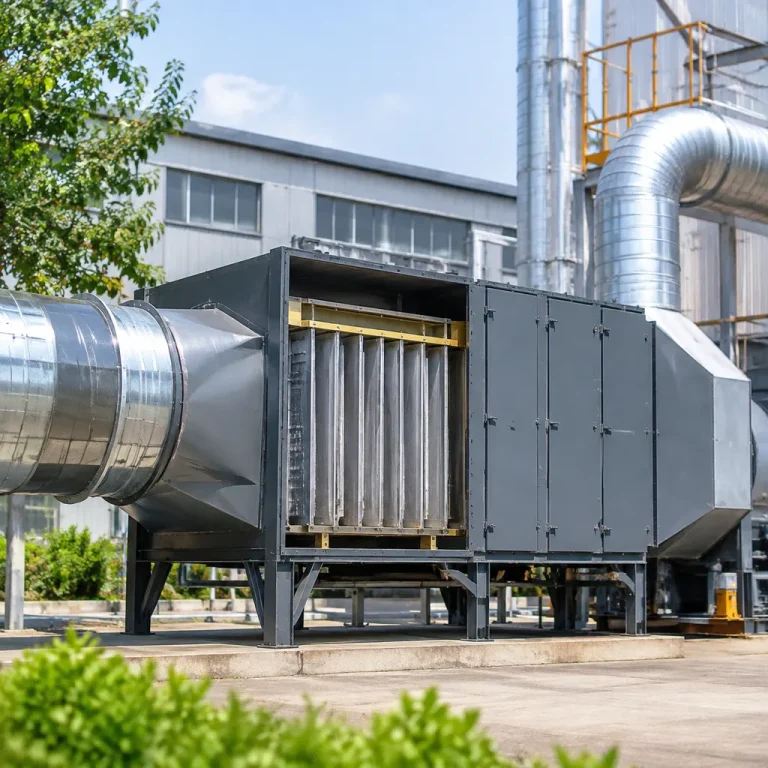
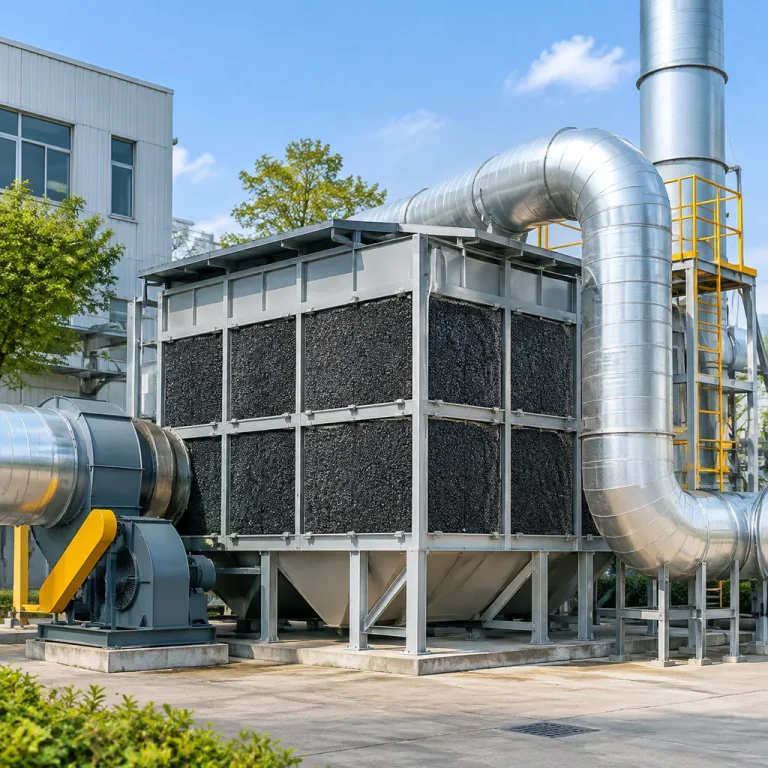
The last stage is insurance. Activated carbon adsorbs residual odorants and handles concentration spikes that pass through the biological stage. Photocatalytic oxidation offers a second route at ambient conditions, breaking down trace organics that survive everything upstream. Our activated carbon adsorption unit supports staged beds, so saturation shows up in pressure drop before it shows up in complaints.
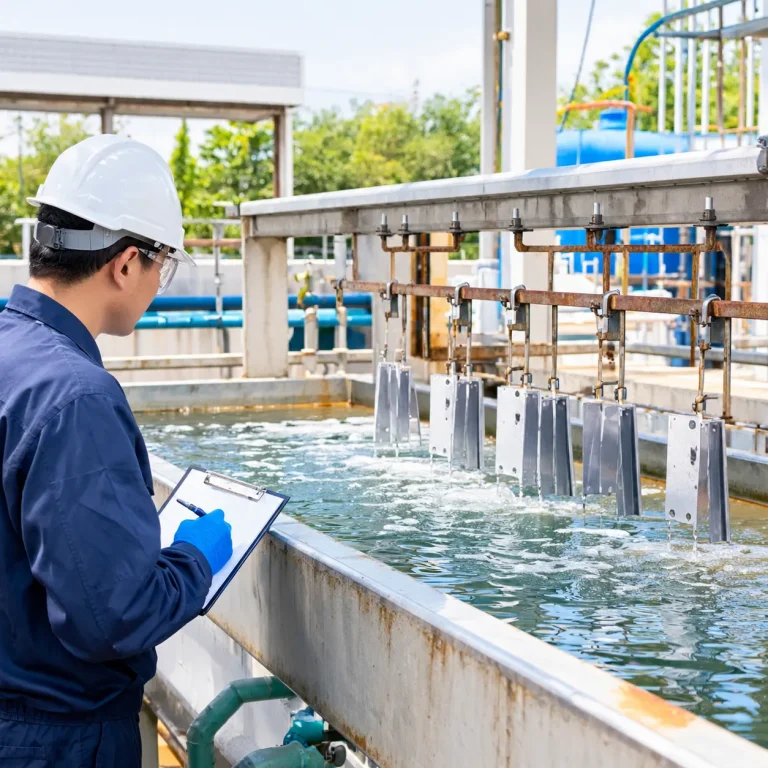
Around the train sits a control layer. Sensors watch inlet and outlet concentrations. The system then adjusts scrubber dosage, irrigation and lamp intensity to match the actual load. That avoids over-treating clean air, which is where a lot of running cost hides. We describe the whole architecture in more depth in our complete guide to laboratory animal room waste gas treatment.
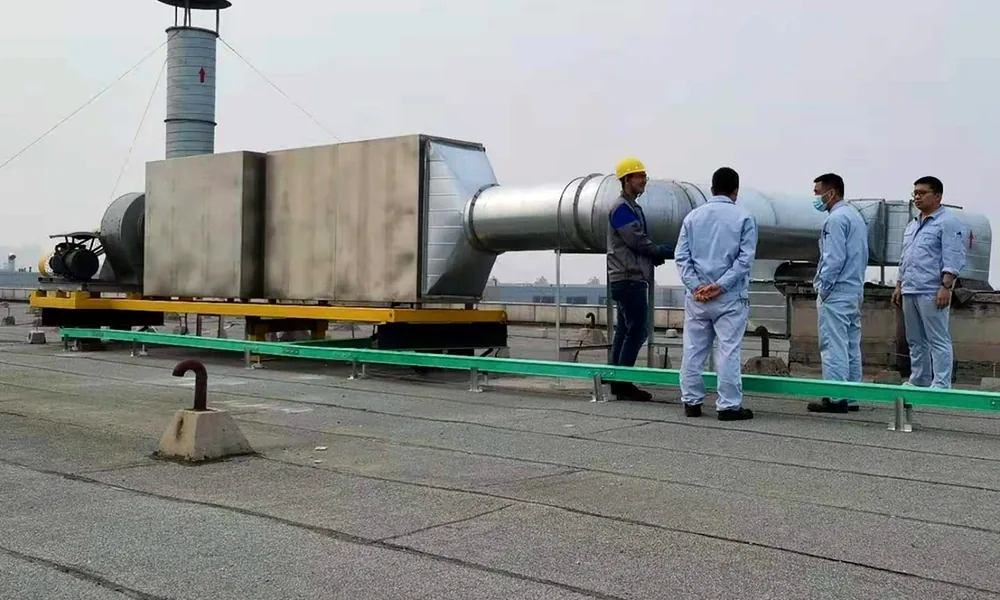
Choosing Equipment for Your Animal Room Exhaust Treatment Train
Match the unit to the duty rather than to the brochure.
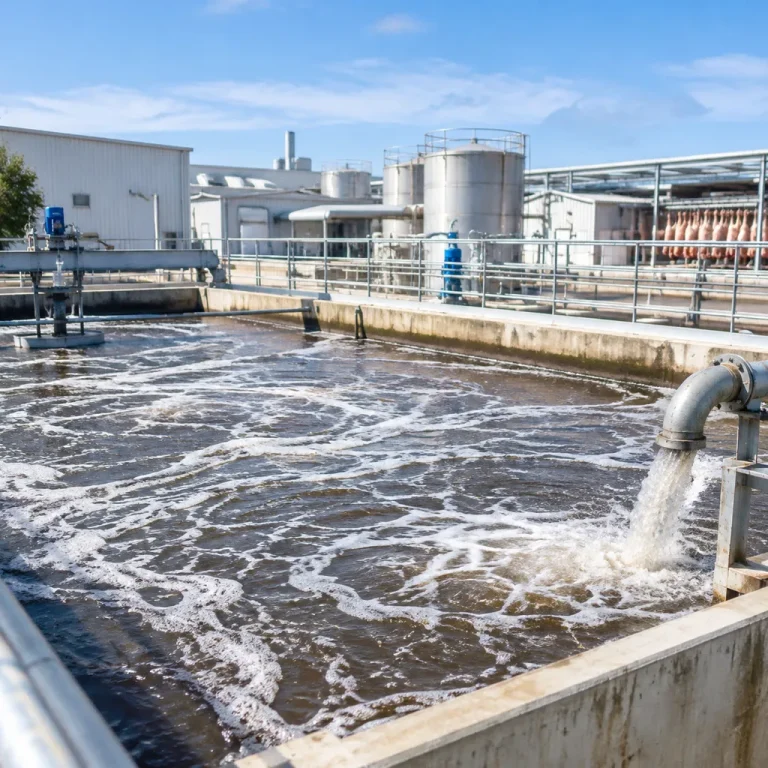
Biofiltration suits steady, moderate loads. Running cost is the lowest of any option. On a stable stream, removal above 90 percent is realistic for ammonia and hydrogen sulfide.
Activated carbon suits polishing and spikes. It earns its place as a final barrier rather than a primary stage. On animal room duty, saturation arrives within months, so replacement becomes a real cost.
RCO regenerative catalytic oxidation rarely belongs here. It excels at high-concentration industrial streams. Animal room exhaust is neither high-concentration nor steady enough to justify the capital, so consider it only for mixed facilities with genuine process VOC loads.
UV photolysis suits small flows and low concentrations. Footprint is small, and start-up is immediate. It also pairs well with the biological stage for trace organics. Note the SPF constraint below before specifying it, though.
Corrosion resistance is a spec, not an option. The stream attacks mild steel. Stainless housings, FRP shells and coated internals extend service life substantially. They should appear in the quotation rather than in the upgrade order.
Case 1: A Research Institute Animal Center
A national biomedical research institute operated an animal center of roughly 5,000 square metres. It housed rats, mice, rabbits and guinea pigs, with peak stock above 10,000 animals. Complaints from nearby residents were rising. Summer low-pressure days then stretched the odor plume further than anyone liked.
Measured inlet values explained the complaints. Ammonia ran at 15 to 25 mg/m³, hydrogen sulfide at 3 to 8 mg/m³, and total VOCs at 30 to 50 mg/m³. Animal-derived particulates rode in the stream as well. Total airflow was about 30,000 m³/h, and the concentration swings defeated any single-stage approach.
The design chained three stages. A chemical scrubber took the bulk of the ammonia and hydrogen sulfide first, and it cooled and humidified the stream at the same time. A biofilter with mixed organic-inorganic media followed, seeded for animal facility duty. An activated carbon bed then closed the train as the safety net for residuals.
Monitoring after six months of operation reported the outcomes. Ammonia removal ran above 95 percent, hydrogen sulfide above 98 percent, and VOC removal around 85 percent. Particulate at the outlet stayed below 1 mg/m³. Complaints then fell from five to eight per month to zero. Treat those as documented project results rather than a guaranteed template. Still, the pattern holds for high-flow animal room exhaust treatment duty. A staged train outperforms any single method, and the higher capital pays back in stability.
A comparable duty profile appears in our vaccine manufacturer animal lab deodorization project.
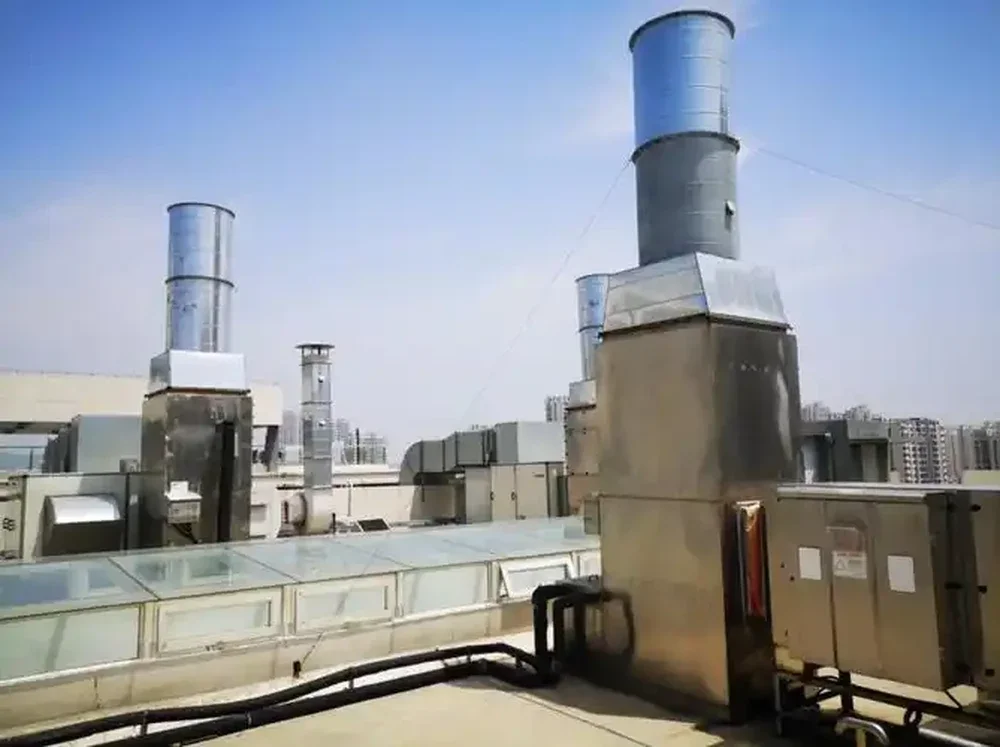
Case 2: A University SPF Laboratory
A university life-sciences faculty built a new SPF animal laboratory of about 1,200 square metres for transgenic mouse work. The building sits in the middle of campus, so discharge requirements were strict. The constraints were also tighter than the first case, in three specific ways.
First, the stream carried lower ammonia, 8 to 15 mg/m³, yet measurable traces of indole and skatole, which scrubbing barely touches. Second, the technology had to avoid ozone, because SPF animals tolerate very little of it. Third, noise had to stay low, since the equipment room sits above working space.
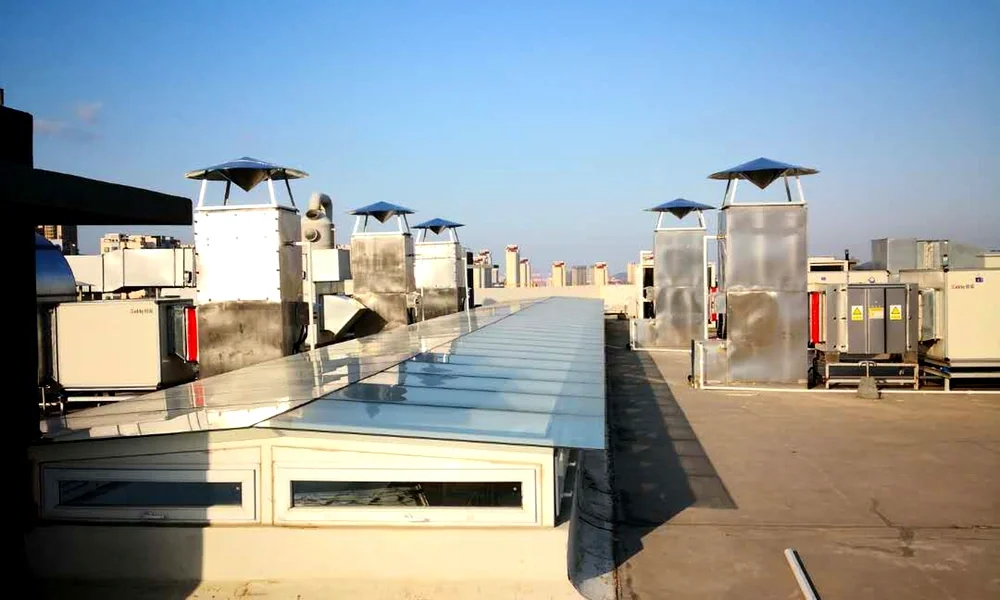
The solution combined three gentle stages. G4 bag filters handled particulates. A biotrickling tower with specialty plastic packing and a seeded recirculation liquor took the soluble load. A photocatalytic unit with a nano TiO2 coating and UV lamps then broke down the trace organics. It was chosen precisely because it avoids ozone generation. Design airflow was 8,000 m³/h, and the whole train sits in an acoustic-shelled rooftop plant room.
Reported results after commissioning were as follows. Ammonia read below 0.5 mg/m³ at the outlet, removal ran above 90 percent for the characteristic odorants, and noise stayed below 60 decibels. A PLC adjusts irrigation flow and UV intensity against measured concentration. Reported energy use came in about 30 percent below conventional operation. Our own university SPF animal laboratory deodorization project faced a similar brief and confirms the pattern.
What the Two Cases Teach
Four lessons from these projects transfer directly to any animal room exhaust treatment design.
Match each stage to a fraction. Scrubbing took ammonia, biology took sulfides, carbon took residuals. The cases worked because nothing asked one device to do everything.
The polishing stage is cheap insurance. In both projects, the last stage caught what the earlier ones missed. That stage is what kept complaints at zero.
Control systems pay for themselves. Both trains adjusted dosage to measured load. The university case attributed roughly 30 percent energy savings to that alone.
Constraints shape the chemistry. Campus location forced low noise. SPF status ruled out ozone. Every facility has a constraint like these, and the design should start from it rather than from the catalogue. That is the “one room, one policy” principle. It is also the difference between a system that passes commissioning and one that quietly disappoints.
Where Animal Room Exhaust Treatment Is Heading
Three directions are worth watching. Biological treatment keeps improving, as screened strains and better reactor designs push removal of specific pollutants higher. Nanomaterial catalysts are dropping the temperature needed for oxidation of stubborn organics. Compact integrated units are spreading through small and medium animal rooms, because they install fast and need little floor space. Resource recovery remains mostly research-stage, such as converting captured ammonia into fertilizer value. Source reduction combined with end-of-pipe treatment, however, is already practical today.
Frequently Asked Questions
What concentration of ammonia should I expect at the inlet?
Measure it rather than assume it. The two documented cases ranged from 8 to 25 mg/m³ depending on species, stocking density and cleaning schedule. Your own value drives scrubber sizing, so a two-week baseline matters more than any rule of thumb.
Why does a single carbon bed fail on animal room exhaust?
Carbon adsorbs organics well, but humid, dusty air blinds its surface and saturation arrives within months. It works as a final polishing stage behind filtration and scrubbing, not as the whole answer.
Can photocatalytic units be used in SPF facilities?
Yes, and they are often preferred there, because TiO2 photocatalysis avoids ozone generation. Conventional ozone-based oxidation is the technology to avoid around immunocompromised animals.
How much airflow should the treatment system be sized for?
Size on the measured exhaust of the rooms served, not on the building total. The documented cases ran 8,000 m³/h for a 1,200 square metre SPF lab and 30,000 m³/h for a 5,000 square metre multi-species center.
What noise level should the equipment meet?
Below 60 decibels at the nearest occupied space is a workable target, and the university case held it with an acoustic-shelled plant room. Anything higher risks animal stress and behavioural confounding.
How long before a biofilter reaches full performance?
Weeks, not days. The microbial community needs time to adapt to your specific gas mix. So plan a ramp-up period, and verify removal at the end of it rather than on day one.
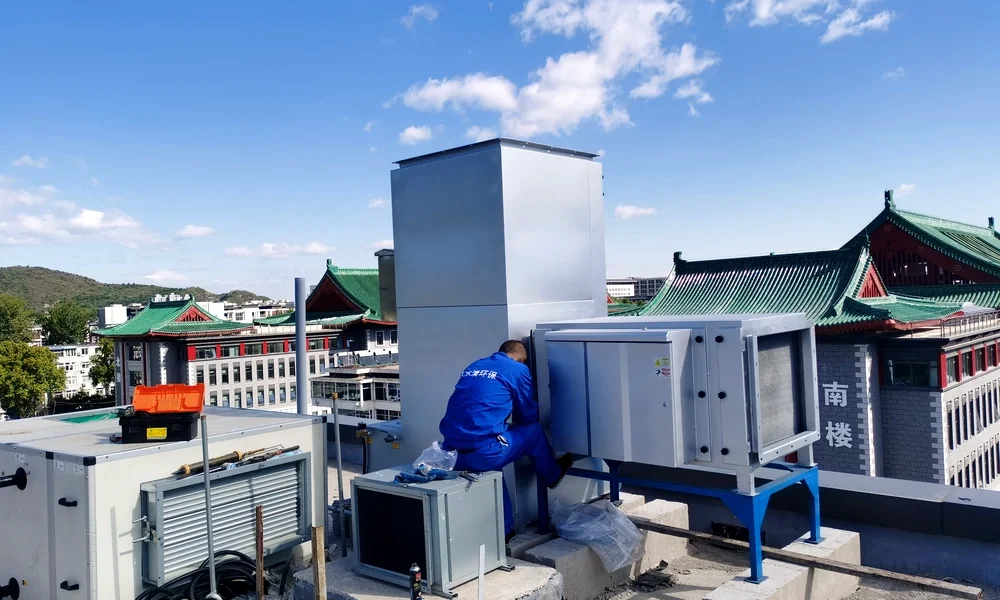
Get a Train Designed for Your Stream
Soto Machinery builds every stage of that train in Qingdao. The range covers wet scrubber towers, bio-media housings, activated carbon units and UV photolysis purifiers, all integrated under one control layer. Behind the factory sit more than 15 years of manufacturing and over 500 delivered projects. Installations also run across more than 40 countries, covering university SPF laboratories, vaccine plants and pharmaceutical animal rooms.
Send us your airflow, a gas analysis and your discharge limit. Our engineers will then propose a staged design, with removal targets and running cost attached before you commit.