Environmental protection equipment supplier

Air Change Rate for Animal Rooms: 15 vs 20 ACH Trade-offs
Choosing an air change rate for animal rooms comes down to a simple trade. More air changes dilute ammonia and heat, while the same air changes cost energy every hour of the day. Fifteen air changes per hour covers most standard rodent rooms. Twenty earns its cost when cage density is high, when heat load is significant, or when a room has to recover fast after cage change. Above twenty the return drops sharply, because dilution cannot keep up with generation.
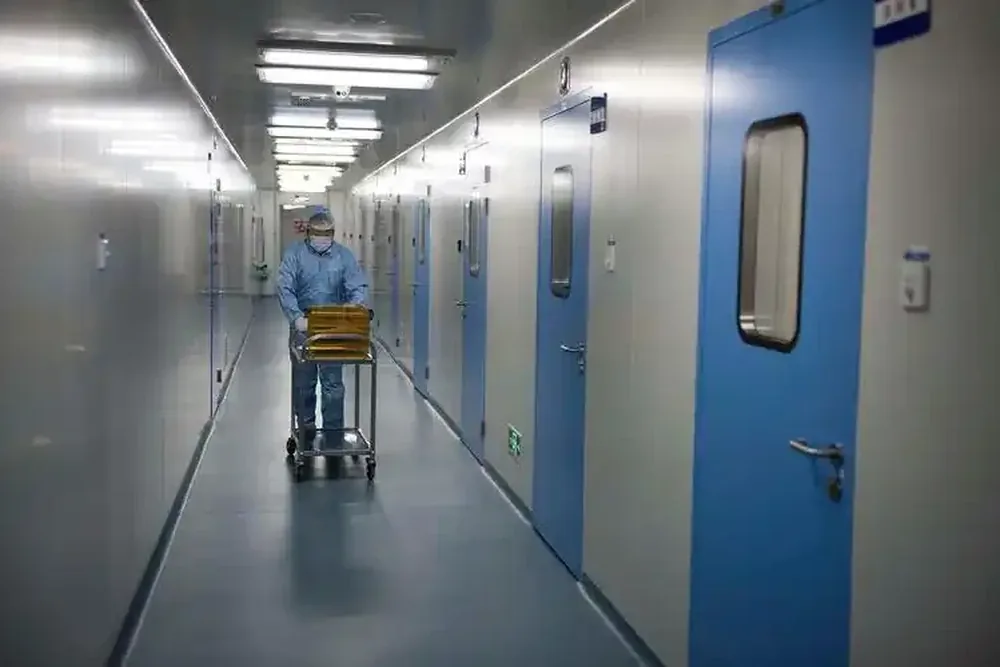
Most arguments about setpoints start in the wrong place. Teams compare 15 with 20 as if the number were a quality setting. It is really a sizing decision with a running cost attached, so the reasoning decides the number.
What an air change rate for animal rooms actually does
An air change rate is supply airflow divided by room volume. Nothing more. A 400 m² room with a 2.6 m ceiling holds 1,040 m³. At 15 air changes per hour that is 15,600 m³/h of supply air. At 20 it is 20,800 m³/h, so five extra changes move another 5,200 m³/h through the room.
ACH = airflow (m³/h) ÷ room volume (m³)
steady concentration ≈ generation ÷ (ACH × volume)
In practice mixing is imperfect, so doubling airflow cuts concentration by less than half.
That second line is the one that decides budgets. Because generation keeps running, the curve flattens as airflow rises. Moving from 15 to 20 air changes improves a well-mixed room by roughly a quarter, not a third. Rooms with dead zones improve less than the arithmetic suggests.
15 versus 20: what each one buys you
15 ACH
- Handles low to medium cage density without odour complaints
- Keeps heat removal adequate for standard LED-lit rooms
- Lower fan energy and smaller duct, filter and treatment footprint
- Recovery after cage change takes longer, so peak readings run higher
- Works best when rack-level exhaust carries the concentrated stream
20 ACH
- Faster recovery after cage change and during bedding swaps
- Headroom for high-density breeding or metabolic heat load
- More stable ammonia through the cycle, which matters for long intervals
- Larger ductwork, bigger filters, more conditioning energy
- Needs tighter commissioning, or the extra air short-circuits
Neither column is better on its own. The right air change rate for animal rooms depends on what the room has to absorb, so work through the constraints before picking a number. Our guide to laboratory animal room waste gas treatment shows how the setpoint interacts with the exhaust train downstream.
The four constraints that decide it
1. Energy, and it is mostly not the fan
Fans are the visible cost, yet conditioning dominates. For the room above, the extra 5,200 m³/h needs about 1.8 kW at the fan. Heating or cooling that same air across a 10 °C difference takes roughly 17 kW. Over a year the fan accounts for maybe a tenth of the bill.
2. Cooling load and humidity control
Animal rooms carry sensible heat from lighting, equipment and the animals themselves. Raising air changes adds cooling capacity, but it also dries the room, so humidification may be needed in winter. Both effects land on the plant, not on the room.
3. Duct, filter and treatment size
Every component scales with airflow. A 33 percent increase in air changes means 33 percent more duct area, filter media and carbon or scrubber capacity. Capital cost follows almost linearly, which is why 20 ACH late in a project is expensive.
4. The environment at cage level
More air changes can mean more draft and more noise, and both stress animals. IVC racks also need their supply balanced against room pressure, so a higher room setpoint without re-commissioning the racks can pull cage airflow out of specification.
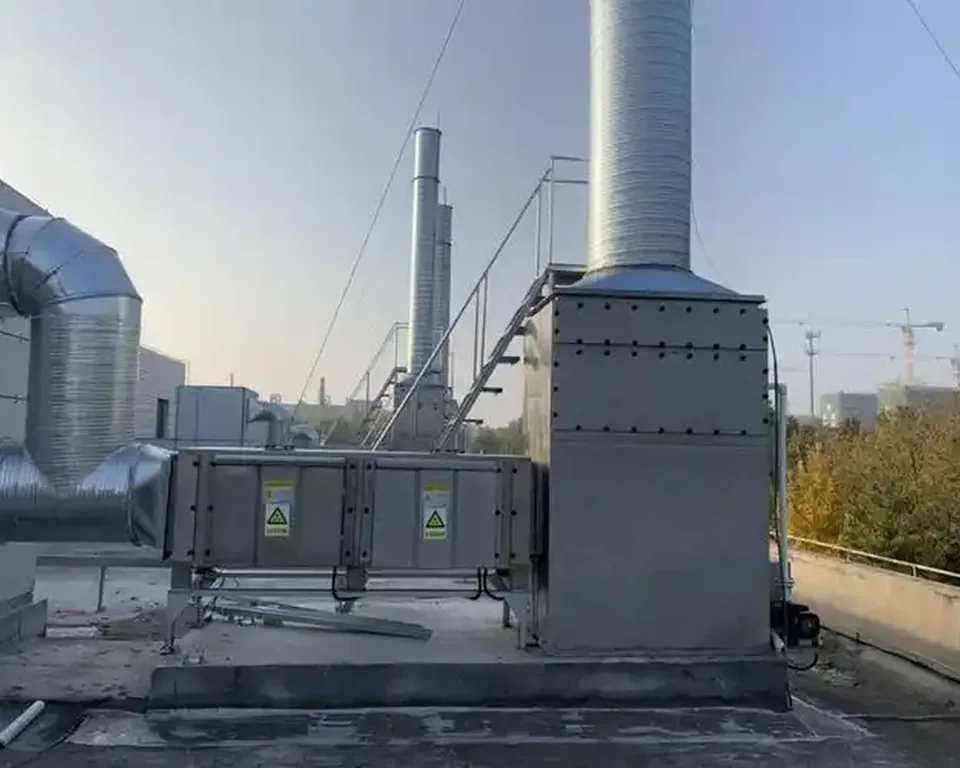
Air change rate for animal rooms by facility type
The ranges below reflect what we see in operating facilities. The last column shows the risk that appears when a room runs at the bottom of its range.
| Room type | Typical ACH | Why that range | Risk if set lower |
|---|---|---|---|
| Low density holding with IVC rack exhaust | 10 to 15 | Rack carries the concentrated load | Odour at cage face |
| Standard SPF rodent room | 15 to 20 | Balances ammonia, heat and energy | Peaks between changes |
| High density breeding | 18 to 25 | Ammonia and metabolic heat both high | Respiratory irritation |
| ABSL-2 with directional airflow | 20 to 25 | Containment and recovery take priority | Containment failure |
| Large animal and primate rooms | 12 to 15 | Heat load drives the number, not odour | Heat stress |
These are starting points rather than rules. European guidance commonly quotes 15 to 20 for rodent rooms, while other frameworks set performance targets instead of a fixed number. When a guideline and a heat load disagree, the heat load usually wins. The odour design then has to work within the airflow you can afford.
What five extra air changes cost per year
Numbers make the trade concrete. Take the 400 m² room again, running continuously, with a total system pressure of 800 Pa and a fan efficiency of 0.65. Note that the air change rate for animal rooms is an energy decision as much as an odour one.
| Item | 15 ACH | 20 ACH | Difference |
|---|---|---|---|
| Supply airflow | 15,600 m³/h | 20,800 m³/h | +5,200 m³/h |
| Fan shaft power | 5.3 kW | 7.1 kW | +1.8 kW |
| Fan energy per year | 46,700 kWh | 62,200 kWh | +15,500 kWh |
| Conditioning load at 10 °C | 52 kW | 70 kW | +17 kW |
| Energy cost at $0.12/kWh, fan only | about $5,600 | about $7,500 | +$1,900 |
So the honest framing is this. The fan difference is small enough to argue about over coffee. The conditioning difference is a plant-room decision. If a facility wants to cut energy, lowering air changes is one lever among several, and it only works when ammonia control is already solid. The odor control methods used in laboratory animal facilities cover the alternatives that do not touch airflow.
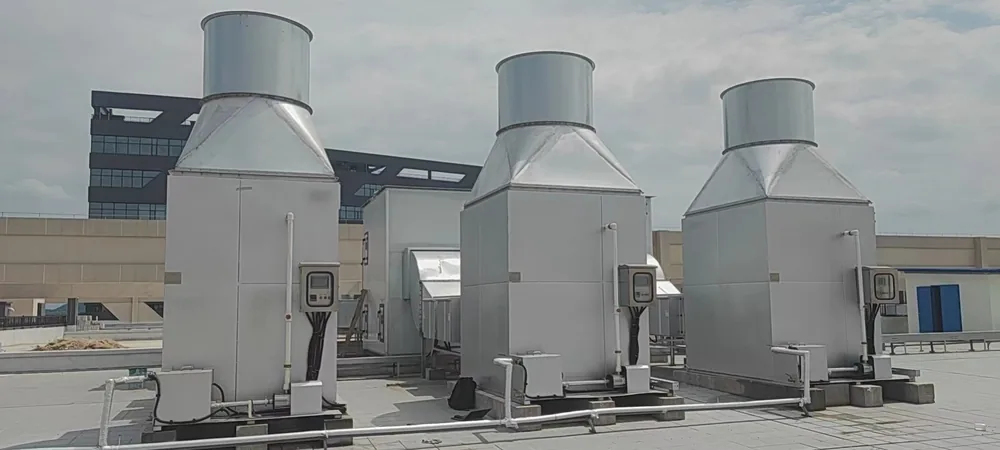
What the setpoint does to the exhaust train
Airflow and treatment sizing move together. Raise the air change rate and the carbon bed, the scrubber and the ductwork all grow, because each one is sized from volume rather than mass.
That has a practical consequence. A room designed at 15 changes can often run at 18 without touching the treatment stage, since most units carry 15 to 20 percent margin. Pushing the same equipment to 25 simply spreads the ammonia through a larger air volume and leaves the same mass to remove. Check the margin before promising a setpoint change, and check it against measured pressure drop rather than the datasheet.
The activated carbon adsorber and packed scrubber tower pages show the sizing basis we use. The laboratory animal industry page lists the configurations we build most often. The order matters, so settle the air change rate for animal rooms first and size treatment against it, not the reverse.
How to test 20 ACH before committing
A two-week trial costs far less than rebuilding ductwork. Run it in this order, and keep the cage schedule unchanged so the comparison holds.
- Baseline week at the current setpoint Log ammonia at three cages per rack, top and bottom tier, every morning before cage change. Record the days since the last change.
- Two weeks at the higher setpoint Hold every other variable steady, including bedding, diet, cage changes and stocking. Otherwise the comparison tells you nothing.
- Compare peaks, not averages Peak values drive complaints. Averages hide the day-six spike that staff actually notice.
- Ask the people in the room Drafts, noise and door effort show up in complaints before they show up in data. Check door closing force as well, because extra supply changes the pressure balance.
- Decide against a threshold If peak ammonia falls by less than 20 percent, the extra airflow is not paying for itself. Spend the money on capture or cage scheduling instead.
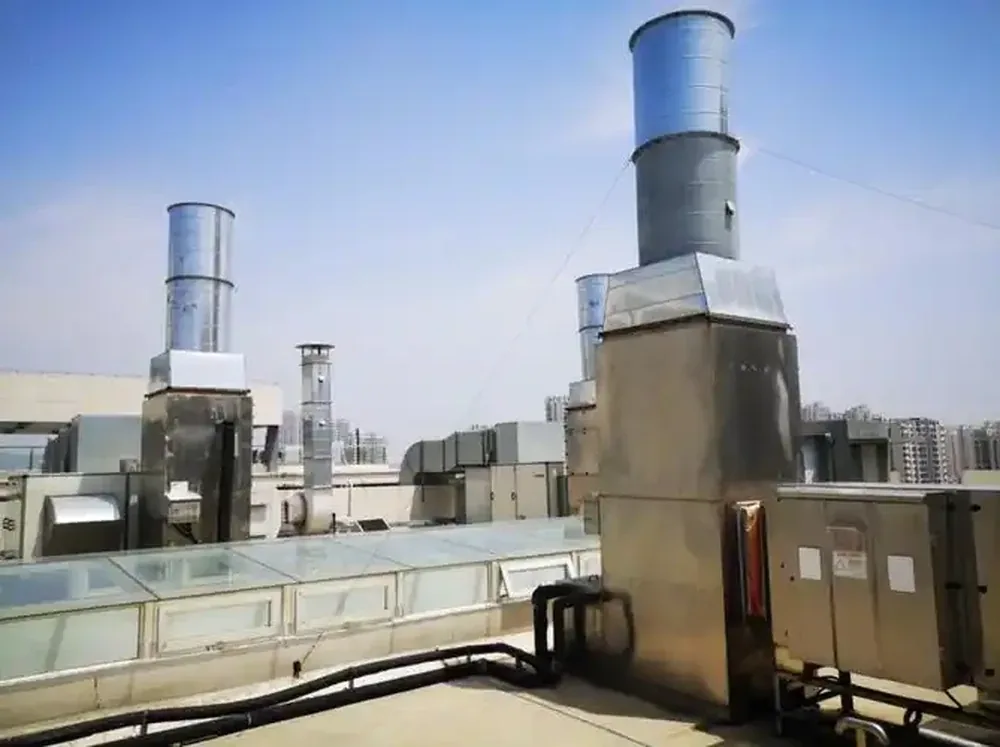
Two rooms, two answers
Patterns repeat across projects. Rooms that end up near 20 air changes usually share two traits: a short cage-change interval, and a rack manifold that cannot be expanded without building work. The airflow buys recovery time that the racks cannot.
Rooms that settle near 15 usually have the opposite profile. Rack capture is strong, the interval is manageable, and the airflow already covers the heat load. In that case extra air changes cost money and deliver little, so the budget goes into capture and instrumentation instead.
Both profiles appear in our case work, including a university SPF animal laboratory and a vaccine manufacturer’s animal laboratory. The operating routines that keep either profile stable are covered in our notes on biotech animal facility odor control and the equipment function breakdown.
Frequently asked questions
These are the questions that come up when we review an air change rate for animal rooms. They are grouped by whether they affect design or operation.
Design questions
Is 15 or 20 air changes per hour better for a rodent room?
Neither is universally better. Fifteen covers standard SPF rooms where rack-level exhaust carries the concentrated stream. Twenty earns its cost when density is high, heat load is significant, or the room must recover quickly after cage change. Above twenty, dilution gains flatten while energy keeps rising.
Does raising the air change rate cut ammonia in proportion?
No. Generation continues at the same rate, so concentration falls more slowly than airflow rises. In a well-mixed room, going from 15 to 20 improves things by roughly a quarter. Rooms with dead zones improve less, and rooms with saturated bedding improve almost not at all.
What do the guidelines actually require?
Requirements differ by market. European guidance commonly quotes 15 to 20 air changes per hour for rodent rooms, while other frameworks set performance targets and leave the number to the designer. Use the stricter rule that applies to your project, then check it against the heat load.
Can we lower air changes to save energy?
Only after ammonia control is proven. Lower airflow saves conditioning energy, yet it also slows recovery after cage change. Run a trial at the lower setpoint before committing, and keep rack exhaust capture unchanged, because capture does more for odour than dilution does.
Operation questions
How do I measure the real air change rate?
Measure supply airflow rather than reading the design drawing. Use a balometer at the diffusers, or a duct traverse where access allows, then divide total airflow by room volume. Repeat with doors closed and with a rack running, because both change the balance.
Why does the room feel drafty after the setpoint went up?
Extra supply air has to go somewhere, so diffuser throw and door pressure change together. Re-commission the diffusers and check door closing force, then confirm cage-level airflow in the racks. A room that drafts will generate complaints that have nothing to do with odour.
What to send us before you change a setpoint
If the air change rate for animal rooms still looks uncertain, four items make the review straightforward. Room volume and current airflow, measured ammonia at cage level across a full cage cycle, rack count and type, and the plant capacity available for extra conditioning. With those, we can tell you whether capture, treatment or airflow will move the number furthest for the money.
Reviewing an animal room ventilation setpoint?
Send the room data and our engineers will compare 15 and 20 air changes on your actual loads, including the conditioning impact that rarely appears in the original design.
Request a sizing review See the animal room system