Environmental protection equipment supplier

Animal Room Odor Removal: Choosing Between Ionization, Biofiltration and UV Photolysis
Animal room odor removal comes down to three proven methods: plasma ionization, biofiltration and UV photolysis. Facilities rarely fail because they picked the wrong chemistry, though. They fail because they picked a method without matching it to airflow, concentration and floor space. So this guide compares the three methods on their merits. It then shows how each one fits into a working system.
Where Laboratory Animal Odor Actually Comes From
Urine and feces are the main source. Microbes break down the urea and organic matter, and the breakdown releases ammonia, hydrogen sulfide, mercaptans, sulfides, indole and skatole. Animal hair and dander add a second stream as they decompose and feed bacterial growth. Chemical reagents, anesthetics and disinfectants contribute their own volatiles. Carcasses and tissue waste add more when they sit too long, because decomposition then releases putrescine and cadaverine.
Three properties make this stream difficult rather than merely unpleasant. First, the mix is complex, so no single mechanism catches everything. Second, production never stops, because metabolism runs around the clock. Third, concentration swings widely with cage density, cleaning schedule and feeding times. After a cage change or before one, the load can jump several times within an hour.
So any animal room odor removal plan has to handle a mixed, continuous, fluctuating stream. That requirement drives the method choice more than anything else.
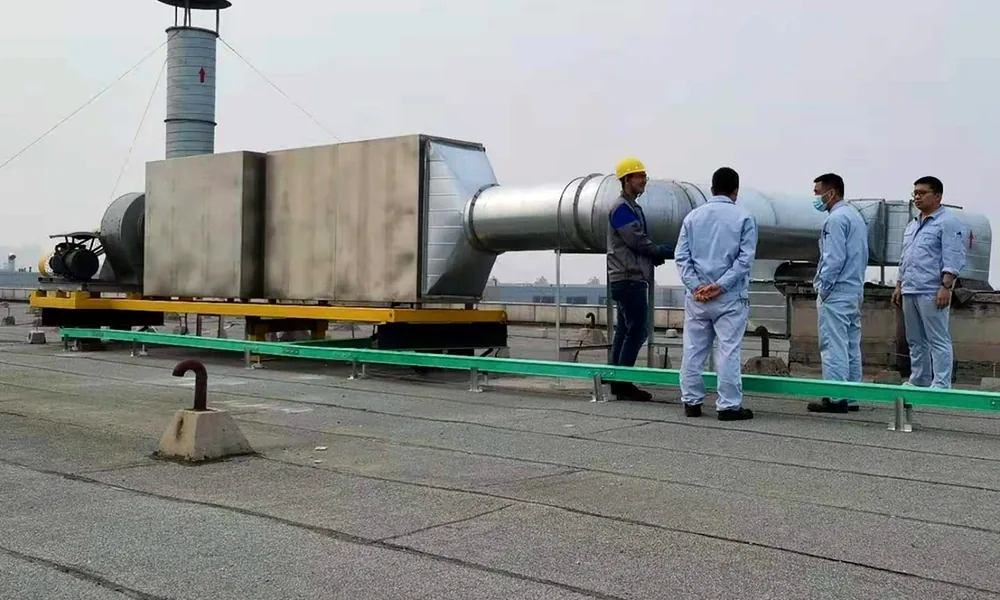
Method 1: Plasma Ionization
A plasma unit uses a high-voltage discharge to split oxygen molecules into free radicals and activated oxygen species. These reactive groups oxidize the odor molecules, and the end products are carbon dioxide and water. Because the reaction is fast and the equipment compact, plasma systems suit rooms with limited space and medium-to-low concentrations. For many animal room odor removal projects, that compactness decides the shortlist.
The strengths are real. It handles a wide range of organic gases, purification efficiency is high, and the footprint stays small. For odorants that other methods struggle with, plasma oxidation is often the practical option.
The weakness sits in the discharge itself. High-voltage equipment in a confined space with high moisture, dust or concentrated organic gas carries a fire and explosion risk. That risk limits where you can install it. Most suppliers therefore cap the inlet concentration. Many facilities now prefer the low-temperature plasma variant, which runs cooler and safer. If you consider this route, review our low-temperature plasma waste gas system for the design details that matter.
Method 2: Biofiltration
Biofiltration hands the job to microbes. Collected exhaust first passes through a humidification stage. It then moves through a wet, porous filter bed that is fully colonized by microorganisms. The microbes adsorb and absorb the odorants, and afterwards they metabolize them into carbon dioxide, water and harmless inorganic salts.
Two variants exist. A biofilter uses a natural organic packing and needs no liquid circulation, so construction stays simple and operation stays cheap. A biotrickling filter instead sprays a nutrient solution over the packing. That gives the microbes better living conditions, so removal efficiency climbs higher.
The economics are the main draw. Removal above 90 percent is achievable, running cost is low, and the packing comes from natural porous organic material. No chemicals are consumed, and no lamps need replacing.
The cost shows up on the floor plan instead. Bio systems need a large bed area and a gas residence time measured in tens of seconds. The equipment footprint is therefore the largest of the three methods. Start-up also takes weeks, because the microbial community needs time to adapt to your specific gas mix. So facilities with spare land and steady loads get the best value from biofiltration.
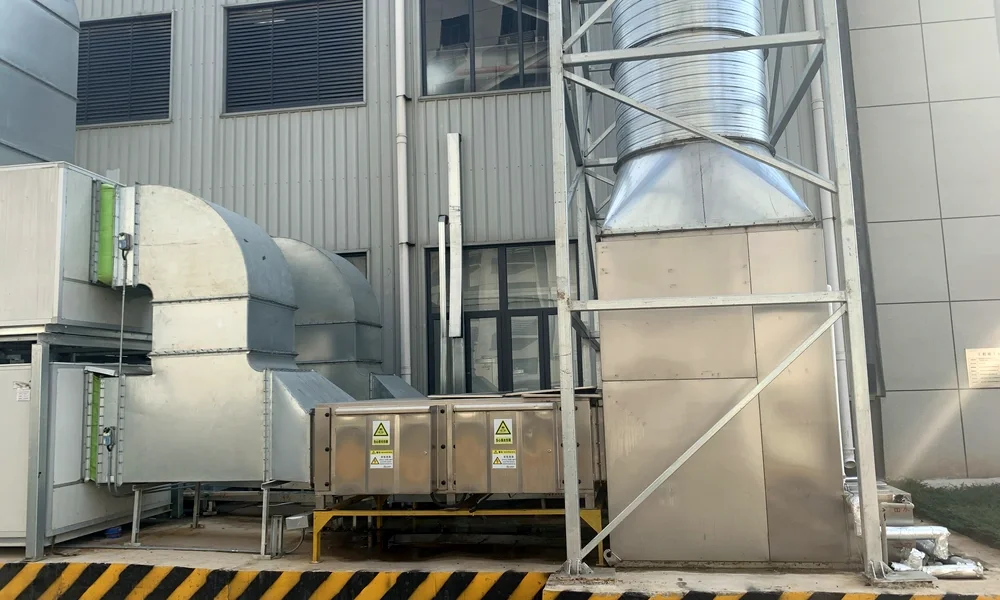
Method 3: UV Photolysis
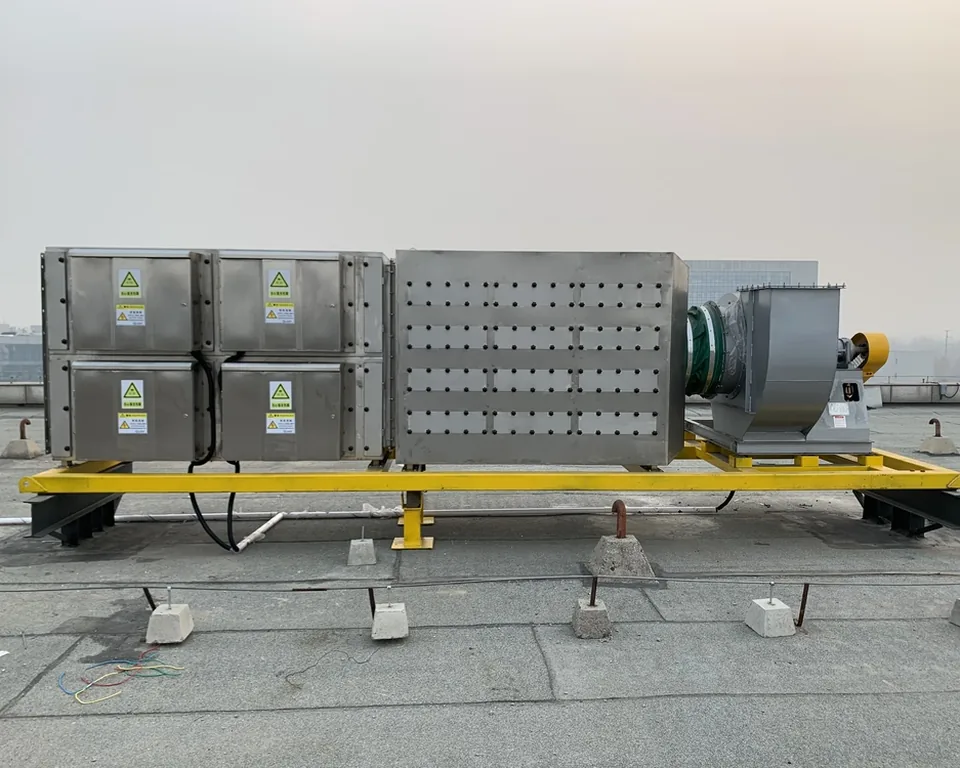
UV photolysis uses high-energy ultraviolet light to split oxygen molecules into activated oxygen, which then forms ozone. Ozone is a strong oxidant. Together with direct photolysis, it breaks the odor molecules down into low-molecular-weight compounds, carbon dioxide and water.
Suppliers report removal above 95 percent, and the practical advantages explain its popularity. It adapts well to medium and low concentrations at large airflows. It also runs stably around the clock with low energy use, and it needs no operator beyond periodic inspection. Those traits explain why UV photolysis dominates animal room odor removal in pharmaceutical settings.
Modern modules also carry explosion-proof treatment, so fire, explosion and corrosion resistance are built in. UV photolysis is therefore the default choice where safety requirements are strict, and it is our own core product line. See the UV photolysis waste gas purifier specification for lamp counts and housing options.
One caution applies to all vendor numbers, and it applies here too. Published removal rates come from controlled test conditions. Your actual figure depends on residence time, humidity and inlet load. So treat 95 percent as a design target to verify at commissioning, not a guarantee.
The Three Methods Side by Side
The table below condenses the choice. Read it as a screening tool rather than a final answer, because your gas analysis should always confirm the shortlist.
| Criterion | Plasma ionization | Biofiltration | UV photolysis |
| Removal efficiency | High | Above 90% | Above 95% (reported) |
| Footprint | Small | Largest | Small to medium |
| Running cost | Medium | Lowest | Low |
| Chemicals consumed | None | None | None |
| Safety note | Explosion risk at high concentration | None significant | Explosion-proof modules standard |
| Start-up | Immediate | Weeks for microbial adaptation | Immediate |
| Best fit | Space-limited rooms, organic gases | Large facilities with steady loads | Medium-low concentration, large airflow |
How to Choose Your Animal Room Odor Removal Method
Answer these in order, and one method usually separates itself from the others.
How much floor space can you give up? A biofilter needs the most area by a wide margin. If the rooftop or plant room is already crowded, plasma or UV wins by default.
Is your load steady or swinging? Microbes need a stable diet. Facilities with steady, moderate loads suit biofiltration. Rooms where cage changes create sharp peaks respond better to UV or plasma. Oxidation capacity there is instant, so it does not need biological adaptation.
What is your concentration profile? High concentrations stress plasma discharge safety. Very low concentrations starve a biofilter. Medium-to-low concentration with large airflow is exactly where UV photolysis performs best.
Who maintains it? UV needs periodic lamp checks. Bio needs packing care and start-up patience. Plasma needs electrical safety oversight. Choose the maintenance model your team can actually sustain, because an unmaintained system loses performance within months.
In practice, larger animal facilities stop choosing and start combining. A two-stage train that pairs UV photolysis with spray scrubbing covers both the water-soluble fraction and the oxidizable fraction. We break down that architecture in our laboratory animal facility odor control guide.
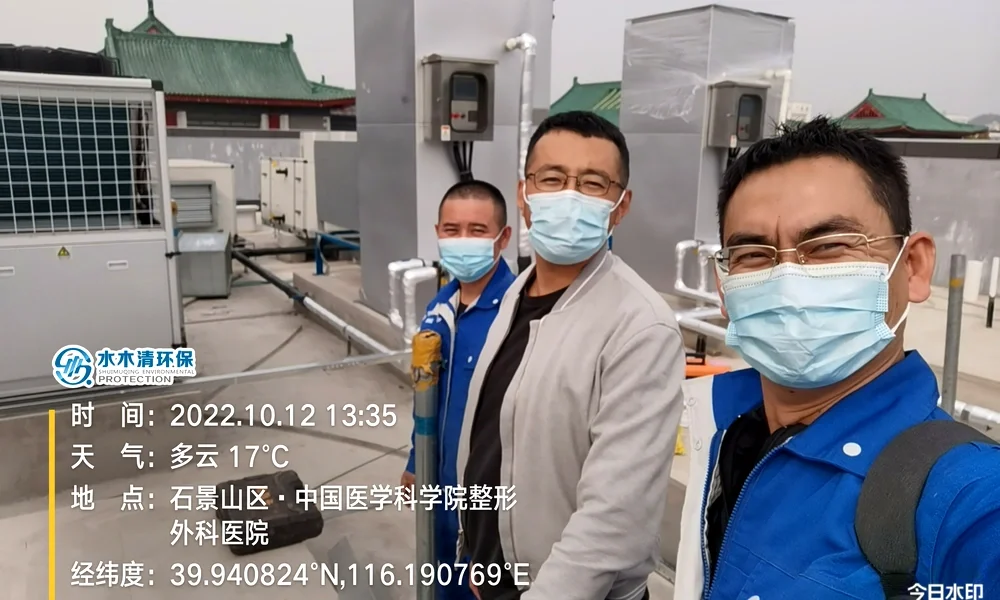
Beyond the Method: The System Around It
No standalone unit solves animal room odor removal on its own. The method sits at the end of a chain, and the chain starts upstream.
Source control comes first. Reasonable cage density, digestible feed and regular bedding changes all cut the load before any equipment sees it. Sealed storage for reagents and carcasses helps as well. Every kilogram of odorant removed at the source is a kilogram your equipment never has to treat.
Ventilation carries the load out. Air change rates of 10 to 20 per hour are the common design band for animal rooms. Sizing follows room volume, animal numbers and the type of work. Ducting must collect the exhaust from every zone and deliver it to the treatment system, because odor that escapes through leaks or open windows bypasses everything you installed.
Filtration protects the equipment. Prefilters and medium filters intercept hair, dander and dust before the treatment stage. Here a correction to common practice is worth making. High-efficiency particulate filters capture aerosols and particles, but they do not capture gas molecules. Ammonia passes straight through a HEPA filter, so odor molecules need adsorption or oxidation instead.
Activated carbon adsorbs what remains. Carbon holds a wide range of odorants, including ammonia, hydrogen sulfide and organics, so it suits polishing duties at the duct end. Saturation is the catch, though. A saturated bed stops working silently, and replacement must follow pressure drop and breakthrough testing rather than the calendar. Our activated carbon adsorption unit supports staged beds that make remaining life visible.
Put together, the full architecture reads as follows. Source control, then collection and ventilation, then particulate filtration. After that comes gas-phase treatment by one or two of the three methods, and finally a polishing stage. We also detail the product-level view in our guide to animal room odor control equipment.
Two Projects That Show the Logic
The following examples are drawn from typical project configurations. Details are anonymized, and the equipment choices follow the selection logic above.
University animal center, mice and rats
A university animal center of roughly 500 square meters ran high stocking densities. Odor affected both staff comfort and animal welfare, so the fix worked in three layers. Stocking density dropped by 30 percent, feed quality improved, and reagent storage moved to sealed cabinets. Ventilation was rebuilt to reach 15 air changes per hour, with prefilter, medium filter and carbon stages in the duct. UV photolysis modules then went into the highest-load zones, the animal rooms and the carcass handling area. Odor dropped noticeably, and the center now holds stable readings during inspections.
A similar configuration is documented in our university SPF animal laboratory deodorization case study.
Biopharma laboratory, rabbits and guinea pigs
A biopharmaceutical company ran pharmacology studies on rabbits and guinea pigs. The carcass and tissue waste area produced the worst odor, and ventilation was limited. So the project sealed and refrigerated the waste stream, then moved it out on a fixed schedule. Existing ventilation gained extra airflow, and a plasma purification unit went in at the duct end. A small biofilter then polished the air near the carcass zone, where the steady load suited microbial treatment. Odor fell to comfortable levels, and the laboratory passed its environmental acceptance review.
Comparable work for pharmaceutical clients appears in our Wuhan pharmaceutical animal room deodorization project, which covers another animal room odor removal duty at production scale.
Frequently Asked Questions
Which method removes odor most completely for an animal room?
UV photolysis shows the highest reported removal, above 95 percent, and biofiltration reliably clears 90 percent. Plasma sits in the same band. The honest answer, though, is that method matters less than matching. A well-sized UV unit on the right airflow beats an oversized biofilter that never stabilized.
Can one method handle ammonia and hydrogen sulfide at the same time?
Yes, all three act on both gases, but with different strengths. Water-soluble ammonia responds well to scrubbing or biofiltration. Hydrogen sulfide oxidizes readily in UV and plasma stages. This is why two-stage systems pair an oxidative stage with an absorption stage.
Why does a HEPA filter not remove odor?
A HEPA filter captures particles down to fractions of a micron. Ammonia and odor molecules are gases several thousand times smaller than that, so they pass straight through the media. Gas-phase odor needs adsorption or chemical oxidation instead.
How often does activated carbon need replacement in animal room duty?
Three to six months is typical for animal facility loads, but the interval depends on inlet concentration and humidity. Set replacement by pressure drop and breakthrough testing. A bed that fails silently is worse than a scheduled change, because nobody notices until complaints arrive.
Is plasma ionization safe to use?
It is safe within its design envelope. The hazard is the high-voltage discharge in confined spaces with high moisture, dust or organic concentration. Respect the inlet concentration limits, choose low-temperature plasma variants where loads are heavy, and the risk stays controlled.
What air change rate should an animal room run?
Ten to twenty air changes per hour is the common design band. Regulatory floors may also set a minimum of fifteen in barrier environments. Still, more air is not always better, because excessive rates dry bedding, lift dust and burn fan energy. So design on room volume and animal load, then verify with measurements.
Get a Method Matched to Your Room
Soto Machinery builds equipment for every animal room odor removal method in Qingdao. The range covers low-temperature plasma systems, UV photolysis purifiers, spray deodorization units and activated carbon stages. Behind the factory sit more than 15 years of manufacturing and over 500 delivered projects. Installations also run across more than 40 countries, including university SPF laboratories, vaccine plants and pharmaceutical animal rooms.
Send us your airflow, your gas analysis and your discharge target. Our engineers will then recommend the method mix that fits your floor space and budget. You get the running cost attached before you commit.