Environmental protection equipment supplier

Ammonia in Rodent Rooms: Why It Builds Up and How to Control It
Ammonia in rodent rooms builds up because urease in soiled bedding keeps splitting urea into ammonia. That reaction speeds up sharply as the bedding gets wetter and warmer, so concentration follows a curve rather than a line. A cage reading 5 ppm on day one can pass 30 ppm by day four with nothing else changing. Because the source keeps generating, ventilation only dilutes it, and cage change frequency decides the outcome more than fan capacity does.
25 ppmOccupational 8-hour limit most SOPs adopt
3 to 5 daysTime for a dense rack to pass it
2 xRough hydrolysis rate gain per 10 °C rise
1.5 mHeight where readings match cage level
Where ammonia in rodent rooms actually comes from
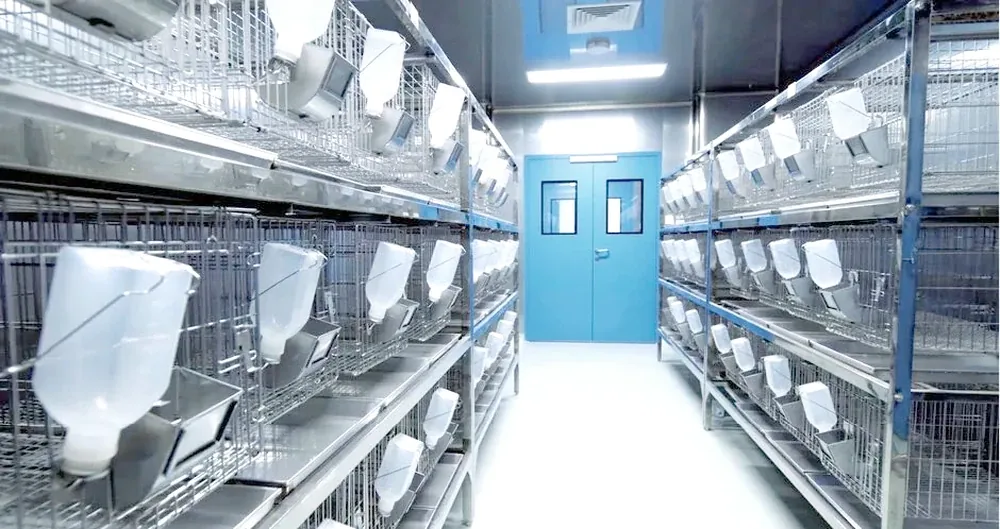
Urine leaving the animal is mostly water and urea, and urea itself has no smell. Bacteria in the bedding produce urease, and urease breaks urea into ammonia and carbon dioxide. That step needs moisture and warmth, so it runs slowly on fresh bedding and quickly once the bedding is saturated.
Two consequences follow. The first is that clean bedding still generating ammonia is normal chemistry rather than a cleaning failure. The second is that the curve is exponential in the early days, which is why a room can feel fine on Monday and be unacceptable by Thursday.
- Hour 0 to 24 · bedding absorbs most of the urine, so headspace stays under 5 ppm
- Day 2 · the absorbent capacity is used up, and the reading typically reaches 10 to 15 ppm
- Day 3 · hydrolysis runs near full rate, pushing dense racks to 20 to 35 ppm
- Day 4 to 5 · ventilation and reabsorption balance generation somewhere between 35 and 60 ppm
The numbers above describe a well-run SPF room at 15 air changes per hour with weekly cage changes. Push the interval to ten days, or double the cage density, and each step moves a day earlier. If you want the room-level view of how that exhaust is handled, our animal room waste gas treatment page sets out the configurations.
Six variables that set the concentration
Ammonia in rodent rooms responds to a small number of inputs, and every one of them is visible in a facility walk-round. Rank them before spending money on treatment, because the cheapest lever usually sits with the animal care team rather than the engineering budget.
1. Cage change intervalThe strongest single lever. Moving from seven days to four often halves peak concentration, and it costs labour rather than capital.
2. Bedding type and depthAbsorbency and urease activity differ by material. Corncob and paper hold more urine than thin wood shavings, while some aromatic softwoods add their own VOCs.
3. Stocking densityMore animals per cage means more urea per litre of bedding, so the absorbent capacity runs out sooner.
4. Rack exhaust captureConcentrated capture at the cage keeps the plume out of the room, and it removes ammonia before it dilutes into the general air.
5. Room air change rateDilution, not removal. Doubling air changes from 10 to 20 lowers concentration by less than half, because the source keeps producing.
6. Temperature and humidityWarm, humid rooms speed hydrolysis. A 10 °C rise roughly doubles the rate, and spillage from drinkers keeps bedding wet.
How to measure it without fooling yourself
Most readings that disagree with the nose come from measuring the wrong place or the wrong moment. Four decisions fix that.
| Decision | What works | What misleads |
|---|---|---|
| Where to sample | Inside the cage, 20 to 30 mm above bedding (or the rack plenum outlet) | Ceiling extract grille, which reads air already diluted |
| When to sample | Just before cage change, when the curve peaks | Right after cage change, which always looks good |
| Instrument | Electrochemical sensor, 0 to 100 ppm range, quarterly span check | Colour-change badges read by eye, or a sensor past its calibration date |
| How many points | Three cages per rack, top and bottom tier | One sample from the middle of the room |
Place sensors away from doorways and diffusers, because both create local dilution. Then log the readings with the days since cage change, so the pattern becomes visible instead of anecdotal. A single 20 ppm reading means little, while the same number on day six of every cycle tells you exactly where the problem sits.
Instrument choice follows budget rather than sophistication. A handheld electrochemical meter suits weekly walk-rounds, since one device covers the whole suite. A fixed sensor at a single rack gives a continuous record, which is what turns a complaint into a trend. Detector tubes still earn their place for spot checks where no meter is available, although they cost more per reading than a meter costs to own per year.
Where treatment fits, and where it does not
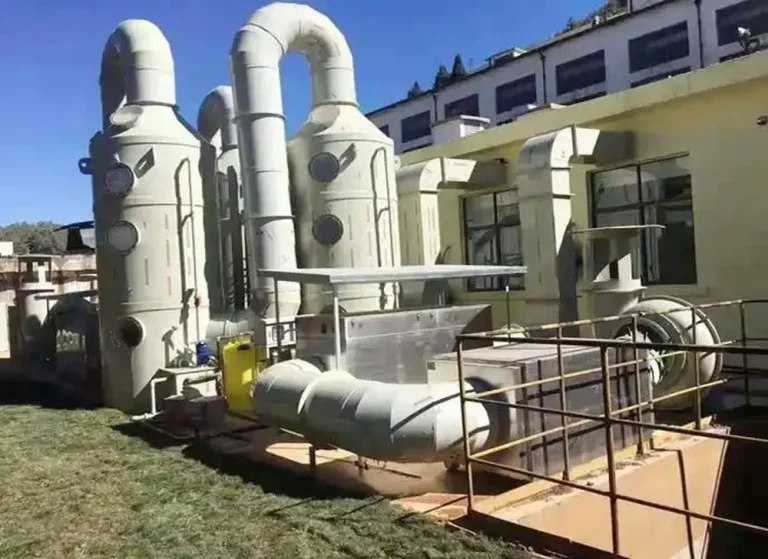
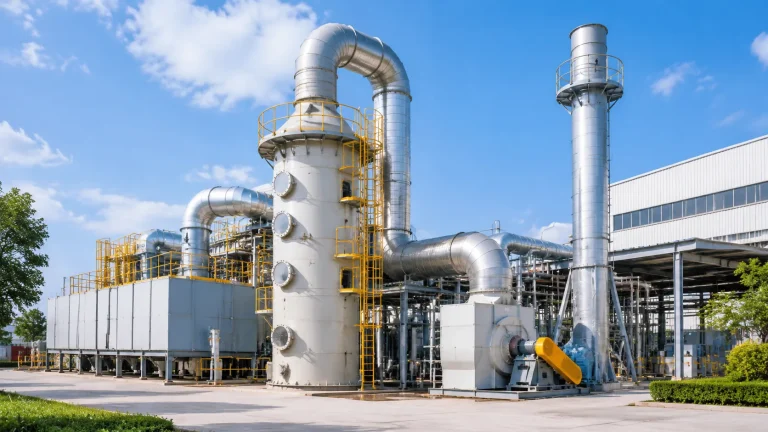
Treatment is not the first answer to ammonia in rodent rooms, and it should not be the second. Capture and cage scheduling solve most cases, while a scrubbing stage earns its place when the numbers stay high through the cycle. The dividing line in our projects sits near 30 ppm at cage level just before a change.
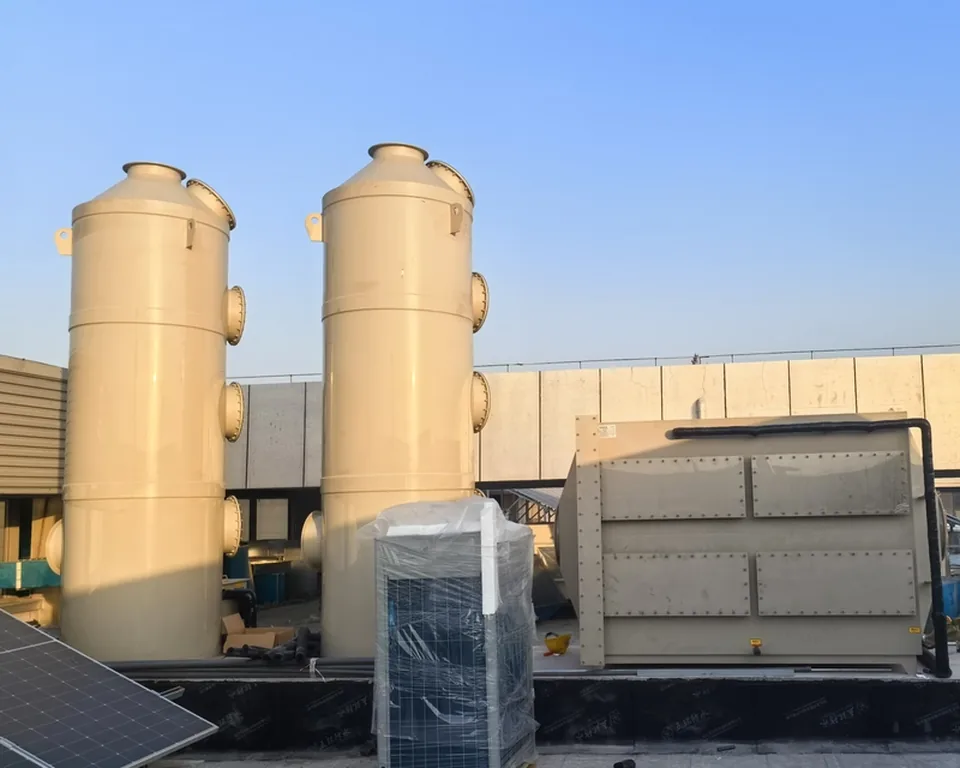
Below that line, a well-sealed rack manifold plus a carbon polisher usually holds the stack within limits. The guide to laboratory animal room waste gas treatment covers those layout options. Above it, acid scrubbing removes ammonia instead of diluting it, so the carbon behind the scrubber lasts a year or more rather than a season.
Two smaller points are worth settling early. First, confirm the room has enough exhaust capacity for the capture you are adding, because a new manifold on an old fan simply moves the problem to the plenum. Second, decide who owns the readings, since a sensor nobody checks is decoration.
Myths that keep rooms smelly
Most confusion around ammonia in rodent rooms comes from four beliefs that sound reasonable until you measure them.
If you cannot smell it, the level is fine.
Olfactory fatigue sets in within minutes, and staff who work in the room lose the ability to judge it. Instruments catch what noses miss, so trust the sensor above about 10 ppm.
More air changes will fix it.
Dilution helps at the margin, yet the source keeps generating. Going from 12 to 25 air changes rarely halves the reading, and it doubles the energy bill for the whole room.
A carbon filter is enough on its own.
Carbon holds ammonia poorly compared with acid scrubbing, so the bed saturates in months. Where levels stay above 30 ppm, a small scrubber takes the load and carbon polishes behind it.
Higher ammonia only affects the animals.
Staff exposure matters too. The 25 ppm eight-hour reference used in most SOPs comes from occupational limits, and cage-change work concentrates exposure into a short, high-dose window.
Fixes, ranked by cost per ppm removed
- Shorten the cage change intervalLabour only, no capital. Often the cheapest reduction available, and usually the one nobody wants to schedule.
- Change bedding material or depthLow cost per cage. Test one rack for four weeks before switching the room, because absorbency claims rarely survive contact with a real cage.
- Improve rack-level captureModerate capital. Best value when the room already has ventilated racks and the plenum runs at less than 20 Pa vacuum.
- Reduce stocking densityOperational cost, because it consumes floor space. Effective, although facility managers rarely control this decision alone.
- Raise the room air change rateEnergy cost, with diminishing returns. Worth doing when the room also has a heat load problem, and rarely worth doing on its own.
- Add a scrubbing stageCapital plus chemicals. Justified when the change interval cannot go below five days, or when the stack sits close to occupied space.
When it is not ammonia
Not every bad smell in a rodent room is ammonia, and treating the wrong gas wastes a maintenance budget. Use the differential below before ordering media.
| Smell | Likely source | Quick check |
|---|---|---|
| Rotten eggs, drains | Hydrogen sulfide from drains, traps or standing water in the duct | Sensor reads low ammonia while the smell persists. Check floor drains first. |
| Sweet, solvent-like | Bedding aromatics, disinfectant residue, isopropanol from spray bottles | Reading drops after cage change, then returns with cleaning. |
| Musty, earthy | Mould in duct lining, condensate pans or a wet demister | Smell is strongest at the extract grille, not at the cage. |
| Sharp, one location only | Dead animal, spilled urine behind a rack, blocked drain under the rack | Single-point source. Move the sensor along the rack until the number jumps. |
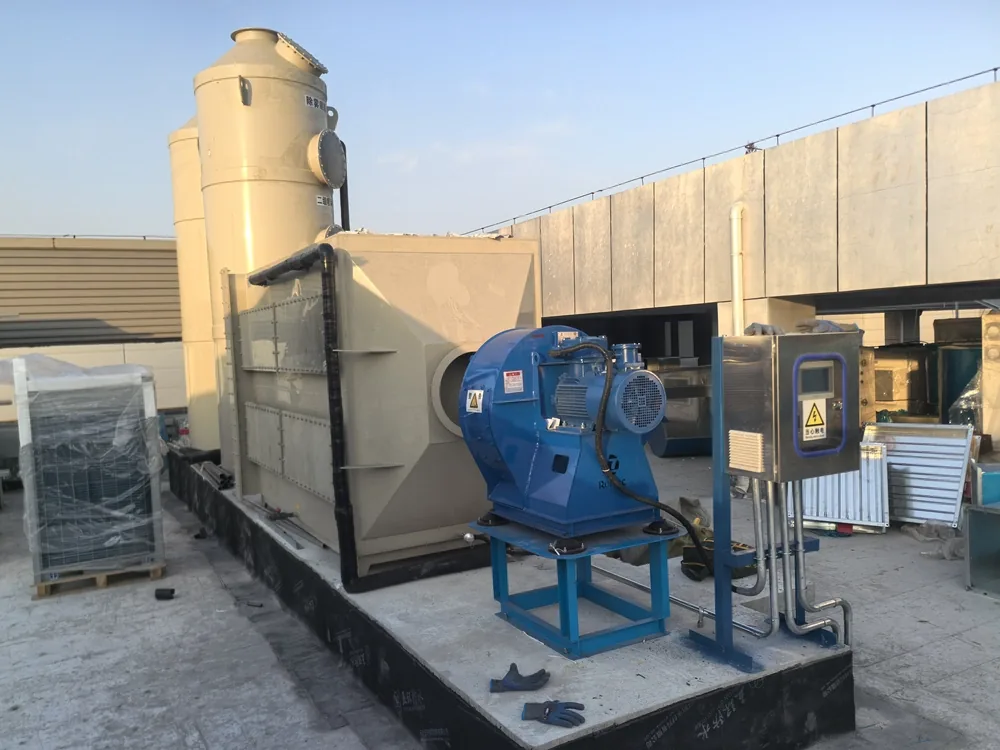
Two of our projects show how the fix changes with the room. A university SPF animal laboratory solved a persistent reading with capture and scrubbing rather than more air. A vaccine manufacturer’s animal laboratory needed documented performance for validation, so instrumentation came first.
Frequently asked questions
These are the questions we get asked most about ammonia in rodent rooms, split by whether they affect design or daily operation.
Measurement and limits
What ammonia level should a rodent room stay under?
Most facility SOPs adopt 25 ppm as an eight-hour ceiling, because that figure comes from occupational exposure limits. Many institutions aim lower at cage level, and 10 to 15 ppm is a common internal target. Whatever number you adopt, measure it inside the cage just before a change, since that is when the curve peaks.
Why do two sensors in the same room disagree?
Placement explains most of it. A sensor near a door or diffuser reads diluted air, while one at cage level reads the plume. Height matters too, because ammonia is lighter than air but mixes slowly in a still room. Fix the sampling points, then compare instruments rather than the other way round.
Can we judge the level by smell?
No. Olfactory fatigue removes the ability within minutes of entering, so the person who works there all day is the least reliable judge. Use smell to raise a question, then confirm it with an instrument before changing the cage schedule or ordering media.
Control and equipment
Will a carbon filter solve high ammonia on its own?
Rarely on its own at high load. Carbon holds ammonia weakly compared with acid scrubbing, so the bed saturates within months and changeouts become routine. Where readings stay above 30 ppm, a packed scrubber takes the ammonia duty, and carbon then polishes the residual odour behind it.
How much does raising the air change rate help?
Less than most people expect. Doubling air changes from 10 to 20 lowers concentration by less than half, because generation continues at the same rate. It also doubles fan energy and the load on heating and cooling. Spend the money on cage changes or capture first, then revisit the air change rate.
When does it make sense to add a scrubbing stage?
Two conditions point to it. The first is a change interval that cannot go below five days without staffing problems. The second is a stack close to windows, air intakes or a neighbouring building. In both cases removal beats dilution, and the operating cost is acid and caustic rather than media replacement.
What to send us if the readings stay high
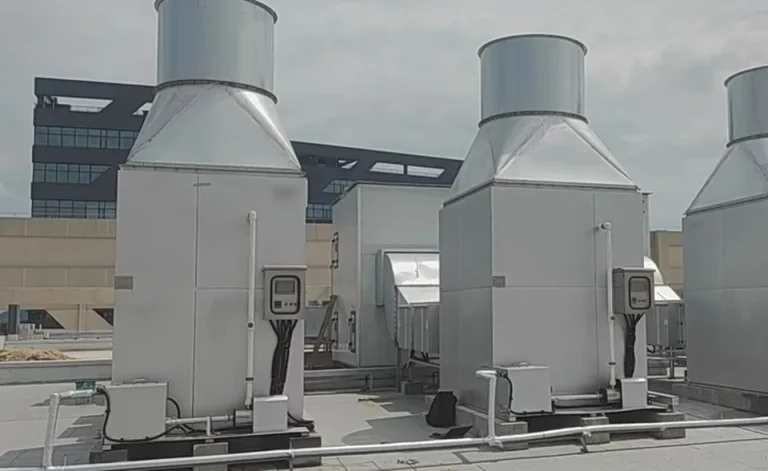
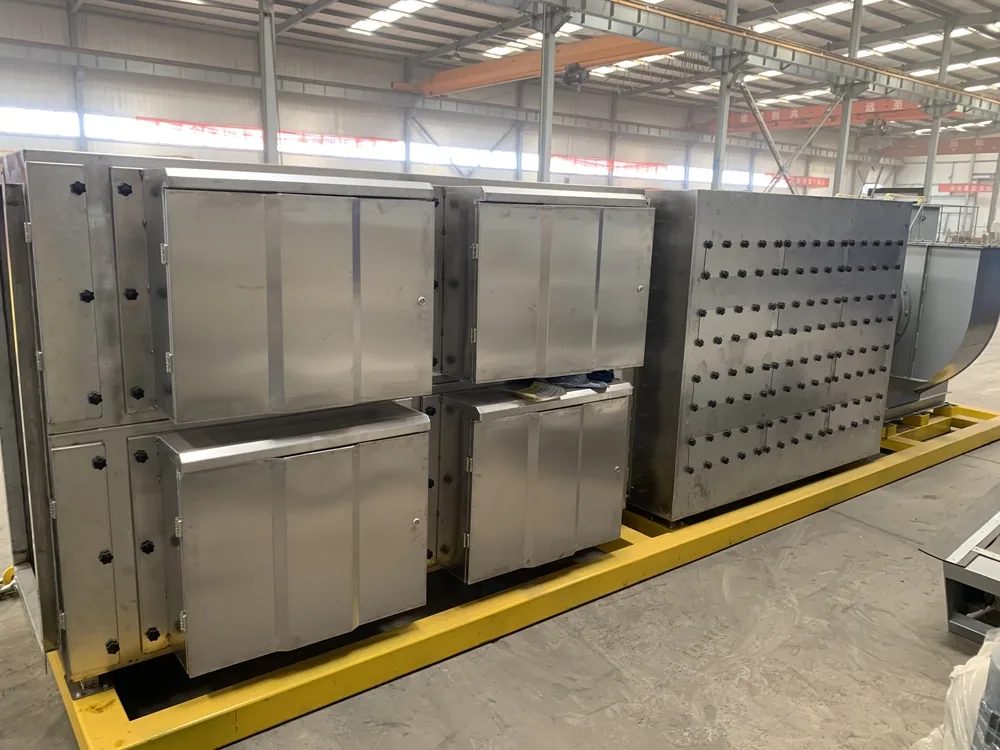
Three things make a useful first review. A week of readings with the days since cage change noted, the rack model and cage count, and the current change interval. Add a photograph of the roof or plant room, since space decides more of the design than most drawings show. When ammonia in rodent rooms stays above 30 ppm through the cycle despite a short change interval, three pages are worth reading before you request a quote. Start with the odor control methods used in laboratory animal facilities. Then read the equipment function breakdown, and finish with the laboratory animal industry page for the configurations we build most often.
Ammonia still climbing after the obvious fixes?
Send the readings and the rack details. Our engineers will then tell you whether capture, scrubbing or a change to the cage schedule moves the number furthest for the cost.
Talk to an engineer See the animal room system